How recreation programs can be used to mitigate youth gang involvement and violence


Recreation programs, in addition to other strategies, can potentially be effective in addressing youth gang involvement and violence, according to a new study from the University of Illinois at Urbana-Champaign.

The study, titled, “The Roles of Recreation in the Prevention, Intervention, and Rehabilitation Programs Addressing Youth Gang Involvement and Violence,” was published in April in Leisure Sciences.

The researchers — Liza Berdychevsky, Monika Stodolska and Kim Shinew, professors in the Recreation, Sport and Tourism Department in the College of Applied Health Sciences at Illinois — conducted 39 interviews with former gang members and practitioners working with current or former gang members, mostly in the metro Chicago area, with the focus being on examining the roles and benefits of recreation in preventing or mitigating youth gang involvement and violence.

The Illinois researchers argued that recreation (including sports, arts, music, and crafts) can be used effectively in multi-approach prevention, intervention, and rehabilitation initiatives.

The former gang members represented the gangs of Latin Kings and Latin Queens, Two-Sixes, Almighty Saints, Satan’s Disciples, Vice Lords, Latin Angels, La Raza, Insane Spanish Cobras, Almighty Bishops, Tutu Boys, Gangster Disciples, and Blackstone Rangers (Almighty Black P. Stone Nation).

The researchers stressed the need to have former gang members involved in program planning and delivery. They argued that omitting ex-gang members’ input “is problematic because consultation and collaboration with the recipients of the programming are crucial for designing and delivering the most appropriate and relevant services. Therefore, in addition to presenting the views of practitioners working with gang-affiliated youth, this study gave voice to people who have lived through the cycles of violence, gang involvement, and (for many) subsequent incarceration.”

The study’s findings point to some key qualities boosting the preventative, interventional, and rehabilitative capacities of recreation programs, such as attractiveness and affordability of offered activities, cooperation with community stakeholders, consistency of programming efforts, structure and supervision, skillful mentoring and coaching, and targeting vulnerable youth.

The researchers found that recreation programs possessing these qualities offer numerous benefits, such as exposing youth to positive role models, nurturing prosocial relationships, teaching life skills, offering diversion and safety, and leading to meaningful reappraisals among vulnerable youth. Hence, they argued that properly planned and delivered recreation programs can be part of a multi-approach toolkit addressing youth gang involvement and violence.

The findings highlight that programs addressing gang involvement need to be attractive and fun for youth. Examples of these activities include sports, physical activity, music, arts, movie nights, and trips.

One former gang member told the Illinois researchers, “The way to keep kids away from gangs is to have a lot of fun programs. Like YMCA, events, movie nights [to] keep these kids from wanting to run in the street. That would be a big help.” Another gang member advocated for sports, stressing the need for something with “energy. It would definitely have to be something physical.”

Yet another ex-gang member stressed the need for affordable, and even free programs. “The thing is, lots of families can’t afford them!,” she said.

The need for intervention is obvious. Between 2002 and 2010, the number of gangs in the United States has grown from approximately 21,800 to 29,400 — an increase of 35%, according to statistics from the Chicago Police Department. Crime statistics showed that of the 764 homicides in metropolitan Chicago in 2016, 67 percent of offenders had a current or prior gang affiliation and youth made up a majority of offenders arrested for homicide.

Still, the researchers caution that recreation is not “a panacea for youth gang involvement and violence,” and that a sustainable solution would require a multi-pronged approach that involves the collaboration of schools, communities, police, and other agencies. In addition, efforts to address “the underlying issues of systemic and structural violence against youth in these disenfranchised communities and other broader causes of inequality” are needed.

Related news

Can exercise help cancer survivors overcome negative effects of treatment?


Cancer survivors have many obstacles to overcome to achieve a sense of normalcy. A University of Illinois researcher believes she can help combat some of these problems with a cost-effective tool of exercise.

Kinesiology and Community Health assistant professor Neha Gothe has initiated the STAY Fit study, which stands for Strength Training, Aerobic walking and Yoga for cancer survivors.

Gothe is enrolling cancer survivors ages 30-70 to take part in a 12-week fitness program aimed at reducing some of the negative effects of cancer treatments such as functional fitness, fatigue, lack of sleep and brain fog.

The study’s aims are to measure how participants’ fitness and quality of life have improved over the study span, but primarily, Gothe said she’s focused on cognitive function.

“We are looking at cancer-related cognitive impairment. It’s a very understudied phenomenon,” she said. “Up to 70 percent, and some studies show that more than that percentage of cancer survivors, regardless of cancer type, report these subjective complaints, that they feel like they are not functioning optimally when it comes to their memory or they can’t stay as focused as they used to. It is particularly common during and after treatments, especially chemo and radiation, but has also been documented before patients begin treatment. Only in the late ‘90s CRCI was formally recognized as a quality of life matter that deserved higher priority in clinical research.”

Gothe said the National Cancer Institute and National Institutes of Health have since encouraged researchers to design and conduct interventions to understand what’s causing CRCI and how to prevent and treat it. 

“People are looking for solutions outside more medications,” Gothe said, which is a driving factor for STAY Fit study’s yoga-based holistic approach.

The study participants are randomly placed into one of three groups, either the strength group, aerobic walking or yoga, with two trainers assigned to each group of 10-15 people. The groups are kept purposely small to ensure participants get equitable treatment and to ensure healthy group dynamics.

All participants wear a heart monitor during the sessions, which run 60-90 minutes, and they’ll exercise 2-3 times a week for a total of 150 minutes as prescribed by the Center for Disease Control and American Cancer Society.

The STAY Fit exercise sessions begin Aug. 26 and runs through Nov. 15. Given the community engagement and interest in the study,  Gothe and her research team will run another 12-week program in the new year starting Jan. 27, 2020.

Editor’s note:

This study is now complete. Neha Gothe joined the faculty of Northeastern University in 2023.
 

Share on social

Related news

Cancer survivors have many obstacles to overcome to achieve a sense of normalcy. A University of Illinois researcher believes she can help combat some of these problems with a cost-effective tool of exercise.

Kinesiology and Community Health assistant professor Neha Gothe has initiated the STAY Fit study, which stands for Strength Training, Aerobic walking and Yoga for cancer survivors.

Gothe is enrolling cancer survivors ages 30-70 to take part in a 12-week fitness program aimed at reducing some of the negative effects of cancer treatments such as functional fitness, fatigue, lack of sleep and brain fog.

The study’s aims are to measure how participants’ fitness and quality of life have improved over the study span, but primarily, Gothe said she’s focused on cognitive function.

“We are looking at cancer-related cognitive impairment. It’s a very understudied phenomenon,” she said. “Up to 70 percent, and some studies show that more than that percentage of cancer survivors, regardless of cancer type, report these subjective complaints, that they feel like they are not functioning optimally when it comes to their memory or they can’t stay as focused as they used to. It is particularly common during and after treatments, especially chemo and radiation, but has also been documented before patients begin treatment. Only in the late ‘90s CRCI was formally recognized as a quality of life matter that deserved higher priority in clinical research.”

Gothe said the National Cancer Institute and National Institutes of Health have since encouraged researchers to design and conduct interventions to understand what’s causing CRCI and how to prevent and treat it. 

“People are looking for solutions outside more medications,” Gothe said, which is a driving factor for STAY Fit study’s yoga-based holistic approach.

The study participants are randomly placed into one of three groups, either the strength group, aerobic walking or yoga, with two trainers assigned to each group of 10-15 people. The groups are kept purposely small to ensure participants get equitable treatment and to ensure healthy group dynamics.

All participants wear a heart monitor during the sessions, which run 60-90 minutes, and they’ll exercise 2-3 times a week for a total of 150 minutes as prescribed by the Center for Disease Control and American Cancer Society.

The STAY Fit exercise sessions begin Aug. 26 and runs through Nov. 15. Given the community engagement and interest in the study,  Gothe and her research team will run another 12-week program in the new year starting Jan. 27, 2020.

Spots are limited, and you can visit https://bit.ly/2QRkB9w to sign up.

A Quiet Place


Baseball Hall of Fame member Yogi Berra once famously said, “It’s so crowded, nobody goes there anymore.” For restaurants, it’s not the crowd but the noise that drives people away.

That’s what Dr. Pasquale Bottalico is trying to mitigate with his research.

Dr. Bottalico, an assistant professor in the department of Speech and Hearing Science in the College of Applied Health Sciences, had his study, “Lombard effect, ambient noise and willingness to spend time and money in a restaurant,” published in The Journal of the Acoustical Society of America in September 2018.

The Lombard effect describes the unconscious attempt speakers make in noisy environments to maintain a level of speech that allows them to be understood. The objective of Dr. Bottalico’s study was to determine the minimum level of noise in a restaurant that initiates the Lombard effect.

Restaurant noise is a common complaint for diners, with some 25 percent saying they consider noise to be the most irritating component of eating out, according to a Zagat survey cited in the study. Using his undergraduate students, Dr. Bottalico simulated a restaurant setting in one of the SHS sound booths.

“We used typical restaurant noise and we changed the level in a random way … from a medium level to a very loud level,” he said.

What Dr. Bottalico found was that subjects reported a disturbance of their speech when noise reached 52.2 A-weighted decibels (dBA) and that vocal effort began to increase at 57.3 dBA. The sound level of speech increased as ambient noise increased. As background noise increased, it triggered a decrease in the willingness to spend time and money in that establishment.
 
“After dinner, your throat is sore and you don’t understand why,” he said. “But the Lombard effect is an unconscious effect, so you are not conscious of the fact that you are actually screaming.

“But your voice, your body and your physiology knows that. And I found that this particular effect was never studied in a restaurant and they were not studying it, correlating with the willingness to spend money.”

The Turin, Italy-born professor had done similar studies in the past understanding other aspects of the Lombard effect, including in classrooms, where the object was to construct the perfect learning environment in terms of how sound reverberates from the instructor speaking to the students.

What Dr. Bottalico found was that many classrooms in Europe had much slower reverberation times than in the United States, which led to sounds overlapping and much less clarity of what was being said, thus hampering comprehension by students.

Armed with that data, he was particularly interested in how it translated in other settings, especially after seeing how it dovetailed with restaurants and a declining bottom line.

“I used a similar protocol, but I changed the setting and I changed the noise,” he said.

Dr. Bottalico concluded that restaurants should have ambient noise levels of 50 to 55 dBA – a level much lower than current restaurants.

He said when restaurants eclipse that figure, “it was starting to [indicate] a willingness to leave that place and also to spend less money to eat in that place. It was starting to create a disturbance in the communication.”

A passion for music and voice  

That disturbance is something Dr. Bottalico assiduously attempts to avoid. A trained opera singer who studied music and engineering at two different universities in Italy at the same time, he was in tune at an early age.

“I come from a family that very much loves music,” he said. “But my parents come from a very blue-collar family so they didn’t have the opportunity or the time to study music when they were kids. I remember in my house there was always music playing and my father in particular was very attracted to classical music and opera. So I grew up learning about opera without knowing I was doing that.”

Dr. Bottalico earned his PhD in Metrology, studying acoustics with particular attention to the uncertainty of measurements and statistical analysis of data. For his dissertation, he investigated classroom acoustics.

The transition from music to his current vocation was seamless, Dr. Bottalico said, because when you’re a vocal performer “you need to understand the internal mechanisms you are using. When you are a voice student, it is an obsession because it is not like other instruments, when you can see what you are doing. If you are a piano player, and you have a hard passage, you will keep practicing that passage until your fingers are moving automatically and you are able to do that particular passage.”

He is particularly interested in the professional voice user and singer techniques, as well as the definition and the quantification of vocal load.

Vocal performers, he said, “cannot study too much because you are your vocal instrument so you need to be very careful.”

Because of that, he is sensitive to what straining to be heard — whether it’s in a restaurant or other setting — can do to a voice.

Taking next steps and finding solutions

Dr. Bottalico is treating this published study as a pilot and hopes to expand it to focus on an elderly population, especially since Champaign-Urbana is positioning itself as aging-friendly.

“I have a doctoral student in audiology and she’s going to start to collect data next semester,” he said, “and the goal will be to create a different group with normal hearing and people with a moderate hearing loss and people with severe loss and try to understand better how this vulnerable population is affected by the problem.”

He said interventions for restaurants with noise problems range from easy to complicated arrangements, but brought up a pizza chain in London that employs domes over tables that keep conversation in and noise out, although the disadvantage is you cannot easily move the tables.

Another restaurant in Los Angeles uses an array of microphones in the ceiling that record noises in real time. That technique allows for a static noise environment that is not dependent on the number of patrons.

“So I’m controlling the reflection by means of artificial acoustics and I can do whatever I want with it,” he said.

Changes can be as easy as changing a tablecloth to muffle sound.

“It’s just a matter of being aware of the problem, and wanting to find a solution.”

If there is a solution to be found, you can be assured that Dr. Bottalico’s voice will be heard.

Editor’s note:

To reach Vince Lara-Cinisomo, email vinlara@illinois.edu.
 

Share on social

Related news

A Few Minutes With … Carmen Rossi


Transcript

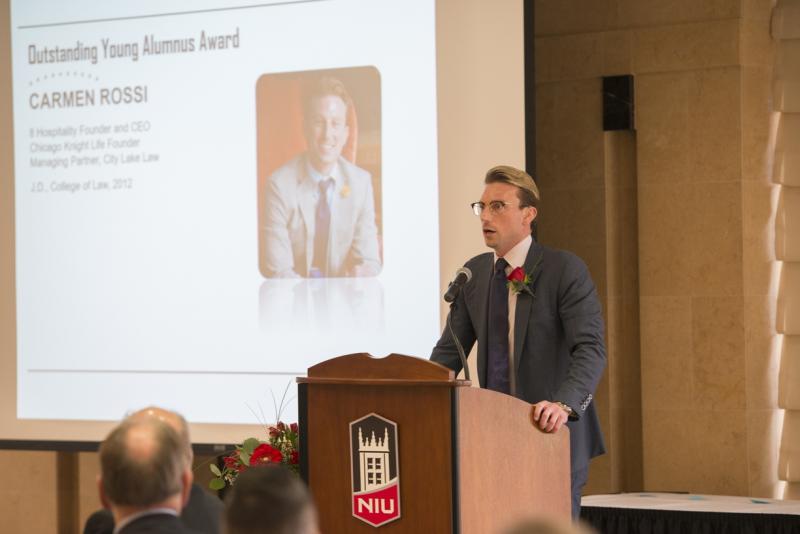
VINCE LARA: Hi, and welcome to another edition of A Few Minutes With, the podcast that showcases Illinois College of Applied Health Sciences. I’m Vince Lara and today, I’m speaking with Carmen Rossi, who is an RST alum, who’s an entrepreneur, real estate developer, and owner of the legendary KAM’s, about his academic career, his entrepreneurial spirit, and his contributions to RST. So Mr. Rossi, I really appreciate you taking the time out of your busy day to talk to me this morning. How are you, sir?

CARMEN ROSSI: Good morning. Good morning. Thank you. Thank you for the opportunity. Hello, and not only to you, Vince. And I think we’re going to have an enjoyable time speaking together. But certainly, the greater U of I community in the AHS alumni, faculty, staff, and students. This is really cool. So ready to kick it off.

VINCE LARA: Excellent. well, Carmen, I should tell our audience that you’re from Frankfort, Illinois. So as someone who grew up in the state, did you always plan to go to the University of Illinois?

CARMEN ROSSI: Well, not to give the Tom Cruise Risky Business reference a regard. But for me, personally, the University of Illinois is a highly competitive process and application and applicant pool. I’ve always had a steadfast desire to attend the community. And I think I honestly say that genuinely because I think I can very much recall the moment when I learned that I had been accepted. And I think it was with that sort of excitement was a channel for me to want to maximize my time. And that not only was during the time that I spent on campus, but that same scene reverberates today. I look at this as an opportunity to remain engaged on, as you will soon learn, very committed to the greater use of the University of Illinois community. And sort of look at it, the journey is not limited to just the years spent on campus, but my commitment beyond, which is as an alumni and as a active cheerleader to the community at large.

VINCE LARA: Now you are an English and political science major as an undergrad. Then you got your master’s degree in RST, Recreation, Sport, and Tourism. And then you got a law degree. And I’m wondering what spurred you to pursue such diverse academic avenues? Was it something that your parents encouraged or was something within you?

CARMEN ROSSI: Well, I think the greatest contributor to the idea of continued education, which given the diversity of my business ventures, contribute as a nod to the experience in college. But my pursuit of higher education and continued education was. The driving force was the U of I experience, most definitely. I had such a positive experience as an undergraduate, whether it was intimate class sizes and the opportunity to engage with professors before and after class.

Certainly, my classmates, with, as you’ve mentioned, those concentrations of studies are diverse, which puts you with a very different set of students and topics and themes. And so it was easy for me to remain committed and committed to the going pursuit of education, so long as it was at the University of Illinois.

And really, I was, also. I mean, those are– not to try to be a romantic here. But those are important development years. I can’t say that my goal, at all, as an 18-year-old or as an undergraduate was to pursue the many ventures that I’m in now. I had to develop individually, but also academically, and then professionally. And it was my exposure to those varied disciplines and paths that I think most contributed to my confidence, right?

So being an entrepreneur requires a element of patience and risk. And I think the academic journey itself, which is to say, deadlines and grades papers and a balanced curriculum. I think those were all little mini tests and mini milestones, which ultimately contributed to my abilities in venturing out into the professional world.

VINCE LARA: Now you passed the BAR in 2012. And you worked at a law firm in 2013. And then you opened a hospitality company. So I’m wondering, did that indicate that a pivot from the law? Or did you always envision pursuing an entrepreneurial career, even after getting your law degree?

CARMEN ROSSI: So the experience was such that I had, as an undergrad, started a couple of small businesses. And it really is a testament to the caliber of students that were my peers because going into Champaign as a freshman, I didn’t really know many people coming from a smaller town, like Frankfurt. And in class, made new friends. And we came up with a couple of companies. And I’m only smiling because I want to use the word, that corporate word, gingerly. But we started a painting company, for example. We started, with a classmate that I met in a Greek organization, with another classmate I met in political science. I started a furniture and loft building company. And again, I had not known these folks before school. And throughout the years, I would start little companies, maybe employee sizes. Maybe it was just two or three of us, the biggest probably being 20. And my undergraduate, with dual disciplines, was five years. My graduate was two. And my law was three. So I did more time than Van Wilder.

There’s the pop culture reference. But yeah, during those 10 years, I probably had eight or nine small businesses that really were just trial and error. I mean, if I were to reference, previously, the painting company or the furniture and loft building company, I don’t mean to indict the great work we did. But I had never painted or used a hammer in my life. So literally, it was those are true learning experiences, through trial and error and probably testaments to our commitment to one another, but our commitment to the customers, if nothing else.

But when I graduated to get back to your original question. When I graduated, I did work for a civil litigation firm out of Joliet, Illinois. I had clerked for the state’s attorney’s office and was actually assigned to one of the most high profile criminal murder cases, as just a clerk. But it was really exciting and cool at the time. And I had such an appreciation for the law. When you go into advanced academics, which I would describe as law, medicine, accounting, engineering– you’re really, to me, the elements and knowledge, specifically, is secondary to the discipline, which is the way of thinking and process of how you approach situations and that repetitive training.

And so I was very excited eager determined to have a career in law that would champion advocacy. So the idea of a hospitality company really didn’t show itself until the nature of my work allowed me the freedom to explore. So imagine I am actually assigned to drafting appellate court briefs for a firm, which is might sound fancy. But it’s incredibly monotonous and boring exercise of writing.

But you have to respond within some statutory time, 28 to 35 days later. And all you need is the internet because you’re just writing. So going the other way of seeing that is I was not confined to a courtroom or an office. I was merely required to have an internet and abide by deadlines. So I started spending time in Chicago. Being from a small town, how incredibly powerful and impactful the city serves those tall buildings, those busy streets. And I very quickly fell in love with the landscape and the potential, the capacity.

So I had money, some money saved up. You can only spend so much on ramen and cheap beer in college, as an undergrad. So whatever dollars I saved from those small ventures, I decided to open up a restaurant, pour all my money in. And not to take away from the the capacity and size of starting a new company. But I was at least aware of the reality of failed business and the reality of my lack of experience and the reality of my youth.

But I knew that I had a good degree. And I knew that I had a network of friends. And I knew that I was still young and that failure is sometimes a very necessary part of life’s lessons and journey. And for any students out there who are frustrated with themselves and any parents who are equally frustrated or kicking themselves in the butt, I am one of those who lived with my parents until I was 27 years old, God bless them. And I am super grateful that they allowed me that roof because it took off so many of the pressures and allowed me the time to develop.

So yeah, I wish I had a more explosive answer. But that’s the truth. That’s how I got there. And I describe as very– I describe academically and very seriously, the elements of success in preparation and research and due diligence.

But almost as importantly, timing and luck. That can be a very not necessarily chilling or humbling, but it can be a very necessary component to any venture or life decision. It needs to be made at the right time. And to get over that hump, you just got to catch a little bit of luck. And so in my opinion. And so I was at the right time for city politics, for city, for where we were in the economy. And I could have easily gone the other way because I was way in over my head. But that was where luck, then, played its part. And yeah, I just kept going.

VINCE LARA: Working in hospitality and opening an industry opening a business in hospitality, it really takes a specific mindset. You have to be patient. Something you referenced earlier, humble. And you have to have a willingness to serve. And so is that what drew you to hospitality?

CARMEN ROSSI: Well, right. That’s a great point. And again, highlights my lack of experience. So right, I had no professional background in hospitality, cooking. I’ve certainly never worked in a kitchen or cooked. But also, wasn’t a mixologist. I was never a server in the steps of service and the art of setting the plate or managing the customer. But I did have a–I have always had a fundamental understanding of making someone feel good and understanding that they are here to have an experience.

And I don’t limit that simply to hospitality. It can be in development, construction, it can be in client engagement, a first client interview, whether a lawyer or a doctor or a pre-call interview, as a journalist. You are tapping into the emotions and expectations of the person on the other line.

And with hospitality, maybe it’s a first date, a birthday, a corporate meeting. And understanding what that person’s expectations are, what they’re looking for from the experience, whether it is sustenance, whether I’m here just to have a bite or a drink and move on or creating a memory, like a wedding, engagement party, or otherwise.

So I knew that if I could surround myself with the skills and people who had the expertise, that’s probably my job today. I wish it was. I wish I was more developed on the intricacies of the many steps. But I put together teams. My ability to participate in so many varied industries. And most recently, if this interview is ever time stamped, in 2021, 2022, in the state of Illinois, you’ve had two massive industries emerge that had never previously existed or existed, legally, I should say. And that is cannabis and gaming.

And those are two industries that I am very deeply involved. But that comes with new regulation. That comes with your– it’s not simply the process of the operation, but rather education, dialogue with elected officials. And it is recruitment, as far as for me, London, of skilled, people who have worked in the industries and have that bandwidth.

So my job is similar to that of a general manager of a sports team. I have to field a team that can perform, but at so many different positions, in so many different skill sets. And the success of our team are, our goal of making the playoffs and playing in the championship, is through the journey of everyone having to perform at the highest degree, but not always at the same task.

So yeah, and boiling back down, I think you’ll be able to see now, as we’ve explored together throughout our talk this morning. I think you see how that’s sort of roadmap has been established. It was at Champaign. It was with very diverse students and curriculum and just learning throughout the process, not knowing where I was going.

I mean, isn’t that a reflection of the American curriculum, as it relates to college. Not everyone knows exactly where they’re going to land in the next four years or what they’re interested in. I mean, I have a law firm today. And our concentration is mostly regulatory, government lobbying. But that was not at all what I had ever envisioned, even while I was in law school. And I think it is a contributor to a larger footprint, a larger vision.

And if you were to say, well, what is the proverbial, where do you see yourself in five years? Well, I hope my head is still above water. I couldn’t necessarily or absolutely describe what the next five years look like or that I wouldn’t get involved in other industries that today I have no idea about.

But the confidence in that patience that you referenced is really just borne from the fact that we’ve been here before, even from the very first day, we stepped on campus, we didn’t know where we were going. But we knew that this is a good community. We’re going to do good work. We’re going to listen. We’re going to network. So long as we make great relationships and friendships.

And so long as people pick up the phone when you call because you’re a valued asset to their Rolodex. Then we’ll be OK. And not to say that there isn’t chaos and problems. But if you boil it down to those very, very simple life lessons and sort of, I wish there was a more algorithmic formula that I could share with everyone, so to say, that I could say, here’s the secret. Don’t tell anyone.

But it’s not. I love keeping it simple. James Carville maybe, KISS, Keep it Simple, Stupid. During Bill Clinton’s campaign. Yeah, I love that. It allows you to breathe a little easier when the pressure is mounting or when you feel like you’re behind, if you just remind yourself of all the little things that you’ve done, all the great relationships that you’ve managed to bring in and cultivate them. It’ll be OK. You just got to weather the storm.

So yeah, that is definitely patience. And it is patience and understanding of that, ultimately, leads to vision. But those are the nation elements.

VINCE LARA: One of the many impressive things I found out about you in doing my research is that there is always a charitable side to your endeavors. And I’m wondering what inspired that in you.

CARMEN ROSSI: Well, that is fundamental. Probably central theme, if we had to create a bubble chart with singular themed words of this conversation, one of the words might be, community. And as I referenced, the network and the friends and the family and the new relationships and ventures, really, those are all fall into community and if you and if you believe that, and you make that a central tenet of your mission statement, then giving back is not, probably, a preferred way of framing. I don’t think– that might come off as obligatory.

I live in the community. And the community has been amazing. I’m so absolutely fortunate for being able to have experienced the degree of success as a product of the community. And the community is representative of so many different cogs in so many different organizations. Therefore, charity is a daily commitment. I can make this point, anecdotally. I had five or six restaurants within let’s say, two to three years of starting this company, which means I’m two to three years into learning about hospitality.

But I had quickly opened up. It was six. But let’s, as many as I have fingers on one hand, we had 150 employees, 200 employees. And I said, I am learning so much about Chicago because I’m not from there. And I’m meeting people who are coming into the restaurants as customers, who work in the neighborhood, that work for such a variety of businesses and organizations. And a lot of nonprofits, especially in Chicago. There’s so many awesome organizations that directly serve the community, but from such a– whether it’s children services, whether it’s educational, whether it’s support, human support. And I have an addictive personality. And I’m a people pleaser and quite frankly, a lover. The idea of hearing more about their organization was a internal trigger to just want to get involved. But I would share it. I would share. I’m in my 20s. And so many of my employees are like me, in their 20s. And I would, these are friends. And I would say, hey, let’s– I just met this person. And they have this organization. And I’m volunteering to serve food. We’re going to make the food. We’re going to go over there. We’re going to serve the food.

And then there was a support system, another organization that was for abused women. And we were there Just to sit and talk, to serve coffee and pastries, and just to hang out. And people in the service industry in their 20s are energetic. We’re jovial. If you have a desire to work in hospitality, you probably have a personality that is pretty electric. And you likely enjoy human conversation because that’s so much a part of the job.

So we just all started signing up. I would just put up sign up sheets throughout the business and our businesses and just say, hey, I’m going to show up here at this time. And if you want to, as well, great. If not, sounds good. And those sign up sheets were never empty. I mean, every single day. And sometimes, they were too full, which is to say we had more help than we needed. And it sort of got out that we were an organization that sort of really enjoyed getting involved. And it just grew from there. So I decided to formalize it and really, it was twofold to formalize it as an opportunity and channel for employees, but also as an opportunity and channel for organizations to hear about us and reach out to us and know that we would, whatever the task, if we’re capable, we’re in. And that was in 2014, 2015. And we’re still engaged 365 now.

VINCE LARA: Speaking of charitable works, part of the reason that we’re chatting today, a small part of it anyway, is that you are giving a gift to RST to support RST 180, which is Mike Raycraft’s Hall of Fame tour, a wonderful program that takes two dozen students around to see various landmarks across the country. So I’m wondering, why did you want to be involved with RST? And specifically, why RST 180?

CARMEN ROSSI: So the curriculum for RST is a lot of what I’ve talked about today. You’re working intimately with people with communities, municipalities, governments, charities, organizations related to kids, students, and development of new organizations. RST, it’s got a very vast base and that touches on a lot of foundations, whether it is organizations of recreation or tourism. Those are massive industries.

So, of course, you’re talking about marketing advertising. You’re talking about operational logistics. You’re talking– I loved it. I had such a– and when you talk about political science in English, and then you go, RST has disciplines that are much– they’re hands on, boots on the ground. And the best way to learn is to engage. Not to take away from the academic curriculum, specifically. But there is a practical application that will best serve you for success. And that practical application is showing up, is getting involved, is trying it out. Not only as the service intends, but as a service to yourself. I enjoy this, OK. There’s only so much a textbook or course tech can teach and educate.

So it requires the students to sort of get out into the community and work, whether it’s an event, whether it’s behind the scenes, organizationally. So I see in these students, probably, a role that I can play is certainly one of opportunity for internships, certainly one of opportunity in education, whether it’s education of philosophy and sort of the steps of service or participate in the practical application through anecdotes, stories, life lessons.

And then there’s the opportunity of establishing scholarships, establishing financial commitments that can lead to students being allowed to participate. Or I think there’s a–I think there’s a designation of funds that’s going toward I would describe as an extended road trip. But a field trip of getting exactly into what we’re talking about, getting into the thick of things, and going and learning and experiencing what you might have discussed, ad nauseum, in the classroom. But now you get to see it in action for events. So yeah, I’m excited to see where this goes. And I’m not hardly done. And the community, again, from Champaign to Chicago, has been an absolute blessing. And I think about that every day. And that I convert that into a commitment of staying involved. And as long as you’ll have me, as long as the AHS family and community will have me, I’m committed to staying involved and excited to see where our journey together will go next.

Again, this was an idea. Shout out to Mike Raycraft I hope there are smiling faces. There has to be many when I say that name because he’s had a significant impact on my experience at the University of Illinois and certainly, in the vast community. So he came up with this idea of getting involved in creating a program that would afford students to participate with financial resources that I could extend in a program that came out of nowhere. And so I’m excited to find out. I’m excited to participate in our next idea together.

VINCE LARA: Yeah, and that’s a fantastic way to end. I appreciate your time, Mr. Rossi. And thank you for all you do for AHS. And I appreciate the time you spent with us today.

CARMEN ROSSI: I thank you, really. This was a cool opportunity. And I again, thank you very, very much.

VINCE LARA: My thanks to Carmen Rossi. For more podcasts on Illinois’ College of Applied Health Sciences, search A Few Minutes With on iTunes, Spotify, iHeartRadio, Radio.com, and other places you get your podcasts fix. Thanks for listening, and see you next time.

Editor’s note:

To reach Vince Lara-Cinisomo, email vinlara@illinois.edu.
 

Share on social

Related news

Renovating for the Future


Conducting 21st century research and instruction in 20th century space can be challenging. Architects designing buildings 40 to 100 years ago could never have imagined the scope of the investigations in which faculty would be engaged, from the macro to the molecular level. Nor could they have predicted with any accuracy how departments would grow and change over the years.

Take the Women’s Gymnasium, for example.

An ambitious plan

Built in the early 1930s, what is now known as Freer Hall provided expanded facilities for the women’s physical education department, which had outgrown its space in the Woman’s Building (now the English Building). The last of 11 Georgian-style buildings on the Urbana-Champaign campus designed by renowned architect Charles Platt, the Women’s Gymnasium housed administrative offices, classrooms, and gymnasium spaces that were used for recreation, intramural sport competitions, and physical education research. Louise Freer, the women’s physical education director for whom the building was later renamed, added a lounge area in 1932 to provide a social space in the building.

The original design called for wings on both ends of the building, with the north wing housing a swimming pool. Funding was exhausted before the wings could be constructed, but the original vision was partially fulfilled in 1968 when a pool wing was added on the north end of the building. Administered by Campus Recreation, the pool served as the home venue for the Illinois Fighting Illini women’s swimming and diving team during renovations to the Intramural Physical Education Building, now known as the Activities and Recreation Center (ARC).

Four years after the pool wing was added, the Department of Physical Education for Women merged with the Department of Physical Education for Men and Freer Hall became home to the School of Physical Education. Renamed the Department of Kinesiology in 1987, the rapidly growing discipline began to strain against the limitations imposed by the nearly 60-year-old building. It wasn’t until the mid-2000s, however, that the College of Applied Health Sciences was able to undertake its first efforts to address some of the department’s pressing needs.

Between 2005 and 2011, two renovation projects converted the north and south gyms on the third floor into office and research space. Ten offices and an exercise science laboratory were carved out of the north gym space, while the south gym became facilities for research on neurocognitive kinesiology and the neuroscience of dance in health and disability. By this time, the women’s swimming and diving team had returned to the ARC, and with outstanding pool facilities existing in both that building and the Campus Recreation Center East, the College lobbied successfully to take ownership of the Freer Hall pool.

The vision for the north wing renovation was ambitious: to convert nearly 48,000 square feet gained by filling in the pool and removing lockers and showers into modern, collaborative research and teaching space. In January 2015, the University of Illinois Board of Trustees approved campus funding for the College’s plan to renovate the north wing “to develop needed spaces that directly support the long-range vision for the Department of Kinesiology and Community Health and the College of Applied Health Sciences at Urbana-Champaign.”

The pool infill renovation is the most comprehensive building project undertaken by the College to date. It includes modifications that will bring the building into compliance with the American with Disabilities Act, including the addition of an elevator that will give access to the fourth floor, previously unreachable by individuals with disabilities. (A new ADA-compliant entrance on the south side of Freer Hall was completed in 2018.) Half of the fourth floor will house new mechanical systems, including central air conditioning, while the other half will contain office space for visiting faculty and postdoctoral scholars.

The highlight of the renovation is the multipurpose testing and research facility that will occupy the first floor of the former pool wing. Described as an “historic renovation” by Dr. Amy Woods, head of the Department of Kinesiology and Community Health, the project will significantly enhance the department’s teaching, research, and outreach missions.

“This new space will include office and conference rooms, a large lifestyle intervention center including areas for blood collection and nutrition studies, a laboratory for motion capture, an exercise physiology wet lab, and other labs for kinesiology research,” she said. “The laboratories in this new space will be shared resources that facilitate multiple research studies as well as faculty and student interactions.” The space also will house a state-of-the-art video production facility for online classes. The comprehensive $20 million project has not been without its challenges, but is expected to be completed during the Fall 2019 semester.

A more welcoming environment

architectural rendering of lobby elevator area in Speech and Hearing Science Building

Also slated for completion this year is a $2.4 million renovation of the Speech and Hearing Science Building, built in the mid-1970s.

Originally conceived as a half-million dollar project to increase research space on the second floor, the College was able to expand the scope of the renovation through a campus initiative to repurpose underused facilities. Bill Goodman, former associate dean in AHS who is now a special assistant to Dean Cheryl Hanley-Maxwell, said the initial plan was to convert small rooms that had served as assessment rooms for the Speech-Language Pathology Clinic into usable space.

“The assessment rooms were rendered obsolete when the clinic moved to the Research Park area south of campus,” he said. “Our plan was to combine several of these smaller rooms into space that would be suitable for faculty research.”

The larger project will renovate more than 5,000 square feet on the second and first floors of the building, not only to provide for better research and teaching facilities but also to create a friendlier, more welcoming image for the Department of Speech and Hearing Science.

“You really had to hunt for the department’s administrative offices,” Mr. Goodman said. “The building didn’t have a very friendly or welcoming environment.”

The renovation project necessitated the disbursement of speech and hearing science faculty to alternative office space around campus. That’s been inconvenient, said SHS department head Karen Kirk, but the new facilities will make the temporary displacement worthwhile.

“The renovations will provide much-needed additional laboratory and student work space,” she said. “It also will give us enhanced meeting spaces of varying sizes that can be used for student seminars, research presentations, and large faculty meetings.”

Dr. Kirk also is excited about the relocation of administrative offices to the first floor, which will increase both the perceived and actual accessibility of SHS, and about the increased functionality and attractiveness of lobby areas on the first and second floors, which are used for student orientations, prospective student visits, and graduation receptions.

Also moved from the Speech and Hearing Science Building to allow for renovations was the University of Illinois Audiology Clinic, which now shares space with the Speech-Language Pathology Clinic in Research Park. That move is a permanent one, Dr. Kirk said, and will allow the department to provide integrated services to clients across the lifespan. And, she added, “Our clients are pleased with the free parking on site.”

Share on social

Related news


A Journey to Empowerment


Harold Scharper Award recipient Kevin Fritz is flanked by Susann Sears, director of Beckwith Residential Support Services, and Pat Malik, former director of Disability Resources and Educational Services.

Kevin Fritz’s disability made his childhood difficult. People noticed his wheelchair before they noticed him. The severity of his disability made it impossible for him to perform the tasks of daily living for himself, and he was often hospitalized with intense illnesses. Despite all of this, he had a strong will to succeed.

So when his health finally stabilized during high school, his thoughts immediately turned to taking advantage of opportunities. It was the first time he felt empowered in his life.

“That was the first time I truly felt authority or power to do something,” he said. “And I did. I immersed myself in academics. I tried to learn things. I tried to become more articulate, sensitive, ambitious.”

In his junior year, he came across an article in New Mobility magazine that listed the top ten universities for people with disabilities. What intrigued him most about the article were the photos of people in wheelchairs.

“They were doing things, going to classes, wearing clothing that wasn’t from a hospital. It was fascinating,” he said.

The University of Illinois was at the top of the list. Although this Pennsylvania resident wasn’t even sure where Illinois was, he called the Division of Disability Resources and Educational Services (DRES) and spoke with Susann Sears, who now directs the Beckwith Residential Support Services program for people with severe physical disabilities who require personal assistants. She recommended a campus visit.

“She said I could take a tour on a special bus that was accessible and see the place where I would live with other students and get care,” he said. “That was the second time in my life that I felt empowered.”

His father drove him 12 hours for the visit. The ride home was quiet, with Kevin feeling “shell-shocked and elated.” His father broke the silence, saying, “Kevin, if you can get in, you can go.”

At Illinois, Kevin learned how to maximize his quality of life. He credits Susann in particular with igniting a fire in him to push back when people said no. “She fought for me to change what is commonplace,” he said. “I have rights. I’m allowed to be here. I deserve to be here.”

He seized opportunity after opportunity, becoming the first student with a known physical disability to be elected to the Illinois Student Senate, which he also chaired, and to serve as director of the Illini Union Board. A student in Community Health, he served as president of Future Health Care Executives, the largest student organization in the College of Applied Health Sciences, and of the rehabilitation service fraternity Delta Sigma Omicron. He landed coveted internships with then-Senator Barack Obama and with Lynne Barnes, vice president of hospital operations at Carle, who encouraged Kevin to apply his analytical mind and passion to law school.

During his studies at Washington University School of Law, he served as the primary editor of the Washington University Journal of Law & Policy, as a board member of Wiley Rutledge Moot Court, and as executive director of advocacy for the National Association of Law Students with Disabilities. He won several mock trials as well as an Excellence in Oral Advocacy Award. As an associate in the firm Seyfarth Shaw LLP, he counsels clients on a wide range of employment issues. His courtroom experience covers the full spectrum of litigation. He co-chairs the firm’s All Abilities Affinity Group, which focuses on inclusion in the workplace, and speaks extensively on disability and diversity issues throughout Chicago.

Looking back on his days at Illinois, Kevin is grateful for the many opportunities that he had through his affiliations with AHS and DRES. He considers the University of Illinois to be a mechanism that allows people to master their lives, adding that he is very honored and proud to have mastered his own.

Share on social

Related news

Partnership focuses on autism


According to the A.J. Drexel Autism Institute, young adults with autism have the lowest rate of employment compared to young adults with other disabilities. Because people on the autism spectrum typically have difficulty with communication and social interactions, they may not perform well during conventional employment interviews. Indeed, the Drexel Institute found that young adults on the autism spectrum with the highest level of conversation skills are far more likely to have worked than those with the lowest conversation skills.

Companies are beginning to recognize that their hiring practices may be shutting out a large pool of talented individuals. In 2015, Microsoft launched a hiring program designed specifically to identify and recruit individuals on the autism spectrum who have the necessary qualifications to fill open positions.

Now the company is hoping to encourage more young adults on the autism spectrum to enter science, technology, engineering, and math, or STEM, fields, with an eye toward increasing the hiring pipeline of these students to Microsoft. To accomplish these goals, Microsoft has invested $200,000 in the Accessibility Lighthouse Program, a year-long collaboration of the College of Applied Health Sciences, the Department of Computer Science, and The Autism Program, a community-focused program of the Department of Human Development and Family Studies and the Department of Special Education.

Launched in June, the program developed from conversations among Illinois alumnus and current Microsoft director of university relations Harold Javid, who earned three degrees in engineering, Katheryne Rehberg, associate director of the University’s Office of Corporate Relations, and Pat Malik, director of the Division of Disability Resources and Educational Services (DRES), as well as a series of campus visits by Microsoft executives with faculty across campus.

In addition to recruiting more students on the autism spectrum to STEM fields, the program is funding the creation of a state-of-the-art digitally accessible classroom using Microsoft tools such as Office 365 and Translator. The Accessibility Lighthouse Project also provides for two graduate fellows in the College of Applied Health Sciences who are focused on increasing awareness of the importance of accessibility, and a graduate assistant in DRES who provides career support services to autistic students.

Accessibility advocates

Both Megan Bayles and Tim Yang have experience in the area of disability, which spurred their interest in applying for the Microsoft Digital Accessibility Graduate Fellowship Program. Megan, a master’s student in Dr. Wendy Rogers’ Human Factors and Aging Laboratory, worked with people with disabilities and older adults as an undergraduate student in psychology at Florida State University. Among her research interests are the use of technology to address social isolation and technology acceptance. Tim is a doctoral student in Dr. Yih-Kuen Jan’s Rehabilitation Engineering Research Laboratory. He began studying the design of wheelchairs for maximum comfort, health, and usability during his undergraduate studies in computer science at the University of Central Oklahoma. His current research seeks to leverage human factors engineering to develop user-centered smart wheelchairs.

As Lighthouse Program Fellows, Megan and Tim are enrolled in the Information Accessibility Design and Policy online certificate program offered by AHS, which consists of three courses on understanding disability and assistive technology, creating and procuring accessible electronic materials, and designing accessible web resources. They are applying their learning toward developing a manual to help professors make classrooms and courses more accessible and an instructional module about accessibility for new teaching assistants. Dr. Jeff Woods, director of the Center on Health, Aging, and Disability, says the role of the Fellows is that of accessibility advocates on campus.

“Many people are not aware of the importance of digital access and of providing students with multiple ways to access course information,” he said. “Even though the Lighthouse Program is targeting students on the autism spectrum, making courses more accessible will undoubtedly help other students as well.”

In addition to increasing awareness, Tim and Megan will work with a professor to revise a course with accessibility in mind with the ultimate goal of assessing whether adjustments impact instructor and course evaluations.

Making the transition to work

Digital accessibility is the bailiwick of Dr. Jon Gunderson, coordinator of the DRES Accessible Information Technology Group. The Lighthouse Project included funding for part-time student workers to continue development of open source web accessibility evaluation tools including the AInspector Sidebar add-on for Firefox browser and Functional Accessibility Evaluator (FAE) 2.0. Dr. Gunderson is the primary software developer of the open source OpenAjax Accessibility Evaluation library used in   AInspector Sideber and FAE 2.0 to evaluate web content for W3C Web Content Accessibility Guidelines (WCAG) 2.0 Level A and AA requirements. 

DRES also received funding for a half-time graduate assistant to provide career services to students on the spectrum. Adrienne Pickett, a PhD student in educational policy studies, will serve in that position until the Lighthouse Program ends in June 2019. She is organizing workshops on career-related topics including disability disclosure and counsels individual students on how to improve their job application materials.

Last summer, Adrienne developed a survey about summer employment for students served by DRES. Pat Malik says it’s important for people with disabilities, including autism, to experience what it’s like to be an employee.

“Some of our students haven’t had the opportunity to flip burgers at a fast-food restaurant or serve as lifeguards at the community pool,” she said, “so they haven’t had the opportunity to find out what is expected in order to get a paycheck, things such as getting to work on time, working with coworkers you don’t like, persevering when work is boring, and so on.”

Dr. Malik says about 125 students on the autism spectrum are currently registered with DRES and seek many of the same services other students with disabilities access, such as individual therapy to cope with struggles they have socially or academic coaching to help them organize course materials or prioritize work. Since not all students on the spectrum register with DRES, Dr. Malik believes it is important to educate career service providers across campus about working with autistic students. DRES is working with The Autism Program and The Career Center at Illinois to offer a campus-wide workshop on employing people with autism this spring.

She also views the Lighthouse Program as an opportunity to learn more from Microsoft about supporting people with autism. Through peer mentoring, team building exercises, organized social events, and other special programs, she says the company “walks the walk” when it comes to having a diverse workforce in which employees with autism and other disabilities are fully integrated. She is looking forward to continuing the collaboration that was initiated through the Accessibility Lighthouse Program to identify and develop new ways of helping students with disabilities make the transition to employment.

Share on social

Related news

Helping to make the dirt go away


This previously empty lot has been converted into a relaxing haven

Dr. Bill Stewart has long been interested in what he calls “place making,” the transformation of environments into desirable places that promote health, happiness, and well-being. His research has focused on rural areas and public parks, including studies of park development on a former landfill and prairie restoration on the site of an army ammunition plant.

A professor in the Department of Recreation, Sport and Tourism, Dr. Stewart recently shifted his focus to place making in an urban setting. Funded by a grant from the US Department of Agriculture’s Forest Service, he has been assessing the effects of a vacant land redevelopment program in Chicago. Along with colleagues Paul Gobster, a research landscape architect with the Forest Service’s Northern Research Station, and RST colleague Dr. Carena Van Riper, Dr. Stewart is identifying both the benefits and challenges of Chicago’s Large Lot Program, a neighborhood stabilization initiative that is part of the city’s Green Healthy Neighborhoods Plan.

The Large Lot Program

Chicago has more than 20,000 vacant lots. They can become magnets for trash and crime, making neighborhood residents feel less safe and more disconnected from each other.

Under the terms of the program, residents who own property in the neighborhood may apply to purchase up to two vacant lots on the same block for $1 per lot. If the lot is not adjacent to their primary property, they must put a fence around it. They must keep the property groomed, pay taxes on it during their years of ownership, and retain ownership for at least five years. They may build on the lots, use them for private or community gardening or socializing, convert them into neighborhood playgrounds, and so on.

The initial offering of the vacant lots in 2014 focused on the Englewood, Woodlawn, and East Garfield Park neighborhoods on Chicago’s south and west sides. In the fall of 2015, Dr. Stewart and his colleagues began collecting data on environmental and social impacts of the program in these neighborhoods.

“The stereotype is that these neighborhoods are populated by desperate people who, for whatever reason, couldn’t move to more desirable neighborhoods or the suburbs,” Dr. Stewart said. “The reality is that residents in these neighborhoods remained behind because they care deeply about their neighborhoods and want to make them better.  Most have options to move, yet have chosen not to.”

What they’ve found

In an environmental assessment that compared lots before and after purchase, the researchers found that 40 percent of lot owners made changes in the first season, including cleaning up trash, mowing the grass, installing fences and signs, developing social and play areas, and planting flowers, vegetables, trees, and shrubs. Some residents had been maintaining the vacant lots for years before purchasing them, a phenomenon known as “guerilla gardening.” The Large Lot Program, however, provides lot owners with the incentive to do more than simply maintain the property.

The social assessment began with focus groups of residents who had purchased lots in the initial offering. Participants discussed what they were doing with their lots, problems they’d encountered, and impacts of lot development on social interaction.

“From the focus groups, we developed a questionnaire that reflected the experiences and language that residents’ used to describe their large lot activity and impacts,” Dr. Stewart said. In the summer of 2016, everyone who purchased a lot in the initial offering received the questionnaire, which had a remarkable response rate of 71 percent.

The researchers’ initial report to city officials noted that prior to lot ownership, undesirable street activity included public urination, drug activity, prostitution, illegal parking, and dumping. After ownership, residents reported increased social activity and changes in street activity. One resident said, “If people know the lot is vacant then they will do dirt in the lot. Ownership helps to make the dirt go away.” Residents experienced an increased sense of belonging and ownership of the neighborhood, as reflected in the comment, “A large lot is a great investment. It allows us to tell our own story, and it is a story so unlike the ones being told about Englewood.”

The greatest impact, however, may be on the social fabric of the neighborhood. As one resident observed, “What a powerful difference the lot has made on the block. It’s about beautification where people know that good things are possible, and it has changed the culture. The lot belongs to people who use it and they treat it like it’s theirs. People look out for one another now.”

What they do with the findings

The researchers are working closely with Chicago’s Department of Planning and Development and neighborhood associations.  The city has expanded the Large Lot Program into several other neighborhoods.  After working primarily in rural areas for nearly 30 years, Dr. Stewart says his experience with urban place-making has exposed him to a whole new literature, and he’s been learning a great deal from urban policy makers, his colleagues, and the residents themselves. “Their commitment to their neighborhoods is so sincere and their enthusiasm is contagious,” he said. “The experience has been both heartwarming and inspiring, and I’m looking forward to extending my work in this area.”

Share on social

Related news

Gaining more than academic knowledge


Meridith Bradford enjoys the alpine slide at Camelback Mountain in Pennsylvania.

Students choose courses for a variety of reasons. It may be a requirement of their major or minor. Perhaps it’s the only class that fits their schedules or they like the instructor. Perhaps it’s related to a personal interest, or their friends are taking it. Whatever the reason, students expect to acquire disciplinary knowledge. If they are lucky, however, they learn about themselves and the world around them.

Community development through leisure

In the spring of 2016, Dr. Mike Raycraft offered a course through the Department of Recreation, Sport and Tourism (RST) that emphasized the role of the leisure industry in the economic, social, and environmental development of communities. RST 199 consisted of eight weeks of classroom instruction followed by a 12-day trip to major recreation, sport, and tourism destinations, including halls of fame, museums, and natural attractions. At each location, students met with industry professionals and community leaders, including several RST alumni, to learn more about the destination and its local impact.

The feedback Dr. Raycraft received from students at the end of the course confirmed that they derived great benefit from it and applied their classroom learning to critical examinations of the recreation, sport, and tourism industries. However, the unique perspectives that two of the students brought to the class resulted in a learning experience that went far beyond professional development.

Cool to be included

Lizzy and Meridith at Niagra falls

Meridith Bradford has spastic quadriplegic cerebral palsy. She can operate her power wheelchair but requires full assistance with the performance of the tasks of daily living. She has never let her disability prevent her from trying new things. As a child, she attended a summer camp where she went zip lining and rode the roller coaster at a nearby amusement park. She has been skiing for 18 years, competitively for the last four years with Disabled Sports USA. In the organization’s last Hartford Ski Spectacular in Breckenridge, Colorado, she was the first person doing her type of skiing, known as tethered fixed-outrigger bi-skiing, to compete in a level one race event. “Anything that involves me not being in my chair makes me happy,” she said.

Still, Meridith had reservations about the trip attached to the RST course. She’d never been on a trip of that length before and was concerned that the extent of her physical and medical needs would be too great to manage the bus trip. Through the Division of Disability Resources and Educational Services, she found an experienced personal assistant who was happy to help her join her classmates on their travel adventure.

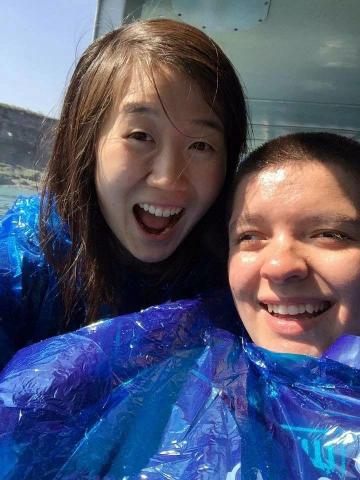
“It was the best trip for sports freaks like me, but I wouldn’t have been able to go without Lizzy Na,” Meridith said. “It was the beginning of the summer, the end of my last year of classes, and it felt like a reward.”

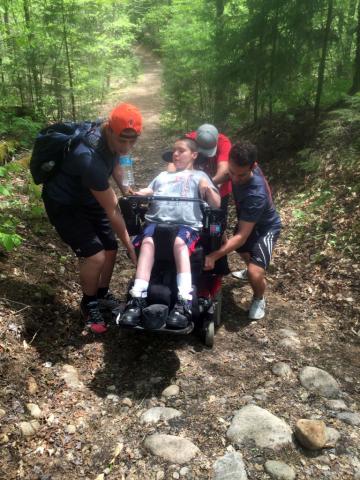
Despite her fearlessness, the trip still taught her something about her own resiliency and the kindness of others. During her first time hiking in the woods on a trail in the Adirondack Mountains, her fellow students helped her over roots and rocks when she got stuck. Then her chair broke. Meridith insisted she could wait alone until help arrived, but three of the other students insisted on remaining with her. “It was cool for me to be included and to be so well accepted by the group,” she said. “I didn’t feel restricted at all, socially or task-wise.”

Meridith hiking in the Adirondak Mountains

Fortunately, the chair was repaired within a few hours at a garage in Lake Placid, New York, and Meridith completed the trip. With the help of her personal assistant, she mastered the rigors involved with changing hotels nearly every day, which was no small task given that she needed to keep track of a great deal of equipment and special supplies.

“It was cool to learn that a trip like this is possible for me,” she said. “I hope my experience opens the door for people like me who might hesitate to take advantage of a similar opportunity because of their disabilities.”

Gaining cultural knowledge

Youyou Zhang is deeply interested in the intercultural communication that takes place during tourism experiences. She hopes to do research on how traveling impacts tourists’ perceptions and opinions of other countries. “My curiosity about the world has been well fed by the University of Illinois and RST so far,” she said, and she plans to continue her studies in graduate school.

Youyou had taken a marketing class with Dr. Raycraft. When she heard about his course on community development and the trip it involved, she immediately knew that she wanted to go. “My interactions with other RST students had been limited to the classroom setting,” she said. “I knew the trip would enable me to know them better and more deeply, and to learn about American culture as well.”

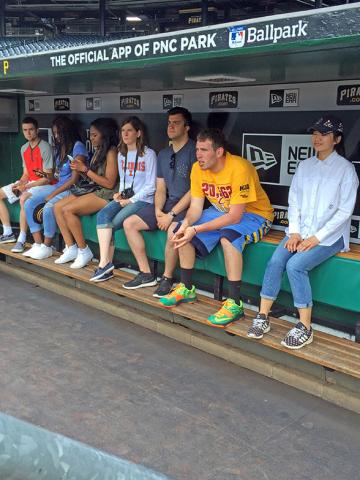
Youyou in the dugout of Doubleday Field

One of the things she learned about was baseball. Youyou watched her very first baseball game at Doubleday Field in Cooperstown, New York, while her classmates explained the rules of the game to her. She enjoyed the small parties that took place in the hotel rooms, where she learned more about American pop culture and music. She feels the trip provided her with the time and opportunity to develop her social skills, as well as a more “Midwest United States” sense of humor. She marveled at the scenery in places such as Niagara Falls and Lake Placid, and treasured the variety of people and places she was able to experience.

With the help of her fellow travelers, Youyou felt she was living in American culture as an “insider,” and she built a personal connection to the culture. It was truly an experience, she said, that she will remember for the rest of her life.

Related news

Leveling the Field, Here and Abroad


Disability Resources and Educational Services (DRES) is making it possible for students with disabilities to fully participate in the Illinois experience, including studying abroad.

Since 1948, Disability Resources and Educational Services (DRES) has worked to ensure that students with disabilities have equal access to all of the resources, programs, and activities offered at the University of Illinois at Urbana-Champaign, access, in other words, to the full student experience. For a large number of students at Illinois, that experience includes studying abroad. The university offers more than 300 study abroad opportunities through its various units, ranging from winter and spring break trips to academic year options.

Research cited by NAFSA: Association of International Educators shows that studying abroad improves grade point averages, fosters intercultural understanding, and increases employability, among other things. DRES has been helping students with disabilities to access this aspect of the student experience since the 1960s. Susann Sears, formerly an access specialist with DRES, says this is in keeping with the philosophical underpinnings of DRES.

Is It Feasible?

“At DRES, we constantly strive to go above and beyond what the law requires to provide services to students with disabilities,” said Ms. Sears, who is now the director of Beckwith Residential Support Services, a program for students with physical disabilities who require assistance in performing the tasks of daily living. “By collaborating with the campus and with faculty leading study abroad programs, we are able to make studying abroad accessible to registered DRES students.”

She points out that even though students with disabilities pay tuition and participate in University of Illinois-sponsored study abroad programs, the Americans with Disabilities Act does not guarantee their right to access in countries other than the United States. So each program in which students with disabilities express interest must be researched thoroughly to make sure their participation is feasible.

“For example, if the essential requirements of a program include traveling between locations by bus, subway, or train, are those vehicles and stations going to be accessible to individuals in wheelchairs?” she said. “Students with non- visible disabilities, such as depression or anxiety, may require counseling support above and beyond other program participants. Are these services available? Are these diagnoses even recognized in the host country? We try to go over questions related to a selected study abroad opportunity exhaustively to minimize surprises.”

Dealing With Challenges

The conditions in the host country aren’t the only issue of concern to students with disabilities. The prospect of flying can itself be daunting. Chelsey Baker, a junior in Special Education, joined a nine-day spring break trip to France that focused on the French system of education. She recalls how her excitement about going abroad was tempered by her nervousness about flying.

“Prior to studying abroad, I had never been on an airplane. Getting on a plane might seem like one of the simpler aspects of going abroad, but I had heard a lot of stories about wheelchairs being damaged on flights and bad experiences traveling with medical equipment,” she said. She uses a power chair, which can cost upwards of $30,000.

Her chair survived the fight. On the first day in France, however, she “fried” the power converter she was using to charge the chair. “The incompatibility of power in foreign countries with power chairs is one of the biggest issues we’ve heard about from our students,” said Ms. Sears. “In some countries, you can’t use a power chair at all and have to have someone push you around in a manual chair.” In Chelsey’s case, she and the trip organizers were able to locate a French wheelchair charger that didn’t need a power adapter.

Students who use power chairs typically have physical disabilities that prevent them from performing the tasks of daily living without assistance. Requiring a personal assistant can be another obstacle to traveling abroad. It was one of the biggest for Amelia O’Hare, a senior in urban planning and community development who went on a winter break trip to Hong Kong and Taiwan to study their resources for people with disabilities.

“Having to pay for a personal assistant to accompany me was the biggest obstacle I faced,” she said. “Susann [Sears] helped me apply for an Enabled Abroad Scholarship, which was amazingly helpful.” The scholarship is available to students who can demonstrate that they have costs associated with studying abroad that exceed the typical costs of the program in which they are participating.

Amelia’a destinations didn’t support power chairs, so her personal assistant had to help her not only with activities of daily living but with getting around in a manual wheelchair. A previous travel experience in Europe hadn’t prepared her for the level of inaccessibility she encountered in Hong Kong and Taiwan. “In Hong Kong, it was difficult to get around and even to get inside buildings. We found a way, but there were a lot of obstacles,” she said.

Do It!

For some students, the educational purpose of the trip itself can be one of the biggest obstacles to address. Tim Nagel, now a graduate student in Recreation, Sport and Tourism, hoped to join a summer program in New Zealand. As an undergraduate, he was a member of the wheelchair basketball team, so traveling during the academic year was not feasible. The potential problem was that the trip focused on adventure tourism.

“It involved a lot of activities I can’t do, such as hiking, climbing, going on rough trails,” he said. “Initially, I was hesitant to pursue it because I thought it would be impossible.”

He met with Ms. Sears, RST department head Laurence Chalip, and RST professor Jon Welty Peachey, the faculty advisor on the trip, anticipating disappointment. Instead, he found that much thought had already been given to alternative activities that he could do. “That’s when I thought, ‘Wow, they really want me to be able to go.’ After that meeting, I really thought this was a trip I could do,” he said.

He, Chelsey Baker, and Amelia O’Hare all describe their study abroad experiences as “amazing.” Each encountered challenges that tested their resourcefulness and perseverance, but each took away greater confidence in their abilities to overcome obstacles and broaden their life experiences. Each was grateful to start their trips with the support of DRES behind them. And each shared the same advice with other students with disabilities who think they might want to study abroad: start planning early, work with the right people, go for it, and have a great time!

Share on social

Related news

College of Applied Health Sciences
110 Huff Hall
1206 South 4th Street
Champaign, IL 61820
(217) 333-2131