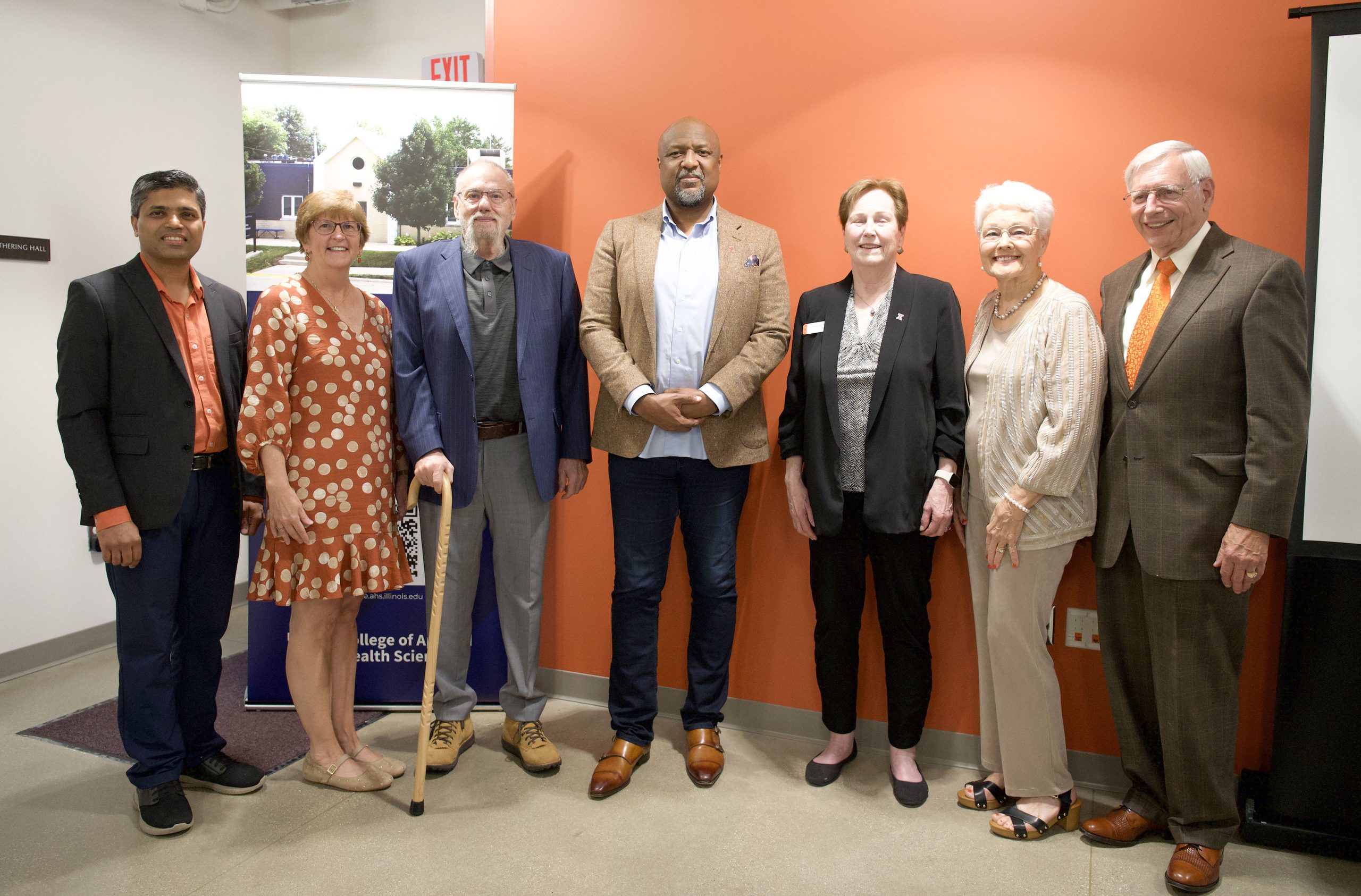
The University of Illinois is part of a consortium that has been awarded a five-year, $14.7 million grant from the National Institute on Aging (National Institutes of Health) for the Center for Research and Education on Aging and Technology Enhancement (CREATE).
University of Illinois Professor Wendy Rogers—of the Dept. of Kinesiology and Community Health within the College of Applied Health Sciences—is the principal investigator for the Illinois site. Co-investigators include Raksha Mudar of the Dept. of Speech and Hearing Science, Dan Llano of the Dept. of Molecular & Integrative Physiology, and Avinash Gupta and RS Sreenivas, both of the Dept. of Industrial & Enterprise Systems Engineering. “One of the most exciting aspects of the Illinois engagement is the breadth of our involvement, representing four departments across three colleges,” Dr. Rogers said. “Such interdisciplinarity is critical for advancement in technology designed to support older adults.”
Weill Cornell Medicine, Florida State University, and Illinois are the lead universities on CREATE, a multi-institutional, interdisciplinary center. The research will focus on employing emerging and existing technologies to promote wellbeing, quality of life and independence for diverse populations of older adults, and to provide support for older adults with cognitive impairments.
Initially funded in 1999, the goal of CREATE is to ensure that older adults can use and realize the benefits of technology for improving daily living. Through the four previous funding cycles of CREATE, the landscape of aging and technology has changed dramatically.
Given that age is a significant risk factor for cognitive impairments such as mild cognitive impairment (MCI) and Alzheimer’s Disease/Alzheimer’s Disease Related Dementias, CREATE V will expand its target populations to include older adults with MCI and involve three integrated cross-site projects. With a focus on enhancing cognitive health, social engagement and preventing cognitive impairment, the first study will look at how virtual reality technology can be used to foster cognitive and social engagement among aging adults.
It will be one of the largest randomized controlled trials of virtual reality in home settings. Preliminary development and testing will be conducted at the McKechnie Family LIFE Home on the Illinois campus.
Freer Hall underwent a makeover, but the pandemic delayed its celebration
In January 2015, the University of Illinois Board of Trustees approved campus funding for the College of Applied Health Sciences’ plan to renovate the north wing “to develop needed spaces that directly support the long-range vision for the Department of Kinesiology and Community Health and the College of Applied Health Sciences at Urbana-Champaign.”
After delays attributable to COVID-19, Freer’s renovation reached what was called “substantial completion” in November 2020. Unfortunately, the pandemic got in the way of a fancy grand re-opening, but the building is now in heavy use thanks to the full return to campus this fall.
The highlight of the renovation is the multipurpose testing and research facility that occupies the first floor of the former pool wing. Described as an “historic renovation” by Dr. Amy Woods, a professor in the Department of Kinesiology and Community Health, the project significantly enhanced the department’s teaching, research, and outreach missions.
The pool building at UIUC’s historic Freer Hall was repurposed to capture much-needed space for the College of Applied Sciences. The renovation provides infrastructure for advanced testing research facilities, including modular and adaptable dry test labs and a wet lab. Newly created classrooms and offices are part of the program. Although the central feature looks like a fitness center, it is actually a first-of-its-kind, interdisciplinary research laboratory to study health, rehabilitation, and human movement.
The long-awaited completion of the renovation brought new life and purpose to one of campus’ most stately academic buildings.
KCH Assistant Professor Jacob Allen got an NIH grant to study and combat rise of IBD.
In 1999, an estimated 1.8 million adults in the United States had inflammatory bowel disease (IBD), according to the Centers for Disease Control. By 2015, that number had risen to 3.1 million. Not only are incidences of IBD rising, but the costs associated with treating IBD have soared as well. According to a study published in 2019 in the journal Inflammatory Bowel Diseases, patients with IBD incurred a greater than three-fold higher direct cost of health care on a per-annual basis, compared with non-IBD controls ($22,987 vs $6,956 per-member per-year paid claims) and more than twice the out-of-pocket costs ($2,213 vs $979 per-year reported costs).
Statistics like those above are why researchers such as Assistant Professor Jacob Allen of the Dept. of Kinesiology and Community Health in the College of Applied Health Sciences at Illinois are working to determine a way to prevent IBD and other conditions caused by mucosal dysfunction. Allen received a $3.8 million grant from the National Institutes of Health (NIH) in July 2022 for his project titled “Role of epithelial ROS signaling in mediating psychological stress-induced mucosal dysfunction and colitis predisposition.”
In his grant application, Allen wrote, “exposure to psychosocial stressors increases the likelihood of developing IBD in genetically predisposed individuals, implicating a brain-gut axis in the IBD etiological framework.” His preliminary data “indicate(d) that the reactive-oxygen species (ROS)-generating capacity of intestinal epithelial cell (IECs) may be the most proximate causes of stress-induced dysbiosis and mucosal disruption.”
“If you look at inflammatory bowel disease rates over the past 30 to 40 years, you see an exponential rise in IBD rates, which is obviously problematic,” Allen said. “But also they’re often relapsing, remitting diseases, meaning that if you have IBD, you often will have periods of flares, symptoms, followed by periods of remission where you don’t have symptoms, which makes it kind of a unique type of disease in that way in that it’s a recurring disease. What we’re learning is that there are certain things that cause the recurrence, including diet, but also relevant for this grant, psychological stress can drive recurrence of disease flares.”
According to the Crohn’s and Colitis Foundation, the costs associated with people missing work, treatments, and medical costs that are indirectly associated with having IBD ranges from $30 billion to $50 billion annually.
As Allen explains, IBD consists of two major diseases in humans—Crohn’s disease and ulcerative colitis. They’re slightly different in their etiology, he said, meaning that the symptoms are a little different and they arise at different points in the intestine. Crohn’s disease usually arises in the small intestine and moves down to the colon, whereas colitis is generally focused in on the colon, located in the distal bowel region.
“Finding the mechanisms underlying why the disease occurs and then also what causes flares and what causes recurrence is also important,” he said, “and so that’s kind of the big picture goal of why this is an important thing to study.”
In his grant application, Allen cites “an emerging line of work has established that stress-induced disruptions to the gut microbiota may be the most proximate cause of stress-induced IBD predisposition.” Researchers in Allen’s lab found that a mouse-adaptive pathogen was more effective at inducing colitis in mice colonized by a microbiota from mice exposed to a chronic social defeat stressor.
Additionally, they found that stress exacerbates chronic colitis.
“We think that essentially comes down to a disrupted communication between the microbiome and the host immune system,” he said. “And what happens is that the adaptive immune system, which recognizes certain bacteria and can attack those bacteria, is disrupted to some degree with IBD. It’s thought to be similar to (but not the same as) classical autoimmune diseases, whereby T cells and B cells start to mistakenly attack our own cells. However, with IBD, it appears that the immune system develops abnormal inflammatory reactions to our endogenous microbiota.” What sets off this reaction, however, is not fully understood. Allen and his team hypothesize that excessive production of stress hormones may be one of the key factors underlying IBD predisposition.
Allen explains that the body and bacteria, under normal circumstances, under a healthy condition, live in homeostasis. However, when people experience high levels of psychological stress, Allen said, that communication pathways get shut down. That can lead to mucosal dysfunction, through which diseases such IBD can occur, as well as food allergies and other gut-related conditions.
“Certain bacteria bloom in response to psychological stress that aren’t necessarily good. They start to break down what we call the mucosal barrier—a line of mucus that lines our colon and protects the cells,” he said. “Understanding how the hormone interacts with epithelial cells or what bacteria are doing to actually degrade the mucus, that kind of stuff will give us targets that we can then look at for potentially modifying with pharmaceuticals or others that would limit IBD. So that’s kind of the big picture goal.
“We want to get back to that balance of where the microbes and our cells live in harmony. But we have to understand the mechanisms behind what happens or what goes wrong in the first place for us to do that.”
Helping a person who uses a wheelchair find a chair that fits their lifestyle is as important as helping someone find a pair of shoes that fit or helping someone find the right bike.
That’s the mission of the Illini Wheelchair and Scooter Clinic on the campus of the University of Illinois. The clinic is the creation of Laura Rice, an associate professor of Kinesiology and Community Health within the College of Applied Health Sciences.
The clinic began as a labor of love for Rice.
“Prior to the formal clinic, I was helping students on campus if they needed a new wheelchair, kind of just through DRES (Disability Resources & Educational Services) helping them out, but nothing was really formalized because I just didn’t have time,” said Rice, who is also interim director of the Master of Public Health (MPH) and Master of Health Administration (MHA) programs and associate director of the Center on Health, Aging, and Disability (CHAD).
[When I first moved to Illinois] “I had a 50 percent appointment at DRES, but it was helping out Jeanette Elliott, the physical therapist there,” Rice said. “Then I moved into a tenure track position and I needed to focus my time and effort on research. When I did get promoted, this was a nice opportunity where I had a bit more space to go back to that model. That’s why I started trying to formalize the clinic.”
The idea of a clinic came out of Rice’s previous work in Pittsburgh.
“I did work at a large seating clinic at the University of Pittsburgh. I felt that my interactions in the clinic with end users was really important to fuel my research. And then I also could help support the clients better because I had a strong research background,” she said.
The Illinois clinic has been open for approximately one year, operating out of Freer Hall on the Urbana-Champaign campus. The clinic helps clients select a piece of assistive technology, primarily a wheelchair or a scooter, to help them go about their day-to-day life, whether that’s going to class, going to work, or engaging with friends and family.
“We really try to provide that support so that they can do the activities that they like and they need to do in everyday life,” Rice said.
The Wheelchair and Scooter Clinic is small, and students in the MHA program help Rice with clinic policies, working with clients and helping with billing.
“We’re not part of a large health care system,” Rice said. “The (client) can contact me, and then I work with them. It’s on campus, especially for students, they don’t have to try to figure out transportation to an off-campus location. The majority of people that I work with are people in need of new devices. I’ll talk to them, we’ll do an evaluation. I work with a wheelchair vendor. An example is like, you go to a doctor, he prescribes you a medication, but he doesn’t actually give you the pills. You go to CVS to get the pills. That vendor is the one who provides the actual device in consultation with me, making those recommendations and the person’s physician, ultimately.”
After the chair arrives, Rice and her assistants help make sure it fits the client and makes sure they have proper training.
For Rice, the clinic is the culmination of marrying her research to her work as a physical therapist.
“I really wanted to be able to step back and kind of really look at like, ‘Why am I doing these things? And how can we improve?’ Because, especially for individuals with disabilities, there’s really a lack of research on different ways to support quality of life and community participation. So that is why I got into research was to have that opportunity to better understand the needs of clients I would like to serve and be able to implement those ideas.”
I hope this message finds you all in good health and high spirits as we embark on a new academic year at the College of Applied Health Sciences. As the dean of our esteemed college, I am thrilled to welcome you to the fall 2023 semester and share some updates.
This edition of the newsletter is a testament to our relentless commitment to excellence, innovation and community engagement. In the past year, our college has made remarkable strides in research, education and outreach. In this newsletter, we celebrate these accomplishments and highlight the incredible individuals who have made them possible.
Our faculty members continue to shine as leaders in their respective fields, producing groundbreaking research that contributes to the advancement of health sciences. Our students, the heart of our community, have continued to excel academically and demonstrate their passion for making a positive impact in the world of healthcare. Moreover, our alumni network continues to grow and thrive, with our graduates making waves in various sectors of the healthcare industry.
I encourage all of you to actively engage with the newsletter by reading and sharing. This publication is a reflection of our shared journey, and your input is invaluable in making it a meaningful resource for our community.
Thank you for your dedication to the College of Applied Health Sciences. Together, we will continue to empower excellence and drive positive change in the field of health sciences.
Marni Boppart, second from right, poses with husband Stephen, left, her daughters, and Chancellor Robert Jones, center. (Photo by Darrell Hoemann)
Marni Boppart’s trajectory to named professorship at the University of Illinois Urbana-Champaign began as a kid playing in the Pine Barrens of New Jersey.
Boppart, a professor in the Department of Health and Kinesiology in the College of Applied Health Sciences, was named the Saul J. Morse and Anne B. Morgan Professor at an investiture ceremony on Sept. 6.
But long before her illustrious career studying cellular biomechanics and muscle began, Boppart’s interests were taking roots in the woods.
“I would describe myself as a very active kid growing up,” she said at the investiture. “All our recreational time was spent outdoors playing baseball, basketball, kickball, riding my bike and jumping over ramps and doing crazy things that my mom still doesn’t know about. I grew up in in the Pine Barrens of New Jersey, and the woods were our playground. I mention this because it really influenced my decision to pursue my first degree in biology at the University of New Hampshire. This provided the opportunity to continue to explore the great outdoors, hiking, rock climbing, skiing, and even trying my hand at hang gliding—without hurting myself.”
As a biology major, Boppart was required to take a course in immunology and was assigned to write a paper on the effects of exercise on immune function.
“I thought, ‘Well, this was a really odd topic. What would exercise have anything to do with immune cells in the body? If you recall, the 80’s were defined by the fitness craze,” she said. “I think I still have my ThighMaster and Jane Fonda tapes sitting in a closet somewhere. The idea that exercise could be beneficial for health and prevent disease was still relatively new. What started as a simple class assignment grew into a life-long obsession with wanting to understand how exercise or the process of muscle contraction could benefit not only muscle, but all organ systems and whole body health.”
Boppart spent time in the Air Force as an aerospace physiologist, then decided to pursue a Ph.D. in Applied Anatomy and Physiology at Boston University. Working with two “powerhouse investigators” in the field of exercise science—Roger Fielding at BU and Laurie Goodyear at Harvard Medical School—the trio was able to document some of the first observations of molecular changes occurring in human muscle as a result of exercise.
“Like most researchers, I had more questions than answers at the end of my doctoral program: How does exercise, or the process of contraction stimulate molecular changes in muscle, what do these changes really mean for structure and function, and going back to my original interest, what is released by muscle into the circulation that might influence whole body health?,” she said.
For Boppart, those question led to what is now a 30-year career studying muscle.
Using transgenic mice, Boppart and her lab partners were able to determine that the integrin complex not only controlled molecular signaling in muscle, but also contributed to skeletal muscle remodeling and growth in response to exercise.
“But then everything changed in 2013,” she said.
That year, Boppart said, she and her lab mates were the first to report that exercise can result in the accumulation of perivascular stem cells in muscle.
“We found that these cells secrete beneficial factors that not only influence muscle remodeling and growth, but structures outside of muscle as well, including vessels and the brain. And so we started to wonder … could these stem cells be used to treat a disease or condition?”
Boppart’s interest in healthy aging led to a study of whether stem cells could be used to address age-related disabilities, particularly slowing the progression of muscle loss. While she found that stem cells were not effective in slowing the progression of muscle loss or regrowing muscle after disuse, she did find if she isolated nanoparticles (or extracellular vesicles or exosomes) from the stem cells first and then injected them into the aged mice, they could successfully recover muscle growth, which is the first step in preventing disability. That discovery led to new sources of funding, including funding from NASA and private foundations such as the Allen Institute.
Cheryl Hanley-Maxwell, dean of the College of Applied Health Sciences, praised Boppart and her work.
“Being named to an endowed position is a singular honor for faculty members,” Hanley-Maxwell said. “Those who hold named professorships are at the top of their fields, and that is certainly true of our honoree today. When I think of Marni, I think of unwavering integrity, deep intellectual curiosity, unconditional dedication to her students, and absolute passion for her work. And humility.”
The named professorship is endowed by Saul Morse and Anne Morgan. Morse earned two degrees at the University of Illinois, including a law degree and is an alumnus of AHS’s Disability Resources and Educational Services. He retired in 2023 after a 50-year career in law. Morgan is a clinical psychologist who retired after more than 30 years of practice in health psychology.
“I would like to thank our donors, Saul and Anne, for their generous contributions to the University of Illinois and the College of Applied Health Sciences,” Boppart said. “I am deeply honored and humbled by this recognition. And I am humbled because, as I look around the room, I see many experts in the fields of health, aging, and disability. To know that several of you nominated me for this award is a bit overwhelming. Thank you for this opportunity. I will remember tonight always.”
Boppart thanked her mentors, HK Department Head Kim Graber and Professor Jeff Woods, as well as her collaborators and colleagues.
Turning toward her future plans, Boppart is energized about what’s next.
“We would like to use our funding and this professorship to translate our EV therapy to humans. I’m confident we can do this,” she said. “Not only because clinical trials with stem cell-derived EVs are already occurring in the U.S. in places like the Mayo Clinic, but also because I have an amazing interdisciplinary research team to help make it possible.”
Beginning August 16, 2024, the name of the Department of Kinesiology and Community Health (KCH) will officially change to the Department of Health and Kinesiology (HK).
The new name better reflects significant changes in our disciplines, research interests and educational mission. Health and Kinesiology allows for a broader, more inclusive representation of a department that focuses on multiple aspects of health and physical activity in a diverse society. It also honors our legacy as leaders in the field of health and kinesiology, while pointing the way forward to a future that is both dynamic and innovative.
We are excited about the new name and hope you are as well!
Giving back to the institution that helped launch their careers makes all the sense to Julie and Rainer Martens
Julie and Rainer Martens pose at a recent reception at the College of Applied Health Sciences. (Photo by Jerry Thompson)
University of Illinois alums Rainer and Julie Martens are retired, but they can hardly stay still.
From their current home base of Ormond Beach, Florida, the pair have stayed busy building out Pictona, a $16 million pickleball facility in Holly Hill with more than 1,400 members that hosts major U.S. tournaments.
In their free time, the couple travels to remote locations across the globe together and documents their expeditions. In a recent visit to the Galapagos Islands, Rainer’s photography and Julie’s videography paired nicely.
“We make a pretty good team,” said Rainer, 81, who taught sports psychology in the Illinois Department of Physical Education for 16 years.
Through all their travels, the Martens say the University of Illinois has continued to hold a special place in their hearts. Giving back to the institution that helped launch their careers—now the Department of Kinesiology and Community Health at the College of Applied Health Sciences—made all the sense in the world.
Together, they’ve created the Rainer and Julie Martens Physical Activity Endowment Fund, a $2 million joint gift that will fund $80,000 in annual scholarships for KCH graduate students in perpetuity. The gift will convey to the department upon the Martens’ passing.
“Both of us were fortunate that when we finished our degree, we were not burdened by having to pay back loans,” said Julie, 74. “It makes life much easier. Then you can concentrate on what it is that your goal was and not have to worry about paying back a lot of money.”
The Martens’ message to future recipients: “simply, is ‘do good,’” Rainer said. They want new students to be able to afford the same scholarly path they once took.
“The difference this will make for some students is profound,” AHS Dean Cheryl Hanley-Maxwell said. “Both Rainer and Julie will live on in the students who are funded through their gift, they will continue to affect the health and wellness of communities and individuals in ways that are yet to be told.”
Illinois laid a foundation for much of their early career success. Julie arrived at Illinois after completing her master’s at the University of Washington and obtained her doctorate in sports psychology in 1977, with Rainer as her advisor. Rainer obtained his Ph.D. from the U. of I. in 1968 and began his tenure as a research professor in sports psychology.
Their lives both changed after Rainer founded the publishing company Human Kinetics in 1974 with his first wife, Marilyn, who passed away in 1991. Julie was the first employee of the publisher of books and journals in the physical activity field; Human Kinetics had swelled into a 300-person staff by the time she retired as its executive vice president in 2009.
“I was fortunate to make lots of connections around the world in our field and the related exercise sciences and kinesiology fields,” Rainer said. “It was those connections that really let us start Human Kinetics, and it’s been the success of Human Kinetics that has given us the wherewithal to make contributions to our universities.”
Their fondest memories in Champaign-Urbana start with the group of students they worked with. The strong cohort of kinesiology scholars was highly motivating for Rainer as a professor, and Julie as a doctoral student. They both made “lifelong friends” and collaborators working long days in the Applied Life Studies Library.
After each of them completed a day’s work, they’d make an afternoon visit to the Intramural Physical Education Building (IMPE)—the U. of I.’s previous campus recreation facility—where Rainer played handball and Julie played racquetball.
“It was a great way to end the day, I think, for the both of us,” Julie said.
A decision to give
No strangers to philanthropy, the Martens have used substantial sums to give back to the Champaign-Urbana community. It was their lead gift that helped build the $12 million Martens Center, a recreation community facility run by the Champaign Park District.
The difference this will make for some students is profound.
Cheryl Hanley-Maxwell
Dean, College of Applied Health Sciences
By last fall, the couple had made clear that they were set on helping the Department of Kinesiology and Community Health in some way. The College of AHS staff and advancement team made it “pleasant to do so,” Rainer said, including Jean Driscoll, who they called a “terrific representative” of the college and university.
“They made it very clear that they were totally open to whatever, however we wanted to structure the gift and didn’t ever try to direct us in a particular direction,” Julie said. The Martens are both lifelong athletes, and Julie—a former tennis player—caught the pickleball bug around 2011. Driscoll and Dean Hanley-Maxwell recently visited them in Florida and got a free pickleball lesson from the couple on one of their own Pictona courts. “They’ve got potential”, Rainer said.
Julie and Rainer visited campus earlier this month in a reception celebrating their estate gift, where they got to speak with faculty and graduate students whose shoes they were in decades ago.
“It has been a true pleasure to communicate with Rainer and Julie through the course of this agreement,” said KCH Department Head Kim Graber. “They are kind, intelligent, and captivating individuals, and they have left an indelible footprint on the history of our department.”
In the meantime, the couple is heading to Svalbard, an archipelago of Norway that’s one of the northernmost inhabited areas in the world. They plan to photograph polar bears and other wildlife there in the summer before making another trip to South Africa in September.
And they recently announced their plan to hand the reins of the Pictona pickleball facility to new leadership by the end of the year.
“One of the things that we’re really proud of here is having had a career in physical activity and made it part of our personal life as well is that here we get to witness, every day, people enjoying physical activity in the form of pickleball,” Rainer said.
“We’re looking at the future and trying to find the right personnel to replace us as we look at doing more travel, more photography, and actually getting to play pickleball more.”
HK Department Head and Professor Kim Graber took over in January as president of the American Kinesiology Association. Graber replaces Auburn Professor Jared Russell, while Utah Professor Tim Brusseau takes over as president-elect.
Hallal receives APHA honor
Pedro Hallal
Pedro Hallal, the Alvin and Ruth Sandall professor of kinesiology and director of the Master of Public Health program in the College of Applied Health Sciences, received the 2023 David P. Rall Award for Advocacy in Public Health for his COVID-19 research and public health messaging in the face of political opposition. Hallal developed the EPICOVID-19 project, which tracked the spread of COVID-19 across Brazil and uncovered racial health disparities that were regularly dismissed by then-Brazilian President Jair Bolsonaro. Hallal shared Brazil’s COVID-19 health data with the world despite threats to his livelihood and well-being from the Brazilian government.
Kevin Richards wins AERA award
HK Associate Professor Kevin Richards was selected as the recipient of the 2024 Catherine D. Ennis Scholar Award for the AERA SIG 93. This award is designed to recognize an outstanding scholar in the field of learning and instruction in physical education.
VanHoutan chosen for SHAPE honor
Kinesiology major Emma VanHoutan was selected to receive the SHAPE America Major of the Year award. The award is given annually to one outstanding undergraduate student in the field of health, physical education, recreation and/or dance. VanHoutan plans to graduate with a bachelor’s degree in 2024.
Strittmatter selected for AIESEP award
HK doctoral candidate Gabrielle Strittmater was selected as one of 21 doctoral students from around the world, and one of only three from the United States, to attend an international doctoral “summer school.” The summer school will provide time to interact with other doctoral students and faculty members while delving into topics of interest for aspiring researchers. The event will take place during the AIESEP conference this summer in Finland.
Wendy Rogers said she always planned to get the Health Tech program established and build a strong foundation before passing it on
Wendy Rogers, center, says Shannon Mejia, left, is ready to lead the Health Tech program (Photo provided)
Health and Kinesiology Professor Wendy Rogers, the founding director of the Health Technology Education Program in 2017, stepped aside in the summer of 2024 and Shannon Mejía, an associate professor in HK, was named her successor.
Rogers had already had an illustrious academic career, primarily at Georgia Tech, before coming to the University of Illinois Urbana-Champaign in 2017. Together with her husband, Dan Fisk—also a Ph.D. in the field of experimental psychology, Rogers created the Human Factors & Aging Laboratory in 2003 at Georgia Tech. After Fisk retired in 2013, Rogers relocated the lab to Illinois—where Fisk got his doctorate—four years later.
Rogers’ arrival at Illinois coincided with an Investment for Growth proposal led by the College of Applied Health Sciences and The Grainger College of Engineering aimed at developing the Health Technology Education Program. Health and Kinesiology Professor Jeff Woods, who spearheaded the IFG with Kesh Kesavadas, a professor of Industrial and Enterprise Systems Engineering, knew who he wanted to lead the Health Tech program.
“Jeff asked me if I would be willing to lead the educational component and I agreed,” said Rogers, who is the Shahid & Ann Carlson Khan Professor of Applied Health Sciences.
“We hired Nicole Holtzclaw-Stone in January 2018 and the four of us (Jeff, Kesh, Nicole, and I) spent a lot of time together developing the Health Technology Education Program,” Rogers said. “We shepherded our Master of Science in Health Technology through department and college educational policy committees, the Graduate College, the Faculty Senate, the Board of Trustees, and finally the Illinois Board of Higher Education. In December 2019, Nicole and I drove to Chicago for the Illinois Board of Higher Education meeting in case there were any questions but there were none and we were officially approved. We welcomed our first cohort in August of 2020,” during the COVID-19 pandemic.
Rogers said she always planned to get the Health Tech program established and build a strong foundation before passing it on.
“The time was right to transition to a new director, but we want to continue to build on the trajectory we are on,” she said. “The mission is to advance health technology education for learners at all levels through our interdisciplinary undergraduate certificate and minor (joint with Industrial & Enterprise Systems Engineering), our Master of Science in Health Technology (in collaboration with Grainger College of Engineering), and our Health Technology Professional Education Program.”
Mejía praised her predecessor’s vision.
“She led the development and implementation of an innovative education program that provides cross training in user needs, human factors and user experience methodologies, and engineering principles to develop leaders who can speak the language of both health care and engineering,” Mejía said of Rogers. “To address the critical challenges facing health care today, it is essential to understand user needs and technological capabilities in order to assure that technological solutions truly support the well-being of individuals, families, organizations, and communities. We train students to fulfill this essential role. This program is one of a kind in the nation. And it is my privilege to take the program to its next level.”
Rogers said the move was eased by knowing Mejía was ready to step in.
“Dr. Mejía has been an active member of the Health Technology Education Program since its inception,” Rogers said. “She is the right person at the right time to take the program to the next level. She has a lot of energy and creative ideas. Together, with Dr. Katelyn Talbott as the assistant director, I know the program will continue to be successful and to grow.”
For her part, Talbott said Mejía “has great ideas for growth and increased recognition in the field.”
“As with any change in leadership, new leaders are able to bring their perspectives to the challenges and goals in front of them,” Talbott said. “Shannon will be no different. I look forward to working with Shannon as we work to grow all aspects of the Health Technology program.”
Rogers will continue in her roles as director of the McKechnie Family LIFE Home, program director of CHART: Collaborations in Health, Aging, Research, and Technology and director of Human Factors & Aging Laboratory. “I have plenty to keep me busy and I look forward to having more time to devote to these activities,” she said.
As a recognition of their continued support of the MS-HT program, Rogers and Fisk have endowed the Wendy A. Rogers Health Technology Travel Award. The award will provide master’s students with the opportunity to travel to conferences to share their own work, to learn from other researchers, and to participate in networking opportunities. Additional donations to the fund are welcome and will help to provide travel support for more students.
Donation instructions for mail or online gifts are on uif.uillinois.edu/how-to-give. For online donations, in the dropdown menu under Gift Designation, click on the “Other” box and enter Fund #777754 or “Wendy A. Rogers Health Technology Travel Award” or write this information on the memo line of your check.
“In August of 2024 we welcome our fifth cohort into the program,” Rogers said of the Health Tech program. “Alumni from our program are already out in the working world making a difference in health technology to improve quality of life for all of us.”