SPICE-Healthcare is meant to assist the growing population of older adults from culturally diverse backgrounds who are enrolling in long-term care services
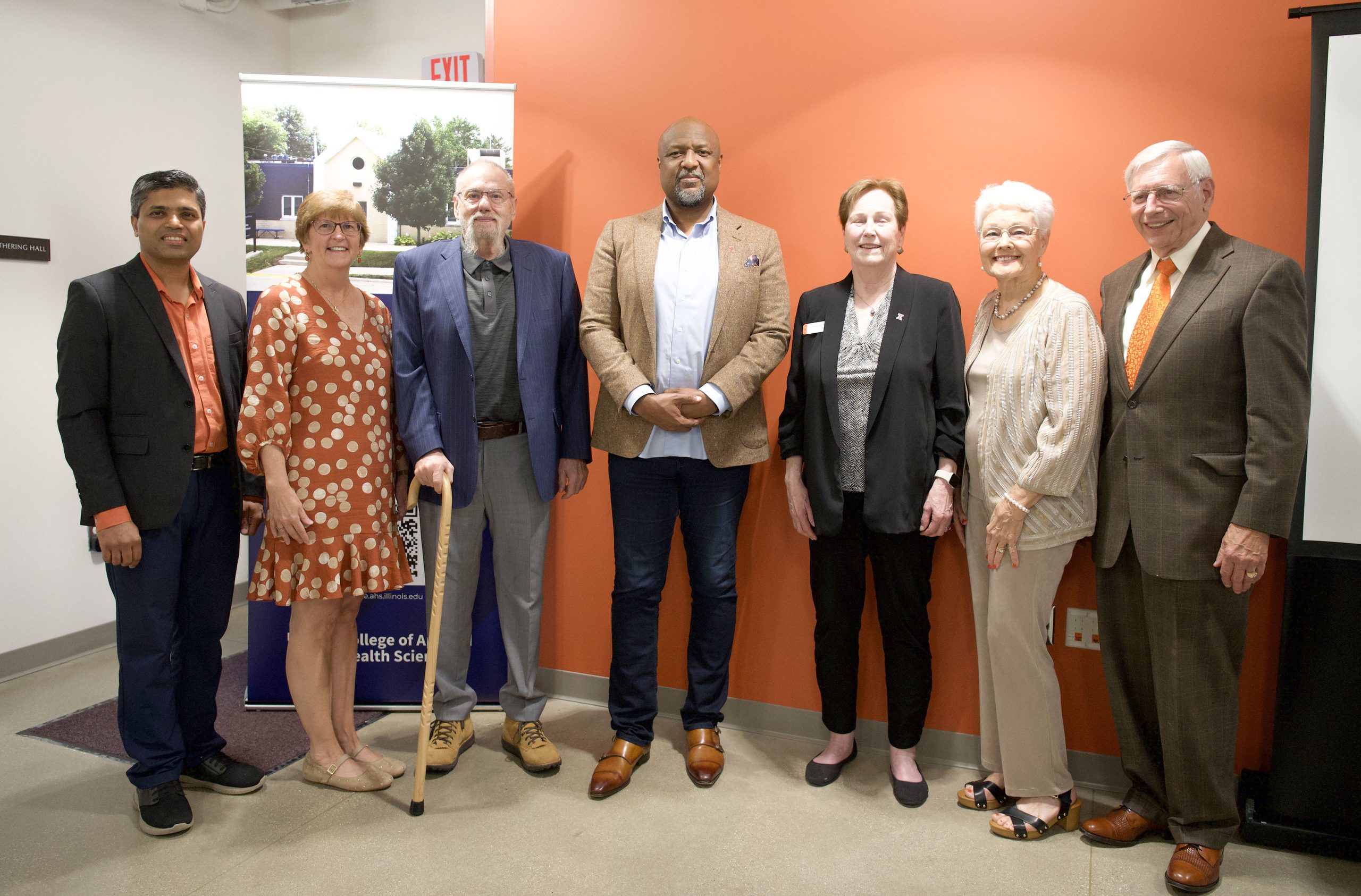
A cross-campus team of researchers at the University of Illinois Urbana-Champaign, led by Kinesiology and Community Health Assistant Professor Mina Raj, has received two grants to test an online platform designed to help dietitians, clinicians and food service personnel make dietary assessments and care plans that are tailored to patients’ medical and cultural needs.
The web-based platform to Support Personalized and Inclusive Cuisines in Environments for Healthcare (SPICE-Healthcare), is in line to receive nearly $120,000 in grant support to test its usability with community partner ClarkLindsey Village and other healthcare organizations.
“We will conduct usability testing locally but also with clinicians from other parts of the country,” Raj said.
Raj focuses her research at the College of Applied Health Sciences on healthcare administration and disparities, particularly on supporting the needs of diverse older adults and family caregivers. Her preliminary studies inform the purpose of SPICE-Healthcare.
Collaborators include KCH Associate Professor Naiman Khan, an expert in nutrition and health behaviors and outcomes; Margarita Teran-Garcia, assistant dean and program leader of Integrated Health Disparities at Illinois Extension; Ian Brooks, director of Center of Health Informatics; and Lisa Gatzke, who leads the User Interface and User Experience Team at The National Center for Supercomputing Applications (NCSA).
“This team has been in conversations for over a year contributing their expertise in nutrition, community outreach, informatics, and design to come up with the platform that aims to improve health service delivery for culturally diverse older adults,” Raj said. “Working together across disciplines has been pivotal to bringing this idea to reality.”
To develop and test this electronic-dietary assessment tool (eDA), the team received a $50,000 seed grant from the Personalized Nutrition Initiative, a University of Illinois project led by the Office of the Vice Chancellor for Research and Innovation, partnered with Carl R. Woese Institute for Genomic Biology and College of Agricultural, Consumer and Environmental Sciences at Illinois.
The Personalized Nutrition Initiative recruits an interdisciplinary group of researchers to investigate ways to optimize human health by making nutrition recommendations based on the individual’s genetics, microbiome and metabolome, along with their dietary history and phenotype.
Another $68,210 is heading to the project from Illinois Chancellor Robert Jones’ Call to Action Research Program, an annual $2 million commitment that funds research targeting racial inequities and injustices.
SPICE-Healthcare is meant to assist the growing population of older adults from culturally diverse backgrounds who are enrolling in long-term care services. Many long-term care facilities and hospitals lack inclusive cuisine for different cultural, ethnic and religious identities.
When food isn’t personalized to these needs and preferences, these older adults face risks of undernourishment, unintentional weight loss, or overburdened family caregivers, investigators say.
Interviews with institutional leaders at ClarkLindsey and other community organizations suggested that a “point of care” resource to improve culturally tailored nutrition assessments was sorely needed.
The first phase of the platform, a click-through prototype electronic-dietary assessment, is almost ready for testing, Raj said.
“We will then continue working with our collaborators at NCSA to refine the tool to be culturally tailored,” she said.
The University of Illinois at Urbana-Champaign’s College of Applied Health Sciences is proud to announce a significant milestone in its ongoing commitment to advancing health sciences education and research. Effective Aug. 16, the Department of Kinesiology and Community Health will officially change its name to the Department of Health and Kinesiology.
The new name better reflects significant changes in our disciplines, research interests, and educational mission. Health and Kinesiology allows for a broader, more inclusive representation of a department that focuses on multiple aspects of health and physical activity in a diverse society. It also honors our legacy as leaders in the field of health and kinesiology, while pointing the way forward to a future that is both dynamic and innovative.
The name change was a decision that was made based on goals highlighted in the KCH Strategic Plan and upon the recommendation of the KCH Restructuring Task Force. It was supported by multiple stakeholders and was recently approved by the College of Applied Health Sciences, UIUC Senate, and Board of Trustees.
Cheryl Hanley-Maxwell, dean of the College of Applied Health Sciences, expressed enthusiasm about the department’s name change, saying, “The renaming of our department to Health and Kinesiology aligns with our strategic vision of fostering interdisciplinary collaboration and addressing the multifaceted aspects of health and wellness. This change reflects our commitment to providing innovative education, conducting impactful research, and serving our communities.”
HK Department Head Kim Graber said, “As the department evolves to better reflect the dynamic landscape of health and movement sciences, we believe the change to Health and Kinesiology not only embraces our commitment to comprehensive wellness but also underscores our dedication to advancing research, education and outreach in these vital areas.”
The Department of Health and Kinesiology offers a wide range of undergraduate, graduate and doctoral programs aimed at preparing students for careers in health promotion, exercise science, public health, rehabilitation, and related fields. With world-class faculty and state-of-the-art facilities, the department equips students with the knowledge, skills, and practical experience needed to excel in diverse healthcare settings.
Black women mention social support as an important consideration for them to be physically active
With roots in Pennsylvania, an upbringing in Connecticut and newly planted ideas in Champaign, freshly minted Ph.D. recipient Imani Canton sees community gardening as a way to improve health equity.
Canton graduated with her doctorate in kinesiology in May, which involved successfully defending her dissertation, entitled “Tending to Our Roots to Increase Our Wellness (TRIOWell): A Community Gardening Intervention.” Canton’s dissertation revolves around a program designed to expand physical and mental health among Black women through community gardening programs, alongside researching health disparities among middle-aged Black women and how to combat them.
“Community gardening addresses multiple dimensions of health,” Canton said. “It is a type of physical activity, which we know can improve physical and mental health, and by working in a community garden, it provides opportunities to improve social health.”
Canton’s story begins at Spelman College, an all-women’s historically Black university in Georgia. But while applying to and completing her undergraduate degree, the college removed all NCAA sports due to the lack of student participation, due to disproportionate health disparities among Black women.
Instead of continuing NCAA sports, the college instead invested in a campus-wide health initiative, “Wellness Revolution,” that included a new gymnasium, as well as policy changes to the physical education curriculum. This eventually kickstarted Canton’s interest in investigating health trends among Black women.
“That actually had been my first-time hearing that, and then it just kind of clicked to me when people say that racism is pervasive that it is in all types of systems,” Canton said. “Now I see how it’s within a health system, too. Fast forward to University of Illinois. I knew that I wanted to design physical activity programs specifically for African-American women.”
Canton began her stint at Illinois by enrolling in a B.S./Ph.D. in Kinesiology program in the College of Applied Health Sciences. Working with an advisor, Canton narrowed her research concentration to wellness in Black communities.
Her journey to a Ph.D. was not an easy one, though. Canton worked with multiple advisors, looking for the best fit within AHS.
During her research, Canton found out that Black women prefer walking as their preferred method of exercise. The reasoning—access to equipment—or lack of it—in Black communities.
“[The] lack of gym access due to racism and historical redlining leaving Black communities disproportionately in areas with less access to a built environment, which includes gyms and also green spaces, like gardens,” Canton said.
Gardening is a lower intensity physical activity compared to traditional forms of exercises such as running and weightlifting, and thus it may encourage those who have health concerns as a barrier to engage in physical activity to want to be physically active, she said.
And, according to Canton, research shows that Black women mention social support as an important consideration for them to be physically active and this is likely due to collectivism being a salient component of Black American culture.
So, Canton combined the two activities—gardening and social support within the community—which is where the concept of community gardening programs came to life.
“Those who have higher levels of social support, typically, are more likely to participate in physical activity,” Canton said. “And you know, it makes sense because if you see your friend working out or doing some kind of physical activity, or if you have someone to do it with, you might be more encouraged to do it yourself.”
As far as the garden, Canton’s choice was the Randolph Street Community Garden, which is planted, cultivated and loved within the Champaign community. The Randolph Street Community Garden was started by another Illinois Ph.D. student as a small, urban planning project, which evolved into a full-scale garden that now has around 65 beds.
During her Ph.D. program, Canton applied for a community grant, Building Beyond the Barriers, alongside Dawn Blackman, the Randolph Street Community Garden stewardess, to bridge the gap between academic and community, and continue the programs at the garden. With that funding, the garden can continue to bloom.
After tending to her planted ideas for six years, Canton is ready to let them flourish and grow within Champaign, and now, she is ready to return home to Connecticut, where she will attend the Yale School of Public Health, pursuing an advanced professional Master of Public Health in Applied Biostatistics and Epidemiology. When she completes that program, she will begin her fellowship at the National Cancer Institute in Maryland.
Canton made many discoveries about her research and herself during her doctoral studies. But one of the first ones had perhaps the biggest impact on her. She found out that in the late 1800s, Anita J. Turner was the first Black woman physical education instructor and later considered one of the pioneers of that field. That helped Canton find her path.
“You see black women doing this, then you think that OK, ‘I can do this myself, too,’ and just kind of build pride around that,” Canton said. “I wanted us to connect to our roots, roots in the garden and then our cultural roots.”
Hernández-Saavedra in 2024 received a $30,000 grant from the Center on Health, Aging and Disability, or CHAD, to study muscle memory. He and his team decided to focus on mice.
“Mice love running. They run like five to 10 kilometers [about 3-6 miles] per night, so a lot. What our studies are trying to do is trying to leverage the fact that mice love running and try to understand whether we can make them healthier,” Hernández-Saavedra said.
The grant Hernández-Saavedra received was part of the CHAD Pilot Grant Program. That program was enabled to support innovative, groundbreaking interdisciplinary research aimed at advancing the understanding of health and wellness, aging disability and the maintenance of a high quality of life.
According to Hernández-Saavedra, in the initial training phase, mice are trained for four weeks. With this group, researchers try to answer the question of how muscle memory is established.
In the second phase, mice train, followed by a detraining period where all mice are sedentary. This group tackles the question of whether the muscle memory disappears after exercise cessation.
In the final training phase, mice are trained, detrained, and once again trained. This cohort answers the question of how prior muscle memory is remembered and recalled by a second exercise training bout, Hernández-Saavedra said.
“We’re limited by doing mouse work, but I think it’s very interesting because we don’t really know how muscle memory works,” he said. “The grant that we received is to study how each cell within the muscle stores the memory and contributes to a better outcome.”
Hernández-Saavedra, born and raised in Mexico, came to the U.S. in 2013 to pursue a Ph.D. at Illinois after receiving his B.S. from the Autonomous University of Queretaro, Mexico. After his Ph.D., he went to The Ohio State University as a postdoctoral fellow in 2018 and returned to Illinois to become a faculty member in 2021.
Hernández-Saavedra’s research focuses on the beneficial effects of exercise to understand the adaptations in key metabolites and lipids in health and disease, the epigenetic mechanisms associated exercise that improve metabolism and bioenergetics, and the transgenerational effect of sedentarism and exercise on metabolism and cardiac function.
In his post-doctorate work at Ohio State, Hernández-Saavedra studied how maternal obesity can affect the health of babies. Now at Illinois, Hernández-Saavedra is more focused on studying exercise memory, which is understanding whether the body remembers it ever exercised.
“What our lab is trying to understand is whether our bodies remember prior exercise. For example, if you worked out, in the past, you’ve gone to the gym, but then you don’t go anymore. Four months later, you go back to the gym,” Hernández-Saavedra said. “Do we start from scratch? Do we start from a middle point? Or do they just remember all that and recover really fast to make it stronger, faster and better.”
Hernández-Saavedra explained that his lab studies how the tissue, the muscle, or the liver or the heart, remember prior exercise and how they store information in an epigenetic memory.
“Our research aims to reveal how exercise shapes muscle memory, providing strategies to combat age-related muscle decline, enhance metabolic health and maintain health and mobility as we age,” Hernández-Saavedra said.
For their studies, various groups of mice undergo different exercise training cycles. Some constantly work out, other groups do, but then stop and others workout, stop, and resume again.
“We use a very interesting strategy,” said Hernández-Saavedra, who credited his students Hank Huang and Clay Weidenhamer for their “tireless” work on the project. “The mice love to work out so we train them. Then we have another group where we train those mice, and then we remove the wheel. And then we see whether the mice, their tissues, specifically the muscle, whether they forget that they ever ran in a wheel.
“They love getting on the wheel,” Hernandez-Saavedra said about the mice. “They love their exercise. And so maybe we should try to be like them a little bit.”
Six-time weightlifing champion Andy Askow is pursuing a Ph.D. at the University of Illinois (Photo provided)
To anyone who knows Andy Askow, the marrying of his personal interests and research interests is no surprise.
The Ph.D. candidate in the Department of Health and Kinesiology is a six-time national powerlifting champion. He’s also planning to defend his dissertation in the fall and graduate from the College of Applied Health Sciences at the University of Illinois Urbana-Champaign in December.
Askow’s dissertation is focused on a randomized controlled trial aiming to understand the role of dietary protein distribution throughout the day and dietary protein source on daily muscle protein synthetic rates throughout a nine-day intervention.
“We can’t look at nutrition without working with the exercise component as well,” said Askow, whose advisor is HK Associate Professor Nick Burd. “Certainly, it cradles a holistic approach to research and setting up to research and setting up the experiments.”
Askow came to Illinois in 2019 after completing his master’s degree in exercise physiology and sport science at Texas Christian University. Before that, he completed his bachelor’s degree in kinesiology and exercise science at University of Wisconsin-La Crosse.
While at TCU, Askow—a Wisconsin native—came to Illinois for the summer to work as a research associate. During that time, he found he wanted to return to the Midwest for his Ph.D., and found a perfect fit in Burd’s Nutrition and Exercise Performance Group.
“We have an interest in trying to identify innovative approaches to promote muscle health across the lifespan,” Askow said. “And every day is complete chaos. It’s really inconsistent, but it’s a fun inconsistent. It doesn’t get stale, because nothing’s ever the same.”
Burd agreed.
“It’s always exciting,” Burd said. “Andy and I were just sitting here for a few hours this morning, trying to figure out some data sets. And I literally told him, ‘This is where you earned your Ph.D.’ It’s fun, being a critical thinker, and being in the trenches in terms of answering the questions, generating that cutting edge information and then sharing it with other people.”
In addition to carrying his course load and his workouts, Askow has also made time for awards. He’s won four scholarships, most recently the Laura J. Huelster Award in spring 2024.
“Being a Ph.D. student, there aren’t a lot of opportunities for external confirmation that you’re doing things the right way. Winning these awards has been a nice reminder that hard work pays off and that I’m on the right path.”
As for future plans, Askow has been collaborating with Dr. Andrew Jagim, the director of Sports Medicine Research at the Mayo Clinic in Wisconsin, and hopes to return there after graduation.
As much mentorship as he offers, Burd knows that students, especially doctoral students, have to be self-starters.
“I’m just there to help them stay afloat and steer them in the right direction, but they’re really doing it on their own,” Burd said. “They’re just very self-driven. I’m there to help create a positive learning environment for him and help culture those passions and foster those passions.”
“The people that have been here have been some of my closest friends and collaborators,” Askow said. “I think you can’t get through a Ph.D. without having a good group around you or, it’s certainly not going to be very nice if you try.”
With her unique scholarly background, Synthia Sydnor has provided a humanities-trained perspective within the department for three decades
Retired Health and Kinesiology Associate Professor Synthia Sydnor smiles outside of the Siebel Center for Design. (Photo by Ethan Simmons)
As a wandering graduate student, Synthia Sydnor used to take cross-country road trips while she worked on her Ph.D. at Penn State University.
In 1986, an opportunity came calling from the College of Applied Life Sciences at the University of Illinois: an opening for a faculty position to study and interpret sport and play.
The role seemed a perfect match for Sydnor—a budding scholar in the cultural-historical analysis of sport—but this Midwestern setting seemed unappealing.
Driving through the “barren” winter landscape of Illinois, “we always said, ‘this is the last place on earth we will ever live,’” Sydnor said.
Two years later, the job was still open, so Sydnor applied to at least get some interview experience. To her surprise, Illinois hired her. Sydnor came to adore the university as well as Illinois’ prairies and skies, and she would retire from the Department of Kinesiology and Community Health in spring 2024, 36 years later.
Sydnor has witnessed profound changes in her discipline and in the University of Illinois, from researching and writing in a basically pre-digital academic environment to teaching a 750-student online class before COVID-19 had even arrived. (Leading KIN 142: “Contemporary Issues in Sport” virtually felt like “running a corporation,” she said.)
With her unique scholarly background—she held appointments in the Unit for Criticism and Interpretive Theory and Illinois Global Institute—Sydnor has provided a humanities-trained perspective within the department for three decades.
“What is sport? Why do we attach all these invented things to it, like ‘masculinity’, ‘teamwork,’ and lately, ‘peace’ and ‘development?’” Sydnor said. “I’ve tried with students and the research I’ve contributed to think of sport as a serious object of knowledge, not just frills and fun.”
In retirement, Sydnor is spending time with family while staying connected to her academic home, collaborating with several younger faculty across the department and mining her own discipline for new insights. Her humor, friendliness and mentorship of graduate students leave a distinct legacy.
“She was always willing to take on a student in need of help—she had a soft spot in her heart for graduate students,” said Kim Graber, head of the renamed Department of Health and Kinesiology. “If they were experiencing challenges or difficulties, if they were not sure what they wanted to study, she’d always lend a helping hand, and be the person to listen to their concerns, and take them under her wing.”
A changing field
Sydnor left her mark on her department in more ways than one. The large triptych painting by Illinois alumna Brett Eaton and posters that line the first floor of Louise Freer Hall, celebrating the female pioneers of the field, are based on Eaton and 50 other undergraduates’ archival research in Sydnor’s course “Sport in Modern Society.”
The exhibit, “An Untold Story: U of I Female Faculty in the History of American Athletics and Sports Scholarship at the University of Illinois,” was funded by the Illinois Ethnography of the University Initiative and Illinois Gender Equity Council after Sydnor applied for them.
“So many alums will walk up and down the halls during visits and really appreciate the art because they bring memories back for them,” said Graber, who joined Illinois six years after Sydnor.
Sydnor always took pride in teaching popular classes, which were often highly rated in student reviews. It’s especially rewarding when former students reach back out to discuss a class concept that clicked for them years later, she said.
She also taught experimental courses, like one focused on extreme sport, to lead students into important topics of culture and theory. The class used a book she co-edited with Robert Rinehart, “To the Extreme: Alternative Sports, Inside and Out,” as a basis for study.
“What I do doesn’t predict or control, it doesn’t necessarily ‘solve’ something,” she said. “Instead, you converse. ‘What does it mean to be human in different times and places? In different bodies?’ I’ve tried to contribute that to my classes, my teaching, my research.”
As a physical education undergraduate at the University of Delaware, Sydnor was interested in cultural studies as well as sport, having played both lacrosse and field hockey. Sydnor continued her academic track at the University of Washington, where she obtained her master’s degree, and Pennsylvania State University for her doctorate in Interdisciplinary Humanities.
With her rare combination of research interests, Sydnor had accepted the idea of becoming an independent scholar.
I’ve loved being part of Illinois because of those leaders who had forethought and courage to pioneer new ideas.
Synthia Sydnor
Retired HK faculty member
“I thought that what I was doing contributed to knowledge, but I didn’t know if any university would ever hire me. And that was OK.” Her experience in ancient Greek language and cultural studies laid a framework for a scholarly niche missing in kinesiology. When she arrived at Illinois in 1988, the field of kinesiology was widening its umbrella.
At the time, Illinois’ Kinesiology department head Karl Newell had begun hiring an “amalgamation” of exciting, cross-discipline scholars, Sydnor said. The department had changed its name from “physical education” to “kinesiology” the year before, and Newell was pushing for other departments across the world to follow suit.
Sydnor even wrote an article with Newell about the historical development of the word “kinesiology,” rooted in the Greek term “kinesis.” They argued that the term was broad enough to hold multiple disciplines of movement and would have plenty of staying power.
She admires the developments of each of the three department heads she’s worked with—such as Wojtek Chodzko’s push to focus on healthy aging, and Graber’s empowerment of younger faculty.
“I’ve loved being part of Illinois because of those leaders who had forethought and courage to pioneer new ideas, and we’re on the cusp of that now with changing to ‘Health and Kinesiology,’” Sydnor said. “I love our department and how much it’s grown, and how much Kim Graber has let the new young professors lead us in research initiatives.”
In retirement, she’ll continue working with Health and Kinesiology Teaching Assistant Professors Caitlin Clarke and Jesse Couture to develop a student textbook, essentially a second edition of her 2021 book “Social Theory for Sport Lovers.”
She’s hoping to finish up her two books of her own: One that explicates new aspects of sport and its futures, and another in reception studies, focusing on how ancient motifs and symbols live on in physical culture in new ways that past civilizations would not comprehend.
“I feel so fortunate, I’ve just loved it here,” Sydnor said. “It enabled my creativity, it enabled collaboration with great thinkers across campus and hopefully helped students approach sport in a learned way in their professional and personal lives.”
The Lifetime Fitness Program sports an eight-decade history at the University of Illinois of helping adults ages 55 and older stay fit
Members of the Lifetime Fitness Program swing medicine balls overhead for an upper body exercise. Classes in the spring and fall terms are hosted at the Campus Recreation Center East in Urbana. (Photo provided)
It’s 7:30 a.m. at Campus Recreation Center East on the campus of the University of Illinois Urbana-Champaign, and Charmaine Young swings a 10-pound exercise ball around her head before lowering to the exercise mat for a “Superman” pose, which works her back muscles.
Young is 86 years old, but you’d never guess it based on how she moves in the Lifetime Fitness Program, the five-day-a-week group exercise class run by the Department of Kinesiology and Community Health. She’s been returning to the class each semester for nearly 38 years.
“I live alone, and outside of a log or a tree limb, I can pick up whatever I need,” Young said. “The [Lifetime Fitness Program] is such a part of me, it’s hard to take it apart.”
The Lifetime Fitness Program, “LFP” for short, sports an eight-decade history at the University of Illinois of helping adults ages 55 and older stay fit, while supporting the college’s research goals.
The program recently changed hands after longtime KCH Professor Ken Wilund, who ran LFP for more than a decade, left for the University of Arizona.
But Lifetime Fitness quickly found fresh legs under it, with two first-year faculty at the College of Applied Health Sciences at the helm: KCH Assistant Professors Jack Senefeld and Emerson Sebastião.
“[Wilund] was looking for someone else to sort of liven up the program,” Senefeld said. “He asked Emerson and I if we would be involved, and we both excitedly said yes.”
Of course, the program didn’t just “fall in their laps,” Sebastião said. Both faculty have research bona fides in exercise science, especially for older adults.
What they’ve quickly discovered is a fitness group brimming with devotees, many of whom have been coming back to the weekday classes for decades. And there’s room for more.
“COVID was not a fun time for society, and a lot of community-based, physical activity-based programs had really dwindling communities,” Senefeld said. “Our goal has been to promote the program and increase the number of people that know about it, because the people who know about it, love it.”
While the pair of faculty members administer the program and oversee its research, the 7 a.m. to 8:30 a.m. weekday classes are run by undergraduate students for class credit and supervised by graduate students Ashley Morgan and Kaitlyn Pawelczyk. Sebastião, like Wilund before him, still attends a couple of sessions each week.
“Having this close connection, being able to work with the older adults, it’s good to be around them. It’s fun—it helps me in other areas as well,” he said. “Talking about building community, I think it’s important to be there, show our faces.”
LFP is a community unto itself. Each class radiates positivity, even in those early mornings.
“That’s an awesome part of the Lifetime Fitness Program, the social, community aspect of it. Not even just for the members, it’s even been like that for me,” said Pawelczyk, a first-year grad student coordinator for the program studying Nutritional Sciences. “Everyone is so supportive, caring, invested in each other’s lives from an exercise standpoint and from an intentional standpoint. Everyone wants to know how everyone is doing and support them.”
A reservoir for research
The year was 2009, and Sandy Goss Lucas had recently retired from the University of Illinois, where she directed the Introductory Psychology curriculum. A friend of hers tipped her off to a study in kinesiology, researching whether women’s weight was better controlled through diet or exercise, and Lucas decided to join.
She was put on the exercise track and found out that the regimen increased the participants’ bone density, among other positive things, she said. For her participation, she got a small payment and a free semester of the Lifetime Fitness Program.
“We were intersecting with people who were doing Lifetime Fitness anyway, so I went to see what it was all about,” she said. “And I got hooked.”
The friendly atmosphere, challenging exercises, and “phenomenal” student instructors immediately appealed to her. Lucas, now 74, has been coming back for the past 15 years.
“It’s just been one of the best experiences of my life,” she said.
Having this close connection, being able to work with the older adults, it’s good to be around them.
Emerson Sebastião
HK assistant professor
Many of Lucas’ classmates found the class in the same way, after going through a research study in the college. That’s intentional: Many KCH faculty are interested in recruiting older adults for exercise studies, but after the study elapses, older adults might not have a place to stay in touch, Sebastião said.
“This program also serves that purpose—to have a place to go after research studies are done, and then they can be integrated with that group and then start building their community and keep exercising, which is the main focus,” he said. “We want them to be long-term exercisers, not just for 12 weeks, which is normally how a study would last.”
The exercise is “vigorous,” according to 20-year LFP attendee Fran Hacker, who said the regular activity helped her recovery from cancer.
“When we’re off a week or two, I can notice the difference,” she said. But the program’s different classes—stretches in the morning, strength work, water aerobics and yoga—are designed to be functional, instructors said.
“You want to tailor the program to the fact that they are older adults. We want to be careful of balance, of the knees, obviously, but we want to make it fun,” Pawelczyk said.
The next frontier for the professors is getting new research elements off the ground, Senefeld said. Many of the adults who keep coming back to Lifetime Fitness are interested in their health; Senefeld and Sebastião are planning to implement regular assessments on various fitness metrics, from strength and aerobic capacity to walking speed.
“They’re really interested to know if they’re slowing down, and so we can help them quantify that and provide that feedback and then use that to look at how does physical exercise benefit older adults,” Senefeld said.
The Lifetime Fitness team recently published a program overview in Kinesiology Review, running through the structure of the program, its physical benefits for older adults and experiential learning for the student instructors.
The group’s social ties have kept the cohort going strong, even through the COVID-19 pandemic. When classes were canceled in early 2020, a group of exercisers began meeting at West Side Park for spaced-out, masked-up outdoor yoga. The tradition of meeting on weekends has kept up ever since, said Mike Sims, an 11-year participant in LFP.
“We text each other and meet on Saturdays and sometimes go out for coffee and watch movies after that,” Sims said. “The [social aspect] opens up a whole atmosphere bigger than just exercising.”
Just three weeks after a knee replacement surgery, Lucas was back in class stretching with the rest of the cohort. Her classmates and the student instructors were, as always, ready to welcome her back.
“We’re a very close group, right now we have people going through breast cancer, ovarian cancer, chemo. People have gone through all kinds of things, we take a meal, we stay in touch, we check up on each other,” she said.
“I just feel very, very strongly that this group has kept me sane.”
(Members of the Lifetime Fitness Program pay $30 a month for full membership. Summer classes run until August 11, MWF from 8-9 a.m. at Freer Hall. Fall classes will resume Monday-Friday at CRCE on August 28).
The question that guides her research: How might yoga be used to manage chronic pain?
Stephanie Voss poses outside of Freer Hall.
To doctoral candidate Stephanie Voss, chronic pain treatment and yoga have more in common than we think.
Voss, now in her third year of a kinesiology Ph.D program at the University of Illinois, first came across the connection while working as an occupational therapist at the Shirley Ryan AbilityLab, a rehabilitation research hospital in Chicago.
While she consulted patients who were dealing with persistent, chronic pain, Voss was training to become a yoga instructor—an out-of-class hobby that helped her overcome her own studying-induced back pain.
“I couldn’t get over how similar the treatment approaches are,” Voss said. “Yoga is very much a holistic practice, and we address chronic pain in very much a similar way—it involves working as part of an interdisciplinary team on strength and muscle conditioning and posture and body mechanics. We also work on the psychological components, the emotional components and how we can integrate pain management strategies into daily life.”
Today, Voss’s research at the College of Applied Health Sciences merges the two: How might yoga be used to manage lasting pain?
This fall, she was named a recipient of the Paul D. Doolen Graduate Scholarship for the Study of Aging, an annual award given to two University of Illinois graduate students whose scholarly work advances research on the human aging process.
With the help of the Doolen scholarship, Voss will develop a yoga protocol that specifically targets interoception, or the ability to perceive and interpret the sensations within one’s own body, an ability which may fade as we age.
The project will explore whether yoga can improve older adults’ abilities detect and interpret feelings of pain and discomfort within their bodies.
“I found [the scholarship] relevant to my research because most of my patients are older adults,” she said. “Chronic pain is immensely prevalent in older adult populations for various reasons but interestingly older adults tend to not be included in pain trials as often.”
It’s so immensely important that my research questions are rooted in the clinical needs of the patients.”
Stephanie Voss
Kinesiology Ph.D. candidate
What the $4,250 scholarship gives her for now is “breathing room,” Voss said. “Being a grad student isn’t always easy from a financial standpoint, so having a little bit of extra support to free up my time and mental space, it’s one less thing to worry about.”
Voss received her B.S. in Communication Sciences and Disorders from Northwestern University in 2014 and her M.S. in Occupational Therapy from Rush University in 2018.
She began at the University of Illinois in August 2021, working under former Illinois KCH Associate Professor Neha Gothe in Gothe’s Exercise Psychology Lab. Gothe was one of the only academics exploring the connection between yoga and pain management. Voss, then fully working as an occupational therapist, reached out to Gothe over email, expressing her desire to pursue a Ph.D. under her.
Since then, Voss has worked as a research assistant and teaching assistant, having instructed an introductory-level yoga class while periodically working with patients at the AbilityLab in Chicago. She recently taught the yoga intervention for one of Gothe’s research studies working with older adults.
“That got to really challenge my clinical and yoga teaching skills to integrate modifying postures for people who live in different bodies than mine,” Voss said. “It’s so immensely important that my research questions are rooted in the clinical needs of the patients. I want to make sure I’m still in touch with that population.”
When Gothe departed Illinois for Northeastern University in Boston, Voss decided to stay and finish the final stages of her Ph.D. program, with KCH Professor Steve Petruzzello stepping up as her on-site doctoral co-advisor.
“She’s very smart, and very personable,” said Petruzzello, who first met Voss while she made insightful comments in his class, KIN 443: Psychophysiology of Exercise & Sport. “It’s just refreshing for somebody to have such a good perspective on the science of what she does, but to also be very respectful and willing to take criticism for what it’s worth.”
Both her mentors described Voss as a methodical, talented researcher whose clinical experience has given her unique perspective and a deft ability to communicate scientific concepts to different audiences.
“She has an eye for translation and application of the research in clinical as well as real-life settings,” Gothe said. “Her years of yoga training and teaching also give her a unique advantage to work and communicate with her patients and research subjects.”
After her graduation, expected in spring 2025, Voss hopes to work in a hybrid clinical-academic position. In the meantime, Voss has seen great recruitment interest in her dissertation research, examining yoga as a strategy for chronic pain management.
“I do feel like I will be leaving with a degree that gives me a lot of opportunity and flexibility that I can teach in occupational therapy departments. I’ll be fully qualified for that, but I’ll also be fully qualified to teach in more traditional academic university-based settings that are not necessarily a clinical program,” Voss said.
Editor’s note:
Stephanie Voss completed her Ph.D. at Illinois in May 2025.
Mina Raj’s research focuses on the ways family caregivers can be better integrated into healthcare settings and teams (Photo provided)
For clinical trials centered on individuals with Alzheimer’s disease and related dementias, what types of information are family caregivers given during the research process? A research team nested in the College of Applied Health Sciences recently evaluated that question by analyzing ADRD trials from the past 30 years.
Given that caregivers are often surrogate decision-makers for participants and are responsible for multiple tasks throughout a clinical trial, the finding stuck out.
“The people who are finding these trials are often caregivers, they’re probably deciding whether to enroll their relatives and whether they have the bandwidth to support their relative through that intensive process,” said co-author Mina Raj, assistant professor in the Department of Kinesiology and Community Health. “And yet less than half of the time they’re given information about what they’re supposed to do.”
For this report, funded by the Center for Social and Behavioral Sciences at the University of Illinois, Raj collaborated with Raksha Mudar, professor in the Department of Speech and Hearing Science at Illinois, and Dr. Vania Leung, a primary care physician in UI Health, which is part of the University of Illinois Chicago, and an assistant professor of Clinical Medicine at UIC.
Two Community Health students took a prominent role in the report: Armando Miranda, who graduated with his master’s degree in the spring, and Eve Rubovits, currently a senior in the program.
Raj’s research focuses on the ways family caregivers can be better integrated into healthcare settings and teams. The report’s topic arose from a separate study Raj conducted a couple of years ago, which centered on Asian American family caregivers, she said. The study combined qualitative interviews and surveys to learn about the caregivers’ challenges navigating the healthcare system.
What consistently came up, Raj said, were the difficulties of handling the intensity and demands of clinical trials.
“Dementia is underdiagnosed and underreported due to diagnostics that are not culturally relevant along with stigma within these communities,” she said. “Caregivers in our study experienced a lot of problems getting their relatives enrolled in clinical trials for Alzheimer’s and dementia-related diseases.”
For example, a lot of trials expect that participants are fluent in English, which would imperil results from screening measures such as word recall tests. Caregivers have additional responsibilities in these situations, including translation, and they are often overwhelmed and underinformed about their responsibilities.
“This led to the question, what are study teams actually telling participants and caregivers about their responsibilities?”
To expand on that question, the team dug deep into ADRD clinical trials, sampling from more than 250 trials completed between 1990 and 2021.
The two students, Rubovits and Miranda, spearheaded the data analysis, qualitatively coding information from relevant study information pages on clinicaltrials.gov, a website commonly used to identify clinical trials. The pair also reviewed the trials to evaluate how many trials included information on caregivers’ responsibilities, and what types of responsibilities were reported.
Rubovits joined Raj’s lab after her freshman year through the Students Pursuing Applications, Research and Knowledge program, also known as SPARK, which connects AHS undergrads to research opportunities. Six months of poring through clinical trial data was the most involved Rubovits felt in any academic study.
“I definitely learned a lot more technical and hard-research skills,” she said. “Having a mentor like Dr. Raj, and working with grad students like Armando has been so helpful, and has honestly shaped my career goals toward wanting to do research.”
Their findings that less than half of the analyzed trials contained instructions for caregivers gave way for a proposal: Clinical trials for ADRD should consistently provide caregivers information about their responsibilities.
“At a baseline, we need to tell our caregivers things like how many times per week they’re going to be transporting their relative back and forth to the study site. We need to tell them the risks and benefits to participating,” Raj said. “Often [instructions] are not clear or accessible, for example through different languages. In other cases, no information is provided at all.”
Researchers are already approaching new ground based on the study’s finding: The broader goal was to understand how to include racial and ethnic minority adults in clinical trials by engaging their family caregivers, Raj said. She has surveyed more than 100 Asian American, Hispanic and Latino caregivers for what information they’d seek in clinical trials for ADRD patients.
“We wanted a baseline understanding of how caregivers are involved right now—this was the first step,” Raj said. “We haven’t really asked caregivers what types of information they want to see in those information pages to prepare them for caregiving responsibilities, and that’s what we’re doing right now.”
The project aim is to remove barriers to participation in recreational, exercise, and adaptive sports often encountered by persons with disabilities
Ian Rice
Ian Rice, a KCH teaching associate professor, received a grant of approximately $4.5 million from the National Institute on Disability, Independent Living, and Rehabilitation Research for his called “Power of Play.”
Rice is the principal investigator and project director for Power of Play, which serves to expand access to and promote use of regular, consistent physical activity, sports participation and active recreation for persons with disabilities through research and development of novel technologies, advanced training and educational techniques, and dissemination strategies.
The mechanism is a Rehabilitation Engineering Research Centers (RERC) Program, Rice said. The long-term strategy of this project is to remove barriers to participation in recreational, exercise, and adaptive sports often encountered by persons with disabilities, with particular emphasis on equity of access among underserved communities.
Objectives target the domains of community living and participation and health and function of persons with disabilities through research and development of novel recreational technologies, health related products and equipment, and advanced training and educational techniques.
According to Rice, Power of Play will specifically address inclusivity, incorporating proven and emerging technologies and strategies, and making adaptive sports and recreation equipment safe, available, affordable, and reliable to children, adolescents and underserved people.
Rice said the project will involve multidisciplinary collaborations among researchers at University of Pittsburgh and University of Illinois Urbana-Champaign as well as health system and community partners serving people with disabilities.
Among the research projects Rice and the group plan to accomplish are examining the impact and usability of an air-powered wheelchair (called PneuChair) capable of navigating outdoor environments previously hazardous and/or inaccessible to power mobility users. They also plan to develop and examine safe limits of use for off-road wheelchairs and hand cycles through using safe clinical limits of use tools (CLOUT) methodology and examine functionality usability and enjoyment of an inclusive, home-based smart connected arm cycle for improved overall function and quality of life in wheelchair users.