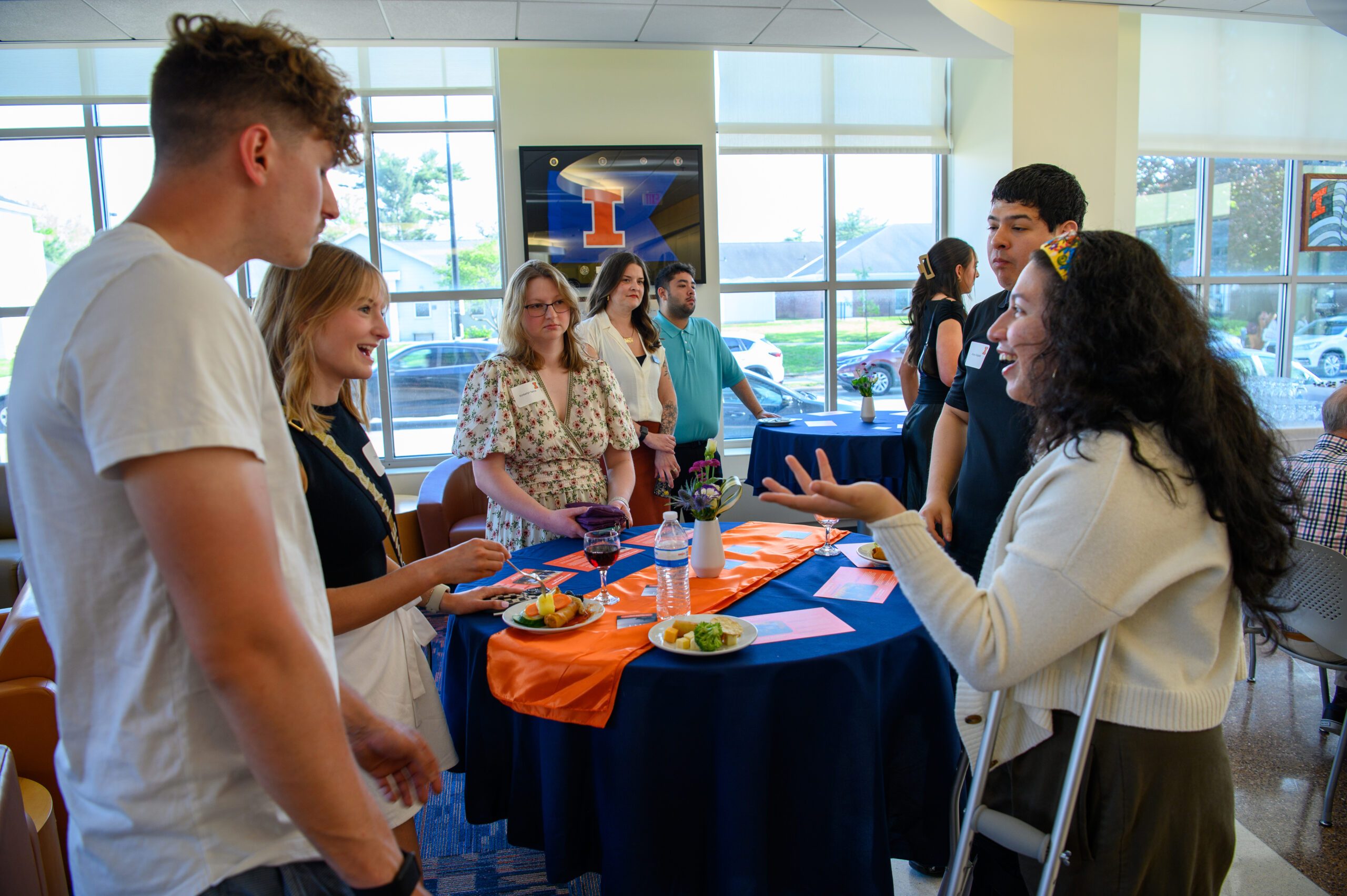
Alessio Norrito joins RST as a postdoctoral researcher


RST postdoc Alessio Norrito will primarily work with Professor Yuhei Inoue, while collaborating across the department.

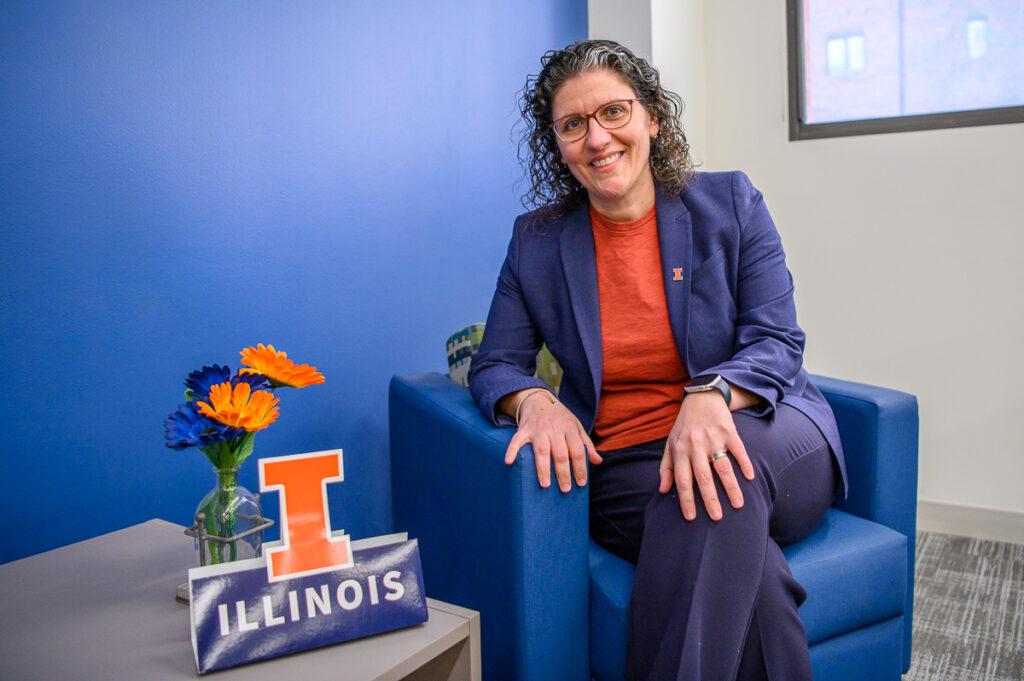
The Department of Recreation, Sport and Tourism at the University of Illinois Urbana-Champaign is pleased to welcome Alessio Norrito as a postdoctoral research associate. Norrito brings with him an international perspective, interdisciplinary expertise and a deep belief in the power of sport to improve lives and communities. He will primarily work with RST Professor Yuhei Inoue, while developing collaborations with other RST faculty members.

“Alessio is an excellent addition to the department, as his research can effectively bridge sport management, recreation and tourism, advancing our understanding of how these interrelated fields can work together to address some of the grand challenges facing today’s society,” Inoue said. “In addition, given his international background and experience, Alessio can share valuable global perspectives with RST faculty and students, strengthening an important dimension of our department.”

Norrito earned his Ph.D. in sport sociology and management from Loughborough University, one of the world’s leading institutions for sport research. Before joining Illinois, he served as a senior lecturer at Manchester Metropolitan University. His academic path, however, is rooted in a broader professional journey that spans continents and industries. Prior to entering higher ed, Norrito worked in marketing and e-commerce within the food and beverage sector, with professional experiences in Shanghai, China and Turin, Italy. Those early roles, he notes, shaped his understanding of organizations, markets and people—insights that continue to inform his research and teaching today.

Norrito has contributed to international research projects supported by organizations such as the International Olympic Committee, UNESCO and UEFA. His work has been recognized by the European Association for the Sociology of Sport, which awarded him the Young Researcher Award for his contributions to the field. Across these projects, his research consistently examines how sport and leisure can enhance well-being and strengthen communities, with particular attention to how organizations pursue social purpose at the intersection of global contexts and local realities.

That interdisciplinary focus made the U. of I. a natural next step.

“I think the University of Illinois has a unique take on the way that sport management should be, which strongly aligns with my ideas,” Norrito said. “I position my work in between sociology and management, firmly believing that the two disciplines should be in constant dialogue for solving pressing global issues, creatively and innovatively finding alternatives that benefit people globally.” He added that he found “matching values in the RST department,” allowing him to contribute meaningfully through sport management while being “strongly supported in the development and realization of this work.”

At the heart of Norrito’s research is a simple idea: sport helps people connect. “At its simplest, sport helps us talk to each other and know each other better,” he said. “These interactions make us feel emotions that either unite or divide us.” His work emphasizes that when organizations learn to harness the positive side of sport, it can generate feelings of being “loved, hopeful and ambitious.” What is often overlooked, he notes, is how everyday experiences—like playing or watching sports—can help individuals and communities imagine a shared future. “Sometimes the simple pleasures of life, like sport, can give us a direction of where we want to go in the future, either [individually] or collectively,” he said. “According to my research, this pursuit can generate diverse forms of happiness.”

Norrito’s international research collaborations have also reshaped his understanding of how global sport organizations operate. “I was surprised the most [by] just how valuable research is for global sport organizations,” he said. “My belief prior to these experiences was that research was something ‘for academics.’”

For students interested in working in sport at a global level, Norrito’s advice is clear: engage deeply with organizations’ strategic plans and think proactively about how to fit within them. “Your time in [U. of I.] is key to developing your future self, and taking the right courses can be key to becoming the person that you need to be to land that dream job,” he said.

This semester, Norrito is teaching RST 210: Management in RST, where he introduces students to management and leadership across recreation, sport and tourism contexts. His approach to leadership resists simple formulas.

“I strongly do not believe in a one-size-fits-all approach,” he said. “Instead I encourage RST students to engage in reflexivity. Reflecting on yourself is a key practice to understand what skills you need to develop to be the leader you want to be in the future.”

That philosophy is closely tied to how he brings his research into the classroom.

“My research leads me to believe that behind every social problem there is always an opportunity to solve it,” Norrito said. “And when this social problem is solved, it benefits those who have solved it, those who were affected by it and society as a whole.” He regularly draws on examples from his own work to show students how social impact, business      and management are deeply connected—and how future professionals can align purpose with practice.

Norrito’s passion for sport as a subject of serious academic inquiry has personal roots. He recalled a formative moment from his high school years in Palermo, Italy.

“When I was in high school, in my hometown of Palermo, the science surrounding sport was not very popular,” he said. After submitting an assignment about soccer, he was told by a teacher that sport did not belong in the classroom—and he failed the assignment.

“The fact that my job now involves talking about sport inside a classroom is quite ironic,” he said, “but also tells the lesson that we should protect our beliefs and challenge assumptions that seem wrong to us.”

Now at Illinois, Norrito is doing exactly that—challenging assumptions, connecting disciplines and preparing the next generation of RST leaders to see sport not just as an industry, but as a powerful force for social good.

Editor’s note:

To reach Alessio Norrito, email anorrito@illinois.edu.
 

Share on social
Related news

What two RST students gleaned from internships abroad


Every year, students studying Recreation, Sport and Tourism at the University of Illinois Urbana-Champaign venture across the United States for professional internships. Some even find work outside of the country.

The College of Applied Health Sciences spoke with two RST students set to graduate this May, David Shan and Juan Manrique, who spent last summer working abroad in China and Guatemala, respectively.

Their interviews have been lightly edited for length and clarity.

***

David Shan

RST student David Shan spent his early life in California but went to middle and high school in Beijing, China. He was always into sports, participating in volleyball and badminton. He even founded a huge badminton tournament at his high school. Shan followed his passion to RST at Illinois, where he’s set to graduate early—and he’s already interned for some of the biggest gaming companies in the world.

What company did you intern for last summer? 

I interned for Electronic Soul, a game studio and public-traded company in Hangzhou, China.

How did you get the job?

There are apps like LinkedIn and Handshake in Chinese markets for job applications. I scrolled through offers and applied for this role.

They asked, “How can you link your experience to the gaming industry?” I explained that games are part of sports, and that a lot of the classes I was taking at RST could prepare me for the job. Marketing, finance, event planning. I also talked about the badminton tournament I had been running. Those things all helped me get the job.

What was your day-to-day like?

At Electronic Soul, we’d have shows for some of the icons inside the games. We ran tournaments for the game they designed and helped prepare all the promotional materials. I was in the office for five days a week, from 9 a.m. to 6 p.m.

We had a big comic show for characters in the games. It was held in place for a week; we spent a bunch of time preparing for it. We set up the stage for the actors dressed as the characters.

I was also involved in the designing stage of one of the games they were launching, while they were still designing the characters. So I helped do some background research on how the characters could act in the game and what would make them appealing. 

Any special takeaways?

Before I went to this company, I didn’t play games that often. The whole process of game design and launch, it was a whole new thing for me.

There are a bunch of different fields in RST, but any industry that’s more popular, I felt like I could grow a lot and it may be easier to get in.

Any advice for students searching for internships abroad?

One is, be more open. There are a lot of industries that we could go to, even though it’s not linked with our own major. People might think, how are games related to your major?

There are a lot of opportunities outside of the [U.S.]. Other countries are still developing, they have huge market opportunities for games and other industries as well. Don’t be shy or afraid.

I got another internship at Tencent, the biggest gaming company in the world, because they had a career fair. I flew there over the weekend and talked to the staff and got the job. Just be more active and try out everything.

What’s your experience been like here at RST?

The RST internship coordinator Hayley Hardin and advisor Jason Schroeder, they all taught us how to reach out to people, how to email and be active. Giving everything a shot. That mindset helped me prepare for my career and get job opportunities.

I’m passionate about entrepreneurship; that’s my long term goal. But in the short-term, I may go to other gaming companies. I’m interning at Tencent right now. After I graduate, I may use that experience to apply for a full-time role.

There are a lot of opportunities outside of the [U.S.]. Other countries are still developing, they have huge market opportunities (…) Don’t be shy or afraid.

David Shan

RST undergraduate
Juan Manrique at the Xelajú MC soccer field.

Juan Manrique, a senior in RST, got his Associate Degree in Computer Science from Harold Washington College in his home city of Chicago. A lifelong sports enthusiast and soccer player, he decided to come to Illinois for its sport management program.

At first, Manrique wanted to find a D1 soccer program to play for. But in his first summer internship outside of the states, he helped the program run behind the scenes.

What company did you intern for last summer? 

The professional soccer club Xelajú MC in Quetzaltenango, Guatemala. They won the league championship back in 2012, when I was 10 years old. It was crazy seeing that on TV.

How did you get the job?

It’s a funny story, my grandfather was actually the president of Xelajú MC back in 1999–2000. But I didn’t use him as a resource at all. Instead, I sent the current president of the club a friend request on Facebook.

I basically told him, “I want to shadow you and help wherever I can.” I mentioned my granddad, and that both my dad and mom are from Guatemala. He accepted my friend request, and he had won the election to continue for a second term. At that club, it works like our presidential election, where they get elected to serve on new terms.

What was your day-to-day like?

When I arrived it was the offseason for the men’s team. The women’s team made the finals but unfortunately lost. I spent a lot of time learning different systems in the institution.

I was moving around the office and helping with whatever I could. I worked with the marketing and communications group, the media group of the team, even helped the utility group as well, making sure the players had their boots and their jerseys. It was pretty cool. That’s what made it interesting, was that every day was different.

Any special takeaways?

It’s a different culture, and a different way things are managed. Any resource we have here in the United States, it’s accessible. You have to work with limited resources, we didn’t have the best equipment, but we had to work with what we had.

The professor told me I was probably the first intern in the history of University of Illinois to do their summer internship in Guatemala. I told that to the soccer club over there; they had never had an intern in their existence. It was pretty cool.

Manrique sits at the club’s media table. He was told he’s “probably” the first student from the University of Illinois to land a summer internship in Guatemala.

Any advice for students searching for internships abroad?

It’s a great opportunity for people that want to take on a new challenge, learn about a different heritage and culture and see how things are managed. Businesses are managed differently in every country; every country has different standards, methods and techniques of how they should do things as an administration.

To do an internship abroad, you need to be familiarized and acquainted with what you’re gonna do. I had the luck that this is my favorite soccer team, and my family’s from there.

What’s your experience been like here at RST?

Doing the internship has opened my doors to working internationally, with them or another team, it has opened that path for me. I see RST is a community that’s growing; recreation, sport and tourism keeps exploding day by day. [The U.S.] is going to be co-hosting the World Cup. That’ll be huge. There’s a lot of opportunities out there, even remotely.

Editor’s note:

To reach Ethan Simmons, email ecsimmon@illinois.edu.
 

Share on social

Related news

Spring 2026: Message from RST Department Head Carla Santos


Hello alumni and friends of the Department of Recreation, Sport and Tourism,

As the spring semester comes to an end, I am pleased to share the latest edition of the Recreation, Sport and Tourism newsletter with our alumni community. This issue reflects the breadth of experiences, scholarship and impact that define RST, and I hope it reconnects you with the people and programs that continue to shape the field.

One of the highlights in this edition explores an exciting partnership centered on Wintrust Sports Complex and Bedford Park, where RST students have been directly involved in emergency planning efforts. This hands-on work exemplifies how our students apply classroom knowledge to real-world challenges, gaining valuable experience while contributing meaningfully to community resilience and safety.

We also take a reflective look at the history of Black runners in the Boston Marathon, a story that not only honors perseverance and achievement, but also underscores the evolving relationship between sport and social change. It is a powerful reminder of the broader cultural contexts in which recreation and sport exist.

Closer to home, we celebrate the contributions of Professor Laura Payne and her work documenting the history of the Office of Recreation and Park Resources. This story highlights the enduring legacy of outreach, research and public engagement that has long been a cornerstone of our department’s mission.

Our alumni network continues to be a source of pride and inspiration. In this issue, you’ll read about a group of RST graduates whose professional paths converged at the USTA, illustrating both the strength of our program and the lasting connections formed here. Their story is a testament to the collaborative spirit that defines our community.

We are also excited to spotlight the global opportunities available to our students, particularly through internships abroad that expand cultural understanding and professional growth. These experiences prepare students to lead in an increasingly interconnected world.

Please join me in welcoming our new postdoctoral researcher, Alessio Norrito, whose work will contribute to the department’s ongoing commitment to innovative research and thought leadership.

Finally, the 2026 Sapora Symposium brought together students, alumni and industry leaders across recreation, sport and tourism for a dynamic day centered on the theme of community. More than 130 students engaged with over 35 speakers and table hosts—many of them RST alumni—creating meaningful connections and mentorship opportunities. We are especially grateful to our alumni, partners and TSMGI for making this experience possible.

Thank you for your continued support and engagement with RST. Whether through mentorship, collaboration or simply staying connected, you play a vital role in sustaining the strength of our community. I hope you enjoy this issue and find it both informative and inspiring.

Warm regards,

Carla Santos, Department Head

Recreation, Sport and Tourism

Share on social

Related news

An online RST master’s degree affirmed Haupert’s career in the arts


In her new role at the Palatine Park District, Laney Haupert carries administrative work to keep her local arts scene running .

From an early age, Laney Haupert dreamed of working in the theater—not acting on stage, but managing her favorite productions behind the scenes. 

But life took her in an unexpected direction: as Palatine Park District’s cultural arts manager, Haupert carries administrative work to keep her local arts scene running from her position in parks and recreation. 

“I had this lightbulb moment: I can work in cultural arts, do theater, put up shows, serve my community, and have all the benefits of working in the public sector,” Haupert said. “Taking this job was my Hannah Montana, ‘Best of Both Worlds’ moment.” 

After a stint in the creative arts and a taste of park district life, Haupert went back to school, obtaining master’s degree online from the Department of Recreation, Sport and Tourism at the University of Illinois Urbana-Champaign in 2021. It gave her the tools to steer her career toward a new path. 

“A master’s degree is something I always wanted to complete,” Haupert said. “Having found this program and hearing more about it, it was a great fit for where my career was at and where I saw my life going.” 

Haupert is from Bartlett, Illinois, a village of 41,000 in the Chicago metro area. She grew up in community theater, starring in her local production of “The Velveteen Rabbit” when she was 8 years old. As she got older, she found more roles backstage: hanging curtains, doing makeup and building sets for local plays.

Haupert’s mother, Carrie Fullerton, always thought Haupert had the “personality for parks and recreation.” Fullerton is a two-time graduate of the RST program at Illinois and has served as executive director of the Arlington Heights Park District since 2020. 

Haupert had different plans, at least at first. She obtained her Bachelor of Fine Arts in Theatre Administration from Millikin University in 2018, working as director of development for the school’s student-run studio theater. But after graduating, the job prospects were dry, so she found an administrative assistant role at the Glenview Park District—and found out she loved it. 

“Sometimes it takes someone who is not your parent to realize how cool this thing is, that your parent has been spoon-feeding you,” she said. “I thought parks and recreation was something I really wanted to explore further.” 

You have to remember the ‘why’ of what we’re doing, and who it’s for. It’s for the little version of you who really needed this at a certain point in life.

Laney Haupert

Cultural Arts Manager, RST ’21

In February 2020, she landed a role with the Bolingbrook Park District, managing both its gymnastics and theater programs. A month in, the COVID-19 pandemic hit, all in-person events were canceled and she had a “whole lot of nothing to do.” 

Haupert’s graduation cap after obtaining her online master’s degree in RST reads “Don’t forget to play.” Today, she is the Palatine Park District’s first-ever cultural arts manager. (Photo provided)

But Haupert had a clearer idea of where she wanted to take her career. She wanted more knowledge—and a degree that connected to her new industry. 

The flexibility of the RST online master’s program appealed to her: “Maybe you’re a sports person and love athletics, want to be around it doing recreation management. For me, my love has always been theater and live performance,” Haupert said. 

The online format made it easier for her to balance coursework and her job, completing her master’s in a year and a half. RST’s online degree gave her “structure” that she sorely needed, especially early in the pandemic. The master’s program also helped her ace the test for her Certified Parks and Recreation Professional Certification, an industry qualification. 

Haupert stayed with Bolingbrook until January 2022, when she began with the Deerfield Park District as its cultural arts and special events supervisor. That experience brought her to Palatine in 2024, where she’s continued to support young artists as the park district’s first ever cultural arts manager. 

She supports all manner of performances year-round: multiple choirs, a community band, theater programs and dance recitals. Her big task is to cultivate a school-of-art brand for the park district, while getting “more and more people to do cool stuff with us,” she said. 

With a fresh perspective on her role, Haupert is helping to realize the artistic dreams of kids growing up in the same lane she once did. 

“The most important thing that’s been a throughline for me: if you’re having fun, you never work a day in your life,” Haupert said. “You have to remember the ‘why’ of what we’re doing, and who it’s for. It’s for the little version of you who really needed this at a certain point in life.” 

Editor’s note

To reach Ethan Simmons, email ecsimmon@illinois.edu.

Share on social

Related news

In RST event management course, preparation is the main event


Visitors to this year’s “Yappy Hour” event brought their pups to Riggs Beer Co. for drinks and fun. Recreation, Sport and Tourism students organized this event and several others this spring. (Photo by Ethan Simmons)

Tournaments for pickleball, spike ball and wheelchair basketball, a “yappy” hour at a local brewery with dogs invited, a fairy tale ball at a local library: Each spring, students in Recreation, Sport and Tourism help organize some of the semester’s most memorable events on and off campus.

And it all comes back to one class: Event Implementation in RST, which is required coursework for undergraduates in the RST major, and Sarah Agate’s “favorite class to teach.”

“In recreation, sport and tourism, regardless of what your job is, you’ll probably be involved in helping plan and facilitate events,” said Agate, teaching associate professor in the Department of RST in the College of Applied Health Sciences at the University of Illinois Urbana-Champaign. “I get emails from students even a few months later who have graduated and are working in their grown-up job, saying, ‘I hadn’t planned on doing events, but now that’s part of my job, and I feel so prepared and ready because of what we did.’”

Technically, Agate teaches two events courses—RST 460: Event Management in Recreation, Sport and Tourism and RST 465: Event Implementation in RST take place across the fall and spring semesters. The two-course sequence was an appealing feature for Agate before she was hired at the University of Illinois; it offered a more rewarding experience than the one-semester event classes she had taught at previous stops.

In fall, students group together, decide the event they want to support, then spend the next few months partnering with local agencies, finding sponsors and sharpening their event plans, including emergency and risk management.

Spring is all about promotion, execution and evaluation. This year, RST students in her class helped put on 11 events, starting with the Illinois Wheelchair Basketball Tournament on Feb. 13–14 and ending with a kids’ football camp on April 26.

After facilitating the events, the final project is the evaluation report. Students gather survey data from attendees and compile suggestions for their partnering agency of what went well and how the event could run even better next time.

Sarah Agate, teaching associate professor in RST.

The event planning process can feel “overwhelming” to undergraduates who are partnering to host big local events with lots of moving pieces. Agate planned a phase of her course to answer the question: how can we be ready if something goes wrong?

This year, Agate expanded the risk management section. She took students to a local crisis management training, including first aid demonstration and an active threat training with campus police officers.

Students are assigned a “venue risk assessment” for each event, where they check for first aid kits and defibrillator locations, whether exits were clearly marked and determine sheltering plans spots if severe weather were to come around.

“The saying that I have heard numerous times is something along the lines of, ‘Hopefully we don’t have any problems, but in the case that we do, we will be prepared for them,’” said RST senior Drew Erickson, who organized a “Yappy Hour” at the Riggs Beer Co. with seven of his classmates.

The group planned a rain date just in case of April showers. Of course, the event went smoothly on a sunny Urbana spring day, bringing together townies, their pups and local vendors over brews.

RST students Nina Bollman, Tariq Cotton, Kaden Feagin, Brandon Henderson, James Kruetz, TJ McMillen, Mac Resetich and Xavier Scott, hosted the ICON for Illini Kids Football Camp held April 26, 2026, at the Irwin Indoor Practice Facility. (Photo provided)

Many of the events have become community mainstays, like the annual Fairy Tale Ball at the Urbana Free Library, or the Illini Get Pickled pickleball tournament, now three years running.

RST junior Michael Evans has helped run the tournament since its inception, an event in Huff Gym first created by RST students Carson Bounds and Gavin Christopherson. The past two years, it raised more than $11,000 for Cunningham Children’s Home, a child welfare agency based in Urbana.

This year’s event had a recreational bracket with lots of student and faculty sign-ups and a second tourney with a new spin: a Greek house bracket for fraternity and sorority members to duke it out on the pickleball courts. This year, more than 50 teams signed on.

Though Evans had experienced behind-the-scenes event organizing through his work at Illinois Athletics, Agate’s courses gave Evans the “why” behind every step of the process.

“Compared to an Illini football game, our event is a blip on a map,” Evans said. “To see how much it takes for just this small pickleball tournament and the number of people from so many different places who have their hands in it—whether it be, ‘Oh hey, I know this person,’ or the people we talked to rent Huff Gym out, the sponsors … there’s a ton of people who just want to see this go well, and they want to support Cunningham.”

The events courses are designed as a capstone experience for students in the recreation, sport and tourism program, and Agate gets an extended front-row seat, as a rare instructor to see the same students for two semesters.

“I feel like I really get to know them,” Agate said. “It’s fun to see their skills develop over those eight months we have together, where they’re nervous at the beginning, then they get into the process with their professional. By spring, they’re event facilitators … it’s fun to watch their confidence grow.”

Editor’s note:

To contact Sarah Agate, email stagate@illinois.edu

Share on social

Related news

Prepared for the unexpected: How Bedford Park and RST built a living laboratory for safety


Students from RST 441 and faculty from the department have developed a model for emergency preparedness at the Wintrust Sports Complex at the Village of Bedford Park. (Photo provided)

On any given weekend, the parking lots around the Wintrust Sports Complex fill with minivans and team buses, their passengers streaming through the doors with duffel bags and folding chairs in tow. Inside, basketballs thud against hardwood, volleyballs whistle across nets and tournament brackets inch toward championships. Over the course of a busy stretch, as many as 2,000 athletes, coaches and family members can pass through the facility.

What most of them never see is the intricate choreography required to keep that many people safe, and the multiyear partnership quietly reshaping how that work gets done.

Over the past three years, the Village of Bedford Park, Wintrust and students and faculty from the Department of Recreation, Sport and Tourism in the College of Applied Health Sciences at the University of Illinois Urbana-Champaign have built a model for emergency preparedness that doubles as a proving ground for experiential learning. What began as a consulting-style project in faculty member Mike Raycraft’s course has evolved into a collaborative, partner-supported initiative central to the department’s engaged scholarship.

At its core, the collaboration reflects RST’s broader strategy: strengthening its national leadership in experiential education through a growing network of community, industry and governmental partnerships that give students high-impact, hands-on training opportunities while addressing real-world challenges.

One prominent example is the funded contract with Bedford Park and the Wintrust Sports Complex led by co-principal investigators Carla Santos—RST’s department head—and RST faculty members Mike Raycraft and Toni Liechty. Through that work, faculty and students are not only developing applied learning opportunities, but also assisting their sponsor in tackling pressing issues tied to community development and facility and operational readiness.

“Our sponsored partnership with Bedford Park and the Wintrust Sports Complex enables us to translate research into practice while providing students with direct, hands-on experience in the field,” Santos said. “Through engagement with practitioners and meaningful service to communities, our students develop the professional competencies, leadership skills and applied judgment that employers increasingly demand. This investment in experiential learning strengthens course relevance, deepens community impact and reinforces RST’s national reputation for preparing career-ready graduates.”

The practical engine behind much of that work is RST 441, a course led by Adjunct Instructor Robyn Deterding. In the class, graduate students function less like traditional students and more like consultants embedded in a working sports venue.

When the partnership began, Deterding said, the first task was to assess the complex’s existing safety infrastructure.

“Wintrust didn’t have much in the way of plans and emergency practices when we started,” she said. “So first we had to find out what they had, what they did and when they did it.”

Students evaluated routine facility checks, reviewed staff training frequency and examined equipment inspection practices. They presented recommendations to venue leadership, who were responsible for implementation. In the second year, the focus sharpened on evacuation planning—a critical need for a multicourt complex hosting youth tournaments, adult leagues, corporate events and special competitions, often simultaneously.

“You know you can’t prevent accidents and incidents from occurring,” Deterding said. “But you can plan and train for them. If they don’t happen, excellent. If they do, you have a plan to work from.”

The partnership has since expanded to include coordination with the Chicago Office of Emergency Management, Homeland Security and other public safety agencies. This year, students in RST 441 are partnering with the complex, the village and Chicago emergency officials to plan and deliver the Safe Chicago training program, an initiative designed to train up to 100 community and agency participants in CPR/AED, Narcan administration and Stop the Bleed techniques.

The Safe Chicago program represents the next phase of the “living lab” concept: moving beyond internal planning to outward-facing community resilience. By training coaches, staff, volunteers and local collaborators, the effort extends preparedness beyond the building’s walls.

For Bedford Park officials, the collaboration has provided both practical benefits and a long-term talent base.

“Our goal is to be able to develop a pipeline to give students an experience and give them an internship where they’re actually going to learn something and be in charge of the task with a project as opposed to going to an already established relationship,” said Joe Ronovsky, the village’s chief business officer. “We view this as like the lab in the Chicagoland area.”

That lab connects students with a broader ecosystem of sports and corporate partners, including the Chicago Sky, the Chicago White Sox, Wintrust Financial and Special Olympics Illinois.

“We really wanted to create kind of this lab that gave them real-life experience as opposed to just an internship where you’re cold calling or doing mailing,” Ronovsky said. “A real-life lab.”

For students, the difference is tangible. Rather than drafting hypothetical plans for a classroom grade, they are producing emergency guides, training protocols and communication strategies that can be adopted and implemented immediately.

“Any students working on these projects with us can actually go into a job interview and talk about things that have actually been done and implemented versus a hypothetical project that they did in grad school,” Ronovsky said.

The arrangement also acts as an external audit for the village and complex.

“The return on it for us is that we get third-party validation of changes or things that we need to implement,” Ronovsky said. “They’re the brightest minds, and one day all those students are going to be in leadership positions. The best thing you can do is just open up the opinions of the room and let all the brighter people talk and contribute to what we want to do. The return for us is just to be able to create this incubator.”

The inside of the Wintrust Sports Complex. (Photo provided)

Co-investigator Raycraft said the “leadership of Dave Brady and Chief Business Officer Joe Ronovsky has been transformative for the Village of Bedford Park.

 “Their forward-thinking vision has accelerated economic development, strengthened tourism and elevated the village’s profile as a hub for sport, business and community engagement. Importantly, this collaborative environment has created a unique living laboratory for our students and faculty and provided opportunities to explore innovative ideas, conduct impactful research  and contribute meaningfully to community-based service initiatives.”

Deterding emphasizes that emergency planning hinges on the principle of reasonable care, the obligation to take appropriate precautions to protect patrons. In a venue that can host thousands of visitors in a weekend, many of them minors, the stakes are high.

“Making sure everyone is receiving the same information and coordinating the work each is doing is difficult,” she said. “There are a lot of moving parts, but that’s what we do, and we do it well.”

Risk management can easily fade from attention in the absence of crisis, she acknowledged. Part of her role is ensuring that safety remains integrated into daily operations rather than relegated to a binder on a shelf.

The broader lesson, Santos said, is that experiential learning is most powerful when it serves both students and communities. The Bedford Park partnership complements a wider array of industry-engaged projects across RST, each designed to blur the line between classroom and field.

As whistles blow and crowds cheer inside the Wintrust Sports Complex, much of that work remains invisible. Yet embedded in updated evacuation guides, coordinated agency protocols and community-wide trainings is a model for how universities and municipalities can collaborate—strengthening public safety while preparing graduates ready to lead from day one.

In Bedford Park, the game plan now extends well beyond the court.

Share on social

Related news

How ORPR is shaping the future of parks and recreation


The ORPR team has worked with more than 20 community and nonprofit organizations on facility planning, capacity building and more methods of improving residents health and quality of life, writes Director Laura Payne. (Photo provided)

On any given day, a graduate student at the University of Illinois Urbana-Champaign might be found leading a focus group in a small Illinois town, presenting data to local officials or helping design the future of a community park. It’s not a simulation—it’s real work with real impact, made possible by the Office of Recreation and Park Resources.

Since its founding in the mid-1960s by Joseph Bannon, Ph.D., ORPR—which is affiliated with the Department of Recreation, Sport and Tourism in the College of Applied Health Sciences at Illinois—has been guided by a simple but powerful vision: connect research to real-world practice while strengthening communities through parks and recreation. Decades later, that vision is not only alive: it’s expanding to enhance ORPR’s reach and impacts.

In recent years, ORPR has worked with more than 20 community and nonprofit organizations, helping them tackle challenges ranging from facility planning to capacity building toward helping communities enhance their health and quality of life for their residents. At the heart of this work is a commitment to service, education and collaboration.

“We take our lead from the communities, as they are experts of their own communities and we partner with them on their projects,” said Laura Payne, director of ORPR. “Students gain hands-on experience while helping organizations make meaningful, data-informed decisions.”

That hands-on experience is transformative. Students don’t just learn theory; they conduct focus groups, analyze survey data and present recommendations to real clients. For many, it becomes a defining part of their professional journey.

“The experience I gained with ORPR helped my application stand out,” said Aaron Hoyle-Katz, a recent master’s graduate who secured a park planner position with the Champaign County Forest Preserve District. “I wasn’t just learning about planning—I was doing it.”

ORPR’s impact extends far beyond the classroom. In Naperville, a needs assessment conducted by ORPR revealed strong demand for a multipurpose recreation facility—insight that guided efforts to secure funding for a new community activity center and to acquire additional land to preserve, restore and maintain parks and extend multiuse trails. In the village of Brookfield, feasibility studies are shaping the future of local multipurpose community recreation spaces.

A rendering of the Naperville park district’s multipurpose facility, born of a needs assessment by ORPR. (Photo provided)

Perhaps one of the most compelling examples comes from the village of Crete. There, ORPR partnered with multiple municipal agencies to conduct a comprehensive community needs assessment. Through shared planning workshop sessions, the Park District, Library District, Village and Township aligned around common goals.

The results were tangible. Community feedback highlighted priorities such as expanded bike infrastructure, more youth and adult programming and the need for a central gathering space. Since the project concluded, Crete has already acted, purchasing and transforming a building into a community center.

For students, projects such as these often evolve into deeper research opportunities. Hoyle-Katz, for example, conducted his thesis research on trail development in Crete, uncovering both community concerns and opportunities for collaboration. Another graduate student, Ryan McGrath, partnered with the Illinois Park and Recreation Association to study how agencies responded to the COVID-19 pandemic—work that now helps guide future resilience planning.

ORPR’s reach also extends into the classroom. Through partnerships with courses such as the Community and Open Space Design Studio in the Department of Landscape Architecture, students collaborate directly with municipalities such as Rock Island, helping reimagine parks such as Mel McKay Park while gaining invaluable design and planning experience.

Looking ahead, ORPR continues to push the boundaries of research and practice. In collaboration with the Rails-to-Trails Conservancy, the team is assessing research on the economic, social and health outcomes of trails to assist in developing an impact calculator that will help communities demonstrate the return on investment in multiuse trails. They are also working on initiatives to position parks and trails as solutions to social isolation and loneliness.

At its core, ORPR is more than a program—it’s a bridge. Between students, educators and professionals. Between research, education and real-world application. And between communities and the resources they need to thrive.

When students leave here, they’re not just prepared—they’re experienced. And the organizations they serve professionally and communities we work with are stronger because of it.

Editor’s note:

To reach Laura Payne, email lpayne@illinois.edu.
 

Share on social

Related news

Full circle: Illinois alumni reunite through friendship and the U.S. Open


Three Recreation, Sport and Tourism alums, Eva Schmidt, Chelcia Abajian and Christine Stromberg work together through the U.S. Tennis Association. “It’s incredible to see the three of us together again.” (Photo provided)

More than a decade after their time together at the University of Illinois Urbana-Champaign, three alumni from the Department of Recreation, Sport and Tourism have found themselves reunited in a place far removed from campus, yet deeply connected to their shared past.

Today, Chelcie Abajian, Eva Schmidt and Christine Stromberg work together through roles connected to the U.S. Tennis Association, contributing to the operations and hospitality surrounding one of the sport’s most prestigious events: the U.S. Open in New York. Their professional reunion, however, is only part of the story. At its core lies a friendship that began during their graduate school days at Illinois and endured long before their careers converged again.

Seeing one another again in the same professional space has been both surreal and deeply meaningful.

“It’s incredible to see the three of us together again,” said Abajian, who is senior manager, conferences and events at the USTA. “Even during the years we weren’t working side-by-side, our bond never wavered.”

Some of their most vivid memories from Illinois weren’t formed in classrooms or lecture halls, but in moments of spontaneity that helped cement their friendship. All three got both their undergraduate and graduate degrees in RST.

“My favorite memory from our Illinois days is more on a personal level,” Abajian said. “Just three months after we met, we took a spontaneous trip to New York City, which was Eva’s first time ever visiting. Looking back, that was the moment we knew this friendship was for the long haul. It’s pretty remarkable that the city where we first bonded as friends is now the same place where we’re making our mark together during the U.S. Open.”

Another favorite memory comes from the final days of their time at Illinois.

“My favorite memory together at Illinois was taking our graduation pictures at Memorial Stadium,” said Schmidt, now director of premium hospitality, office of the president with the USTA. “With the help of a colleague, we were able to take pictures in the Colonnades and it was a fun way to reflect on the last two years. Today, 12 years later, it’s surreal to be working together again, but I love the camaraderie!”

Their journey from classmates to colleagues was never guaranteed, but perhaps it wasn’t entirely surprising either.

“In a way, I think we always knew,” Abajian said. “Christine and I have been a team since 2008, first as student-athletes and now as colleagues who share a love for event operations and tennis.”

That long-standing partnership eventually played a role in bringing the trio back together professionally. When Abajian joined the USTA in 2022, she quickly realized the potential of reconnecting with familiar talent.

“When I landed at the USTA in 2022—due to Christine referring me—one of my first major events was managing the president’s suite,” she said. “I called Eva because her hospitality background was the missing piece of the puzzle for our staff. Watching her move into a full-time role afterward was the ‘full-circle’ moment we’d been building toward since college.”

Another member of the group shared a similar perspective about their eventual reunion.

“Similar to Chelcie’s answer, I always knew we’d be working together again in some capacity,” Schmidt said. “Our paths were always parallel and it was only a matter of time before they intersected.”

Even so, the exact setting was a surprise.

“When we were at Illinois, if I could have predicted where we would end up, at least for me and Eva, I thought it would be in Chicago somewhere, not all living in new places,” said Stromberg, who is director of U.S. Open Player Services. “The years after graduation, following each other’s careers and supporting each other in what we were pursuing is one of the things that kept us all together.”

Their individual career paths since college have been anything but identical.

Abajian remained closely tied to athletics after completing her master’s degree, eventually transitioning into her current role with the USTA.

“I stayed in college athletics until I shifted to the USTA in 2022,” she said. “I’m not surprised by my journey. I have a love for tennis and event management and this role marries the two together.”

Schmidt said her trajectory was far less predictable.

“My career journey since college has been completely nonlinear,” she said. “Every time I thought I had a pathway, I’d pivot and go the polar opposite direction. Working at the USTA has felt the most stable so far.”

Unexpected turns ultimately became a rewarding part of the journey.

“I never thought I’d end up outside of the state of Illinois but that’s my favorite part of my career path,” she said. “I never expected any of this and I continue to surprise myself. Who knows what’s next!”

For Stromberg, tennis itself became the unexpected thread tying everything together.

“Even though I grew up as a tennis player, my original goal was not to work in tennis,” she said. “I started taking opportunities as they arose and walked through some doors that were open and found the career path that I was ultimately looking for; I just didn’t know it’s what I was looking for.”

Many of the skills they rely on today trace directly back to their student-athlete experiences and time at Illinois.

“My skills go back to being a student-athlete,” Abajian said. “Most importantly: time management. I can juggle multiple tasks, prioritize what needs to get done and work my daily life around a schedule.”

Schmidt credited her early experiences working within Illinois athletics as formative.

“I was fortunate enough to have an internship in the Division of Intercollegiate Athletics as an undergrad that took me into my graduate assistantship at Illinois,” she said. “Those years were so formative and have influenced everything I’ve done.”

Accountability, Stromberg added, remains central to how she approaches leadership today.

“Similar to Chelcie, my skills go back to being a student-athlete,” she said. “In addition to what she mentioned, accountability is one of the most important things I learned and it drives how I make decisions and lead today.”

Their friendship has only strengthened as their relationship has shifted from classmates to colleagues.

“It has only grown,” Abajian said.

Working together professionally has also given them new perspectives on each other.

“It’s certainly grown and also allows us to approach things from a different perspective,” Schmidt added.

“It continues to grow every day,” Stromberg said.

One moment in particular made their shared journey feel complete.

During one U.S. Open, the three unexpectedly found themselves together in the player walk-on tunnel at Louis Armstrong Stadium during the retirement ceremony for American tennis player John Isner.

“In my first year full time with the USTA, the three of us found ourselves in the player walk-on tunnel at Louis Armstrong Stadium for John Isner’s retirement ceremony,” Schmidt said. “Each of us were there for different reasons and we had yet to organically bump into each other at the Open. We all paused and acknowledged the greatness of the moment and even took a selfie.”

Their long history together also shapes how they work.

“Having been friends since 2012, our professional partnership at the USTA is built on a decade-plus of mutual trust,” Abajian said. “This shared history allows us to solve problems with total confidence and zero hesitation. We are each other’s most reliable sounding board and always the first phone call when it’s time to get to work.”

Honesty is part of that dynamic as well.

“We aren’t afraid to tell each other the hard things,” Stromberg added. “That’s really where growth comes from.”

Looking back, each of them has advice for the younger versions of themselves who were navigating graduate school in Champaign-Urbana.

“Work hard, but work does not define you,” Abajian said. “Chill out on the perfectionism; mistakes are just proof that you’re actually out there trying things. Your worth doesn’t go up or down based on your productivity, so don’t forget to clock out and find some sun.”

Schmidt emphasized patience.

“Take a breath,” she said. “Don’t feel like you have to have your whole life figured out by 25.”

And while their professional futures may take them in different directions, one thing is certain: their friendship will remain constant.

“Our friendship comes first in our circle,” Abajian said. “We are fortunate to have each other to lean on for work and personal advice. We hope to keep growing and learning together in this organization.”

As Stromberg summed up, the next step might be uncertain, but the foundation they share is not.

“We don’t know where the professional path will take each of us,” she said. “But we know where our friendship will.”

Editor’s note:

To reach Vince Lara-Cinisomo, email vinlara@illinois.edu
 

Share on social

Related news

From the lab to the concert hall, virtual reality plays a growing role in acoustics studies


To simulate classrooms, performance halls and other indoor environments, the Speech Accommodation to Acoustics Lab uses virtual reality and “auralization” techniques in controlled settings. (Photo provided)

At the Speech Accommodation to Acoustics Lab, researchers are trying to solve a common problem for teachers and vocal performers. How can they be heard and understood without straining their voices? 

Pasquale Bottalico, associate professor of speech and hearing science, runs the Speech Accommodation to Acoustics Lab, which investigates the acoustical conditions of rooms—classes, restaurants and concert halls alike—that lend themselves to intelligible speech with minimal vocal effort from the speakers. 

Over the last 5 years, the lab’s research has steered toward virtual reality and auralization, a technique to replicate the sound conditions of different spaces, to simulate these indoor conditions and make their studies more applicable to real-life scenarios. Here, Bottalico expands on his SpAA Lab’s recent projects and VR experiments.

When did your lab begin using virtual reality? What compelled you about this type of technology for your area of research?

Our lab began working with virtual reality (VR) in 2020 as part of our broader research on how acoustic environments influence voice production and communication. In many traditional speech and voice studies, experiments are conducted in quiet laboratory settings that do not fully represent the complex environments people encounter in everyday life.

VR provides a powerful way to bridge that gap. It allows us to recreate realistic environments—such as classrooms, concert halls, or social settings—while still maintaining precise experimental control. For example, VR makes it possible to manipulate room acoustics, background noise and visual cues independently and observe how speakers adapt their voice. Research has shown that both auditory and visual environmental information can influence voice production and perception, highlighting the importance of studying communication in multisensory contexts rather than purely auditory ones.  

For virtual reality studies you’ve worked on, could you describe what these experiences look, feel, and sound like for participants?

Participants wear a virtual reality headset and headphones that immerse them in a simulated environment. For example, someone might find themselves standing in a classroom, a concert hall or a restaurant while speaking or singing. The visual environment allows them to look around the space, while spatialized audio reproduces how their voice would sound in that particular room.

This means participants hear realistic acoustic effects such as reverberation, reflections and background noise. Studies using these methods have shown that speakers and singers naturally adjust their vocal production depending on the acoustic properties of the environment, even when those environments are simulated.  

What equipment or tools do you use to simulate these experiences?

To create these simulations, we combine several technologies. 

Participants typically use a VR headset for the visual environment and high-quality headphones to deliver spatial audio that reproduces realistic room acoustics.

Behind the scenes, we use auralization techniques, which allow us to simulate how sound propagates in real spaces such as classrooms, concert halls or lecture halls. We use real measurements to simulate the acoustics of the environments, like a University of Illinois classroom, or venues at the Krannert Center for the Performing Arts. 

Microphones and acoustic analysis tools are also used to measure vocal parameters such as sound pressure level, pitch, and vocal effort while participants interact with the virtual environment.

Because virtual reality can replicate the sensory conditions of real communication environments, it may help improve the transfer of therapeutic strategies from the clinic to everyday life.

Pasquale Bottalico

Associate Professor Speech and Hearing Science

Tell us more about VR as a training or therapy tool. How might virtual reality benefit professional voice users and individuals with voice disorders?

VR has enormous potential as a training and therapy tool, especially for professional voice users such as teachers, singers and public speakers. These individuals often need to communicate in demanding environments for long periods of time, which can lead to vocal fatigue or voice disorders.

One challenge in voice therapy is that exercises performed in a quiet clinic may not transfer easily to real-life environments. VR can help address this problem by allowing people to practice communication in realistic scenarios—such as teaching in a noisy classroom or speaking in a crowded social setting—while still being in a safe and controlled therapeutic environment.

Because VR can replicate the sensory conditions of real communication environments, it may help improve the transfer of therapeutic strategies from the clinic to everyday life.

What are some examples of virtual reality studies you’ve performed? What did you learn?

Our lab has been exploring VR applications for voice and speech research through several projects and doctoral dissertations.

For example, the doctoral work of Charles Nudelman, Ph.D., supported by the Raymond H. Stetson Scholarship, examined how visual aspects of an environment—such as room size and occupancy—affect voice production using immersive virtual reality. His research demonstrated that visual characteristics of a room can influence acoustic voice parameters and self-perceived vocal fatigue and discomfort, highlighting the importance of visual cues in voice production.  

Similarly, the doctoral research of Ümit Daşdöğen (now at CSD University of Delaware), funded through an NIH R21 grant, investigated how auditory, visual and audiovisual sensory inputs influence voice perception and production in immersive VR environments. This work showed that multisensory factors can significantly affect vocal loudness, vocal effort, and acoustic voice parameters, helping establish a scientific foundation for the use of VR in voice training and therapy.  

Another related project is the doctoral research of Carly Wingfield at the Illinois School of Music in collaboration with Professor Yvonne Gonzales Redman, which was supported by the prestigious Kate Neal Kinley Fellowship. Her work explored the use of VR simulations to help singers rehearse in virtual replicas of performance venues. The results suggested that practicing in VR environments allowed singers to better adapt to the acoustics of the real performance space and feel more confident when performing in unfamiliar venues.  

We also currently have a new project underway in the lab focusing on virtual reality–based voice therapy and communication training. This study involves Giulia Fusari, a visiting scholar from the Politecnico di Milano, and Mariah Bates, a master’s student in Health Technology at the University of Illinois completing her capstone project with our lab.

The project is developing a human-centered VR platform designed to simulate realistic conversational environments, such as social interactions in restaurants or other everyday communication settings. Participants complete weekly sessions over several weeks, and we evaluate usability, communication effort, realism of the environment and overall user experience. The goal is to better understand how immersive environments can support communication training and voice therapy in ecologically valid contexts.

In future developments, these types of VR environments could also be adapted to support individuals with neurological conditions that affect speech and voice, such as Parkinson’s disease, where patients often struggle to generalize speech therapy skills from the clinic to real-world communication settings.

If there are studies open to participants, how can they reach out?

Individuals interested in participating in research studies in our lab can contact us directly at pb81@illinois.edu. We regularly recruit participants for studies involving speech perception, voice production and immersive communication environments.

Editor’s note:

To learn more about the Speech Accommodation to Acoustics Lab, visit their website.


Share on social

Related news

Our 2026 College of Applied Health Sciences award winners


At the spring college meeting for the College of Applied Health Sciences, our faculty and staff gathered to celebrate this year’s college award winners, and give send-offs to two faculty leaders who are entering retirement: Speech and Hearing Science Professor and former Department Head Pamela Hadley and AHS Professor and Associate Dean for Research Jeff Woods.

(Two of our award winners, Christy Bazan and Mary Flaherty, won equivalent awards from campus as well.)

Here are our AHS college award winners for 2025-26. A recording of the meeting is available on Media Space:

AHS Staff Excellence Award

  • Chez Veterans Center Outreach Coordinator and Veteran Recruiter, Garrett Anderson
  • College of AHS Assistant to the Dean, Robbin King

AHS Excellence in Undergraduate Advising Award

  • Health and Kinesiology Academic Advisor, Patty Hudek

AHS Excellence in Undergraduate Teaching Award – Faculty

  • Speech and Hearing Science Associate Professor, Mary Flaherty

AHS Excellence in Undergraduate Teaching Award – Teaching Assistant

  • Health and Kinesiology Graduate Teaching Assistant, Ashley Morgan

AHS Access, Belonging and Community Awards

  • SHS student Zhitong Zhu
  • RST graduate research assistant Jenna Fesemyer-Ayers
  • RST Assistant Professor Yannick Kluch
  • Chez Veterans Center Research Assistant Professor Michael Lotspeich-Yadao

AHS Excellence in Guiding Undergraduate Research Award

  • Recreation, Sport and Tourism Assistant Professor, Joelle Soulard

AHS Excellence in Graduate and Professional Teaching Award

  • SHS Associate Professor, Dan Fogerty

AHS Excellence in Graduate Student Mentoring Award

  • HK Associate Professor, Laura Rice

AHS Excellence in Online Teaching Award

  • HK Instructor, Christy Bazan

Phyllis J. Hill Faculty Award for Exemplary Mentoring

  • HK Teaching Assistant Professor, Jesse Couture

Share on social

Related news

College of Applied Health Sciences
110 Huff Hall
1206 South 4th Street
Champaign, IL 61820
(217) 333-2131