RST alumni fondly remember a former department head
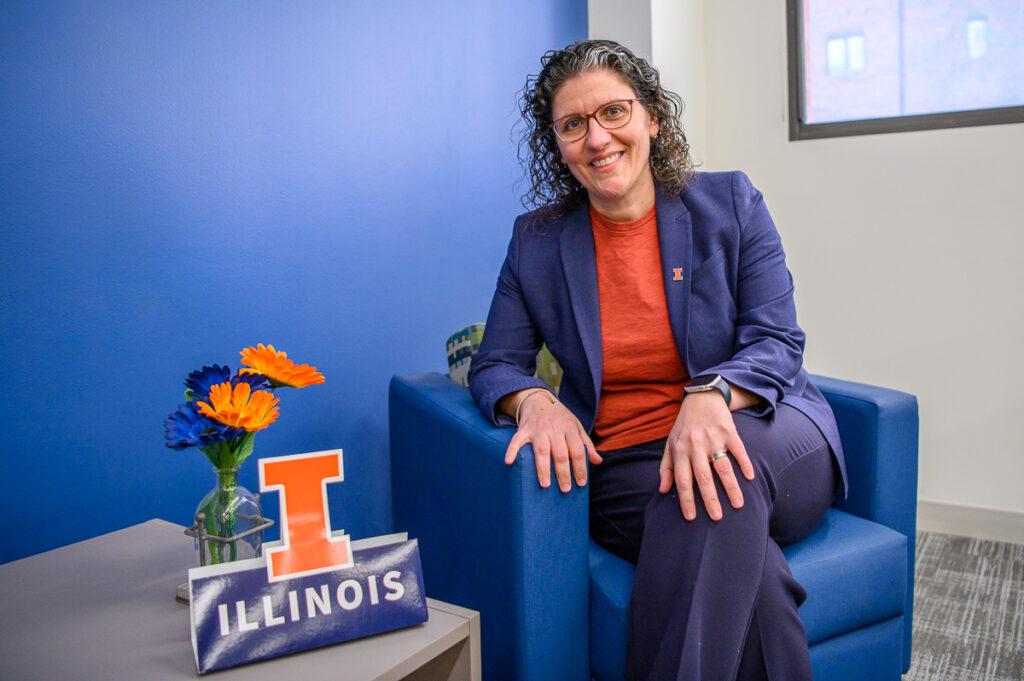
Laurence Chalip (Photo provided)
Dr. Laurence Chalip, former head of the Department of Recreation Sport and Tourism and a Brightbill/Sapora professor, died on Aug. 17, 2025, at the age of 74.
Chalip was a global leader and visionary in the field of sport policy and sport management. He championed the integration of the recreation, sport and tourism field and encouraged the RST faculty and students to emphasize the commonalities among their sub-fields. In an interview at George Mason University, Chalip said, “There’s no problem out there that’s strictly a sociological problem, economic problem, or a political problem. In the real world, it all comes together.”
Chalip’s legacy and influence went far beyond Illinois—he was recognized internationally and served as the president of the North American Society for Sport Management, or NASSM. Chalip was a change agent, shaping global conversations on policy and best practices in sport, tourism, and recreation. While he valued research-driven knowledge, he focused equally on advocating for change that has “on the ground” impacts for RST organizations, policy makers, communities and society.
“Laurence was among the top 2 percent of scholars globally across all fields and selflessly advanced the study of sport management,” said Robert Baker, professor emeritus of Sport, Recreation and Tourism at George Mason. “Listing his many accomplishments only scratches the surface of who Laurence was, his impact on our thinking and careers. Laurence inspired us—he made the academy, and each of us (in sport management) better. He was passionate about teaching and mentoring students. He brought deep analysis and insights into his courses, questioned the status quo, and challenged students to critically examine and defend their positions.”
Dr. Liselle Milazzo, a former RST doctoral student, shared how Chalip’s mentoring helped her grow as a scholar. “Dr. Chalip pushed me harder than any other mentor or professor I’ve ever had, but if I am even a fractionally successful academic, it’s because he saw me as a curious 25-year-old and treated me like I was already a scholar,” Milazzo said.
As a mentor, Chalip made an indelible impression on every student.
“What I will always value about having Dr. Chalip as a friend and mentor is his ability to make students believe in themselves, said Dr. Jeff Far, a former RST doctoral student. “He often said that his favorite time of the week was the time he spent with us in the classroom.”
Chalip grew up in Alameda, California, where he exceled as a competitive swimmer. As a musician and music lover, he enjoyed playing blues and flamenco guitar, and when he was a young man, he was in a girl band, The Fabulaires. He loved to cook and enjoyed cooking for friends and family.
After earning his bachelor’s degree in anthropology at the University of California-Berkeley, he headed to New Zealand where he served as the aquatics director for the Wanganui Community Sports Centre and then the head coach of the Te Awamutu Swimming Club. He continued coaching in Dayton, Ohio. Chalip’s thirst for knowledge led him to earn a master’s degree in psychology at the University of Waikato, and doctorate in public policy at the University of Chicago, where he began integrating his sport experience with policy knowledge.
Friends and colleagues often encouraged him to retire or to cut back on his work, but for Chalip, his work was his leisure. Chalip’s partner and colleague Chris Green said, “He liked nothing better than to play with ideas and create solutions to make a difference in the world.”
Fortunately for all of us, he inspired others to join in the fun and gave us the tools to continue his legacy.
As the fall semester unfolds, I am delighted to share the newest edition of our Recreation, Sport and Tourism newsletter. This issue reflects the breadth of scholarship, creativity and connection that define our department.
Among the stories you’ll read are the work of Charis Tucker, whose research explores the history and lived experiences of Black travelers; Joelle Soulard and Toni Liechty’s creative project investigating the relationship between tattoos and travel; Yannick Kluch’s initiative to empower high school athletes through a peer-to-peer social justice curriculum; and Monika Stodolska’s research on how Ukrainian refugees in Poland find meaning and community through leisure.
Beyond research, this issue also celebrates the friendship between Alex Roux and Dan Bernstein, two alumni whose shared love for sport has evolved into a meaningful personal and professional bond. Their story, and the story of alumnus Dan Isaacson, are testaments to the enduring connections forged through RST and the ways our graduates continue to carry forward the spirit of collaboration and community.
These features, and many more, capture the vibrant spirit of our department. They remind us that the heart of RST lies in the people, stories and relationships that give meaning and shape the future of recreation, sport and tourism.
Thank you for being a vital part of our community. I hope this newsletter inspires you, as it has inspired me, to celebrate the diverse ways recreation, sport and tourism shape our world.
Now that fall 2025 is underway, I’m excited to share some of the exciting stories from the Department of Health and Kinesiology. Each newsletter reminds me of how fortunate I am to work alongside such passionate faculty, students and alumni who are making a real difference in people’s lives.
In this issue, you’ll find a fascinating look at how our researchers are using fMRI technology to see how a new mother’s brain responds to pain. We’re also tackling an issue you may have seen in the news related to the growing misuse of nitrous oxide. Our faculty are at the forefront of this devastating issue. In the past decade, U.S. annual deaths from nitrous oxide poisoning are up by nearly 600 percent.
Another feature dives into how machine learning is helping us better understand cognitive function. The study offers insight into the health and lifestyle indicators—including diet, physical activity and weight—that align most closely with healthy brain function. And for those interested in nutrition, you won’t want to miss our story on potato-protein diet combinations. This research is showing creative, practical approaches to fueling both wellness and performance.
What ties all these stories together is the spirit of curiosity and care that defines our department. And, as always, none of this work would be possible without the encouragement of alumni like you. Your support inspires our students and drives our mission forward.
Thank you for staying connected with us—I hope you enjoy reading this issue as much as we enjoyed putting it together.
On October 8, faculty, students, and researchers from the Department of Industrial and Enterprise Systems Engineering and Department of Health and Kinesiology gathered at the iHotel for the 2025 Chittenden Symposium: “Lifelong Health by Design – Human-Centered Innovations in Chronic Disease Prevention.” The event united experts across disciplines to explore how engineering precision and health science insight can combine to design systems that foster long-term, equitable health outcomes.
New grant advances cochlear implant noise reduction
Photo by caption
Justin Aronoff, an associate professor in the Department of Speech and Hearing Science in the College of Applied Health Sciences at the University of Illinois Urbana-Champaign, has received a subaward on a Phase I Small Business Innovation Research grant from the National Institutes of Health and the National Institute on Deafness and Other Communication Disorders. The project, led by Vortant Technologies, focuses on a novel approach called “spatially transparent binaural beamforming” that improves on noise reduction techniques in cochlear implant processors.
Cochlear implants have transformed the lives of hundreds of thousands of people worldwide, offering a sense of sound to individuals with severe to profound hearing loss. Yet despite their effectiveness, users often face significant challenges in noisy environments such as restaurants, classrooms or crowded public spaces. Traditional technologies designed to filter noise can unintentionally distort spatial cues—the subtle differences in sound loudness and timing that allow people to locate and separate sounds in space. This distortion makes it harder for cochlear implant users to orient themselves in noisy situations, diminishing the devices’ usefulness in the real world.
The newly funded collaboration between Aronoff’s research group at Illinois and Vortant Technologies aims to solve this problem by advancing a promising new strategy in signal processing. Beamforming, the core technology under study, works by amplifying sounds coming from a specific direction—typically the person a listener wants to focus on—while suppressing sounds from other directions. While beamforming is not new, most existing approaches compromise spatial awareness. Vortant’s innovation, however, is a “spatially transparent” beamformer, meaning it not only improves speech perception in noise but also preserves the spatial cues that are critical for natural hearing.
“Beamforming helps improve speech perception in noisy environments by allowing a microphone to focus on sound from a specific location,” Aronoff said. “The problem with most beamformers is that while they enhance speech, they distort spatial cues, making it difficult to tell where different sounds are coming from. Vortant has been developing a beamformer that overcomes this tradeoff, both improving speech perception and preserving spatial information.”
Aronoff’s lab will play a key role in testing this technology. As the Illinois subawardee, he is responsible for designing and conducting behavioral studies with cochlear implant users. These studies will assess whether the new algorithm delivers on its promise to improve speech understanding in noisy conditions while maintaining the ability to detect where sounds originate. All participant testing will take place in Aronoff’s laboratory at Illinois, where his team has extensive experience conducting similar research.
Being able to follow conversations in noisy environments is one of the biggest challenges they face, and we hope this technology can make a meaningful difference in their everyday lives.
Justin Aronoff
SHS Associate Professor
Vortant Technologies specializes in developing assistive technologies that increase accessibility for people with disabilities. Aronoff first connected with the company through Phil Schaefer, Vortant’s chief scientist, when the two served together on an NIH SBIR review panel. Their shared interest in advancing assistive hearing technologies led to discussions of collaboration, eventually resulting in this funded project. Alongside Aronoff’s group on the Urbana-Champaign campus, a second subaward was issued to Ryan Corey at the University of Illinois-Chicago, expanding the collaboration across campuses.
For Aronoff, the project builds on a long-standing line of research aimed at maximizing the benefits of binaural hearing—the use of both ears—in cochlear implant users. His laboratory has previously been supported by an NIH R01 grant from the NIDCD, now in its fifth year, which investigates how cochlear implant users process spatial hearing cues. That project has already generated four peer-reviewed articles, additional manuscripts under review, and presentations at major national and international conferences. A renewal application for the R01 is currently under consideration, demonstrating the momentum and sustained impact of his research program.
The new SBIR project represents an opportunity to translate fundamental scientific findings into real-world applications. By validating the effectiveness of Vortant’s beamforming algorithm in a controlled laboratory setting, Aronoff’s group will help lay the groundwork for technology that could ultimately be integrated into commercial cochlear implant processors. If successful, the innovation has the potential to make daily listening situations—such as following conversations in a busy café or hearing a teacher in a lively classroom—more manageable and less exhausting for cochlear implant users.
For Aronoff, the potential impact is deeply motivating. “Our ultimate aim is to improve speech perception in noise for cochlear implant users,” he said. “Being able to follow conversations in noisy environments is one of the biggest challenges they face, and we hope this technology can make a meaningful difference in their everyday lives.”
The NIH’s SBIR program is specifically designed to support early-stage research and development conducted by small businesses, often in collaboration with academic partners. By fostering these partnerships, the program seeks to accelerate the translation of innovative ideas into marketable products that can benefit patients and society. The Phase I award to Vortant Technologies and its collaborators at Illinois and UIC exemplifies this mission, advancing cutting-edge science with clear pathways toward clinical application.
As the project progresses, Aronoff and his team will collect data to determine whether the algorithm meets its dual goals of enhancing speech perception and preserving spatial hearing. If the Phase I studies are successful, the team hopes to pursue a Phase II SBIR award, which would provide more substantial funding to refine the technology and move closer to commercialization.
For cochlear implant users, the promise of better hearing in noise could be life-changing. For Aronoff and his collaborators, the new grant marks an important step toward bridging the gap between laboratory research and the lived experiences of people who rely on hearing technology.
It is my pleasure to share with you the latest edition of our fall 2025 Speech and Hearing Science newsletter, which highlights the exciting work happening in our department. Even during a time of transition, our faculty, students, and staff continue to lead with innovation, dedication and a strong commitment to advancing both science and practice in the communication sciences.
One of the most inspiring projects featured is led by Associate Professor Marie Channell, whose research explores healthy aging among adults with Down syndrome. What makes this work so meaningful is the way adults with Down syndrome are engaged not just as participants, but as partners in the research process. Their involvement at every stage ensures that the findings are both scientifically rigorous and directly relevant to their lived experiences. This study exemplifies our department’s mission to connect scholarship with real-world impact.
We also celebrate the contributions of our new American Sign Language instructors, Jerri Seremeth and Lesli Williams. Through their teaching and leadership, they provide our students with invaluable skills in ASL while fostering greater cultural understanding of Deaf communities. Their work enriches the academic experience for our students and supports the department’s broader vision of inclusivity and accessibility. We also celebrate the contributions of our new colleague, Mariana Mendes Bahia, as she shares insights from her first year as an assistant professor in SHS.
Innovation in auditory research remains a hallmark of Speech and Hearing Science, and Associate Professor Justin Aronoff’s lab is making important strides in advancing cochlear implant technology. His research is aimed at improving how individuals with cochlear implants perceive and process sound, with the ultimate goal of enhancing quality of life. This line of inquiry has the potential to transform auditory rehabilitation and extend the benefits of cochlear implantation to even more people worldwide.
Finally, we highlight a collaborative project led by faculty members Sadie Braun and Dan Fogerty, who are working to develop hearing tests that more closely reflect the complex listening environments people face every day. Traditional assessments often fall short in capturing these challenges, but their approach promises to give clinicians better tools to understand and treat hearing difficulties in realistic contexts.
As you read about these efforts, I hope you share in our pride for the work being done here at Illinois. We are fortunate to have such dedicated faculty, staff and students pushing the boundaries of knowledge while remaining grounded in our commitment to service. Our alumni community is an essential part of this story, and I am grateful for your continued support and engagement.
“It’s never too late to begin getting into shape but it does take daily, sometimes painful, perseverance. After all, you can’t expect in a week’s time to make over a body that took years to wreck.” – Thomas K. Cureton, Jr.
T.K. Cureton is known as the ‘father of physical fitness.’ (Photo courtesy of Illinois Archives)
In the College of Applied Health Sciences at the University of Illinois Urbana-Champaign, there is a legacy of one man’s unwavering dedication to physical fitness. That man is Thomas K. Cureton, Jr., better known as T.K. Cureton, but probably best known as the “father of physical fitness.”
Long before exercise guru Jack LaLanne began hosting his syndicated TV fitness program in the 1950s, Cureton established the Physical Fitness Research Laboratory in 1944 at Illinois. Cureton’s research and commitment to physical education and fitness laid the foundation for the fitness movement that is so widely recognized today. From the athletic fields to university classrooms, the impact of his work extends far beyond the realm of physical education.
Born in Florida, Cureton had a diverse academic and professional journey before arriving at the University of Illinois. Growing up in the South, he initially attended Georgia Tech before transferring to Yale University to finish his undergraduate degree. From there, he found himself coaching swimming and directing research at Springfield College in Massachusetts. But it was his arrival in 1941 at the University of Illinois, after being recruited by Dean Seward Staley, that would shape the future of fitness research and practice.
At the time, physical education as an academic discipline was still in its infancy, and there were few established research foundations. Cureton’s appointment marked the beginning of the transition from physical education to a more comprehensive study of physical fitness. He worked to establish research programs, recognizing the importance of physical fitness for overall health long before it became a popular societal trend. This vision, paired with his extensive background in athletics, allowed him to bridge the gap between the two worlds—combining sports with research-driven methodologies to better understand how fitness impacts human health.
But what exactly sparked Cureton’s passion for fitness and wellness? His son Kirk recalled how his father’s interest in athletics and fitness developed early.
“He was a good athlete at Georgia Tech and Yale, participating in varsity athletics, especially swimming,” Kirk Cureton said. “The influence of people like Yale’s swimming coach, Bob Kiphuth, and other experts in biology and hygiene inspired him.”
Through his exposure to these environments, T.K. Cureton was drawn to physical education and ultimately pursued further education in the field, earning bachelor’s and master’s degrees in physical education, and a Ph.D.degree in educational research, cementing his position as one of the foremost authorities in the field.
Some 20 years after his heroics in the 1936 Olympics, Jesse Owens was tested in T.K. Cureton’s lab.
In the early 1930s, as the concept of physical fitness was still gaining traction, T.K. Cureton was one of the first researchers to publish significant works on the subject. One such milestone came in 1935 when the Research Quarterly journal published a supplement titled “Physical Fitness,” which included a series of articles on the components of physical fitness, including those authored by Cureton himself. “He’s often credited as one of the primary contributors to defining the concept of physical fitness,” Kirk Cureton said. “That idea was radical at the time.”
Before figures such as LaLanne, who later became synonymous with the fitness craze of the 1950s and beyond, Cureton was already working tirelessly to raise awareness of fitness as an integral aspect of health. His contributions were not only academic but practical, as he worked on initiatives that showed how physical activity could improve long-term health outcomes, including cardiac rehabilitation—a field that was revolutionary at the time.
Cureton didn’t just focus on academia. He brought his expertise to the public through clinics and talks, often conducting sessions for professionals such as dentists. As Kirk Cureton recalled, “On weekends, he’d often be away doing clinics, and then come home and talk about it.” His commitment to fitness permeated his life to the point where even vacations became opportunities for exercise. “We’d go on family trips, and my dad would just decide to run behind the car while my mom drove,” Kirk said with a laugh. “Of course, as kids, we were embarrassed, but that’s just how he lived it.”
Growing up with a father deeply invested in physical fitness, Kirk Cureton was naturally exposed to these ideas from an early age, though he admits he didn’t fully appreciate them at the time. It’s clear, though, that his father’s dedication left a lasting impression. “He would talk about it all the time,” he said. “He would give us lectures and discussions about fitness, especially when he came home from conferences or testing. We got an earful.”
“We’d go on family trips, and my dad would just decide to run behind the car while my mom drove. Of course, as kids, we were embarrassed, but that’s just how he lived it.”
Kirk Cureton
Son of legendary Illinois researcher T.K. Cureton
It was in Huff Hall, the hub for the University of Illinois’ physical education and health sciences departments, where much of T.K. Cureton’s academic life took place. Though Huff Hall was nominally home to athletic facilities, it also housed classrooms, labs and faculty offices, reflecting the integral role that academia played in physical education. For Kirk Cureton, Huff Hall was a frequent stop. “Growing up, we’d often drive to Huff Hall to pick him up after classes,” he said. “It was a central part of (T.K.’s) work life.”
Even after his retirement, T.K. Cureton’s legacy lived on, particularly through his influence on graduate students. Many of these students, a who’s who of kinesiology, went on to distinguished careers of their own in the discipline, furthering the work of their mentor.
As Kirk said, “His teaching was crucial to graduate students, especially during the summers when he’d teach two classes every year. That was a lot of work, especially considering he was running a large research program at the time.” This hands-on mentorship continued for many years, ensuring that T.K. Cureton’s impact extended far beyond his time at the university.
Though Kirk Cureton was undoubtedly influenced by his father’s work, he did not initially plan to follow in his footsteps. He went on a different path, studying pre-med and spending time in medical school before returning to Illinois to pursue a master’s degree in the field his father helped pioneer. His eventual return to Illinois marked the beginning of his own academic career, one that would honor the legacy his father established.
Today, the impact of T.K. Cureton’s work is still felt, particularly within the College of Applied Health Sciences. His contributions to the understanding of physical fitness, exercise, health, and wellness laid the foundation for future generations of researchers, educators, and practitioners. His work, often ahead of its time, helped to redefine what fitness meant to society and has left an indelible mark on the world of physical education, now Kinesiology. As the University of Illinois celebrates the centennial of Huff Hall, the memory of T.K. Cureton’s vision continues to shape the future of health and fitness research.
For a century, Huff Hall has stood as a cornerstone of Illinois athletics—hosting generations of Fighting Illini athletes and fans—as well as academics, functioning as the home base for the College of Applied Health Sciences. As we celebrate the 100th anniversary of this historic venue, we reflect on its storied past and enduring impact on the University of Illinois community.
Opened in 1925, Huff Hall was originally called ‘New Gymnasium.’
When it opened in 1925 on the University of Illinois’ campus in Urbana-Champaign, New Gymnasium, as it was called at the time, was described as “the greatest gym in the country,” a facility unlike any other, the Yankee Stadium of the college realm. Huff Hall was designed in the Georgian-Revival style by architect Charles A. Platt and University Architect James M. White. Its design harmonizes with other historic campus buildings, including the Armory, Main Library and the Illini Union. When completed in 1925 at a cost of $772,000, it replaced the Military Drill Hall (now Kenney Gym Annex) as the home of Fighting Illini basketball. An eight-foot-deep, 25-yard swimming pool was added in 1927. Following George Huff’s passing in 1936, the gymnasium was officially renamed in his honor.
Huff Hall is a versatile multi-use facility and the proud home of Fighting Illini volleyball, wrestling and men’s and women’s gymnastics. It is famed for its electric atmosphere, which helped foster the term “March Madness” when it hosted the Illinois State High School Association state basketball tournament for decades.
Beyond its role as a competition venue, Huff Hall houses essential athletic facilities, including a training room, weight room, equipment rooms and locker rooms serving the men’s and women’s track and field, volleyball and wrestling teams. Academic offices and classrooms span three floors, while an underground tunnel links Huff Hall to the Armory.
Host to a First Lady, Music Legends and Dance Marathons
In addition to athletics and academics, Huff Hall has been a community good, home to a visit by a sitting first lady and dance marathons. In 1942, during World War II, First Lady Eleanor Roosevelt visited Huff to plead with local and state officials to speed up their work to aid in the conflict with Nazi Germany and its allies.
“War goods must be produced in a hurry,” Roosevelt said, according to the Daily Illini on Feb. 6, 1942. “We were not mentally prepared for war … now it is up to each and every one of us at home to build up a greater strength in people.”
Dance marathons at Huff Hall were a popular method to raise money in the 1970s and ’80s.
For more than four decades, Huff was the primary venue on campus for national touring jazz and swing bands, hosting many a concert and dance.
A number of jazz legends played Huff starting with Duke Ellington in 1937 and including Tommy Dorsey, Benny Goodman, Cab Calloway, Louis Armstrong, Dave Brubeck, Miles Davis and Count Basie, who appeared with his orchestra in October 1966.
In the 1970s and ‘80s, Huff was home to less-historic-but-also-impactful events: dance marathons. Starting in 1973, Huff hosted the Dance-A-Thon, a Friday-through-Sunday dance marathon that would test the endurance and arch support of wiggly Illini.
Organized by the Zeta Beta Tau fraternity, the marathon was part of a nationwide collegiate fundraiser for muscular dystrophy research. The grand prize was a trip to Las Vegas, and the participants swayed to music for 52 hours, while sideshow acts such as fire-swallowers entertained the crowd. As the weekend wore on, some contestants even danced with textbooks in hand, studying for their Monday exams.
The last dance at Huff happened in 1989. A generation later, IlliniThon was born. The year-long fundraising endeavor, with St. John’s Children’s Hospital in Springfield as the beneficiary, culminates with a dance marathon in April at the Activities and Recreation Center on campus.
Academics
Academics always has been a vital component in the history of Huff Hall. In 1932, the Board of Trustees established the School of Physical Education with authority to award the degree of Bachelor of Science.In 1957, the board changed the name of the school to the College of Physical Education, which included the Department of Physical Education for Men; Department of Physical Education for Women; Department of Health Service; Department of Recreation, two divisions, a bureau and two clinics. It offered master’s and doctoral degrees.
In 1942, during World War II, First Lady Eleanor Roosevelt visited Huff to plead with local and state officials to speed up their work to aid in the conflict with Nazi Germany and its allies. (Courtesy WILL)
In June 1975, the board renamed the College of Physical Education as the College of Applied Life Studies.The College of Applied Life Studies was composed of three academic graduate departments: Health & Safety Education, now Health and Kinesiology, Leisure Studies, now Recreation, Sport and Tourism, and Physical Education, now also part of Health and Kinesiology. Each department had a distinguished history and achieved national prominence.
In 1944 in Huff, Thomas K. Cureton became the director of the Physical Fitness Research Laboratory, one of the first of its kind in the nation. He developed methods to test motor and cardiovascular fitness and aquatic performance and to appraise the human physique. Cureton, who taught at Illinois from 1941 to 1969, is known as the father of physical fitness and played a major role in the development of the fitness movement in America.
Cureton was one of the first authorities in the 20th century to advocate regular exercise and has been credited with helping inspire Americans to take up jogging, a trend that began in the 1960s. What set Cureton apart from other exercise gurus was his large body of research, which established the health benefits of exercise, particularly for the heart.
Other faculty who made their names known in Huff include:
Aurelio E. “Joe” Florio started the first traffic and driver education program safety program for the schools of the state of Illinois.
William H. Creswell, Jr. played an integral part of the national School Health Education Study that involved 1,460 schools and 840,832 students in 38 states from 1961-65. Results of the first stage of this study evidenced the “appalling” lack of knowledge and prevalence of health misconceptions among students at all levels. The second stage involved developing a comprehensive curriculum package using an innovative conceptual approach that still influences school health curricula today.
Howard S. Hoyman developed the “Ecologic Model of Health and Health Education” that served as the forerunner in the field and influences contemporary thought to the present.
Due to the university’s reputation as a prominent contributor to the role of education to address the smoking and health issue, Donald Stone, Thomas O’Rourke and Creswell were invited to contribute chapters to the Adult Education for the 1979 Surgeon General Report on Smoking and Health. This was the first time since the initial 1964 Surgeon General Report on smoking and health were included.
Reflecting the growing and evolving mission of the college and its departments, Huff Gym was renamed Huff Hall in spring 1984. In March 2006, the Urbana-Champaign Senate approved a proposal to rename the college to the College of Applied Health Sciences. This was done to reflect the college’s research, instructional, and outreach programs as well as the structure of the college.
Today, Huff is the nerve center to AHS, housing the dean and administrative offices, as well as faculty office, labs and classrooms.
A Storied Athletic Tradition
Huff Hall is named in honor of George Huff, a pivotal figure in Illinois athletics. Serving as Illinois’ athletic director from 1901 to 1935, Huff guided the Fighting Illini to an era of unparalleled success and played a key role in the construction of Memorial Stadium in 1923. Prior to his tenure as athletic director, he coached Illinois football (1895-1899) and baseball (1896-1919) before managing Major League Baseball’s Boston Red Sox in 1907 (for all of eight games, in which the team had a record of 2-6).
From 1925 to 1963, Huff Hall was the home of Fighting Illini basketball, witnessing an incredible 339 victories in 418 games (.811), eight Big Ten championships and two NCAA Final Four appearances. Though it was more than twice the size of its predecessor, it quickly became evident that Huff Hall could not accommodate the ever-growing demand for basketball.
For nearly 40 years, the Illini played before raucous, sellout crowds at Huff Hall, making it one of the most formidable venues in college basketball.
Over the years, Huff Hall has hosted numerous prestigious collegiate and high school championships:
Wrestling Championships: NCAA Wrestling Championships (1940, 1947); Big Ten Wrestling Championships (1930, 1933, 1946, 1948, 1958); IHSA State Wrestling Championships (multiple years in the 1940s, 1950s, and 1960s).
Gymnastics Championships: Big Ten Women’s Gymnastics Championships (1991, 1995, 2003); Big Ten Men’s Gymnastics Championships (1992, 1995, 2004); NCAA Men’s Gymnastics East Regional (1993, 1999).
Volleyball and Basketball Tournaments: Huff Hall has hosted numerous NCAA Volleyball Tournament matches, dating back to 1992, including multiple first and second-round matchups in the 1990s and 2000s. The gymnasium also served as a host site for the 1997 NCAA Women’s Basketball Tournament first and second rounds.
In the past decade, Huff has undergone large-scale renovations, including the addition of the Khan Annex, which opened in 2011, thanks to a $10 million donation from alumnus Shahid and Ann Carlson Khan. The Khan Annex provided more than 24,000 square feet of state-of-the-art laboratory, instructional and collaborative space. In 2014 the basketball court was replaced by a more springy volleyball surface to protect the student-athletes’ joints, and in 2018, locker rooms received a full upgrade and a new Taraflex volleyball floor came in August of the 2019 season.
As we mark the 100th anniversary of Huff Hall, we celebrate not just a building, but a legacy—a place where history has been made, champions have competed and the Fighting Illini spirit has thrived from its early days as a basketball powerhouse to its continued role as a premier athletic facility. The academic accomplishments that have occurred in the building, in its laboratories and classrooms, are just as important a part of that legacy. Huff Hall remains a symbol of tradition, excellence and Illini pride.
Editor’s note:
A special thanks to Thomas O’Rourke, Professor Emeritus, Health and Kinesiology, for his contributions to this article.
Honorees embody resilience, leadership, service, and equity
AHS Dean Cheryl Hanley-Maxwell, second from left, poses with AHS alumni award winners Jack Groppel, left, Adrienne Albrecht, right, and Brandon Buchanan, far right. (Photo by Craig Pessman).
The College of Applied Health Sciences at the University of Illinois Urbana-Champaign once again shined a light on extraordinary alumni at its annual Alumni Awards celebration, held during Homecoming weekend. This year’s honorees—Dr. Jack Groppel, Justice Adrienne Albrecht and Brandon Buchanan—embody the college’s enduring mission of advancing health, equity and human potential.
The ceremony, led by Dean Cheryl Hanley-Maxwell, is designed not only to recognize the professional accomplishments of alumni but also to share the personal journeys that shaped their paths. “The individuals who receive these awards never fail to impress and fascinate me,” Hanley-Maxwell said. “As you hear their stories today, I’m sure you’ll find yourself saying, ‘Wow!’ many times, just as I have.”
Distinguished Alumni Award: Dr. Jack Groppel
Few careers demonstrate the power of seizing opportunity quite like that of Jack Groppel, recipient of the 2025 AHS Distinguished Alumni Award. An internationally recognized scholar in the science of human performance, Groppel has been a professor, tennis coach, entrepreneur, author, corporate consultant and motivational speaker.
And yet none of that would have happened without the University of Illinois.
“If the leaders in this college hadn’t given me a shot, I’d be counting wolves in Wyoming,” he said.
Growing up in a small southern Illinois town, Groppel was drawn to sports early, teaching himself to play tennis and eventually becoming one of the top junior players in the St. Louis area. Determined to play for the University of Illinois, he convinced men’s tennis coach Dan Olson to give him a chance—a story that foreshadowed a career marked by persistence and boldness.
His academic path was less direct. Pressured to pursue a “practical” major, Groppel earned a degree in wildlife biology. Yet his passion for athletics led him to graduate study in biomechanics at Illinois, where mentor Dr. Charles Dillman helped redirect his career. Groppel later completed a Ph.D. in exercise physiology at Florida State University before returning to Illinois as a professor and head tennis coach.
“How do you go from crying yourself to sleep at 22 to this?,” Gropple said, referencing his unhappy time seeking a career in the wildlife industry. “I have been truly blessed in my life, thanks to my time at the University of Illinois.”
After a decade, Groppel made another daring move: leaving a tenured faculty position to work in Florida at the Saddlebrook Resort. That leap led him to co-found the Human Performance Institute with Dr. Jim Loehr, a venture later acquired by Johnson & Johnson. Groppel became a pioneer in applying the training principles of elite athletes to business leaders, co-authoring the influential book The Corporate Athlete. He went on to brief Congress on worksite wellness, share stages with global icons like Muhammad Ali and Margaret Thatcher, and earn induction into three tennis halls of fame.
Groppel credits the University of Illinois with giving him the scientific foundation and teaching passion that shaped his career.
One of his mentors was Thomas K. Cureton, considered the father of physical fitness. After a semester working with Cureton and others in the precursor to what is now known as the Department of Health and Kinesiology in AHS, Groppel was hooked.
“AHS molded me into a person who can do quality research,” he said. “It all began with leaders in AHS taking a chance on me. It started in that small town and on those small farms where young Jack dared to dream big.”
Harold Scharper Award: Justice Adrienne Albrecht
If Groppel’s story is about breaking down doors, Adrienne Albrecht’s is about perseverance and the power of access. Recipient of the Harold Scharper Award, presented by the Division of Disability Resources and Educational Services, Albrecht retired in 2024 as a Justice of the Third District Appellate Court of Illinois, capping a distinguished legal career.
Born in Kankakee as the eighth of 10 children, Albrecht was diagnosed with Marfan syndrome, a connective tissue disorder that severely impaired her vision. In the 1960s, long before disability rights laws provided protections, her mother fought to secure accommodations like front-row seating and access to blackboards. “My mother was extraordinary,” Albrecht said. “She understood what I needed and made sure I got it.”
“If the leaders in this college hadn’t given me a shot, I’d be counting wolves in Wyoming.
Jack Groppel
Distinguished Alumni Award winner
DRES founder Tim Nugent also played a vital role. Several of Albrecht’s siblings, who also had Marfan syndrome, attended Illinois with the support of DRES scholarships.
“I can’t tell you what a profound effect the University of Illinois had on my entire family. Imagine this family of 10 children, thinking they could all go to college and have great careers. The University of Illinois was just so crucial to my family,” she said.
Despite limited assistive technology at the time, Albrecht thrived academically, drawn to international relations before pursuing law. A constitutional history course sparked her passion for legal analysis, while her visual impairment forced her to develop a near-photographic memory—an asset in her legal work.
Over a 30-year career, Albrecht became known for her skill, adaptability and dedication to justice. She was among the first attorneys in Kankakee to integrate personal computers into her practice, eventually teaching technology courses for the Illinois State Bar Association. She served on the circuit court bench before her appointment to the appellate court, where she helped interpret Illinois’ landmark cashless bail statute.
Her proudest moments, however, were deeply personal. “People approach me in the grocery store to thank me, to tell me I made a difference in their lives,” she said. “That means more than anything.”
Dean Hanley-Maxwell said Nugent would be proud to see how Albrecht carried forward his legacy of inclusion and access.
“(Nugent) would join all of us in AHS and DRES in saying that you are richly deserving of this award,” Hanley-Maxwell said.
Young Alumni Award: Brandon Buchanan
Brandon Buchanan was honored with the AHS Young Alumni Award for his leadership in health equity and hospital administration. Buchanan is now associate chief operating officer of Orlando Health Dr. P. Phillips Hospital, but his path began in Champaign with a shift in academic focus.
Originally a journalism major, Buchanan found his calling while volunteering at Smile Healthy, a clinic providing dental care to underserved populations. “Community health took a holistic approach to how society looks at health and well-being,” he said. Inspired, he switched majors and pursued graduate training in health administration.
That decision launched a career devoted to improving access to care. Buchanan managed HIV and STI outreach programs at Ohio State, then spent nearly seven years at Endeavor Health in Chicago. There, he built the health equity impact team from a one-person office into a 30-member department that improved mammogram screening rates, reduced hypertension in Black communities, and expanded community education.
Now in Florida, Buchanan serves on the board of the local YMCA and mentors students pursuing careers in healthcare administration. “I’m proud when I see them flourish and shine,” he said.
Hanley-Maxwell praised Buchanan’s blend of leadership and compassion: “You cannot go wrong when you are committed to improving your community through service, fairness and respect.”
Pedro Hallal has built an international reputation for his research on physical inactivity
Pedro Hallal accepts the King James McCristal Distinguished Scholar Award on Wednesday, Sept. 23, 2025.
Like many young researchers, Pedro Hallal thought his first study would be groundbreaking and potentially change the paradigm of the study of physical activity. Ultimately, he said, it didn’t, but now, with the value of experience at hand, he understands that was OK.
“We are trained to think of things that no one has ever studied. But science is much more about consistency of results nowadays, than about brand-new findings,” said Hallal, the Alvin M. and Ruth L. Sandall Professor in the Department of Health and Kinesiology at the University of Illinois Urbana-Champaign. “We do research because of the questions; we don’t start with the answers.”
Thanks to that curiosity and because of the breadth of his research, Hallal on Sept. 24 was awarded the King James McCristal Distinguished Scholar Award, one of the most prestigious recognitions in the College of Applied Health Sciences. The award honors faculty whose scholarly contributions have significantly advanced their disciplines while elevating the reputation of the university.
For Hallal—whose research has transformed global understanding of physical activity and health—the honor represents both a recognition of past achievements and an encouragement to push forward in addressing one of the world’s most pressing public health challenges: physical inactivity.
“Professor Hallal’s scholarly work has substantially elevated the profile of his department, our college and the university by advancing public health knowledge and global health equity,” said Cheryl Hanley-Maxwell, dean of the College of Applied Health Sciences.
A Global Lens on Physical Activity
Hallal, who is also director of AHS’ Master of Public Health program, has built an international reputation for his research on physical inactivity, a phenomenon he argues must be understood in the context of modern life.
“Today, we have fewer people being active,” Hallal said. “Most of them are indoors, looking at a screen. We have to think about what physical activity is today, not decades ago. The notion that physical activity is good for health has been known for centuries. Only since the 1950s and ‘60s have we really been studying it.”
His scholarship began in Brazil, where his master’s thesis—“Physical Inactivity: Prevalence and Associated Variables in Brazilian Adults”—found that 41.1 percent of the surveyed population did not meet recommended activity levels of 150 minutes per week. This early work set the stage for his career-long focus on understanding inactivity as both a personal and societal issue.
Hallal’s impact expanded dramatically with his contributions to a series in The Lancet, one of the most influential medical journals in the world. His research revealed that one-third of adults worldwide—approximately 1.5 billion people—failed to achieve the minimum recommended level of physical activity. Equally concerning, four-fifths of children ages 13 to 15 fell short of the one-hour daily activity guideline. The findings underscored physical inactivity as a global pandemic, drawing international attention to a public health crisis with profound implications for chronic disease and health equity.
Hallal has often said that this work in The Lancet is the “research I am most proud of.”
Redefining Scientific Inquiry
Throughout his career, Hallal has emphasized the importance of scientific rigor and humility.
That philosophy has guided him to produce a body of work that does not merely identify problems but interrogates the systems that perpetuate them. His studies consistently highlight how socioeconomic and geographic inequalities shape access to safe and purposeful physical activity.
“Access to safe, purposeful physical activity must be a societal priority,” Hallal said. By framing physical inactivity not only as an individual choice but also as an issue of structural inequities, he has pushed the field toward broader, more inclusive approaches to solutions.
Access to safe, purposeful physical activity must be a societal priority
Pedro Hallal
Professor of Health and Kinesiology
A Legacy of Impact
The King James McCristal Distinguished Scholar Award cements Hallal’s place among the most influential scholars at Illinois. The recognition highlights not only his academic achievements but also his role in shaping the conversation around health equity worldwide.
From uncovering high rates of inactivity in Brazil to leading global efforts to quantify physical inactivity, Hallal has consistently produced research that informs public policy, inspires further scientific exploration, and elevates the role of physical activity in public health discourse.
Looking Ahead: Challenging Assumptions
As Hallal reflects on the future of his field, he sees opportunities to question prevailing assumptions and generate new lines of inquiry.
He is particularly interested in challenging the idea that “every movement counts.” While small bursts of activity are beneficial, Hallal believes that the global challenge lies in ensuring people have the opportunity for meaningful, sustained physical activity. He also underscores the importance of recognizing how time scarcity and resource inequality reinforce global disparities in health behaviors.
“I think this place, this campus and college, are in a great position to tackle these things,” Hallal said. “We are already one of the country’s leaders in the field, and we are one of the most productive groups in the world on this topic.”