Spurred to succeed: RST alum Larson knows importance of dedication to his craft


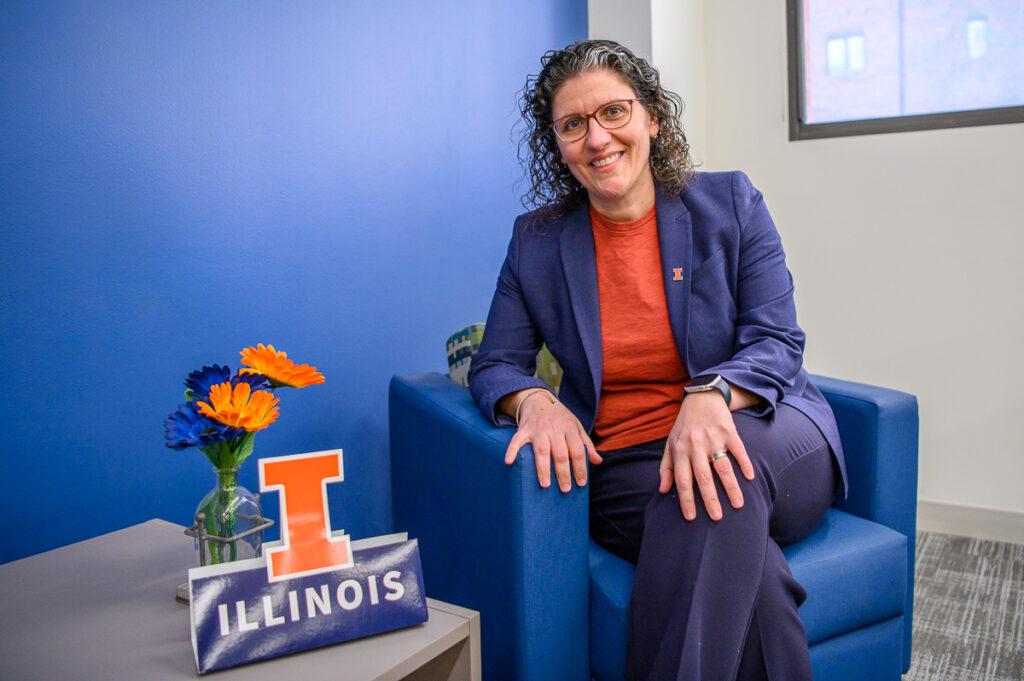
RST alum Josh Larson is general manager of the Austin Spurs, the G-League affiliate of the NBA’s San Antonio Spurs. (Photo provided)

Many sports fans only see the athletes arriving at games, ready to take the court. However, the logistical and behind-the-scenes work often goes unnoticed. When a plane is delayed, causing the team to miss a connecting flight, or someone arrives 20 minutes late, it’s Josh Larson’s responsibility to ensure everything continues running smoothly.

That emphasis on service and hard work has propelled Larson to where he is today. He was immersed in basketball, almost from birth. His mother, Jenny, was an assistant athletic director at the University of Illinois Urbana-Champaign, and his brother played basketball collegiately. Today, Josh Larson serves as the general manager of the Austin Spurs, the G-League affiliate of the NBA’s San Antonio Spurs.

Raised in Tolono, Illinois, Larson attended the University of Illinois, where he earned a B.S. in Recreation, Sport and Tourism. 

“What you learn in college isn’t necessarily all the Xs and Os of sports like how to coach basketball, how to work a salary cap, how to negotiate contracts and things like that,” Larson said. “To me, what was really beneficial, and I think it applies to not only my profession but a lot of other ones, was how they teach you to problem solve.”

Although the fast-paced lifestyle might seem stressful, Larson sees it as a rewarding challenge. 

“That’s kind of the beauty of sports in general, or even recreation. It’s never perfect,” Larson said. “You have to be able to think, do things your own way, problem-solve and figure out how you feel best fits your team, your culture, your park district.”

Larson emphasized that the RST program equips students to handle real-world situations. One hallmark of the program is its focus on practical experience. Reflecting on his coursework, Larson recalled a group project where he and his peers organized a kids’ day for the Stephens Family YMCA in Champaign.

“That was a good reminder of what it means to be service driven,” Larson said. “In the moment, you think, ‘Group project,’ and you have to go hang out with kids for four hours, and I probably wasn’t as excited to do it. But I felt like afterwards, I got a lot out of it, purely because it forced me to be in a mindset of serving others.”

After his sophomore year, he landed a summer internship with the NBA’s Charlotte Hornets. Through that experience, he made connections with the Spurs organization, which led to an internship in Austin after graduation. However, Larson noted that it didn’t begin with fun and glamour.

“You just do the laundry, you do the film, you do all the grunt work, and drive the players and vans … and clean apartments,” Larson said. 

He then spent two years as the basketball operations assistant for the San Antonio Spurs before becoming the general manager of the Austin Spurs last May. His current responsibilities include managing players and coaches and supporting the coaching staff with resources for team building and player development.

Larson’s dedication to basketball was evident long before he entered the professional world. He started volunteering at Illinois men’s basketball summer camps the summer before he began college, eventually becoming a team manager for four years and serving as head manager his senior year. His relentless work ethic caught the attention of the coaching staff, and through networking within the program, he was able to make key connections that helped propel his career forward.

Jenny Larson said dedication has always been a part of her son’s work ethic.

“He was the first one in the office when he interned at the Charlotte Hornets, and he was the last one to leave,” Jenny Larson said. “It’ll be 7 at night when I call him, and he’d say, ‘I’m still in the office,’ and I’d ask him, ‘Why are you still in the office?’ and he’d say, ‘Because my boss hasn’t left.”

Josh showed his dedication to his mom on another occasion when he was in high school and met with Mike Raycraft, a clinical associate professor in the RST program. Raycraft helped Larson figure out his interests and potential career paths. 

“He dressed up in a suit. He’s a junior in high school and he walks into meeting him, and he’s serious,” Jenny Larson said. “Josh put himself out there. He had to be extremely nervous, going in and talking to a professor. But he did it and I know it helped him grow and get to where he is today.”

Josh Larson said Raycraft was one of the most influential figures in his career. 

“For him to do that, it meant a lot to me,” Larson said. “He was a massive influence, not only going to the university, but even after I got there. His care and attention to his students, not only with me, but you could see it with other people too.”

Another enduring takeaway from the RST program was its strong sense of community. Larson said he frequently encounters former classmates while traveling for work.

“A lot of people—we stay in touch still, so I think that, again, is a testament to the quality of people that the major tracks,” Larson said. “You get to have lifelong connections with people that you know you’re going to be working with. You can call for advice—they know what you’re going through and they can probably give you better advice than anybody.” 

Larson explained that the program introduces students to diverse perspectives, which become invaluable when collaborating with others in the future.

“Even aside from just the classes and the curriculum that you learn, I think the people you meet is what makes it worth the while in the end,” Larson said.

Share on social

Related news

Illinois wheelchair basketball prepares to play for home crowd


Women’s wheelchair basketball player Hailey Smith and men’s player Martrell Stevens pose together in front of this weekend’s game schedule.

For the first and only time this season, the Illinois men’s and women’s wheelchair basketball teams are facing the competition in their home court at this weekend’s Illinois College Tournament. 

A total of 22 games will be played at the Activities and Recreation Center (201 E. Peabody Dr., Champaign) from Friday, Feb. 9 to Saturday, Feb. 10, including eight individual contests for the Illini women’s and men’s teams. 

For Friday’s 5 p.m. women’s game against The University of Texas at Arlington and the men’s 7 p.m. contest against University of Wisconsin-Whitewater, the teams want fans to fill the stands. 

“We want to get as many people in the gym as possible—we’ll have the band and the cheerleaders, we’re trying to make it a loud and fun environment for our student athletes to play in,” said Stephanie Wheeler, head coach of both Illinois wheelchair basketball teams.

Wheeler, head coach of the women’s team since 2010, took over coaching duties for the men’s team after former head coach Matt Buchi moved to a new role at Illinois. 

On Saturday, seniors will be recognized between the 3 p.m. men’s game against Mizzou and the 4:45 p.m. women’s game versus the University of Arizona. 

“We have veteran guys and ladies who have been in the game, and some who are brand new to college basketball,” said Matt Poland, the assistant coach for both teams. “It’s been fun having that blend, and not only helping the fifth- and sixth-year players finish out stellar careers, but help the next generation come into their own.” 

This season, the men’s and women’s teams are playing together more than ever, with coach Wheeler leading joint practices alongside full-time assistant coach Matt Poland and volunteer assistant coach Ranley Clayton, herself an alumna of the program. 

The two teams crossed over in practices before this season, often meeting for skill work, but now nearly everything is done together, with the 22 student-athletes mixing or facing off in most scrimmages and drills. 

It’s a unique spin for two uniquely structured teams, with sixth-year seniors Gabe DenBraber, Ryan Glatchak, Marlee Wagstaff and Ali Ibanez and seniors Shawn Sloan and Mary Wagstaff shouldering much of their teams’ game experience. This week’s focus: staying disciplined on defense, playing free on offense, Wheeler said. 

“Both teams are getting a lot out of training with each other,” she said. “It’s challenging both teams on physical and mental level—it’s been a really positive change and connects the two together.” 

Illini wheelchair basketball teams will face their final tests next month at the National Intercollegiate Wheelchair Basketball Tournament College Nationals. The women’s team will head to the University of Alabama (March 6-9); the men’s team will travel to Marshall, Minnesota the following week (March 13-16). 

“The message has been each game is a building block on how we want the rest of the season to be going up to the next tournament,” Poland said. “Every single team goes to the last tournament, we have an opportunity to every single game build off of it, and in Nationals is where we need to be our best self.” 

Before then, the women’s team will travel to Brookfield, Wisconsin, to play in the Big Cheese Classic (Feb. 16-17); the men’s team will play in the Arizona College Tournament, hosted in Tucson (March 1-2). 

Editor’s note:

To reach Ethan Simmons, email ecsimmon@illinois.edu.
 

Related news

Raj partners with ClarkLindsey to test culturally diverse seasonings


ClarkLindsey’s executive chef, DeAngelo Newson, presents a special Hanukkah dinner for residents: beef brisket with latkes and sufganiyot. In 2025, ClarkLindsey food personnel will test out culturally diverse seasonings as part of a KCH research project.

For many older adults from diverse cultural backgrounds, reluctance to enroll in long-term care facilities may start in the cafeteria. 

Mina Raj, an assistant professor in the Department of Kinesiology and Community Health at the University of Illinois Urbana-Champaign, surveyed 140 Asian American family caregivers and found that one of the biggest obstacles for their relatives living in long-term care is the lack of culturally relevant food options. 

An upcoming research project from Raj and her team will put an international range of seasonings to the test at an eager local retirement community.  

Raj will organize a live culinary workshop at ClarkLindsey, a retirement community in Urbana. The workshop is aimed at educating ClarkLindsey’s food personnel how to incorporate culturally diverse seasonings (i.e., herbs or spices) into common dishes. Afterwards, personnel and residents will learn about the seasonings and taste the modified meals for themselves.  

“I realized I need one place that is willing to work with us,” Raj said. “If you can build evidence in one place and show something works, you can have that data to start convincing others a model like this could work.”  

The hope, Raj said, is the workshop will provide some proof of concept for other long-term care facilities that are trying to enroll a more diverse clientele, while potentially reducing food waste and promoting cultural inclusivity.  

The study is funded by a two-year grant from the McCormick Science Institute, which sponsors research on the health effects of culinary herbs and spices. The population at ClarkLindsey, with its longstanding research connections with the College of Applied Health Sciences and Illinois at large, is ready and willing to participate. 

“As people grow older, often the dining experience is the highlight of their day, having good food with good community and good conversation,” said Laura Edwards, vice president of strategy & innovation at the nonprofit retirement home. “I’m really excited to see where this goes.”

A logical connection 

When she began exploring the topic with registered dietitians and food service directors in long-term care facilities in a project funded by the Center on Health, Aging, and Disability, Raj met some resistance to the idea of incorporating a more diverse set of ingredients into LTC menus. 

Professionals she surveyed worried that lack of cultural knowledge among their food personnel and the cost of ingredients would pose significant barriers to a culinary revamp, especially if their resident populations were majority White and most familiar with American/Western cuisine. 

However, the consequences of excluding dietary desires of culturally diverse older adults could be wide ranging, Raj posits. Many populations of these cultures will need significant institutional care in the coming decades, and refusal to eat the food at long-term care facilities could lead to negative health outcomes, including frailty. This can often place substantial additional demands on their family members to prepare and deliver meals.

A leading candidate for collaboration emerged just across town. The College of AHS’ Wendy Bartlo, assistant director of strategic initiatives and research relations, serves on ClarkLindsey’s board. She connected Raj with Edwards, who organizes research opportunities at the nonprofit retirement home. 

Edwards, an AHS alumna who obtained her B.S. in Community Health in 2012, began working at ClarkLindsey as an intern just before graduating. She’s seen the frequent research collaborations with College of AHS and Illinois led by an astute, participatory resident population, and this project fit the bill perfectly. 

“Whenever we hear about interesting research that could benefit the lives of older adults, we are very interested to know more, because it’s our mission to ensure older adults can live their best lives,” Edwards said.  

According to recent data, most ClarkLindsey residents are connected to the university in some way. In 2018, 42 percent of them were Illinois alumni and 57 percent were current faculty or emeriti. More than a quarter of the near-300 residents had reportedly participated in Illinois research. 

“If there’s an opportunity to participate in research, our residents are very eager to get involved,” Edwards said. “Why these projects are so successful is these [professors] feel like they’re defending their dissertation again, because they’re getting questions right and left.”

ClarkLindsey’s executive chef, DeAngelo Newson, already experiments with cross-cultural dishes with his staff. Residents usually choose between a traditional “option A” for dinner or a more adventurous “option B”— recent examples include Indian cuisine, oxtail, and Hanukkah-themed latkes and sufganiyot. 

“I anticipate it being a popular and exciting experience for our residents and for our staff as well,” Edwards said. 

The plan

This year, Raj and her team, including her doctoral student Ammarah Mashhood and undergraduates Sabeen Sadruddin and Harshita Varanasi, will conduct another nationwide survey of dietitians and food service personnel working in long-term care to understand their awareness of culturally diverse seasonings and ability to prepare meals with those ingredients in mind. 

In 2025, planning for the workshop will commence. 

In the current agenda, ClarkLindsey food personnel will be treated to an educational session on the use and history of the seasonings on day one of the workshop delivered by chefs from the McCormick Science Institute. Then, they’ll witness two demonstrations from South Asian and Hispanic/Latin American dietitians on culturally tailored meals that are both diabetes-friendly and heart-healthy, followed by taste panels and acceptability surveys.

(Luis Gutierrez-Munoz, a nutritional sciences master’s student, will help develop these specialized recipes.) 

The meals will include common vegetables and culinary staples such as green beans, potatoes and rice, prepared and seasoned in different ways, Raj said. She’s particularly excited to see how personnel and residents respond to the educational part of the exercise, and whether their cultural awareness shifts after the workshop. 

“We want to emphasize the “why” in this workshop. Most trainings on diverse cultures focus on the “what,” but when it comes to food every culture has a rich history of culinary traditions and norms. Teaching about, and ultimately incorporating culturally diverse seasonings, could present a meaningful, and low-cost, approach to raising awareness among staff and sense of belonging for our diverse older adults,” Raj said.

Editor’s note:

To reach Mina Raj, email mraj@illinois.edu.
 

Related news

HK professors work with Chicago Lighthouse on a home-based exercise program for low-vision and blind adults


How can accessible, home-based exercise programs be created for low-vision and blind adults? A team from the Department of Kinesiology and Community Health at the College of Applied Health Sciences will begin collaboration with the Chicago Lighthouse in the spring of 2024 to design one such training plan.

The University of Illinois Urbana-Champaign’s Campus Research Board has provided $25,000 in funding for the Exercise for Visual Impairments and Aging: Co-Designing a Home-Based Exercise Program for Blind and Visually Impaired Individuals (EXVIA) Project for two years. 

“The purpose of this research is to collaboratively design a feasible home-based exercise program for individuals with low vision and blindness,” said KCH Assistant Professor Soyoung Choi, the project’s principal investigator.

EXVIA content will be developed in the spring and summer of 2024, followed by feasibility testing in the fall. Choi, an accessibility researcher and nurse, is joined on the project by her KCH faculty colleagues, assistant professors Susan Aguiñaga and Emerson Sebastião.

The EXVIA team also includes Dr. Schweta Chaudhary, an ophthalmologist and surgical consultant at Hines VA Hospital in Hines, Ill. 

The Chicago Lighthouse for the Blind, founded in 1906, serves the blind, visually impaired, and Veteran communities with vision rehabilitation services, education, employment opportunities, and assistive technology and will play a key role in EXVIA. Choi noted that Chicago Lighthouse will “support participant recruitment and data collection. Through regular meetings, we will incorporate their expert opinions into developing exercise sessions tailored for individuals with low vision and blindness. We will set up a screen, speakers, and a video camera at The Chicago Lighthouse, serving as the primary data collection site, to evaluate the feasibility and acceptability of the home-based exercise program.”

Aiming to recruit three low-vision adults and three blind adults to participate, the EXVIA team will distribute information to the Chicago Lighthouse community and ultimately select seven volunteer participants “considering potential dropouts” and ensuring “a balanced representation across variables such as the onset of visual impairment (acquired vs. congenital), gender (male vs. female), and age brackets (20s-30s, 40s-50s),” Choi said.

The workouts will be identified and then designed via group discussion by the team to create eight home-based exercise sessions. Choi described a “focus on key training areas: muscle strength, cardiovascular endurance, flexibility, balance, and bone density and joint health. Each session will be meticulously designed in accordance with the latest evidence-based advancements in exercise science, exercise physiology and adapted physical education, ensuring their effectiveness and acceptability for individuals with low vision and blindness. Upon completing the synthesis of synopses for the regimen, we will then create exercise videos, verbal instructions, and video descriptions.” 

The team will utilize immersive computing and audiovisual resources, including a high-powered PC workstation, virtual video production, and audio recording equipment available at the SCIM Lab at Illinois’ Library Scholarly Commons to create the final products.

Editor’s note:

To reach Soyoung Choi, email soyoungchoi@illinois.edu.
 

Related news

KCH, IHSI researchers take lead on Illinois Youth Tobacco Survey


Eight years have passed since comprehensive data was collected on the tobacco use and smoking habits of Illinois teenagers. But scientific minds are back on the issue once again, with University of Illinois Urbana-Champaign researchers at the helm. 

Two Kinesiology and Community Health faculty are set to receive $650,000 to administer and report the Centers for Disease Control’s Illinois Youth Tobacco Survey this academic year, conducting essential research on tobacco use among thousands of Illinois middle and high schoolers. 

In partnership with the Interdisciplinary Health Sciences Institute on campus, KCH Assistant Professor Sarah Geiger will lead the survey as principal investigator, along with co-investigator Professor Pedro Hallal, director of the Master of Public Health program at the College of Applied Health Sciences. 

“It’s been too long, in our opinion, without telling what’s going on in Illinois with youth smoking, vaping, hookah, all of those things related to tobacco,” Geiger said. “Think about how much has changed in 10 years in terms of youth culture and vaping, and everything tobacco related.”

The CDC runs the National Youth Tobacco Survey on an annual basis, surveying teenagers across the United States on their smoking and tobacco habits. State health departments can conduct their own versions of the survey if funding is available. 

Illinois last funded its own youth tobacco survey in 2015, contracting out-of-state to do so, Geiger said. For the first time, the University of Illinois will lead the project, with funding from the Illinois Department of Public Health.

In spring 2024, the research team plans to send out digital surveys to teenagers in 50 middle schools and 75 high schools, randomly selected within Illinois. Their ideal target: 7,500 respondents. 

Since 2014, e-cigarettes have been the most commonly used tobacco product among young people, according to the CDC. In 2022, more than 4 in 100 middle schoolers and about 1 in 6 high schoolers reported current use of a tobacco product. 

The Illinois survey is being constructed with core items from the national form, along with more state-specific inquiries. The previous Illinois Youth Tobacco Survey found children with asthma had higher rates of tobacco use than those without; this iteration of the survey will contain an “asthma module” to gather more in-depth data. 

“The landscape for youth tobacco use has changed. I’m glad we’re implementing questions specifically related to vaping and asthma,” said Max Wallace, program coordinator for IHSI who will serve as the project’s field coordinator. “Asthma is so prevalent among youth in the United States, so I think it’s really important we’re incorporating these questions.”

The hope among investigators is a successful youth tobacco survey will lead to a more regular occurrence in Illinois, with the U. of I. staying in the driver’s seat. 

“For us, it’s like a capacity building exercise as well,” Hallal said. “We’ll be able to gain expertise and become the primary option for them to conduct this survey.”

A sizable portion of the project’s budget is set aside for graduate students to assist with the data collection and analysis. More opportunities will come indirectly, Hallal said, from subsequent research analyses of the completed survey data.  

“This will generate a lot of fantastic data,” Geiger said. “This is a big ask to put this all together. Having the funding helps, but that’s not the full picture. You have to have the expertise; you have to have the will from different units to be able to put this all together.

“I’m proud of U of I for having the people within the organization who had the wherewithal to go. ‘Let’s figure this out and let’s make it happen to at least to be considered for this opportunity.’”

Editor’s note:

To reach Sarah Geiger, email smurphy7@illinois.edu
 

Related news

RST Staff Spotlight: Tim Tiger

The College of Applied Health Sciences has an array of faculty that are renowned in their areas of research and instruction. But AHS would not be able to operate as efficiently without its staff, who are the backbone of this great college. Periodically, we will shine the light on one of these staffers so their colleagues can get to know them better. This time, it’s Tim Tiger, a graduate student services advisor in the Dept. of Recreation, Sport and Tourism.

Q: What drew you to the University of Illinois?

A: I was recruited here for the MFA in Jewelry & Metals, which I completed in 2001.

Q: How long have you been in AHS?

A: I started working with RST in fall of 2007.

Q: What’s your favorite part of your job?

A: Working with and assisting students and helping them feel part of the Illini family!

Q: What’s your favorite spot on campus?

A: The Quad.

Q: The best part of being an Illini is …

A: Knowing that we are at one of the best education institutions in the world!

Q: What’s your favorite movie?

A: “Star Trek II: The Wrath of Khan.”

Q: What’s your favorite TV show?

A: Past: “X-Files”

Current: “Curse of Oak Island”

Q: What’s your go-to snack?

A: Fun-sized Krackel

Q: What’s the last book you read?

A: An Indigenous Peoples’ History of the United States for Young People

QUOTABLE

“Tim’s an integral part of RST, and he has a genuine desire to be of service. Our faculty, students and staff count on him, and he manages to make it all happen with a smile and a great attitude. Thank you, Tim!” — Carla Santos, Department Head, Dept. of Recreation, Sport and Tourism.

Ian Rice gets NIDILRR funding for Power of Play project


Ian Rice

Ian Rice, a KCH teaching associate professor, received a grant of approximately $4.5 million from the National Institute on Disability, Independent Living, and Rehabilitation Research for his called “Power of Play.”

Rice is the principal investigator and project director for Power of Play, which serves to expand access to and promote use of regular, consistent physical activity, sports participation and active recreation for persons with disabilities through research and development of novel technologies, advanced training and educational techniques, and dissemination strategies.

The mechanism is a  Rehabilitation Engineering Research Centers (RERC) Program, Rice said. The long-term strategy of this project is to remove barriers to participation in recreational, exercise, and adaptive sports often encountered by persons with disabilities, with particular emphasis on equity of access among underserved communities.

Objectives target the domains of community living and participation and health and function of persons with disabilities through research and development of novel recreational technologies, health related products and equipment, and advanced training and educational techniques.

According to Rice, Power of Play will specifically address inclusivity, incorporating proven and emerging technologies and strategies, and making adaptive sports and recreation equipment safe, available, affordable, and reliable to children, adolescents and underserved people.

Rice said the project will involve multidisciplinary collaborations among researchers at University of Pittsburgh and University of Illinois Urbana-Champaign as well as health system and community partners serving people with disabilities. 

Among the research projects Rice and the group plan to accomplish are examining the impact and usability of an air-powered wheelchair (called PneuChair) capable of navigating outdoor environments previously hazardous and/or inaccessible to power mobility users. They also plan to develop and examine safe limits of use for off-road wheelchairs and hand cycles through using safe clinical limits of use tools (CLOUT) methodology and examine functionality usability and enjoyment of an inclusive, home-based smart connected arm cycle for improved overall function and quality of life in wheelchair users.  

The funding spans five years, Rice said.

Editor’s note:

To reach Vince Lara-Cinisomo, email vinlara@illinois.edu.
 

Share on social

Related news

Laura Rice gets grant to extend TechSAge work


Laura Rice

A “smart” bathroom optimized for safety and mobility disabilities. A tai chi telewellness program. Fall detection devices for wheelchair users. 

All are projects associated with the Rehabilitation Engineering Research Center on Technologies to Support Aging Among People with Long-Term Disabilities, also known as “TechSAge.”

The research of TechSAge is pressing forward after Kinesiology and Community Health Associate Professor Laura Rice received a $4.6 million grant from the National Institute on Disability, Independent Living, and Rehabilitation Research (NIDILRR) to support another five years of work. 

“We want to make sure people with disabilities are able to live life to their fullest,” Rice said. “We want to make sure as people with disabilities get older, they continue to enjoy the things that they like to do.”

The goal of TechSAge is to meet the needs of people aging with long-term disabilities where they live, work, and play by conducting advanced engineering research and developing innovative technologies.

Recent surveys suggest the needs are pressing: According to current estimates, about 42.5 million Americans report living with a disability, making up roughly 13 percent of the population. That percentage jumps among older adults ages 75 or older, of whom 46 percent report having a disability. 

TechSAge started at Georgia Tech 11 years ago, with then-GT faculty Jon Sanford directing the project with co-directors Wendy Rogers and Tracy Mitzner. Rogers, now a professor in KCH and director of the McKechnie Family LIFE Home research center, moved to the University of Illinois in 2017, and the project’s presence has continued to grow on the Urbana-Champaign campus while the cross-country partnership continued. 

Rogers, Sanford—who is now at Georgia State University—and Mitzner, who is now at Person in Design, will continue as key members of the Leadership Team, along with longtime Project Coordinator, Elena Remillard, now site PI at Georgia Tech. The TechSAge team will continue to engage their vast network of industry partners and community-based stakeholders.  The projects also engage students at all levels, including undergraduates, graduates, and postdocs.

In TechSAge’s third iteration, Rice is the principal investigator, with Rogers continuing as a co-investigator. The Illinois interdisciplinary collaborators include Harshal Mahajan, assistant director of research at the McKechnie Family LIFE Home; Ian Rice, a teaching associate professor in KCH; Katie Driggs-Campbell, an assistant professor in the Department of Electrical and Computer Engineering in the Grainger College of Engineering; Girish Krishnan, an associate professor in Industrial & Enterprise Systems Engineering in the Grainger College of Engineering; and Deana McDonagh, a professor of Graphic Design in the School of Art + Design.  

“I definitely appreciate that they see something in me, and that I can be a part of leading the next several years of this center,” Rice said. “We have a very collaborative process.” 

Rice arrived in year six of the project, after her colleagues spent five years “laying the foundation” of the Center.  One of the initial projects, led by Illinois Professor Wendy Rogers, involves performing a needs assessment to understand the needs of adults aging with long-term disabilities.  These findings have helped to provide design guidance for the rest of the projects associated with the Center. 

In the last five years, the team has focused on ramping up their interventions and technology solutions to assist the aging of people with long-term disabilities. Jon Sanford and Georgia Tech researcher Brian Jones have spearheaded the “SmartBathroom” at the university’s Aware Home to meet the needs of people with mobility disabilities, for example. 

Much of the lab-based research at Illinois has taken place at the McKechnie Family LIFE Home, the research center dedicated to technological innovations in the home environment. One on-site project led by Katie Driggs-Campbell is focused on developing an assistive robot to help older adults who are blind or low-vision navigate through their space.  Another robotics project co-led by Girish Krishnan and Ian Rice will develop a robot shower to enable safe and independent bathing for older wheelchair users. The LIFE Home will be used for preliminary testing in both robot projects.

“Research can be a hard process, we do have to go slow—especially with technology, we need to make sure that we’re developing things properly so that it will be useful and usable to individuals who are beneficiaries of it,” Rice said. Projects emphasize user-centered design and the inclusion of people aging with disabilities in all stages of the R&D process.

That said, some projects are nearing their release to the public, Rice said. TechSAge researchers at Person in Design and Georgia Tech, Tracy Mitzner and Elena Remillard, have adapted a tai chi intervention to support the needs of adults aging with long-term disabilities, using a telewellness protocol to deliver a physical activity and social engagement opportunity in a safe and supportive manner. 

“In these next five years, we have the ability to take these projects to the next level,” Rice said. 

Editor’s note:

To reach Ethan Simmons, email ecsimmon@illinois.edu.
 

Share on social

Related news

Monika Stodolska named Brightbill/Sapora Professor


Monika Stodolska’s research is guided by developing theory in the areas of leisure, culture, ethnicity and race and by pressing social issues such as lack of access to natural environments in urban areas and discrimination

By ANNA FLANAGAN

How does a scholar with a master’s degree in geography and a Ph.D. in earth and atmospheric sciences end up teaching and doing research in leisure studies? 

By pursuing the passion for understanding the relationship between culture and leisure that began in their graduate work.

At Warsaw University in Poland, Monika Stodolska focused her master’s degree on tourism development in Peru and received a post-graduate diploma in Latin American studies. Her doctoral research at the University of Alberta investigated leisure among ethnic and racial minorities in Canada. Since completing her Ph.D., she has continued to pursue her passion as a professor of recreation, sport and tourism, building an outstanding record of scholarly and professional contributions over the last 23 years. In 2022, she was named the Brightbill/Sapora Professor in Applied Health Sciences.

“I have always been interested in Latinx cultures and issues of cultural change that are related to migrations,” she said. “This merged with my interest in how leisure among diverse groups contributes to individual and community health and well-being.”

Stodolska’s research is guided by developing theory in the areas of leisure, culture, ethnicity and race and by pressing social issues such as lack of access to natural environments in urban areas and discrimination. She has investigated how leisure helps minorities to retain their culture, achieve socioeconomic advancement, adapt to host environments, develop a sense of belonging and improve their mental and physical health. She also has examined how crime, low socioeconomic standing and undocumented status impose constraints on leisure.

“Investigating factors that help underprivileged members of our society to live healthy and fulfilling lives is incredibly rewarding in and of itself,” Stodolska said.

She cited two studies as among the most meaningful to her. In the most recent study, Stodolska returned to her homeland to examine the experiences of refugees, largely women and children, who fled to Poland after being displaced by Russia’s invasion of Ukraine. In what she termed a “truly unprecedented refugee crisis,” more than six million people have crossed the Polish border since February, and almost two million remain. Many of them are living with Polish families. Through interviews with refugees, hosts and volunteers, Stodolska is investigating how the refugees are adapting to their new lives and the role of leisure in helping them deal with war-related trauma, as well as the Polish population’s response to the crisis. Based on the findings of her study, she hopes to write a book and to contribute toward the design of refugee-centered recreation programs.

The other study, funded by the Call to Action to End Systemic Racism and the Urbana Park District (UPD), followed up on a study she and former RST professor Kim Shinew had done in 2017 that identified strategies for improving access to UPD programs and services for diverse communities. The 2021-22 study evaluated the changes the district had implemented and resulted in a blueprint for serving these communities that will be distributed to other recreation agencies in the United States.

Until Shinew’s retirement, she and Stodolska had a dynamic research partnership for more than 20 years. Of the partnership, Stodolska said, “We had different personalities but we worked together seamlessly. Our research interests are very similar, we have similar values, we care about communities and we care about underrepresented populations.” They also collaborated on establishing the Diversity Research Lab in 2001, when scholarship on leisure and recreation among racial and ethnic minorities was in its infancy. Alumni of the lab now hold leadership positions in leisure education, research and practice. Stodolska’s approach to mentoring graduate students is simple.

“I treat them like family. I expect them to form a non-competitive community and to support each other, and the relationships they form are incredibly strong,” she said. 

It is the same kind of environment Stodolska has found in RST, which she calls “truly my home.” While she has received many honors during her time at Illinois—a Larine Y. Cowan Make a Difference Award for Teaching and Mentoring in Diversity, Fellow status in the Academy of Leisure Sciences, the King James McCristal Scholar Award for Excellence in Research—it is her work with students that gives her the most pride.

“At the end of our careers, we won’t be remembered by the number of papers or the books that we’ve written but by the impact we’ve had on people and whether we’ve used this privilege of professorship to leave the world a slightly better place,” she said.

With all the projects she has yet to complete, the end of Stodolska’s career is far in the future. Wars, poverty and political instability all lead to migrations, and inequality is entrenched in U.S. and Western societies. Given leisure’s critical role in helping underprivileged members of society live better lives, she anticipates being busy for many years to come.

Share on social

Related news

Welcome to AHS: Meet the Class of 2027


The AHS Class of 2027 gathered in Huff Hall for the first time.

Welcome Week at the University of Illinois Urbana-Champaign capped off with individual college celebrations scattered across campus.

The College of Applied Health Sciences brought first-year students to Huff Hall for a spirited welcome and resource-sharing session. A few members of the newest freshman class offered their thoughts on why they chose AHS and what they’re looking forward to in the new academic year. 

Mustafa Siddique, hailing from Naperville, Ill., had a lot of fun with the “festive” atmosphere of University of Illinois Welcome Week, where it felt like everyone was there to lend a helping hand. 

Mustafa is studying interdisciplinary health sciences on the pre-medical school track. The College of Applied Health Sciences won out in his school choice for its real-world usefulness.  

“It kind of gives you a perspective into the specific field that you’re going into instead of just science as a whole. So I thought AHS was a good choice,” he said.  

Arely Soto, from Aurora, Ill., was exposed to a wide range of therapists through her mother, who’s a social worker. After speaking with a speech pathologist and learning about her career, Arely decided speech and hearing science was the path she wanted to follow. 

Experiencing Illinois Sights and Sounds, the capstone Welcome Week event that teaches new students Illinois traditions, was an early highlight for her. Especially taking a huge picture with her class packed into a “Block I” on the Memorial Stadium field. 

“I’m really excited for RSOs to start, to get involved and see what the schools offer in general.”

Dallas Miles, from South Holland in the Chicago suburbs, said his family always encouraged him to do something in the health field. 

“I’m glad I’m here now,” said Miles, who’ll be studying interdisciplinary health sciences in his freshman year. After Welcome Week, he’s got plenty of Illini merchandise—shirts and stickers galore. 

Dallas’ vision for his career vision orbits around health technology, “making stuff like hearing aids and heart monitors” to help patients day-to-day, he said. 

Allison Pines is from Highlands Ranch, Colo., but she’s a “religious Cubs fan” through and through. In fact, she declared for recreation sport and tourism with a concentration in sports management in the hopes of becoming an analyst for a Major League Baseball team. 

“I was really impressed with the prestige that the concentration in sports management held, it’s something that I’ve been dreaming of for a very long time. The fact that I found a prestigious program at a school I’m passionate about drove me to Applied Health Sciences,” she said. 

“Sports management is my declared major but I may get involved in kinesiology or other opportunities this college has to offer.” 

Illinois freshmen Sam Rausenberger from Carterville and Mihir Patel from Vandalia share an interest in the human body and how it works. Majoring in kinesiology at AHS seemed an easy choice for both of them. 

“I like sports and fitness and I like helping people,” Patel said. “Physical therapy spoke to me, basically, I feel like that’s something I can do.” 

Both freshmen are interested in the physical therapy path, specifically in the world of athletics. 

“I took a health class my freshman year which was required and I loved learning about the skeleton and muscles and all the movement,” Rausenberger said. “I didn’t take another class like that until anatomy in my senior year, we did the bones and learned in-depth how muscles move and how they work. I was super interested in that and knew this is what I want to do.”

After putting their names in for student organizations at the AHS Student Welcome—and in Patel’s case, catching a prized Illini shirt thrown into the crowd at Sights and Sounds—both are excited to explore the U. of I.’s opportunities. 

“I’m definitely looking forward to getting to know more people and knowing the campus, what I’ve seen so far. It’s a beautiful campus. I just don’t know my way around yet,” Rausenberger said. 

Editor’s note:

To reach Ethan Simmons, email ecsimmon@illinois.edu
 

Related news

College of Applied Health Sciences
110 Huff Hall
1206 South 4th Street
Champaign, IL 61820
(217) 333-2131