KCH becomes Health and Kinesiology


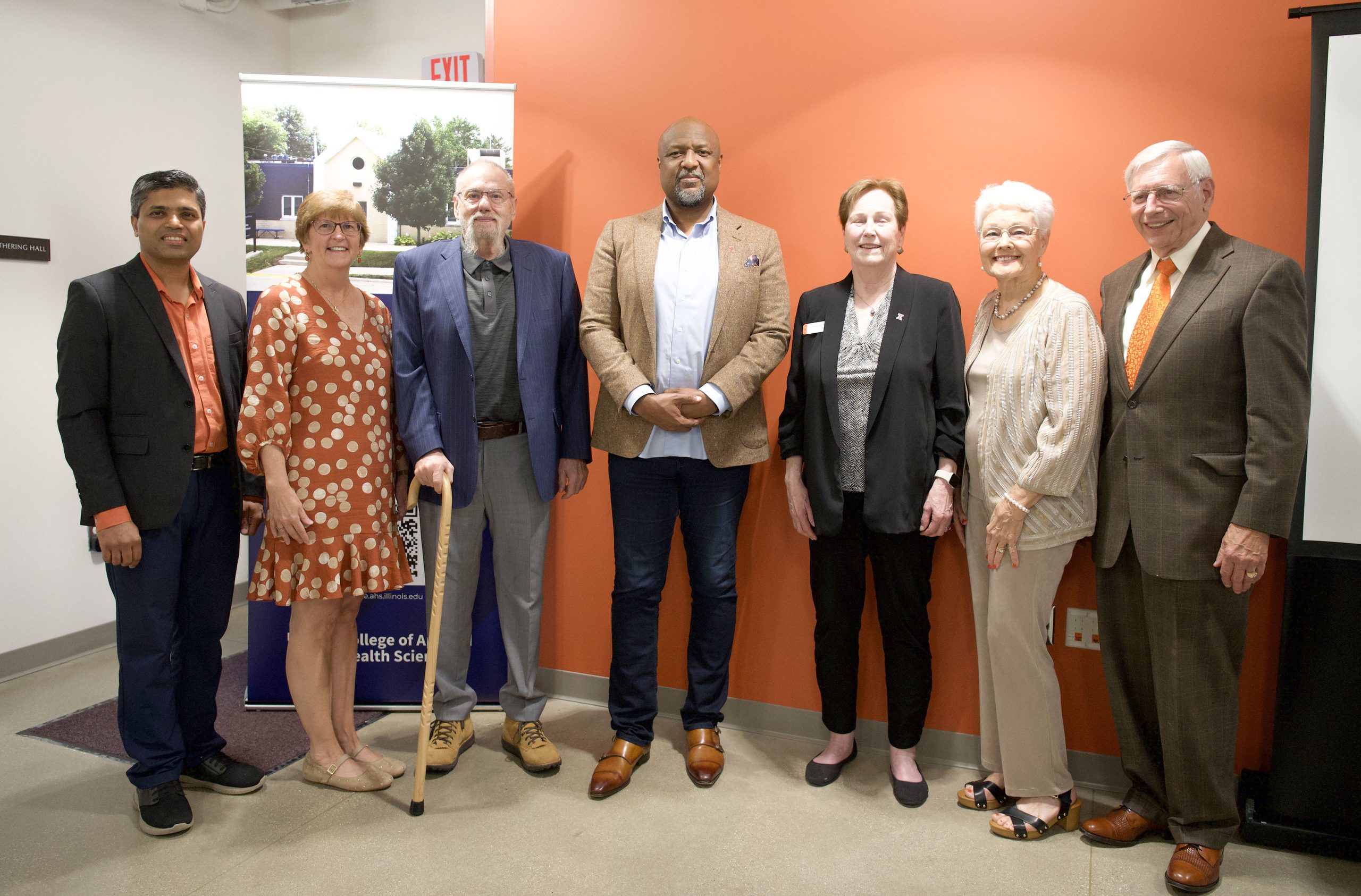
The University of Illinois at Urbana-Champaign’s College of Applied Health Sciences is proud to announce a significant milestone in its ongoing commitment to advancing health sciences education and research. Effective Aug. 16, the Department of Kinesiology and Community Health will officially change its name to the Department of Health and Kinesiology.

The new name better reflects significant changes in our disciplines, research interests, and educational mission. Health and Kinesiology allows for a broader, more inclusive representation of a department that focuses on multiple aspects of health and physical activity in a diverse society. It also honors our legacy as leaders in the field of health and kinesiology, while pointing the way forward to a future that is both dynamic and innovative. 

The name change was a decision that was made based on goals highlighted in the KCH Strategic Plan and upon the recommendation of the KCH Restructuring Task Force. It was supported by multiple stakeholders and was recently approved by the College of Applied Health Sciences, UIUC Senate, and Board of Trustees.

Cheryl Hanley-Maxwell, dean of the College of Applied Health Sciences, expressed enthusiasm about the department’s name change, saying, “The renaming of our department to Health and Kinesiology aligns with our strategic vision of fostering interdisciplinary collaboration and addressing the multifaceted aspects of health and wellness. This change reflects our commitment to providing innovative education, conducting impactful research, and serving our communities.”

HK Department Head Kim Graber said, “As the department evolves to better reflect the dynamic landscape of health and movement sciences, we believe the change to Health and Kinesiology not only embraces our commitment to comprehensive wellness but also underscores our dedication to advancing research, education and outreach in these vital areas.”

The Department of Health and Kinesiology offers a wide range of undergraduate, graduate and doctoral programs aimed at preparing students for careers in health promotion, exercise science, public health, rehabilitation, and related fields. With world-class faculty and state-of-the-art facilities, the department equips students with the knowledge, skills, and practical experience needed to excel in diverse healthcare settings.

Editor’s note:

To reach Vince Lara-Cinisomo, email vinlara@illinois.edu.
 

Related news

How Black distance runners shaped the sport from the shadows


Long-distance runner Ted Corbitt, center, was the first Black American to represent the U.S. in the Olympic marathon. (Photo provided)

The world of competitive long-distance running took off in the 1970s. But stories of the sport’s Black architects and pioneers who laid its foundation have been largely untold for decades. 

Teaching Assistant Professor Jake Fredericks in the Department of Recreation, Sport and Tourism at the University of Illinois has dedicated a significant part of his research to uncovering the legacies of successful Black long-distance runners who grew the sport “from the shadows” while challenging enduring racial stereotypes. 

“The explosion of running in the 1970s could not have happened without the efforts of the earlier generation, in the ‘50s and ‘60s, to lay the groundwork for the races in the first place,” Fredericks said. “These are the men who established the marathon courses or put the structures in place for organizations that could support bigger and bigger races.” 

This Memorial Day Weekend, he’ll co-lead a panel presentation on Black running history to an academic audience at a conference for the North American Society for Sport History (NASSH). Fredericks will present papers alongside Gary Corbitt, an archivist and son of legendary long-distance competitor Ted Corbitt, and Suzuko Morikawa, associate professor of History and Africana Studies at Chicago State University. 

Dave Wiggins, the former NASSH president and professor emeritus from George Mason University, will co-moderate the discussion. 

Fredericks’ paper, titled “When is it Okay to Run Around Your Neighborhood in Shorts?: Representations of Black Running at the National Marathon Championship,” examines the country’s perceptions of race and long-distance running through the prism of the AAU National Championship in Yonkers, New York, the nation’s second-oldest marathon.

From 1938 until 1966, Yonkers was the site of the country’s preeminent championship marathon race, and several Black American runners—such as Louis White, Ted Corbitt and Harold Harris—posted some of its best times, more than a decade before long-distance running grew beyond its niche, community-driven status.  

While Black American athletes such as basketball’s Bill Russell, baseball’s Jackie Robinson and tennis’s Althea Gibson received significant coverage in the newspapers of the day, “marathoning was on the margins,” Fredericks said. 

In 1952, Corbitt became the first Black American to represent the United States in the Olympic marathon. Two years later, Corbitt was crowned champion in the 1954 National Marathon Championship. 

“That victory is so sparsely covered across the newspapers in the United States, that he’s mostly forgotten. Ted Corbitt is not a name that we often say alongside Jackie Robinson, even though they’re competing at the same time and had similar levels of success,” Fredericks said. “My research looks at how these Black Americans really shaped the sport, even from the shadows.” 

Chicago’s Harris posted his best performance in the 1964 Yonkers Marathon, finishing fourth—just one spot removed from a bid to compete in that year’s Summer Olympics. 

Compared to the more “glamorous” track and field events such as sprints and jumps, long-distance running lacked institutional support, Fredericks said. So, in 1958, many of the sport’s top competitors formed the Road Runners Club of America, opening chapters with running enthusiasts in major American cities. 

Harris became one of the founding members of the Midwest Road Runners branch based in Chicago, which fostered a multiracial community of runners in the city, Fredericks said. Meanwhile, based in New York City, Corbitt pioneered techniques to measure more accurately the 26.2-mile marathon races.

Back when Harris competed, marathons were lucky to run 100 participants, Fredericks said. The “marathon boom” of the 1970s changed all of that. 

A confluence of factors led to marathoning, and running writ large, to hit the mainstream. Medical science backing the health benefits of exercise had steadily grown while Cold War-era pressures to increase Americans’ fitness continued. Then, in 1972, Frank Shorter won the marathon at the Munich Games, scoring the United States’ first gold medal in the event since 1908, and first medal since 1924. 

Ted Corbitt is not a name that we often say alongside Jackie Robinson, even though they’re competing at the same time and had similar levels of success.

Jake Fredericks

Teaching Assistant Professor, RST

Shorter’s success was lionized in the media, and his profile—a white, educated American man—suddenly became the prototypical image of the long-distance runner. 

“We lose the image of Ted Corbitt, who could have just as easily been the image of running, or somebody like Harold Harris, in Chicago, could have been the image of running,” Fredericks said. Those kinds of pioneering figures get replaced throughout the ‘70s, by a Frank Shorter-esque, well-to-do upper middle-class person.” 

The lack of recognition these Black American pioneers faced also played into athletic racial stereotypes. Fredericks’ dissertation, “Great Speed and Great Stamina,” in part challenged the lasting notion that Black athletes were “built” for explosive, powerful feats but couldn’t win in tests of endurance. 

The stereotype seemed to build from the sport of boxing, where analysts alleged that Black fighters couldn’t “go the distance” in the ring. Jesse Owens’ prodigious success in the sprints and long jump Olympic events of the 1930s shattered racial barriers in the sporting world but reinforced some of the same athletic stereotypes that dogged Black American athletes of the day. 

These Black runners’ success, however, “disproves these stereotypes that, unfortunately, have lasted 100 years. They’ve just been so hard to remove in the minds of the public,” Fredericks said. 

Part of the mission of Fredericks’ research, along with Gary Corbitt’s new Ted Corbitt Institute for Running History Research, is to document the history of the sport’s development more accurately and recognize the oft-forgotten figures who laid its framework. 

What stands out to Fredericks is many of these early organizers’ foresight: “They knew that road running had this potential to engage the masses,” he said. Even when races were lucky to field a dozen runners, they kept pushing to host events and spread the word. 

“Black Americans are a huge part of the story of long-distance running. Today, we reap the benefits of their efforts to establish and grow the sport of running, yet that part of the history often gets left out.” 

Editor’s note:

To reach Ethan Simmons, email ecsimmon@illinois.edu.
 

Related news

Get to Know: Miki Sato, RST assistant professor


Miki Sato (Photo provided)

Miki Sato joined the College of Applied Health Sciences in 2020, after six years at James Madison University. 

How would you describe your primary research interests?  

My primary line of research focuses on exploring how and why engagement in sport-related consumption activities, such as sport participation and sport spectatorship, can contribute to improved health, health-related behaviors, and overall well-being. 

I have conducted research in various sport settings, including participatory sport events (e.g., running events, walking events), fitness clubs, spectator sport events, and the Olympic Games.

What are you working on right now?

I am involved in research projects that examine the health benefits of sport participation and park and recreational facility availability within communities. Additionally, we are working on projects that explore the distinct roles of various sport participation locations, such as parks, fitness clubs, and community recreation centers, in promoting sport participation behaviors and enhancing well-being.

Regarding sport spectatorship, we are conducting projects that examine how engagement in professional sporting events, both through behavioral live spectating and psychological identification with professional sport teams, is associated with consumer well-being. We recently published a paper that provides evidence supporting sport spectatorship as a form of experiential consumption that fosters happiness among sport fans.

What’s a fun fact you’d like to share about yourself? What do you like to do in your free time?

I am a big fan of track and field and long-distance running. One of my childhood idols was Carl Lewis, who won nine Olympic gold medals in sprint and long-jump events. I am also a recreational runner. 

Since moving to Illinois, I have participated in the Illinois Marathon’s 10k race twice. The event was incredibly well-organized, and I recommend it to runners of all levels, from novices to experienced athletes!

Editor’s note:

To reach Ethan Simmons, email ecsimmon@illinois.edu.
 

Related news

Canton grows program within public health


With roots in Pennsylvania, an upbringing in Connecticut and newly planted ideas in Champaign, freshly minted Ph.D. recipient Imani Canton sees community gardening as a way to improve health equity.

Canton graduated with her doctorate in kinesiology in May, which involved successfully defending her dissertation, entitled “Tending to Our Roots to Increase Our Wellness (TRIOWell): A Community Gardening Intervention.” Canton’s dissertation revolves around a program designed to expand physical and mental health among Black women through community gardening programs, alongside researching health disparities among middle-aged Black women and how to combat them.

“Community gardening addresses multiple dimensions of health,” Canton said. “It is a type of physical activity, which we know can improve physical and mental health, and by working in a community garden, it provides opportunities to improve social health.”

Canton’s story begins at Spelman College, an all-women’s historically Black university in Georgia. But while applying to and completing her undergraduate degree, the college removed all NCAA sports due to the lack of student participation, due to disproportionate health disparities among Black women.

Instead of continuing NCAA sports, the college instead invested in a campus-wide health initiative, “Wellness Revolution,” that included a new gymnasium, as well as policy changes to the physical education curriculum. This eventually kickstarted Canton’s interest in investigating health trends among Black women. 

“That actually had been my first-time hearing that, and then it just kind of clicked to me when people say that racism is pervasive that it is in all types of systems,” Canton said. “Now I see how it’s within a health system, too. Fast forward to University of Illinois. I knew that I wanted to design physical activity programs specifically for African-American women.”

Canton began her stint at Illinois by enrolling in a B.S./Ph.D. in Kinesiology program in the College of Applied Health Sciences. Working with an advisor, Canton narrowed her research concentration to wellness in Black communities.

Her journey to a Ph.D. was not an easy one, though. Canton worked with multiple advisors, looking for the best fit within AHS. 

During her research, Canton found out that Black women prefer walking as their preferred method of exercise. The reasoning—access to equipment—or lack of it—in Black communities. 

“[The] lack of gym access due to racism and historical redlining leaving Black communities disproportionately in areas with less access to a built environment, which includes gyms and also green spaces, like gardens,” Canton said.

Gardening is a lower intensity physical activity compared to traditional forms of exercises such as running and weightlifting, and thus it may encourage those who have health concerns as a barrier to engage in physical activity to want to be physically active, she said.

And, according to Canton, research shows that Black women mention social support as an important consideration for them to be physically active and this is likely due to collectivism being a salient component of Black American culture. 

So, Canton combined the two activities—gardening and social support within the community—which is where the concept of community gardening programs came to life.

“Those who have higher levels of social support, typically, are more likely to participate in physical activity,” Canton said. “And you know, it makes sense because if you see your friend working out or doing some kind of physical activity, or if you have someone to do it with, you might be more encouraged to do it yourself.”

As far as the garden, Canton’s choice was the Randolph Street Community Garden, which is planted, cultivated and loved within the Champaign community. The Randolph Street Community Garden was started by another Illinois Ph.D. student as a small, urban planning project, which evolved into a full-scale garden that now has around 65 beds. 

During her Ph.D. program, Canton applied for a community grant, Building Beyond the Barriers, alongside Dawn Blackman, the Randolph Street Community Garden stewardess, to bridge the gap between academic and community, and continue the programs at the garden. With that funding, the garden can continue to bloom.

After tending to her planted ideas for six years, Canton is ready to let them flourish and grow within Champaign, and now, she is ready to return home to Connecticut, where she will attend the Yale School of Public Health, pursuing an advanced professional Master of Public Health in Applied Biostatistics and Epidemiology. When she completes that program, she will begin her fellowship at the National Cancer Institute in Maryland.

Canton made many discoveries about her research and herself during her doctoral studies. But one of the first ones had perhaps the biggest impact on her. She found out that in the late 1800s, Anita J. Turner was the first Black woman physical education instructor and later considered one of the pioneers of that field. That helped Canton find her path.

“You see black women doing this, then you think that OK, ‘I can do this myself, too,’ and just kind of build pride around that,” Canton said. “I wanted us to connect to our roots, roots in the garden and then our cultural roots.”

Related news

Hot wheels: A stationary track for mice could lead to breakthrough


From left to right, Hank Huang, Diego Hernández-Saavedra, and Clay Weidenhamer. (Photo provided)

The sight of mice scurrying across the kitchen floor is usually the stuff of our nightmares. But in the lab of Department of Health and Kinesiology Assistant Professor Diego Hernández-Saavedra, running mice indicates progress.

Hernández-Saavedra in 2024 received a $30,000 grant from the Center on Health, Aging and Disability, or CHAD, to study muscle memory. He and his team decided to focus on mice.

“Mice love running. They run like five to 10 kilometers [about 3-6 miles] per night, so a lot. What our studies are trying to do is trying to leverage the fact that mice love running and try to understand whether we can make them healthier,” Hernández-Saavedra said. 
     
The grant Hernández-Saavedra received was part of the CHAD Pilot Grant Program. That program was enabled to support innovative, groundbreaking interdisciplinary research aimed at advancing the understanding of health and wellness, aging disability and the maintenance of a high quality of life.  

According to Hernández-Saavedra, in the initial training phase, mice are trained for four weeks. With this group, researchers try to answer the question of how muscle memory is established. 

In the second phase, mice train, followed by a detraining period where all mice are sedentary. This group tackles the question of whether the muscle memory disappears after exercise cessation. 

In the final training phase, mice are trained, detrained, and once again trained. This cohort answers the question of how prior muscle memory is remembered and recalled by a second exercise training bout, Hernández-Saavedra said.

“We’re limited by doing mouse work, but I think it’s very interesting because we don’t really know how muscle memory works,” he said. “The grant that we received is to study how each cell within the muscle stores the memory and contributes to a better outcome.”

Hernández-Saavedra, born and raised in Mexico, came to the U.S. in 2013 to pursue a Ph.D. at Illinois after receiving his B.S. from the Autonomous University of Queretaro, Mexico. After his Ph.D., he went to The Ohio State University as a postdoctoral fellow in 2018 and returned to Illinois to become a faculty member in 2021.

Hernández-Saavedra’s research focuses on the beneficial effects of exercise to understand the adaptations in key metabolites and lipids in health and disease, the epigenetic mechanisms associated exercise that improve metabolism and bioenergetics, and the transgenerational effect of sedentarism and exercise on metabolism and cardiac function. 

In his post-doctorate work at Ohio State, Hernández-Saavedra studied how maternal obesity can affect the health of babies. Now at Illinois, Hernández-Saavedra is more focused on studying exercise memory, which is understanding whether the body remembers it ever exercised. 

“What our lab is trying to understand is whether our bodies remember prior exercise. For example, if you worked out, in the past, you’ve gone to the gym, but then you don’t go anymore. Four months later, you go back to the gym,” Hernández-Saavedra said. “Do we start from scratch? Do we start from a middle point? Or do they just remember all that and recover really fast to make it stronger, faster and better.”

Hernández-Saavedra explained that his lab studies how the tissue, the muscle, or the liver or the heart, remember prior exercise and how they store information in an epigenetic memory.

“Our research aims to reveal how exercise shapes muscle memory, providing strategies to combat age-related muscle decline, enhance metabolic health and maintain health and mobility as we age,” Hernández-Saavedra said.

For their studies, various groups of mice undergo different exercise training cycles. Some constantly work out, other groups do, but then stop and others workout, stop, and resume again. 

“We use a very interesting strategy,” said Hernández-Saavedra, who credited his students Hank Huang and Clay Weidenhamer for their “tireless” work on the project. “The mice love to work out so we train them. Then we have another group where we train those mice, and then we remove the wheel. And then we see whether the mice, their tissues, specifically the muscle, whether they forget that they ever ran in a wheel.

“They love getting on the wheel,” Hernandez-Saavedra said about the mice. “They love their exercise. And so maybe we should try to be like them a little bit.”


Related news

Even in retirement, Synthia Sydnor stays connected to kinesiology


Retired Health and Kinesiology Associate Professor Synthia Sydnor smiles outside of the Siebel Center for Design. (Photo by Ethan Simmons)

As a wandering graduate student, Synthia Sydnor used to take cross-country road trips while she worked on her Ph.D. at Penn State University. 
 
In 1986, an opportunity came calling from the College of Applied Life Sciences at the University of Illinois: an opening for a faculty position to study and interpret sport and play. 
 
The role seemed a perfect match for Sydnor—a budding scholar in the cultural-historical analysis of sport—but this Midwestern setting seemed unappealing.
 
Driving through the “barren” winter landscape of Illinois, “we always said, ‘this is the last place on earth we will ever live,’” Sydnor said. 
 
Two years later, the job was still open, so Sydnor applied to at least get some interview experience. To her surprise, Illinois hired her. Sydnor came to adore the university as well as Illinois’ prairies and skies, and she would retire from the Department of Kinesiology and Community Health in spring 2024, 36 years later. 
 
Sydnor has witnessed profound changes in her discipline and in the University of Illinois, from researching and writing in a basically pre-digital academic environment to teaching a 750-student online class before COVID-19 had even arrived. (Leading KIN 142: “Contemporary Issues in Sport” virtually felt like “running a corporation,” she said.) 
 
With her unique scholarly background—she held appointments in the Unit for Criticism and Interpretive Theory and Illinois Global Institute—Sydnor has provided a humanities-trained perspective within the department for three decades. 
 
“What is sport? Why do we attach all these invented things to it, like ‘masculinity’, ‘teamwork,’ and lately, ‘peace’ and ‘development?’” Sydnor said. “I’ve tried with students and the research I’ve contributed to think of sport as a serious object of knowledge, not just frills and fun.”
 
In retirement, Sydnor is spending time with family while staying connected to her academic home, collaborating with several younger faculty across the department and mining her own discipline for new insights. Her humor, friendliness and mentorship of graduate students leave a distinct legacy. 
 
“She was always willing to take on a student in need of help—she had a soft spot in her heart for graduate students,” said Kim Graber, head of the renamed Department of Health and Kinesiology. “If they were experiencing challenges or difficulties, if they were not sure what they wanted to study, she’d always lend a helping hand, and be the person to listen to their concerns, and take them under her wing.” 

A changing field 

Sydnor left her mark on her department in more ways than one. The large triptych painting by Illinois alumna Brett Eaton and posters that line the first floor of Louise Freer Hall, celebrating the female pioneers of the field, are based on Eaton and 50 other undergraduates’ archival research in Sydnor’s course “Sport in Modern Society.”

The exhibit, “An Untold Story: U of I Female Faculty in the History of American Athletics and Sports Scholarship at the University of Illinois,” was funded by the Illinois Ethnography of the University Initiative and Illinois Gender Equity Council after Sydnor applied for them. 

“So many alums will walk up and down the halls during visits and really appreciate the art because they bring memories back for them,” said Graber, who joined Illinois six years after Sydnor.
 
Sydnor always took pride in teaching popular classes, which were often highly rated in student reviews. It’s especially rewarding when former students reach back out to discuss a class concept that clicked for them years later, she said. 
 
She also taught experimental courses, like one focused on extreme sport, to lead students into important topics of culture and theory. The class used a book she co-edited with Robert Rinehart, “To the Extreme: Alternative Sports, Inside and Out,” as a basis for study.
 
“What I do doesn’t predict or control, it doesn’t necessarily ‘solve’ something,” she said.  “Instead, you converse. ‘What does it mean to be human in different times and places? In different bodies?’ I’ve tried to contribute that to my classes, my teaching, my research.” 
 
As a physical education undergraduate at the University of Delaware, Sydnor was interested in cultural studies as well as sport, having played both lacrosse and field hockey. Sydnor continued her academic track at the University of Washington, where she obtained her master’s degree, and Pennsylvania State University for her doctorate in Interdisciplinary Humanities.  

With her rare combination of research interests, Sydnor had accepted the idea of becoming an independent scholar. 

I’ve loved being part of Illinois because of those leaders who had forethought and courage to pioneer new ideas.

Synthia Sydnor

Retired HK faculty member

“I thought that what I was doing contributed to knowledge, but I didn’t know if any university would ever hire me. And that was OK.” Her experience in ancient Greek language and cultural studies laid a framework for a scholarly niche missing in kinesiology. When she arrived at Illinois in 1988, the field of kinesiology was widening its umbrella. 
 
At the time, Illinois’ Kinesiology department head Karl Newell had begun hiring an “amalgamation” of exciting, cross-discipline scholars, Sydnor said. The department had changed its name from “physical education” to “kinesiology” the year before, and Newell was pushing for other departments across the world to follow suit. 
 
Sydnor even wrote an article with Newell about the historical development of the word “kinesiology,” rooted in the Greek term “kinesis.” They argued that the term was broad enough to hold multiple disciplines of movement and would have plenty of staying power. 
 
She admires the developments of each of the three department heads she’s worked with—such as Wojtek Chodzko’s push to focus on healthy aging, and Graber’s empowerment of younger faculty. 
 
“I’ve loved being part of Illinois because of those leaders who had forethought and courage to pioneer new ideas, and we’re on the cusp of that now with changing to ‘Health and Kinesiology,’” Sydnor said. “I love our department and how much it’s grown, and how much Kim Graber has let the new young professors lead us in research initiatives.”
 
In retirement, she’ll continue working with Health and Kinesiology Teaching Assistant Professors Caitlin Clarke and Jesse Couture to develop a student textbook, essentially a second edition of her 2021 book “Social Theory for Sport Lovers.”
 
She’s hoping to finish up her two books of her own: One that explicates new aspects of sport and its futures, and another in reception studies, focusing on how ancient motifs and symbols live on in physical culture in new ways that past civilizations would not comprehend. 
 
“I feel so fortunate, I’ve just loved it here,” Sydnor said. “It enabled my creativity, it enabled collaboration with great thinkers across campus and hopefully helped students approach sport in a learned way in their professional and personal lives.”

Editor’s note:

To reach Ethan Simmons, email ecsimmon@illinois.edu.
 

Related news

Fresh legs carry on the Lifetime Fitness Program


Members of the Lifetime Fitness Program swing medicine balls overhead for an upper body exercise. Classes in the spring and fall terms are hosted at the Campus Recreation Center East in Urbana. (Photo provided)

It’s 7:30 a.m. at Campus Recreation Center East on the campus of the University of Illinois Urbana-Champaign, and Charmaine Young swings a 10-pound exercise ball around her head before lowering to the exercise mat for a “Superman” pose, which works her back muscles. 

Young is 86 years old, but you’d never guess it based on how she moves in the Lifetime Fitness Program, the five-day-a-week group exercise class run by the Department of Kinesiology and Community Health. She’s been returning to the class each semester for nearly 38 years. 

“I live alone, and outside of a log or a tree limb, I can pick up whatever I need,” Young said. “The [Lifetime Fitness Program] is such a part of me, it’s hard to take it apart.” 

The Lifetime Fitness Program, “LFP” for short, sports an eight-decade history at the University of Illinois of helping adults ages 55 and older stay fit, while supporting the college’s research goals. 

The program recently changed hands after longtime KCH Professor Ken Wilund, who ran LFP for more than a decade, left for the University of Arizona. 

But Lifetime Fitness quickly found fresh legs under it, with two first-year faculty at the College of Applied Health Sciences at the helm: KCH Assistant Professors Jack Senefeld and Emerson Sebastião. 

“[Wilund] was looking for someone else to sort of liven up the program,” Senefeld said. “He asked Emerson and I if we would be involved, and we both excitedly said yes.” 

Of course, the program didn’t just “fall in their laps,” Sebastião said. Both faculty have research bona fides in exercise science, especially for older adults. 

What they’ve quickly discovered is a fitness group brimming with devotees, many of whom have been coming back to the weekday classes for decades. And there’s room for more. 

“COVID was not a fun time for society, and a lot of community-based, physical activity-based programs had really dwindling communities,” Senefeld said. “Our goal has been to promote the program and increase the number of people that know about it, because the people who know about it, love it.” 

While the pair of faculty members administer the program and oversee its research, the 7 a.m. to 8:30 a.m. weekday classes are run by undergraduate students for class credit and supervised by graduate students Ashley Morgan and Kaitlyn Pawelczyk. Sebastião, like Wilund before him, still attends a couple of sessions each week. 

“Having this close connection, being able to work with the older adults, it’s good to be around them. It’s fun—it helps me in other areas as well,” he said. “Talking about building community, I think it’s important to be there, show our faces.” 

LFP is a community unto itself. Each class radiates positivity, even in those early mornings. 

“That’s an awesome part of the Lifetime Fitness Program, the social, community aspect of it. Not even just for the members, it’s even been like that for me,” said Pawelczyk, a first-year grad student coordinator for the program studying Nutritional Sciences. “Everyone is so supportive, caring, invested in each other’s lives from an exercise standpoint and from an intentional standpoint. Everyone wants to know how everyone is doing and support them.” 

A reservoir for research 

The year was 2009, and Sandy Goss Lucas had recently retired from the University of Illinois, where she directed the Introductory Psychology curriculum. A friend of hers tipped her off to a study in kinesiology, researching whether women’s weight was better controlled through diet or exercise, and Lucas decided to join. 

She was put on the exercise track and found out that the regimen increased the participants’ bone density, among other positive things, she said. For her participation, she got a small payment and a free semester of the Lifetime Fitness Program. 

“We were intersecting with people who were doing Lifetime Fitness anyway, so I went to see what it was all about,” she said. “And I got hooked.” 

The friendly atmosphere, challenging exercises, and “phenomenal” student instructors immediately appealed to her. Lucas, now 74, has been coming back for the past 15 years. 

“It’s just been one of the best experiences of my life,” she said. 

Having this close connection, being able to work with the older adults, it’s good to be around them.

Emerson Sebastião

HK assistant professor

Many of Lucas’ classmates found the class in the same way, after going through a research study in the college. That’s intentional: Many KCH faculty are interested in recruiting older adults for exercise studies, but after the study elapses, older adults might not have a place to stay in touch, Sebastião said. 

“This program also serves that purpose—to have a place to go after research studies are done, and then they can be integrated with that group and then start building their community and keep exercising, which is the main focus,” he said. “We want them to be long-term exercisers, not just for 12 weeks, which is normally how a study would last.”   

The exercise is “vigorous,” according to 20-year LFP attendee Fran Hacker, who said the regular activity helped her recovery from cancer. 

“When we’re off a week or two, I can notice the difference,” she said. 
But the program’s different classes—stretches in the morning, strength work, water aerobics and yoga—are designed to be functional, instructors said. 

“You want to tailor the program to the fact that they are older adults. We want to be careful of balance, of the knees, obviously, but we want to make it fun,” Pawelczyk said. 

The next frontier for the professors is getting new research elements off the ground, Senefeld said. Many of the adults who keep coming back to Lifetime Fitness are interested in their health; Senefeld and Sebastião are planning to implement regular assessments on various fitness metrics, from strength and aerobic capacity to walking speed. 

“They’re really interested to know if they’re slowing down, and so we can help them quantify that and provide that feedback and then use that to look at how does physical exercise benefit older adults,” Senefeld said. 

The Lifetime Fitness team recently published a program overview in Kinesiology Review, running through the structure of the program, its physical benefits for older adults and experiential learning for the student instructors. 

The group’s social ties have kept the cohort going strong, even through the COVID-19 pandemic. When classes were canceled in early 2020, a group of exercisers began meeting at West Side Park for spaced-out, masked-up outdoor yoga. The tradition of meeting on weekends has kept up ever since, said Mike Sims, an 11-year participant in LFP. 

“We text each other and meet on Saturdays and sometimes go out for coffee and watch movies after that,” Sims said. “The [social aspect] opens up a whole atmosphere bigger than just exercising.” 

Just three weeks after a knee replacement surgery, Lucas was back in class stretching with the rest of the cohort. Her classmates and the student instructors were, as always, ready to welcome her back. 

“We’re a very close group, right now we have people going through breast cancer, ovarian cancer, chemo. People have gone through all kinds of things, we take a meal, we stay in touch, we check up on each other,” she said. 

“I just feel very, very strongly that this group has kept me sane.”

(Members of the Lifetime Fitness Program pay $30 a month for full membership. Summer classes run until August 11, MWF from 8-9 a.m. at Freer Hall. Fall classes will resume Monday-Friday at CRCE on August 28). 
 

Editor’s note:

To reach Ethan Simmons, email ecsimmon@illinois.edu.
 

Related news

AHS faculty, staff honored with 2024 awards

Here are the 2024 College of Applied Health Sciences and Campus award winners. The awards were presented at the Spring College Meeting on May 2. Congratulations to all of our colleagues on this outstanding achievement.


AHS Excellence in Undergraduate Teaching Award–Faculty
Instructor Robyn Deterding
Recreation, Sport and Tourism


AHS Excellence in Undergraduate Teaching Award–Teaching Assistant
Graduate Teaching Assistant Emily Harrington
Speech and Hearing Science


AHS Excellence in Guiding Undergraduate Research Award
Associate Professor Brian Monson
Speech and Hearing Science


AHS Excellence in Online Teaching Award
Instructor Susan Dramin-Weiss
Speech and Hearing Science


AHS Excellence in Graduate and Professional Teaching Award
Associate Professor Naiman Khan
Health and Kinesiology


AHS Excellence in Graduate Student Mentoring Award
Assistant Professor Susan Aguiñaga
Health and Kinesiology


Phyllis J. Hill Faculty Award for Exemplary Mentoring
Associate Professor Laura Mattie
Speech and Hearing Science


AHS Staff Excellence Award
Assistant Director of Finance & Administration Mary Jones
Health and Kinesiology


AHS Excellence in Undergraduate Advising Award
Community Health Academic Advisor Hollie Heintz


Inclusive Leadership, Diversity, Service, and Excellence in Outreach Award
Graduate Student Kaley Graves
Speech and Hearing Science


Inclusive Leadership, Diversity, Service, and Excellence in Outreach Award
Undergraduate Student Monserrat Ponce
Health and Kinesiology


Campus Award Winners

Excellence in Undergraduate Teaching Award (Faculty)—Robyn Deterding

Excellence in Undergraduate Teaching Award (Teaching Assistant)—Emily Harrington

Excellence in Online Teaching Award—Susan Dramin-Weiss

Related news

AHS students present diverse projects for Undergrad Research Week


Kinesiology juniors Elizabeth Martinez (center) and Aubrey Cervantes (left) present their research at the AHS Undergrad Research Expo on April 24, 2024. (Photo: Ethan Simmons)

For a freshman at the College of Applied Health Sciences, Saiesha Bollapragada’s research portfolio is impressive. 

At last week’s Undergraduate Research Symposium, the I-Health major got to present the results from her first research project, “Public Health Preparedness Among UIUC Students During Extreme Heat Conditions,” where she examined students’ awareness and handling of severe heat in the spring semester. 

She completed her study with a push from Students Pursuing Applications, Research and Knowledge, or SPARK, an AHS program that jump-starts incoming undergraduate students research experiences by pairing them with professors in the college. Bollapragada was placed with Recreation, Sport, and Tourism Associate Professor Mariela Fernandez, whose experience with urban environmental injustices fit her research topic perfectly. 

“Professor Fernandez motivated me to start this project on my own,” Bollapragada said. “There’s a lot more reading involved than I thought there was, it was a lot of work preparing for the symposium, but if it’s something you’re interested in it’s a fun process.” 

Students, faculty and staff got a taste of the findings from AHS’ budding student researchers during the AHS Undergraduate Research Expo at Huff Hall on Wednesday, April 24, where a roster of undergraduates gave poster presentations on a diverse range of research topics.

An AHS freshman smiles next to her research poster

Many students spearheaded their own research projects with significant support and guidance from faculty and graduate students. Others, like a group of Speech and Hearing Science students from the Intellectual DisAbilities Communication Lab led by Associate Professor Marie Moore Channell, provided updates on long-range research projects they’ve assisted with on campus. 

Three SHS seniors, Emma Mueller, Abigail Keasler and Liz Gremer, presented initial findings from their glimpse into the Speech Accessibility Project, an ongoing research endeavor looking to make voice recognition software—such as Apple’s Siri or Amazon’s Alexa—more accessible for people with different speech patterns.

Each of the students has helped recruit participants with Down syndrome or aided vocal transcriptions from the samples they’ve collected. Under the leadership of Channell, the lab hopes to collect 240,000 voice samples from 400 participants. 

“Our poster looked into the recruiting process with that population and took a look at patterns of articulation differences exhibited by individuals with Down syndrome,” said Mueller, who transcribed vocal samples for the project. 

All three of the students met in Channell’s lab, and immediately found research responsibilities once the Down syndrome portion of the project came under Channell’s purview. 

“It’s been very rewarding, very interesting and very impactful,” Keasler said. “A lot of families in meetings or over the phone say, ‘Siri doesn’t really understand what we’re trying to say,’ so this is very important and I can’t wait to see the results of it.” 

Coming to a project affiliated with SHS with “so much publicity and so much money coming in is encouraging,” said Gremer, who has helped recruit participants and set up their first meetings for collecting voice samples. 

A man in a blue sweater listens to students give a research poster presentation.

AHS student programs, such as the first-generation focused Mannie L. Jackson Illinois Academic Enrichment and Leadership Program (I-LEAP), were well represented in the research symposium. I-LEAP juniors Elizabeth Martinez and Aubrey Cervantes, both studying kinesiology, brought results from their research collaboration on high-intensity interval training. 

Working within KCH Professor Steve Petruzzello’s Exercise Psychophysiology Lab, the pair analyzed 25 participants’ emotional responses to high-intensity exercise, compared with their scores and symptoms of several mental health qualities: namely anxiety, depression and neuroticism. 

“We were looking at exercise adherence—how can we get more people to get more active—and we were really interested in HIIT exercise, so we put it all together in one research project,” Cervantes said. 

What they found: Participants with more symptoms of depression reported more negative affect responses during the HIIT exercise, while anxiety and neuroticism didn’t show significant predictive power, they said.

“This is my first hands-on [study] that I can call my own and Aubrey’s,” said Martinez, who’s applying to physical therapy schools. “My favorite part is meeting with the participants. It’s so fun getting to know everyone, even if there’s a lot more hours behind the desk just plugging and chugging data.” 

Editor’s note:

To reach Ethan Simmons, email ecsimmon@illinois.edu
 

Related news


DRES alum’s posthumous gift takes spotlight: ‘I don’t think she ever forgot her debt’


The family of Susan J. Chaplinsky sits on her memorial bench in the center of the Disability Resources and Educational Services building. Her siblings Kathy, Amy, Molly and Pete sat with her plaque. (Photo by Ethan Simmons)

To honor their sister’s time at the University of Illinois, the siblings of Susan Jane Chaplinsky thought a memorial bench in the open-air plaza of Disability Resources and Educational Services would be a fitting tribute. 

Because the work of DRES was a big part of what propelled Chaplinsky, living with juvenile rheumatoid arthritis, to become an acclaimed business scholar and beloved instructor. She said so herself.  

“[DRES at Illinois] … put me on a path to achieve the professional success I have attained over the course of my life,” Chaplinsky wrote in her will. “It remains a unique institution for students with disabilities to level the inequities caused by life and health and allows them to achieve a measure of success.  I would be proud to have my name associated with an institution with these goals and aspirations.”

Upon her passing in November 2022, Chaplinsky dedicated a substantial portion of her wealth to the DRES: A $3.4 million estate gift which will support two endowment funds for Illinois students with disabilities. 

The family got to witness the memorial for Chaplinsky at the DRES 75th Anniversary Open House on April 19, surrounded by staff, alumni and visitors. College of Applied Health Sciences Dean Cheryl Hanley-Maxwell gave thanks to the family and to Chaplinsky for her generosity. 

”It’s going to change much of what we can do here at DRES, I can’t thank you guys enough for being willing to be here with us today to celebrate Susan’s commitment to us,” Hanley-Maxwell said. “Susan is an example of many students who have graduated from the University of Illinois who look back on DRES and say, ‘If it weren’t for DRES, I don’t know what I would have done.’” 

‘A lifeline’

Chaplinsky graduated from Illinois in 1975 with her bachelor’s in economics. She went a couple hours north to obtain her MBA and a Ph.D. in Economics from the University of Chicago. 

What followed was a stellar academic and teaching career, where Chaplinsky taught finance at the University of Michigan, Northwestern University, and eventually the University of Virginia’s Darden School of Business, where she spent her final 28 years. 

But with her early obstacles, she charted a course her family could’ve never foreseen.  

In sixth grade, Chaplinsky was diagnosed with a severe form of juvenile rheumatoid arthritis. In a matter of months, Chaplinsky went from being an active, able-bodied preteen to needing a wheelchair to get around day to day. 

Growing up in Palatine, Illinois, a village 30 miles northwest of Chicago, Susan’s sister Kathy would bring her lunches during high school, since Susan couldn’t access the cafeteria with her wheelchair. As Chaplinsky confronted her new health challenges, others began to place unfair limits on her abilities. 

“My sister was always very smart, brilliant, but there was no guidance counselor encouraging her to look at colleges,” Kathy Arter said. 

“Then our parents learned about the program at Illinois, and it was just like a lifeline to them. There was a place that not only could accommodate her, but they wanted her there.”

Illinois, with its wheelchair accessible campus and the Division of Rehabilitation Education Services led by director Tim Nugent, was an opportunity too promising to pass up. After being accepted onto campus, Chaplinsky’s life and confidence transformed, her siblings said. 

Every time they’d visit her at Allen Hall, she was surrounded by friends, going out to bars or movie showings on campus, living a regular student’s life.  

But she took her studies seriously, and Nugent played a hand in that. Chaplinsky “talked a lot about Nugent,” Arter said; he was demanding, and held high expectations for the students he worked with. 

“Some of that, with Susan, she left here with that: ‘They expect me to go on and be a success, I won’t disappoint them,’” Arter said. “I don’t think Susan ever forgot her debt to the university, for that opportunity.” 

An outpouring of support flowed from the UVA campus after Chaplinsky’s passing. Her siblings didn’t always get to see the teaching side of Susan; a memorial event they attended allowed them to see a new side of their sister. 

“The great passion of her life was teaching,” said her sister, Amy Meehan. “She was interested in students, she always rooted for the underdog. She just views this gift as an extension of that: ‘I can help for years to come.’” 

Plenty of the traits they knew well—Chaplinsky’s sports fandom and dry humor, for example—also shined through in their remembrances. 

“She’s funny, she’s brilliant,” sister Molly Gillis said. “I think about all the time, her footprint is ginormous when she had so many things that could’ve limited her reach and they didn’t.” 

The siblings and extended family made a big showing at the DRES Open House. They gratefully packed in around their sister’s newly arrived memorial bench and posed for pictures in the cool spring weather. 

“Maybe somebody sees that bench, and it gives them the confidence, the energy to go forward, to dream big, and to do something they didn’t think they could do,” brother Pete Chaplinsky said. 

Editor’s note:

To reach Ethan Simmons, email ecsimmon@illinois.edu.
 

Related news

College of Applied Health Sciences
110 Huff Hall
1206 South 4th Street
Champaign, IL 61820
(217) 333-2131