Pedro Hallal has built an international reputation for his research on physical inactivity
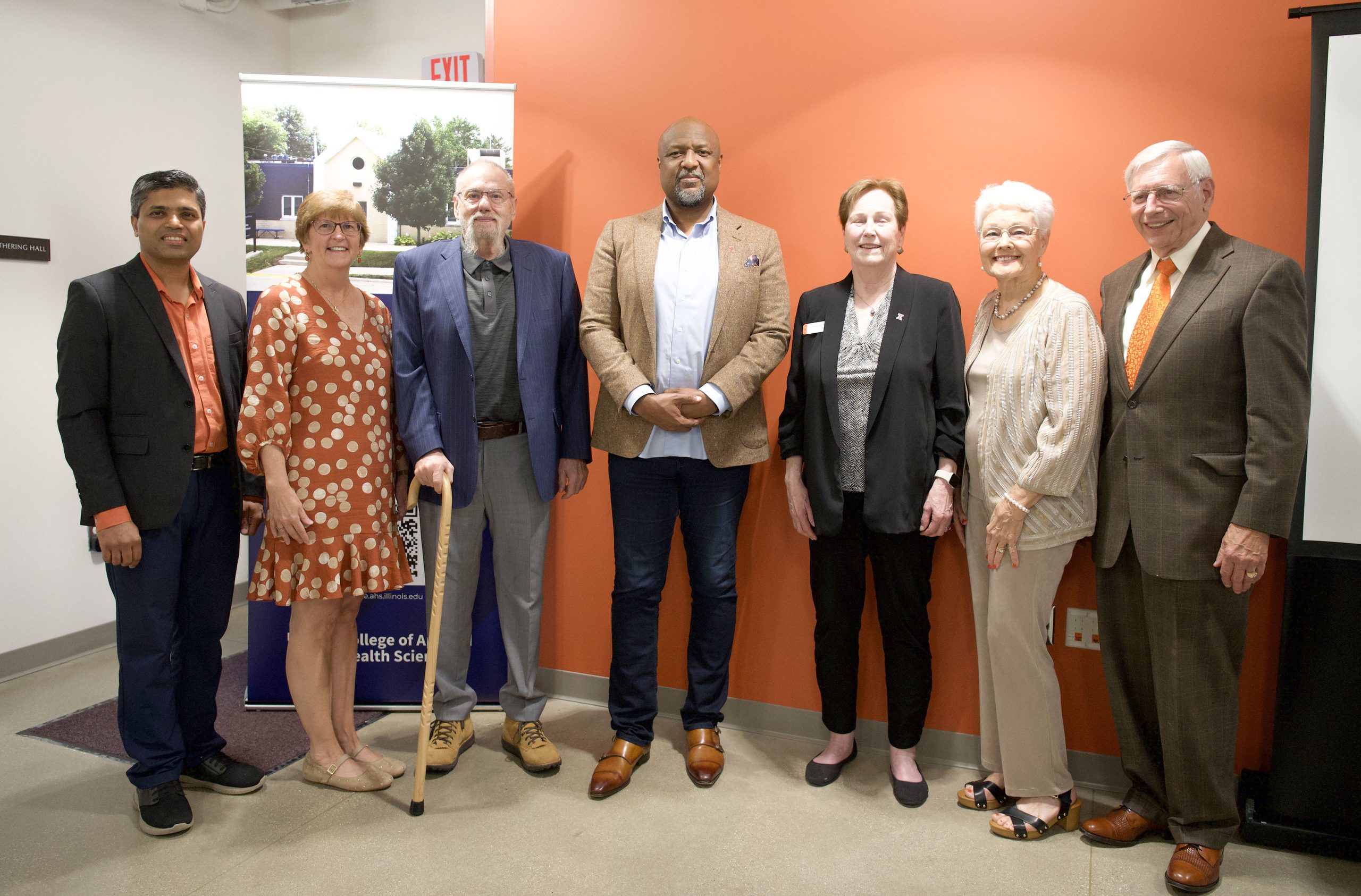
Pedro Hallal accepts the King James McCristal Distinguished Scholar Award on Wednesday, Sept. 23, 2025.
Like many young researchers, Pedro Hallal thought his first study would be groundbreaking and potentially change the paradigm of the study of physical activity. Ultimately, he said, it didn’t, but now, with the value of experience at hand, he understands that was OK.
“We are trained to think of things that no one has ever studied. But science is much more about consistency of results nowadays, than about brand-new findings,” said Hallal, the Alvin M. and Ruth L. Sandall Professor in the Department of Health and Kinesiology at the University of Illinois Urbana-Champaign. “We do research because of the questions; we don’t start with the answers.”
Thanks to that curiosity and because of the breadth of his research, Hallal on Sept. 24 was awarded the King James McCristal Distinguished Scholar Award, one of the most prestigious recognitions in the College of Applied Health Sciences. The award honors faculty whose scholarly contributions have significantly advanced their disciplines while elevating the reputation of the university.
For Hallal—whose research has transformed global understanding of physical activity and health—the honor represents both a recognition of past achievements and an encouragement to push forward in addressing one of the world’s most pressing public health challenges: physical inactivity.
“Professor Hallal’s scholarly work has substantially elevated the profile of his department, our college and the university by advancing public health knowledge and global health equity,” said Cheryl Hanley-Maxwell, dean of the College of Applied Health Sciences.
A Global Lens on Physical Activity
Hallal, who is also director of AHS’ Master of Public Health program, has built an international reputation for his research on physical inactivity, a phenomenon he argues must be understood in the context of modern life.
“Today, we have fewer people being active,” Hallal said. “Most of them are indoors, looking at a screen. We have to think about what physical activity is today, not decades ago. The notion that physical activity is good for health has been known for centuries. Only since the 1950s and ‘60s have we really been studying it.”
His scholarship began in Brazil, where his master’s thesis—“Physical Inactivity: Prevalence and Associated Variables in Brazilian Adults”—found that 41.1 percent of the surveyed population did not meet recommended activity levels of 150 minutes per week. This early work set the stage for his career-long focus on understanding inactivity as both a personal and societal issue.
Hallal’s impact expanded dramatically with his contributions to a series in The Lancet, one of the most influential medical journals in the world. His research revealed that one-third of adults worldwide—approximately 1.5 billion people—failed to achieve the minimum recommended level of physical activity. Equally concerning, four-fifths of children ages 13 to 15 fell short of the one-hour daily activity guideline. The findings underscored physical inactivity as a global pandemic, drawing international attention to a public health crisis with profound implications for chronic disease and health equity.
Hallal has often said that this work in The Lancet is the “research I am most proud of.”
Redefining Scientific Inquiry
Throughout his career, Hallal has emphasized the importance of scientific rigor and humility.
That philosophy has guided him to produce a body of work that does not merely identify problems but interrogates the systems that perpetuate them. His studies consistently highlight how socioeconomic and geographic inequalities shape access to safe and purposeful physical activity.
“Access to safe, purposeful physical activity must be a societal priority,” Hallal said. By framing physical inactivity not only as an individual choice but also as an issue of structural inequities, he has pushed the field toward broader, more inclusive approaches to solutions.
Access to safe, purposeful physical activity must be a societal priority
Pedro Hallal
Professor of Health and Kinesiology
A Legacy of Impact
The King James McCristal Distinguished Scholar Award cements Hallal’s place among the most influential scholars at Illinois. The recognition highlights not only his academic achievements but also his role in shaping the conversation around health equity worldwide.
From uncovering high rates of inactivity in Brazil to leading global efforts to quantify physical inactivity, Hallal has consistently produced research that informs public policy, inspires further scientific exploration, and elevates the role of physical activity in public health discourse.
Looking Ahead: Challenging Assumptions
As Hallal reflects on the future of his field, he sees opportunities to question prevailing assumptions and generate new lines of inquiry.
He is particularly interested in challenging the idea that “every movement counts.” While small bursts of activity are beneficial, Hallal believes that the global challenge lies in ensuring people have the opportunity for meaningful, sustained physical activity. He also underscores the importance of recognizing how time scarcity and resource inequality reinforce global disparities in health behaviors.
“I think this place, this campus and college, are in a great position to tackle these things,” Hallal said. “We are already one of the country’s leaders in the field, and we are one of the most productive groups in the world on this topic.”
How an RST alum became a Hollywood trainer to the stars
Dan Isaacson, center, served as executive director of the Governor’s Council under then-Gov. Pete Wilson. Before Arnold Schwarzenegger became governor, he chaired the council.
Transforming John Travolta. Becoming the first fitness editor for ABC’s “Good Morning America.” Marketing customized racketball racks for the Denver Broncos. Presenting the first wearable fitness device, the Polar Heart Rate Monitor. The list goes on.
“I dream of what could be and say why not? It’s the cornerstone of the creative entertainment community with visionary entrepreneurs like Walt Disney,” Dan Isaacson said. “I know I’m an entrepreneur, and I believe that that’s something I got from the University of Illinois.”
Isaacson, 75, grew up in Quincy, Illinois. His father owned John Isaacson & Sons Trucking and Isaacson remembers his early days as wonderfully rural, including farmhouse living, with no in-door running water or plumbing, one room schoolhouse for his first grade experience, church on Sundays, daily chores and sleigh rides in the winter. He said his background set a base for personal training and coaching others to achieve their goals in life.
“I believe we have a series of connecting dots in life that create a picture of who we are and our life’s story,” Isaacson said. “I grew up riding ponies at age 4, hiking, swimming, riding bikes, playing baseball, basketball, football and the tenor saxophone. It created a work/play lifestyle that developed my work values of discipline and responsibility balanced with unstructured play and the importance of being a person you could count on in life.”
Isaacson earned his B.S. from Western Illinois University in Recreation and Park Administration in 1971 and went on to earn his master’s in recreation, sport and tourism at the University of Illinois Urbana-Champaign.
His reason for choosing Illinois was simple: its historic and unparalleled history in the field recreation and leisure studies. Huff Hall had been graced with several “professors at that time, in the ‘60s and ‘70s, that were true pioneers in health, fitness and recreation education.”
Isaacson said Dr. Joseph Bannon and Dr. Chuck Pezoldt were his mentors. Bannon’s class on decision- making set a base for him that he still uses today, as well as being Pezoldt’s graduate assistant that provided him a guiding light on how to conduct his life personally and professionally.
“Everything to establish the professional importance and value of recreation activity was there,” Isaacson said. “When I got to Illinois, I saw the possibilities beyond just municipal recreation and parks including fitness specialized to improve performance and athletic facility development.”
His first professional role was as a manager of the Sheridan Swim Club in Quincy. Sheridan was also an early training ground for Olympic hopefuls. Nicole Kramer trained there before eventually competing in the 1976 Montreal Olympics for women’s swimming. During those Games, Isaacson was her spokesperson and reported live for the WGEM affiliate in Quincy.
“I got a call from a close friend living in Denver who said, ‘Dan, they’re opening several new athletic clubs in Denver,’ and sent me an article from The Denver Post.”
After that, he headed west.
He began working on programs at elite, full-service athletic clubs that were at the forefront of a new trend: real estate-driven fitness centers in cities like Denver, Las Vegas, Washington, D.C., and Newport Beach. Serving high-profile clients and specifically the baby boomer generation, these clubs helped spark what would become a nationwide fitness boom.
In the early ‘80s, Isaacson found massive success in training John Travolta for a role-specific physical transformation for the movie “Staying Alive.” Not only did he lay the groundwork for a science-based training program, he shifted the way Hollywood viewed strategic fitness as a means for elevating on-screen performance. Following the movie release, Isaacson and his wife opened their first personal training center by Warner Brothers called “Winning Results,” training many of the biggest stars, producers, directors and studio executives in Hollywood.
While Isaacson attributes much of his career success to his academics, he said there were other experiences outside of the classroom that shaped his worldview. He recalled a time when he was invited to play ice hockey with a friend’s friends.
When I got to Illinois, I saw the possibilities beyond just municipal recreation and parks including fitness specialized to improve performance and athletic facility development.
Dan Isaacson
RST alumnus
“Of course, they were hockey ice skaters,” Isaacson said. “I used to ice skate at home, but I only went one way, which was forwards. So, when the puck was passed to me and I had to skate backwards, they shouted, ‘What are you doing?’”
Despite the embarrassment, “it taught me a good lesson: know in life how to go forwards and backwards, right and left, and you’ll be fine,” Isaacson said. “You don’t want to be stuck – you want to have places to go.”
Isaacson said his next goal is to create a city-model to improve overall health and wellness in a community. Today with advanced technology, use of AI, holograms, robots, biohacking information, social media and new products, he said it’s time to develop and provide customized programs specific for cities.
“How do we create a healthy physical behavior pattern for a city in 90 days?” Isaacson said. “It’s a big goal and the next frontier in health, wellness and longevity.”
Even with all his accomplishments, there is one philosophy that Isaacson continues to champion.
“I just don’t want to look back on my life and say, ‘I wish I would have,’” Isaacson said. “It’s ‘Try, fail and sail.’”
John Preston had never been in an integrated environment until he came to the University of Illinois in 1967
John Preston, second from right, navigated an unfamiliar world when he came to Urbana-Champaign (Photo provided)
Arriving at the University of Illinois Urbana-Champaign in the 1970s, John Preston was among the few Black students and people with disabilities on campus. His journey through the university not only challenged him to navigate an unfamiliar world but also taught him the value of embracing life as it comes.
“If you understood what you’re going through, being Black, then what you go through being disabled is just a continuation of having that experience of being different,” Preston said.
In high school, a car accident left Preston paralyzed. The sudden change forced him to navigate a world that wasn’t built for people like him.
Having also grown up in the South, he said he had never been in an integrated environment until he came to U. of I. in 1967 to complete an undergraduate degree in business administration and marketing. It was the only university in the nation at that time that was accessible and accommodating to persons with disabilities.
“When I arrived, I went into my room and I met my roommate. Dwight was from Wisconsin and he was white,” Preston said. “This would be the first time I ever had lived with someone of a different race.”
Preston faced some discrimination in his dorm during the early weeks, but “I was used to it and I soon felt that discrimination melt away when we all got to know each other personally.” For him, the accessibility of the campus and sense of freedom was amazing.
“It was a campus that I could push all over,” Preston said. “I could go from one end to the other, and I could go anywhere in any building. I could get out of my chair and transfer into an accessible shower chair. It was absolutely fantastic.”
He had never lived in a place with accommodations like U. of I. Preston recalled that when he first applied to Illinois, he was missing course requirements like chemistry and algebra. Those classes in his high school were taught upstairs—a place inaccessible to him.
The first thing one has to do is accept, ‘This is who I am’
John Preston
Illinois alumnus
His wife, Lynn Preston, said the integration of people with disabilities isn’t just an opportunity for students with disabilities to have an accessible college program.
“U. of I. offered an opportunity for people who are able-bodied to have a realistic normalized opportunity to integrate with a population that happened to be disabled,” Lynn Preston said. “When we integrate with each other and know each other personally, we don’t see the disability or wheelchair first—we learn to see the person.”
At Illinois, Preston said it was a real treat to be in an environment where he felt comfortable, physically and mentally, as well as educationally.
“I was able to get in touch with a self that I had never been before,” Preston said. “I was able to start thinking about myself as someone who had an opportunity to become different in a world that I hadn’t traversed.”
That physical freedom opened the door to emotional freedom, too—a shift Preston didn’t fully understand until a study abroad trip to France offered and supported by Illinois as part of his master’s program in psychological social work.
A trip to France helped Preston, center, feel more emotional freedom. (Photo provided)
“As far as I can see, people were standing up staring at us—but I didn’t feel bad,” Preson said. “I was trying to figure out, ‘Why don’t I feel bad?’ And I realized that I cannot look inside their heads to see what they were thinking. Whatever negative impressions I was getting was from me—it wasn’t coming from people on the outside.”
It was at that moment, Preston said, that he began to feel OK about himself.
“That was the greatest sense of accomplishment because I came away knowing that my life was about learning how to be OK with me, not about trying to determine whether someone liked me or didn’t like me. It was more about me getting to like me.”
Another experience that defined Preston’s college career was his job as a bouncer at a bar.
“I determined who could come through the door, I was checking IDs at the door,” Preston said. “That was one of the things that really was the normalization process for me. I felt like everybody else because I was doing the same things everyone was doing. I’ll always appreciate the gentleman who gave me the job.”
Shortly after graduating with his B.S., Preston went back to earn his masters in social work. Once it was completed, he packed his car and drove to California, where he landed a job as a licensed psychotherapist for Stanford. His job was to provide sessions to staff and faculty who were having difficulties with their families, the university or any other issues.
“People just feel different sometimes in their environment. We try to get in touch with whom we are within a group of individuals,” Preston said.
He said being in social service helped him understand a lot about individuals and the therapeutic process, and that is intimately tied to my education and experiences at U. of I.
“My success as a psychotherapist was also a result of my coming to terms with myself and the quality of the education that I was getting,” Preston said. “It helped me become a better therapist and gave me the tremendous ability to change my awareness of life to see how I could grow and become the best that I could be.”
Preston said he’s gone on to have a fantastic life, with kids, grandchildren and a great-grandchild with another on the way.
“My life has been more than I could ever have thought it could be,” Preston said.
His philosophy that he has carried throughout his life can resonate with all audiences.
“The first thing one has to do is accept, ‘This is who I am,’” Preston said. “Then, you look at each situation that comes into your life as, ‘How can I be the best me in this situation?’ And you are always looking at life as an ability to grow and become who you are and feel OK about you.”
Tacoria Humphrey was recently named a Dike Eddleman Athlete of the Year, presented annually to the top Fighting Illini male and female athlete
Big Ten long jump champ Tacoria Humphrey has plans beyond her track and field competitions. (Photo courtesy of Fighting Illini)
She races down the rubberized runway, determination pumping through her arms, energy coursing across her strides and focus blazing in her eyes. With a mighty leap, she seems to sail through the air. Sand mushrooms under her shoes as she lands in the pit, the crowd roaring. That’s Tacoria Humphrey—champion of the 2025 Big Ten Long Jump.
Humphrey started track in middle school at Raymond Park Middle School on Indianapolis’ east side, where she broke two records in the high jump and 200 meter. Now, she’s well-decorated: she earned All-American honors in both indoor and outdoor seasons after winning back-to-back Big Ten long jump titles, placed fourth at the NCAA outdoor championships, recorded the third-longest indoor jump in NCAA history as national runner-up and earned a spot on The Bowerman Watch List. Humphrey said her success came from confidence.
“I feel like track is a mental sport,” Humphrey said. “If you believe you can do something, you’re most likely going to be able to do it, whereas if you’re scared or thinking about other people, that’s going to take over your mind and you’re not going to do well.”
Humphrey also attributed her many accomplishments to her training and her coach, Petros Kyprianou, the current director of Track & Field and Cross Country at the University of Illinois Urbana-Champaign.
“He has inspired me the most because he really believes in me, and when somebody just believes in you so much, you start to believe in yourself,” Humphrey said. “He’s just so thrilled to coach me, and he sees that I have a bright future and it just makes me want to accomplish everything to the highest level I can.”
She recalled a moment at the 2025 regionals for the NCAA Outdoor Championships. Competitors only had three jumps, and Humphrey’s weren’t up to the number she needed to qualify for nationals.
“After my second jump, he talked with me,” Humphrey said. “He was giving me that pep talk, like, ‘You got this. This is what you’ve been training for,’ and helping me calm down. I literally went from 15th place to fourth, and I qualified.”
Kyprianou was the one who encouraged Humphrey to switch her event from high jump to long jump her sophomore year of college.
“I definitely was like, ‘This is weird,’ but I love trying new things,” Humphrey said. “I never expected to change events and to do so good in that event, but I 100% don’t regret it.”
“I always love helping people. I’m a people person.
Tacoria Humphrey
Community Health major and Dike Eddleman Athlete of the Year
Outside of her national achievements, Humphrey was recently named a Dike Eddleman Athlete of the Year, presented annually to the top Fighting Illini male and female athlete. The University of Illinois Athlete of the Year was first awarded in 1940, and was named in honor of the 11-time UI letterman and Olympian Dwight “Dike” Eddleman in 1993, who is generally considered the greatest athlete in the history of Illinois Athletics.
Caitlin Clarke, a health and kinesiology teaching assistant professor and chair of the Academic Progress and Eligibility Committee, said that sport performance is typically not the only factor that goes into choosing the recipient of the Dike Eddleman award.
“This is part of the culture of Illinois Athletics—they’re not going to go for someone who’s just really good at their sport and doesn’t care about academics at all,” Clarke said. “We get some really phenomenal students who are both really good at their sport and also really good at their major.”
At Illinois, Humphrey is a community health major, with a concentration in health education and health planning and promotion.
“I always love helping people,” Humphrey said. “I’m a people person.”
This summer, she’s participating in the Health and Kinesiology 471 internship program and working with Wellness4Every1, an organization dedicated to ensuring equitable access to high-quality arts and wellness programs for students in diverse communities. Clarke, additionally a lead faculty for the community health internship program, said Humphrey is doing a great job stepping into the professional world.
“She’s future-thinking, because she knows that she wants to compete professionally for a while, but she isn’t just checking off a box with this internship,” Clarke said. “This experience really pushes students to learn how to communicate professionally, which is an important skill anywhere and can be difficult to navigate.”
Clarke said it’s important for all student athletes to also excel outside of their sport.
“Most of our student athletes are going to go on to careers that are not always directly related to sports, so you have to have a plan,” Clarke said. “You don’t want that plan to be, ‘Well, I just kind of did okay in my major.’ You want to be the rock star that gets into a successful career so that you can enjoy your life and do more to help other people around you.”
Currently, Humphrey is preparing to become a pro athlete. Her first pro meet was the USA Track and Field Championships at the end of July.
“I’ll be a little nervous, but not really, because I’ve been jumping big marks that are close to what pros jump,” Humphrey said. “I’m eager to have better competition, and that will definitely push me.”
For her, success means a gold medal, and with her trademark confidence, it’s not a matter of if—but when.
Today’s Department of Health and Kinesiology once hosted the nation’s foremost researchers of sport psychology. Nearly 50 years on, these pioneers reunited at Huff Hall for a weekend on campus.
When Rainer Martens arrived at the University of Illinois in the summer of 1966, he stepped out of his blue Mustang and bounded up the steps of George Huff Hall, to see the university’s Sport Psychology Laboratory with his own eyes.
What he found on the third floor of Huff initially disappointed him: old equipment piled up in the corner of a room with just enough space to seat a class. “We thought we’d come to the wrong place,” Martens said.
Turns out, he wasn’t in the wrong place—maybe just a little early.
What followed was the explosive growth of sport psychology research at Illinois. With help from the university’s world-class department of psychology, a group of likeminded doctoral students—including Martens, Glyn Roberts and the late Dan Landers—began building a formal sport psychology graduate program at Illinois, to study the mental aspects of athletic success, motivation and performance.
Dozens of doctoral students went on to matriculate in the program and bring their discoveries to institutions across the globe. By the late 1970s, Illinois had become the torchbearer for modern-day sport psychology in the U.S., with a vibrant group of researchers at the helm.
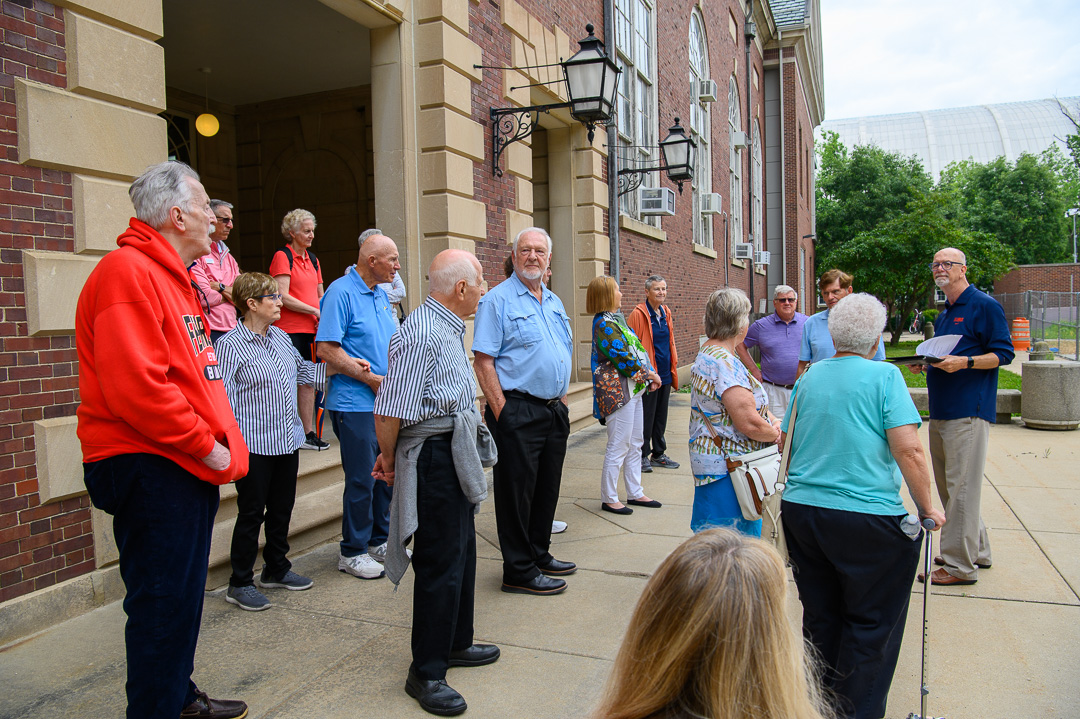
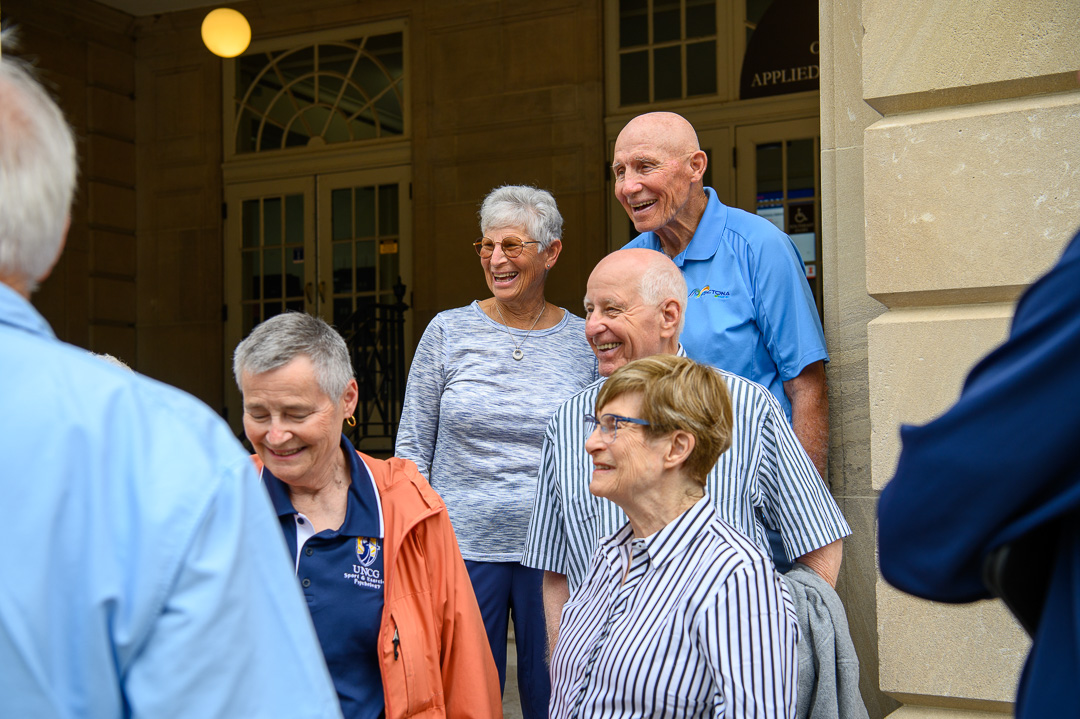
Five decades later, a group of those same students and faculty returned to campus to catch up with their former colleagues, and take a tour of their old academic home. The guest list left an indelible mark on the field of sport psychology as it stands today.
Even as Illinois’ own sport psychology program has faded, the legacy of its achievements and discoveries endure in the modern day College of Applied Health Sciences. Faculty at AHS, particularly in Health and Kinesiology, continue to study the psychological effects of exercise and physical activity at large, building on more than 100 years of tradition.
“All these former students, they’ve all gone on to distinguished careers. They’ve gone on to become presidents of national sport psychology organizations, and spoken all over the world,” Martens said. “This gathering, it’s a once in a lifetime thing.”
To cap off their walk down memory lane, these legends of sport psychology got to share lunch with current-day faculty and doctoral students in the Department of Health and Kinesiology.
“That was very humbling, we never expected anybody to turn out,” said Glyn Roberts, who worked as a professor of sport psychology at Illinois until 1998. “It was very rewarding that they would do that for us.”
Guests of Honor
Rainer Martens, a professor of kinesiology at Illinois until 1984, and co-founder of Human Kinetics, leading publisher of books and journals on physical activity
Julie Martens, PhD in sport psychology and the first employee of Human Kinetics, who retired as executive vice president in 2009
Glyn Roberts, professor emeritus at the Norwegian School of Sport Sciences and former professor of sport psychology at Illinois
Tara Scanlan, professor emerita of psychology at UCLA, and her husband Larry Scanlan
Diane Gill, kinesiology professor emerita at UNC Greensboro
Dan Gould and Marty Ewing, professors emeriti at Michigan State. Both earned a Ph.D. at Illinois, and Gould taught here until 1991
Damon Burton, professor of sport psychology at the University of Idaho
Robin Vealey, professor of kinesiology and health at the University of Miami, Ohio
Linda “Bump” Harrison, a publisher who got her PhD in the program in 1987
Marc Lochbaum, professor of kinesiology at Texas Tech who went to Illinois for undergrad and was mentored by several sport psychology greats
Absent were Joan Duda, professor of sport and exercise psychology at University of Birmingham, and Dan Landers, a professor of sport and exercise psychology and co-founder of the Journal of Sport Psychology, who passed away in 2023
‘We didn’t realize it, but we were pioneers’
Though Illinois experienced fertile growth of sport psychology in the 1970s, the seeds were planted by Coleman Griffith, known as the “father of sport psychology” for his pioneering work into the mental aspects of athletic performance.
Griffith founded and ran Illinois’ Athletic Research Laboratory until 1932, where he studied the links between personality and physiology on athletic success. He wrote two books—“Psychology of Coaching” and “Psychology and Athletics”— but left no proteges for his research. Griffith later became provost of the university.
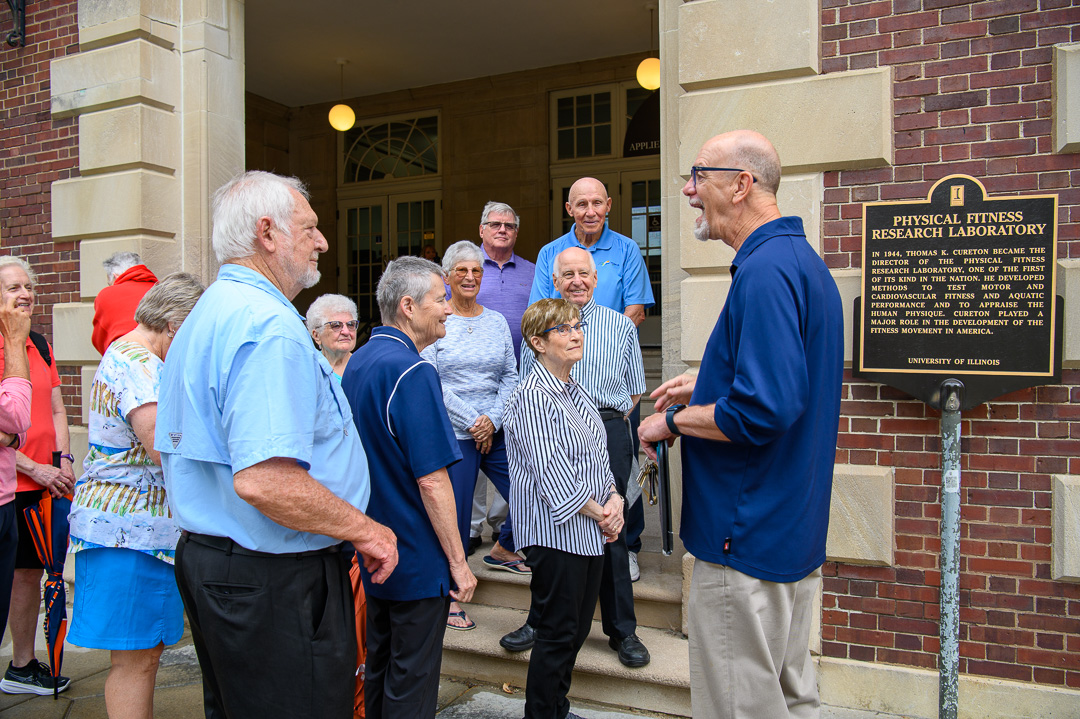
Physical fitness pioneer Thomas “TK” Cureton started his Physical Fitness Research Laboratory in 1944, occasionally collaborating with psychologist Raymond B. Cattell. The two of them examined the relationship between physical activity on personality and several of Cureton’s graduate students examined the anxiety-reducing effects of exercise. In 1951, Professor Alfred “Fritz” Hubbard revived Griffith’s research line with a new Sport Psychology Laboratory, located in a third floor office of Huff Hall, then known as Huff Gymnasium.
Hubbard specialized in motor learning, but saw latent potential in the sport psychology discipline. After a decade of research and recruitment, Hubbard had a prediction: the number of graduate students interested in sport psychology would double or triple by the end of the 1970s. His forecast of growth came true.
Still, those who joined the Illinois sport psychology program in the 1960s found their way to the field before an academic path formally existed. Some started out in coaching or physical education, and were searching for applied knowledge to use in the field.
For Rainer, his experience with intense anxiety before youth wrestling matches inspired him to understand competitive nerves and how to quell them.
After getting degrees from the then-named Department of Physical Education, Landers, Martens and Roberts all eventually joined the Children’s Research Center, a grant-funded research vehicle seeking to explain children’s behavior from multiple academic disciplines.
The recent grads worked in the center’s Motor Performance and Play Research Laboratory, where they used social psychology principles to study children’s play, and explore how their stress levels, personalities and more influenced their motor learning.
The grant-funded lab supercharged their progress.
“A lot of the stuff we did initially was stress related. How do you reduce stress? That was Rainer’s research—what he called competitive anxiety,” said Roberts, who began working at the Children’s Research Center in 1973. “Mine was motivation: how do you make people do what they ought to be doing?”
Full-time research positions to study the field were unusual, and freeing. From 1968 to 1975, Martens stayed on with the Children’s Research Center. Lifted by the university’s resources, namely its enormous library, computing power and collaborators in psychology, the lab produced leading research in sport psychology before peer institutions had caught on to the emerging discipline.
Julie Martens (center left) and Tara Scanlan (second from right) share a laugh in Huff Hall. Both of them obtained their doctoral degrees in sport psychology from the University of Illinois.
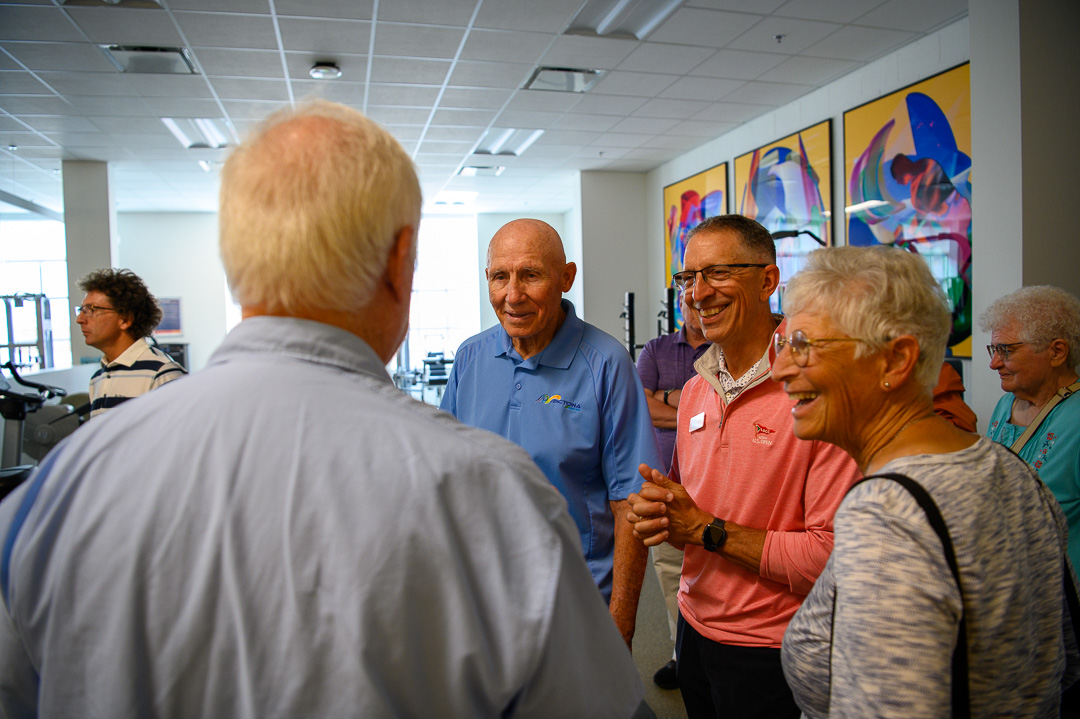
Jean Driscoll (center) chats with Dan Gould and Damon Burton, both graduates of the sport psychology program at Illinois who went on to successful careers in the field.
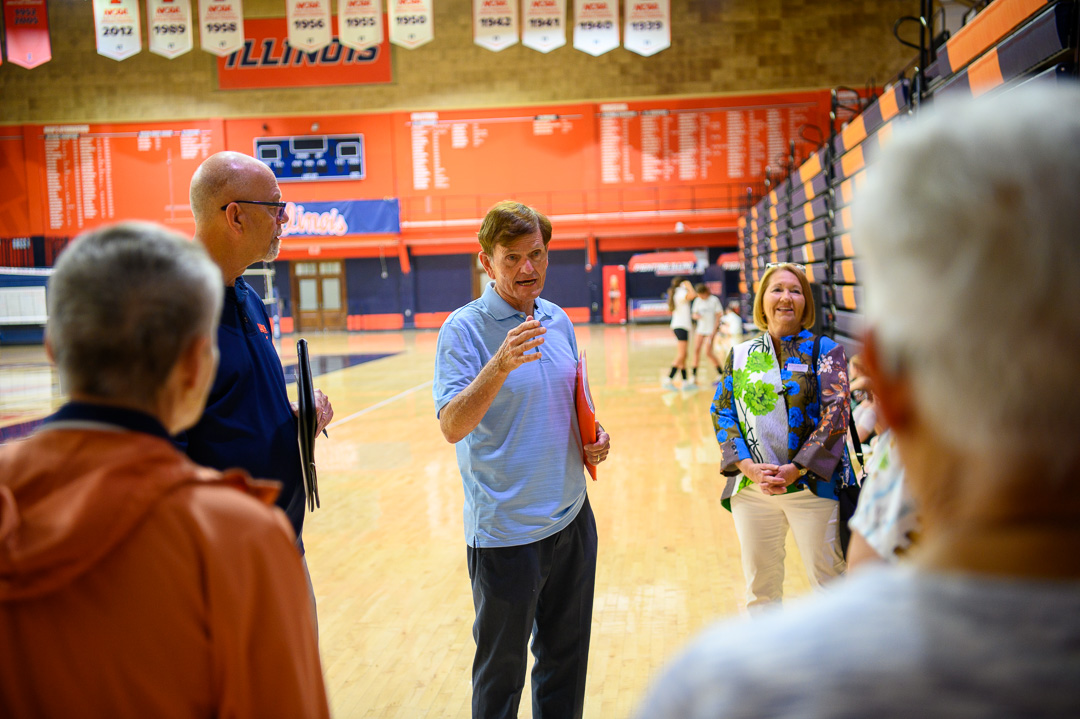
Bill Goodman (center) retired associate dean for administration at the College of AHS, tours former Illinois sport psychology students and faculty around Huff Gym.
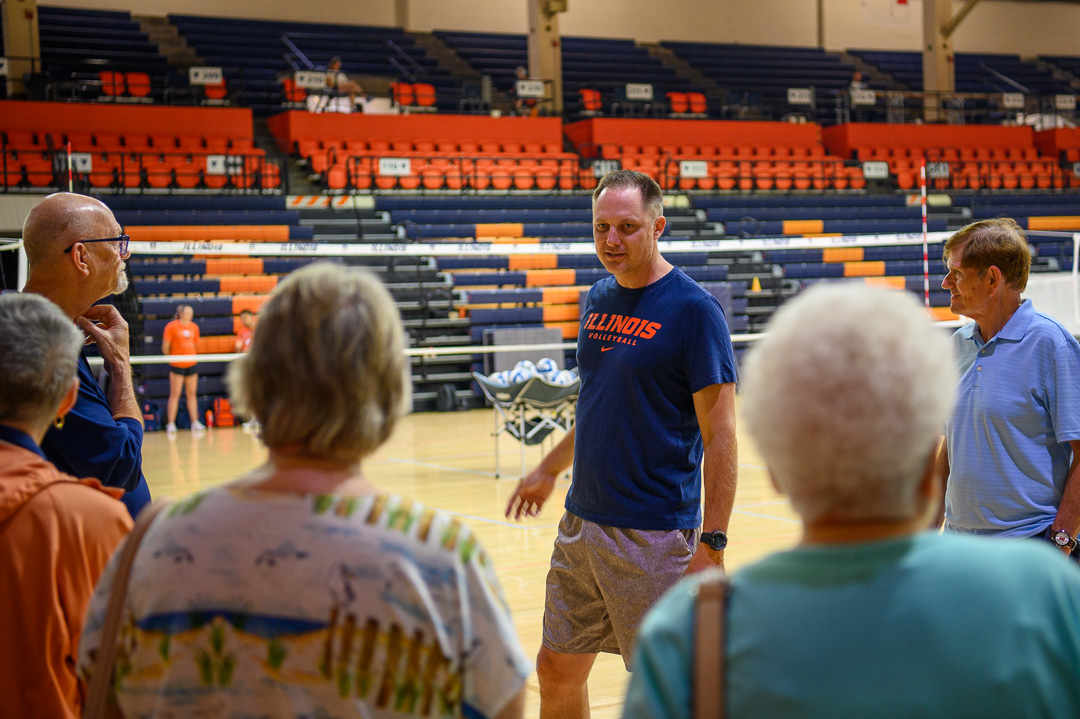
Chris Tamas, the current coach of the Illinois volleyball squad, speaks to former sport psychology students and faculty in Huff Gym.
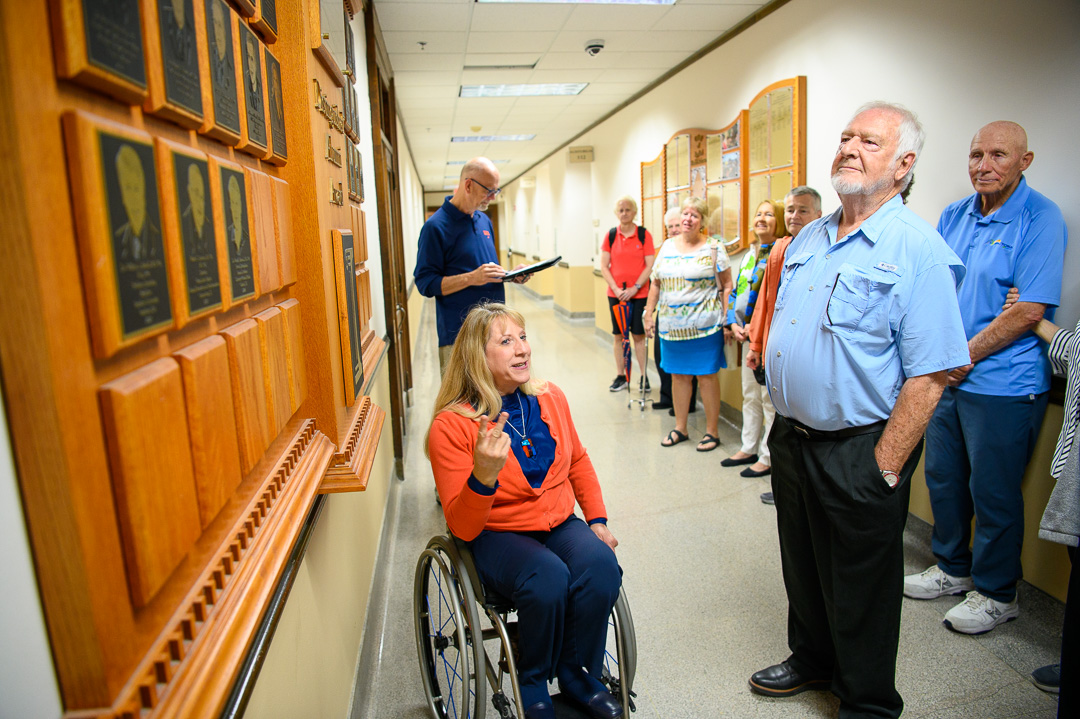
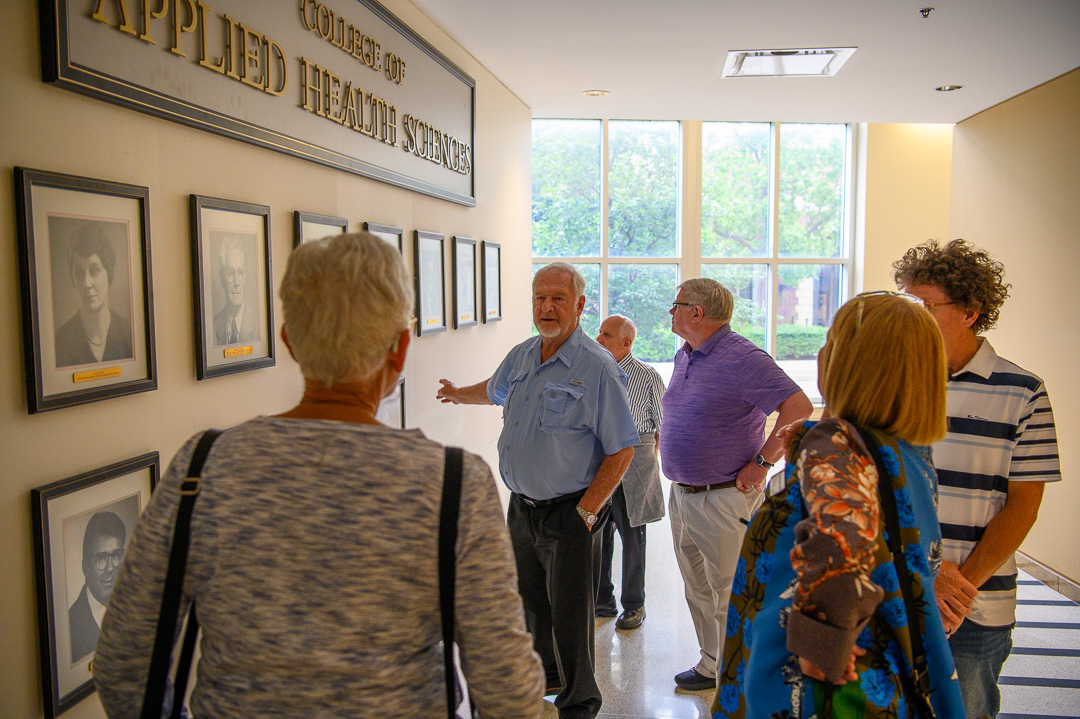
Jean Driscoll shows off the wall of Distinguished Alumni Award winners from the College of Applied Health Sciences.
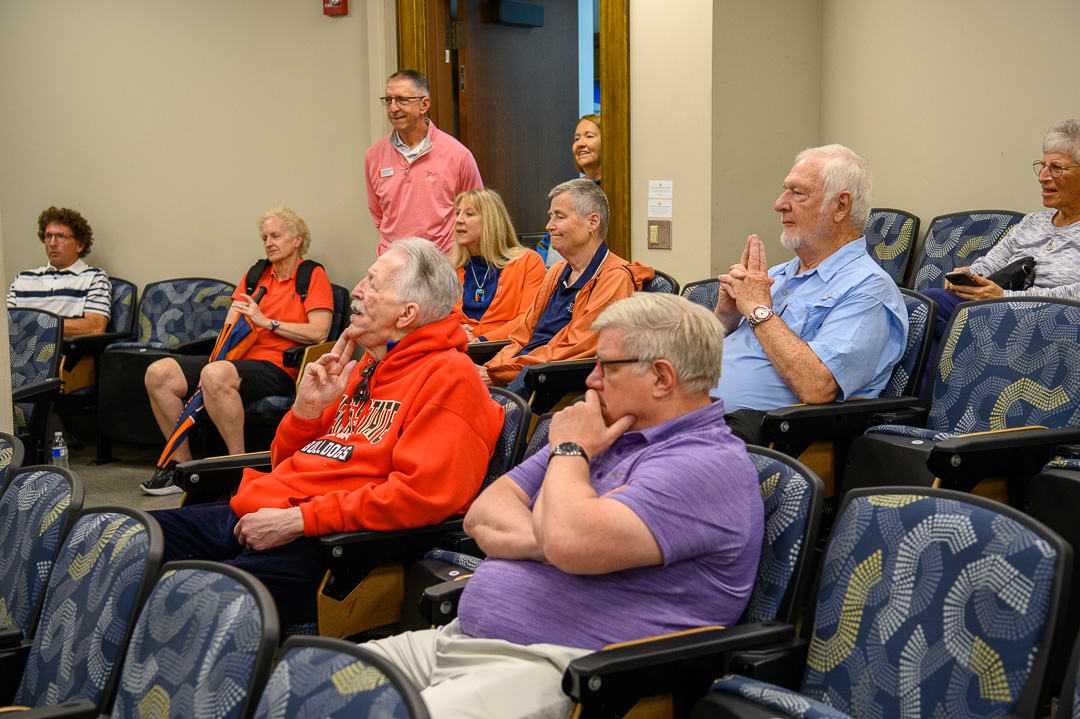
Former Illinois sport psychology students and faculty sit in one of the new Huff Hall classrooms. The space used to be part of the Huff Gym indoor pool.
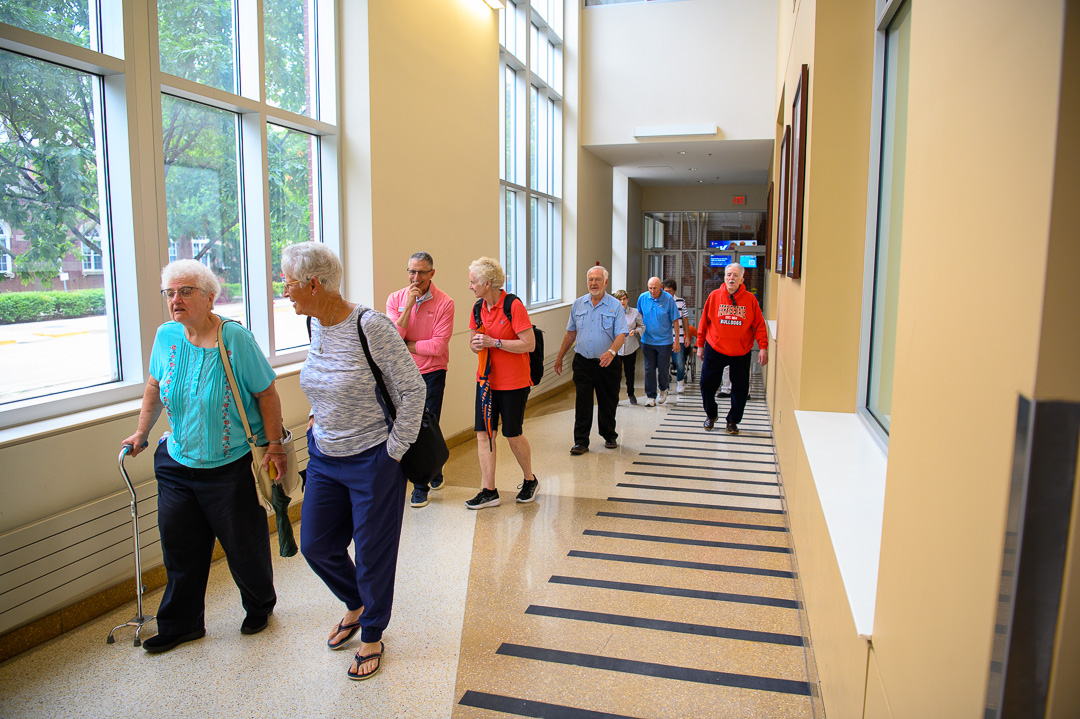
A reunion of sport psychology faculty and students at Illinois brought the guests inside and outside Huff Hall, where much of the early research into their field took place.
Former Illinois sport psychology faculty and students walk up the ramp of the Khan Annex, an addition to Huff Hall that opened in 2011.
Glyn Roberts (center) points to the wall of deans of the College of Applied Health Sciences.
Don Hardin (right), adjunct instructor at AHS and former women's volleyball head coach, talks about the history of Huff Hall with former sport psychology students and faculty.
The sport psychology tour stops by the Freer Hall gym, used for research purposes.
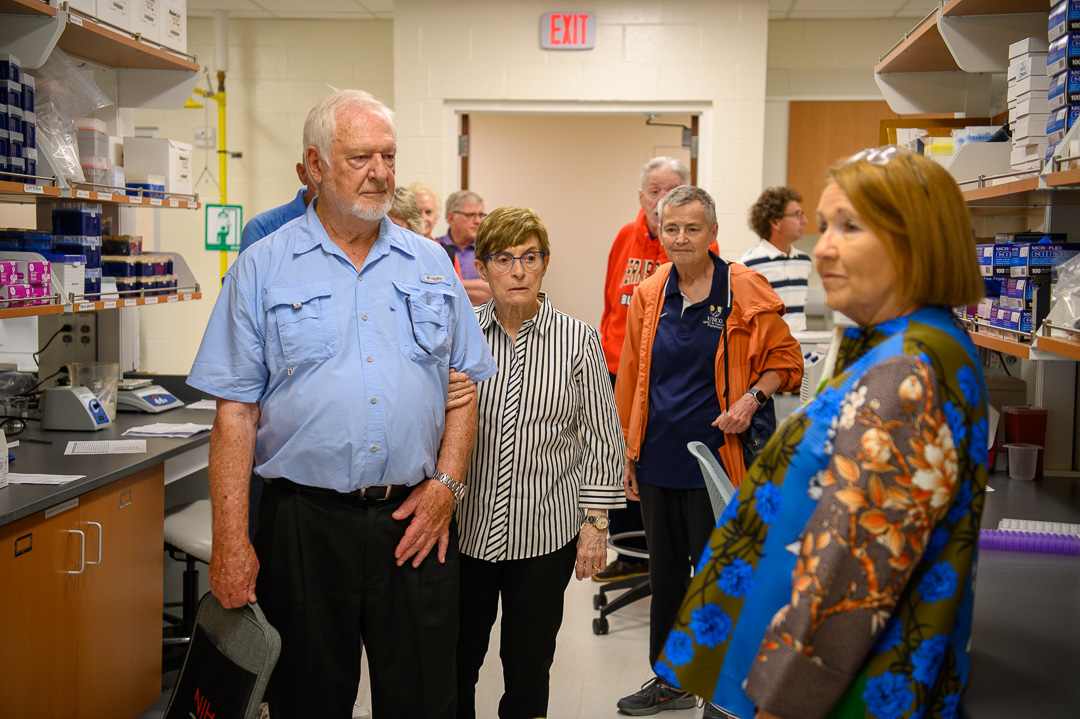
Former sport psychology students and faculty tour the basement labs of Freer Hall.
The enthusiasm of Illinois sport psychologists was clearly infectious. After a couple years teaching physical education, Diane Gill attended a conference at Brockport, New York, where she got to hear both Dan Landers and Rainer Martens speak about their research at Illinois. By her first semester in Urbana-Champaign, Gill was in Martens’ class “Social Psychology and Physical Activity,” where his first doctoral student, Tara Scanlan, was teaching assistant.
“Taking that course, immediately I thought, ‘this is the area I’d like to be in,’” Gill said.
She soon worked with the pair on their competitive anxiety research, and later studied competitiveness and athletes’ “achievement orientation,” or drive to improve and accomplish goals within their sport, along with a host of other topics in the field.
“Illinois was the place to be if you wanted to be in sport psychology,” she said.
Gill is newly retired, having spent more than 30 years as a professor of kinesiology at University of North Carolina, Greensboro after obtaining her master’s and Ph.D. at Illinois.
(“My doctoral students are retiring,” said Martens, now 82. “That makes me really old.”)
Physical activity—whether it’s high-level athletics or recess play—is all one field.
Diane Gill
Professor Emerita of Kinesiology, UNC Greensboro
Julie Martens, née Simon, was accepted into the program in 1973, coming to Illinois specifically to study with Rainer. (They would get married nearly 20 years later).
“[Tara Scanlan and Diane] had an office out at the Children’s Research Center right next to Rainer’s. As I got to know them, we used to be out there every evening. They said, “Come on out, you can study at night with us,’” Julie said. “That’s how I got involved with meeting the other students, then I got an assistantship and got where I wanted to be.”
The scientists would run experiments, hop over to the nearby cafeteria in the Adler Mental Health building for lunch and sketch out ideas for new research designs on napkins. Those early days were “invigorating,” Martens said.
By 1980, U. of I. was the premier place of study for sport psychology, alongside Penn State. They had turned the topic into a formal graduate program, and the field was continuing to blossom. In 1979, Dan Landers and Rainer co-founded the Journal of Sport Psychology, where Landers was the inaugural editor-in-chief.
As the field grew in relevance, new pathways opened up and Illinois sport psychology spread across the country. Sport psychology got a “big break” when the Olympic Training Committee allowed athletes to be advised by professionals who weren’t clinicians or psychiatrists, Roberts said—sport psychologists could now help athletes develop strategies to perform under extreme stressors.
“The U. of I. was very special. And the thing that stuck with me was we attracted such good students. We generated a reputation, and students wanted to come here from all over the world,” Roberts said. “We didn’t realize it, but we were pioneers.”
‘No better program in the world’
Between visits to their old labs and offices, the sport psychology legends visited classrooms in Huff Hall where there used to be a swimming pool, and walked on floors of Freer Hall that were once open air.
“In Freer and Huff, things have changed, which is good in many ways. You wouldn’t want the same stuff you had 50 years ago,” Gill said.
Over the weekend, the sport psychology crew took the 40-minute drive to Allerton Park in Monticello, where they hosted the nation’s first conference in sport psychology: the North American Society for Psychology of Sport and Physical Activity (NASPSPA) in 1973.
Several of them later served as executives and presidents of the society. The first conference also planted the seeds for Human Kinetics, the Champaign-based publisher of sport and exercise science founded by Martens and his first wife, Marilyn.
Though a formal sport psychology program no longer exists at Illinois, the field has expanded and evolved. The Department of Health and Kinesiology continues to study the psychological aspects and benefits of physical activity.
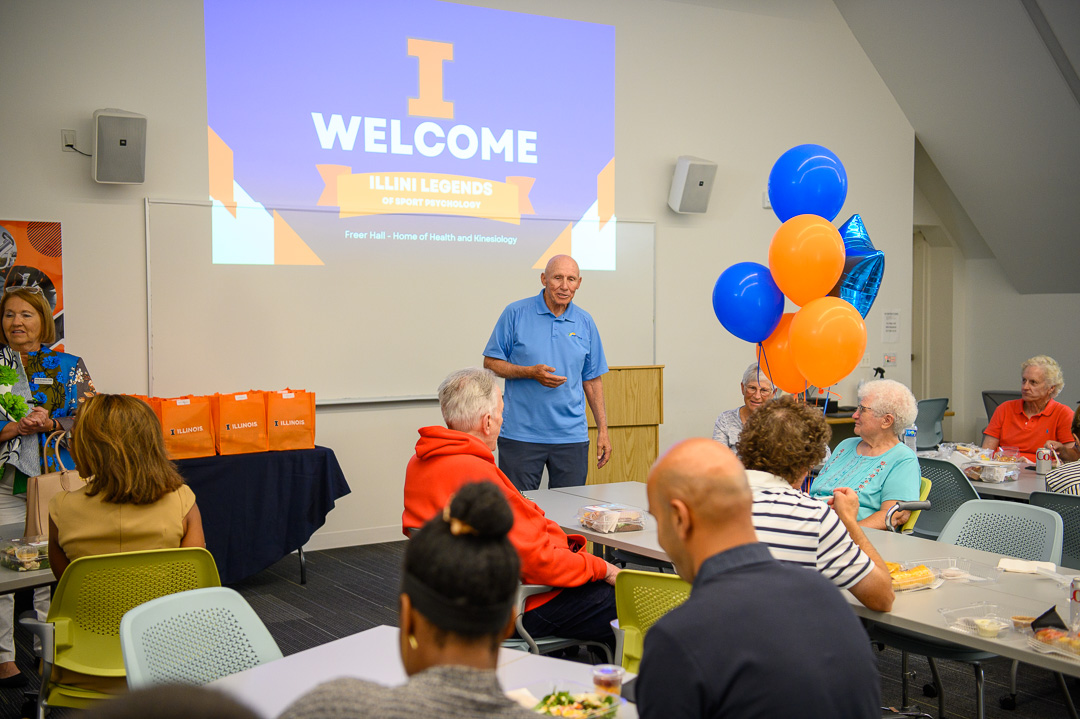
Rainer Martens speaks to his former Sport Psychology colleagues, and the current-day faculty of Health and Kinesiology.
“I think of it as one field. Physical activity—whether it’s high-level athletics or recess play—is all one field,” Gill said.
After walking through their old stomping grounds, the group met with current-day faculty and students of Health and Kinesiology for lunch in Freer Hall.
“This was the group that got sport psychology a foothold in this country,” said HK Professor Steve Petruzzello, who runs the college’s Exercise Psychophysiology Laboratory. “It’s wonderful to see these folks back here, to see their eyes light up as they’re walking around the halls, seeing spaces that look familiar and some that are completely unfamiliar.”
What remains from this era of sport psychology, and even the early days of Athletic Research Laboratory, are questions on the relationship between physical activity and psychology—including personality, stress, cognitive factors and affect, or feeling states.
“Faculty currently study these kinds of topics in older adults and children, in diverse populations, and in more specialized groups like tactical athletes,” Petruzzello said. “So really, the pioneering work of Coleman Griffith at Illinois over 100 years ago has evolved and developed into what it is today.”
Before heading off, the sport psychologists dispensed career advice with some of the rising graduate students and faculty. Linda Harrison obtained her Ph.D. from the program in 1987—she opted to go into the publishing industry instead of academia, but she credits her time at Illinois for developing her abilities to think and ask questions.
“The grad students all benefited from the historic founding fathers of sport psychology and the scholars who picked up the torch to carry the program to the next level,” Harrison said. “I am sure there was no better program in the world than the one offered at U. of I.”
Editor’s note:
To reach Ethan Simmons, email ecsimmon@illinois.edu The College of Applied Health Sciences and Illinois Division of Intercollegiate Athletics are celebrating 100 years of Huff Hallthis fall.
Misuse of nitrous oxide, or “laughing gas,” is on the rise nationally. Researchers warn that the U.S. may be at the “bottom of the hill” for this public health issue.
Canisters of Galaxy Gas, a nitrous oxide product often carried by smoke shops and online sellers. (Credit: Galaxy Gas)
An anesthetic most often used at the dentist or doctor’s office, nitrous oxide or “laughing gas” has been misused recreationally for decades in the form of whipped cream chargers, often called “whippets.”
Research from a University of Illinois professor shows an alarming rise in fatalities associated with the drug in the last decade, potentially driven by efforts to mass-market products to a new generation.
In the study, “US nitrous oxide mortality” published in JAMA Network Open and co-authored by Health and Kinesiology Assistant Professor Rachel Hoopsick and University of Mississippi Assistant Professor of Public Health Andrew Yockey, the researchers tracked the number of deaths in the United States associated with nitrous oxide misuse from 2010 to 2023, using Centers for Disease Control and Prevention data.
In that timeframe, U.S. annual deaths from nitrous oxide poisoning are up by nearly 600%, the study found. Of the 1,240 reported deaths during that period, 74% occurred in the last 7 years.
“I think we are currently at the bottom of a hill,” said Hoopsick. “Without any type of regulatory intervention, deaths and poisonings from nitrous oxide will increase at an accelerating rate and become a tremendous public health issue.”
For reference, 23 users of nitrous oxide died from the drug in 2010, compared to 156 in the year 2023. two factors make the picture look even worse: the sale of nitrous oxide is largely unregulated, and unlike most “party drugs,” users can die after inhaling it just once.
“This product is killing kids, it’s killing young adults,” Yockey said. “There’s no clear intention for using this product recreationally. Our message at the end of the day is: no one should be dying from nitrous oxide poisoning, at all.”
The number of annual deaths associated with nitrous oxide misuse has leapt by 600% in the last 14 years, according to a new study published in JAMA Network Open. (Source: “US nitrous oxide mortality”)
Repackaged for a new generation
Hoopsick and Yockey are frequent collaborators on research into substance use and mortality, often studying highly addictive drugs like methamphetamine and heroin.
Rachel Hoopsick (Provided)
Until recently, Yockey wasn’t convinced nitrous oxide misuse had become a public health issue. During a class he taught on substance abuse, he initially dismissed whippets as a fad of the past.
“A student raised their hand and said, ‘I can buy this at a gas station,’” Yockey said. Sure enough, the student pulled up pictures of colorfully packaged canisters of nitrous oxide, with goofy brand names such as “Galaxy Gas” or “Exotic Whip.”
These emerging brands are exploiting a regulatory loophole, the researchers said. Nitrous oxide is the whipping agent for whipped cream, so companies use that purpose as a cover to sell the product for recreational use.
“Flavored and scented versions, there’s no legitimate culinary purpose for that,” Hoopsick said. “It’s a gas—it doesn’t flavor the whipped cream. But it gives a scent or flavor to that gas for people using it as an inhalant.”
In the U.S., misuse of the inhalant has steadily risen since 2010. From 2023 to 2024, the number of intentional nitrous oxide exposure reports increased by 58 percent, Yockey wrote in a letter to the Journal of Medicine, Surgery and Public Health. More than 13 million people in the U.S. report using the inhalant in their lifetime.
A separate analysis showed emergency medical visits for nitrous oxide misuse in Michigan jumped by four to five times from 2019 to 2023.
We don’t want to wait until we’re at the top of the mountain, which is what we did with opioids.
Rachel Hoopsick
Assistant Professor of Health and Kinesiology
As of now, due to the culinary purpose of these products, the sale of nitrous oxide is still largely unregulated. Four states—Alabama, California, Michigan and Louisiana—have banned its recreational use as of July 2025. Others, such as Arizona and Connecticut, have banned the sale of the substance to minors; New York banned the sale of whipped cream chargers to anyone under 21 years of age.
Earlier this year, the Food and Drug Administration advised consumers to avoid inhaling nitrous oxide “from any size canisters, tanks, or chargers,” naming more than a dozen brands.
Still, in most states, users can pick from collections of brightly colored whipped cream chargers or dispensers at local smoke shops, or have canisters of nitrous delivered to their door from online shopping platforms.
“Since last summer, it’s taken off,” Yockey said.
A familiar playbook
The marketing “playbook” for nitrous oxide bears eerily similarity to the tobacco industry, Hoopsick said, in both appeal and accessibility. Sellers minimize health risks while dressing up the products in flashier exteriors, targeted at young people.
Tobacco companies were pressured by federal regulators to end practices that targeted young buyers, such as flavored cigarettes and cartoon brand mascots.
A canister of “original flavor” Galaxy Gas. (Credit: Galaxy Gas)
“We know nitrous oxide has neurological effects,” Hoopsick said. “But sellers rarely, if ever, provide health warnings. The public largely views it as a harmless party drug.”
Unlike the usual “party drug,” however, nitrous oxide risks both instant brain damage and death. The brief “high” temporarily paralyzes users, and can lead to hypoxia, or deprivation of oxygen to the body. Nitrous oxide inactivates vitamin B12, which can lead to a host of other health problems, including nerve damage.
Many deaths arise from the drug’s paralytic effect: the researchers were recently contacted by a mother whose college-age child died from drowning in a hot tub after inhaling nitrous oxide.
In the researchers’ view, the best path to stem nitrous oxide misuse is by making it harder to get, by raising the age requirements for purchase or limiting where the substance can be purchased.
“From a public health perspective, now is a critical window of time to intervene,” Hoopsick said. “We don’t want to wait until we’re at the top of the mountain, which is what we did with opioids.”
Sadie Braun, left, is working to develop more accurate and meaningful hearing assessments (Photo by Brian Stauffer)
Imagine sitting in a busy café, struggling to follow a conversation as voices and background clatter blend together. For many people with hearing loss, this is a daily challenge—yet traditional hearing tests, conducted in silent rooms with isolated tones, fail to reflect these real-world difficulties. At the University of Illinois, a team of researchers is working to bridge that gap by developing more accurate and meaningful hearing assessments that simulate everyday listening environments.
Sadie Braun, an audiologist and clinical assistant professor in the Department of Speech and Hearing Science in the College of Applied Health Sciences, is the team’s primary investigator and recently received a $30,000 pilot grant from the Center for Health, Aging, and Disability. She is working with Dan Fogerty, an SHS associate professor, on a project titled “Creation of Speech-in-Noise Profiles for Clinical Fitting of Hearing Technologies.”
The project has two goals, the first being to analyze and better understand speech-in-noise testing results from clinical environments.
“Instead of simply pressing a button when you hear a tone, we’re trying to get more out of tests that already exist which mirror real-world scenarios,” Braun said. “For example, it is fairly common now to play full sentences while background voices are talking at the same time—more like what someone might hear at a party or in a restaurant. We want to use these results to help understand the nuances in what causes understanding-in-noise difficulties on an individual basis.”
The second goal of the project goes a step further: not just measuring how many mistakes a person makes during a hearing test, but understanding what kind of mistakes—and why they happen.
“Right now, clinical hearing tests can tell you that someone misunderstood a sentence, but not how they misunderstood it,” Fogerty said. “Our approach focuses on the types of errors people make and the conditions under which those errors occur.”
By analyzing these mistakes—called error profiles—the team hopes to gain new insights into what’s actually causing the difficulty. For example, one person might confuse similar sounds, like saying “cat” instead of “cats,” which could suggest a problem with sound clarity. Another person might only repeat the second half of a sentence, pointing to a possible cognitive issue like memory or processing speed.
“We’re identifying patterns across different types of errors,” Braun said. “Then we compare those patterns with results from standard hearing tests to see if there are connections. That could help us predict which patients need which kinds of interventions.”
Data collection will begin in the fall and participants will come from patients who come to the Audiology & Speech-Language Pathology Clinic and have consented to their audio recordings being used for this study. Braun said the tests focus more on adults, primarily those in their 50s and upward.
With those error profiles, the team hopes to use those to improve hearing aid fittings and outcomes for patient satisfaction.
“Different types of errors can have different real-life consequences,” Fogerty said. “Identifying the reasons why someone misunderstands speech will help the clinician identify recommendations to address those specific difficulties.”
With support from CHAD, the pilot grant will allow Braun and Fogerty to gather foundational data, refine their testing protocols and begin developing detailed error profiles. Their ultimate goal is to translate this information into better hearing aid fittings, more accurate diagnoses and improved quality of life for patients.
Looking ahead, the team plans to apply for additional funding to expand the project and validate their findings across broader patient populations.
Braun emphasized the strength of the partnership at the core of this work.
“This is a true collaboration between research and clinical practice,” she said. “Dr. Fogerty brings deep expertise in auditory research, while I bring the day-to-day clinical experience. Together, we’re approaching the same problem from different angles—and that’s what gives this project real potential to move the field forward.”
The Chez Veterans Center showed an increase in military-connected student engagement in the first year after implementing a comprehensive case management model.
The Chez Veterans Center has refocused on more individualized care
The number of unique students Chez served increased by 25.89%, meaning that the center had expanded its reach to more students while focusing on more targeted, individualized care. Andy Bender, director of operations and services at Chez, said that the focus of this initiative was putting the person back into what they do.
“What do we need to do in order to connect with the students on a human level and show them that we care and we really are interested in their success?” Bender said.
The initiative was spearheaded by Ingrid Wheeler, Chez’s assistant director for behavioral health programs, who took the concept of the new model and made it into a practical application. Wheeler said that the shift began with questions like the one above, and evolved over time through the pandemic and as the Veteran population changed.
Her background in social work and case management helped her recognize that “a more individualized plan has to be in place to really support the ever-changing needs,” she said. “It’s about seeing it through a different lens that maybe we wouldn’t have if we weren’t seeing them as an individual.”
Cheryl Hanley-Maxwell, dean of College of Applied Health Sciences, was also part of conversations from the beginning, said Bender. She has been supportive of Chez’s mission shift and provided resources and knowledge about transition. Additionally, the Chez team said that student feedback, through their conversations with staff, was another part of shaping the new model.
Bender said that a September 2023 visit from Samuel Skinner, an alum and former White House chief of staff, had prompted the team to look more deeply into how Chez was caring for students. Previous to this shift, Bender said the way things were run wasn’t wrong, but that this mission change is a new approach to making a more powerful impact.
“A lot of our things were based on transactional services,” Bender said. “It was reliant on the student identifying that they have a problem and identifying a source for relief of that challenge. Often what would happen is the student would come in, they’d get the help, and then we’d never see the student again.”
Chez still provides those transactional services, such as assistance with Veteran benefits, resume writing and counseling, but now with an emphasis on continuing to check in with students. Chez documented 1,287 case management encounters this past year, ranging from quick check-ins to intensive support sessions.
Another aspect of the mission change was assessing what might be barriers for students and providing them with resources before they run into those barriers.
“Now we’re reaching out to students individually several times throughout the semester to really pull them in and have those conversations of ‘What’s brought you to campus? What are your goals?’” Wheeler said. “We can connect them to different resources, whether it be in the center or on campus, versus ‘Oh, you came to orientation—here’s a couple of pamphlets with everything on campus. Good luck!’”
What do we need to do in order to connect with the students on a human level and show them that we care and we really are interested in their success?
Andy Bender
Chez Veterans Center director of operations and services
She also said that Chez has been making sure that its own staff is equipped to answer the main areas that many students have questions about, such as resume review, so that students aren’t bounced around as much.
John Goeken is an electrical engineering undergraduate student and a former Marine and combat Veteran. Goeken’s first interaction with the Chez Veterans Center was through the Warrior’s Scholar Project, a “boot camp” started in 2022 for military-connected students to reacquaint themselves with the classroom environment.
“The hospitality that they had for us for that program for each student—they were willing to go out of their way and make sure we were accommodated,” Goeken said. “It was just above and beyond the reception you get as a Veteran anywhere else.”
Goeken recalled the first time that he spoke to Wheeler—he said he was just blowing off steam about difficulties adjusting during his first semester, including figuring out childcare.
“I’m just venting all this stuff, and she’s taking all these mental notes and literally follows up with me on an email that day an hour or two later with a list of resources for me to investigate,” Goeken said. “That was huge. I still have the list, too.”
Goeken said that he didn’t realize how much stress can compound, especially with the loss of structure and support that came with being in the military.
“But Chez helps fill that gap with knowledge, hospitality and resources,” Goeken said. “It hasn’t been any grand gesture, but it’s been all these little incremental things.”
Another student-Veteran, Jacob Means, is a social work student and a former Chez resident advisor. He said the biggest service Chez has done was connect him with the community.
“The biggest thing for me was the people,” Means said. “It’s hard to connect with people in class. With Chez, you’re immediately ingrained in this really welcoming community of people that are very excited to have you there and that understand you, which is super hard in college.”
Means also said that a benefit of living right above the CVC was the close access to all of Chez’s resources.
“It takes people like me, who were scared and alone and didn’t know what to do, and it empowers them and it gives them all this ability to feel able to say, OK, I can leave this housing and understand what’s going on now,’” Means said.
With the new model, the Chez team said its focus is to improve and develop what it is doing, which often means taking into account military-connected student feedback.
Goeken suggested more resources with specifics to different colleges, as well as Chez taking a more proactive role in encouraging Veterans to access the benefits available to them.
“There are so many resources out there, but Veterans like myself often don’t know what’s available, or how to stay informed,” Goeken said. “If Chez could expand its outreach or offer low-pressure education around available benefits, through peer support, onboarding, or regular updates, I think it could make a real and lasting impact.”
Even with the increase in quantitative data of this year’s engagement, Bender said success isn’t defined by numbers.
“I want the success to be more about how the student defines their success,” Bender said. “Again, every student is different and everyone has a different idea. If we’re going to put humans back at the center of all we do, then the numbers can’t be the most important—it has to be the feedback they give us on their success and if they feel like they’ve achieved their own goals.”