Illinois researchers quantify health gains in federal housing effort


Weatherization typically assesses a home’s insulation, air leaking, heating and energy use, but many eligible households are turned away due to conditions like leaky roofs, pest infestations, or mold. (Photo provided)

A new initiative is taking aim at a key barrier facing low-income homeowners: weatherization deferrals. Weatherization is the process of making the home more energy-efficient, which can lower energy bills and improve overall home comfort. The project, titled “Reducing Deferrals by Integrating Healthy Homes with Weatherization,” is looking to enhance energy efficiency upgrades by also addressing the environmental health hazards that often disqualify homes from weatherization programs.

Funded by the U.S. Department of Energy in partnership with the Champaign County Regional Planning Commission, the three-year effort plans to integrate healthy home evaluations into the traditional Weatherization Assistance Program (WAP) audits. Using DOE funds, the program provides weatherization services to about 32,000 homes every year. These audits typically assess a home’s insulation, air leaking, heating and energy use, but many eligible households are turned away due to conditions like leaky roofs, pest infestations, or mold—problems that impact the health of residents.

“One of the focuses really is to be able to take credit for the health benefits,” said Paul Francisco, the director of Champaign County Regional Planning Commission’s Indoor Climate Research and Training team and the principal investigator of the project. “If we can take credit for the health benefits, now it makes it much more plausible to say, ‘Hey, let’s not defer this home’—let’s do this home, and the cost effectiveness is going to be great because of all of these non-energy impacts we’re going to be doing.”

Francisco said there’s been a lot of interest in trying to quantify those benefits in a way that allows the federal program to take credit for those benefits, since the weatherization program allows a certain amount of money for each state. Sheena Martenies, an assistant professor in the Department of Health and Kinesiology at the University of Illinois Urbana-Champaign, works on that quantifying aspect of the project.

“We have tons of evidence from the epidemiological literature that says these indoor environmental conditions are are harmful to health, and that improving these indoor conditions improves health, but sometimes you have to you have to a dollar value on it in order for it to be in the same vein as other pieces of evidence that these decision makers are considering,” Martenies said.

The project is currently working in seven homes all over Illinois, with more in the process of being recruited. Franscisco’s team does a pre- and post-assessment of each home, identifying issues such as leaking roofs and old windows, as well as conducting a number of assessments on indoor environmental quality measures, like air pollutants.

“My lab takes information from Paul’s evaluations and we translate it into health benefits: for example, fewer individuals who are being hospitalized for asthma exacerbations,” Martenies said. “After we quantify the number of benefits of these programs, we can actually attach a dollar value to those health benefits so that we can perform a more comprehensive cost benefit analysis, of ‘Do we see a better cost-benefit ratio?’”

Martenies said her calculations provide numbers for avoided health impacts, or the health outcomes that would have occurred had we not remediated these homes. Those final results are then reported to their funders, like the Department of Energy, as well as peer-reviewed papers, conferences and other avenues of dissemination.

Currently, an average home gets about $250 to $300 in energy savings, according to Francisco. He said success with this project would make it possible for these households to get those benefits.

If the project is successful in integrating health benefits into the calculations for return on investment, the team said they would like to apply the same methods to other settings where kids spend a lot of time, like schools, to help support health-positive infrastructure projects. They hope that for policies, that energy programs would include health benefits in their decisions of what measures to implement, and be able to take credit for those health benefits.

Both Francisco and Martenies said it’s incredibly important for individuals to have access to healthy homes.

“Our homes are incredibly important places, emotionally and socially, but also from an environmental health perspective,” Martenies said. “I firmly believe that everyone deserves to live in a healthy home and a healthy environment,  and I don’t think that your income level should dictate the quality of your housing.”

Francisco said a lack of healthy homes impacts everyone—not just those who don’t have one.

“There’s an economic cost to all of us. There’s a moral cost to all of us. There is a societal cost to all of us. There is a productivity cost to all of us,” Francisco said. “This is why we should care—because when thousands and millions of families are struggling with this every day, we’re lying to ourselves if we think we’re not paying a price for that.”

Related news

Improving clinical practice and quality of life


Marie Moore Channell and Laura Mattie (Photo provided)

Speech and Hearing Science Associate Professors Marie Moore Channell and Laura Mattie have long been interested in the development of communication and life skills in individuals with neurodevelopmental and intellectual disabilities.

Channell directs the Intellectual DisAbilities Communication Lab, where her research team works toward a comprehensive understanding of skills that support day-to-day communication for people with Down syndrome in order to identify and develop strategies for supporting their social and academic success. In Mattie’s Development in Neurogenetic Disabilities Lab, research addresses the early development of individuals with Down syndrome and fragile X syndrome. She, too, aims toward promoting the developmental success and well-being of people with these neurogenetic disabilities.

The scholars’ shared interests have led to fruitful collaborations in the past. They led a team of researchers who used a large, national database developed by the Down Syndrome Cognition Project to characterize variability in IQ, executive functioning, adaptive and challenging behavior, and autism symptomatology among individuals with Down syndrome.

In a paper titled “Capturing cognitive and behavioral variability among individuals with Down syndrome: a latent profile analysis,” published in the Journal of Neurodevelopmental Disorders (2021, 13:16), Channell, Mattie and their co-authors describe three latent classes, or subtypes, of people with Down syndrome that emerged from their analyses.

Those in the “normative” group showed a profile of cognition and behavior that is typically represented in the literature on Down syndrome. Those in the “cognitive” group had lower cognitive scores and adaptive behaviors such as self-care and daily living skills than their peers with Down syndrome, along with high rates of autism symptoms.

Those in the “behavioral” group showed cognitive scores and adaptive behaviors similar to their peers with Down syndrome but had high rates of autism symptoms and challenging behaviors such as hyperactivity and conduct problems. Thus, with a large enough sample size, different patterns of autism symptoms and other characteristics can be seen across individuals with Down syndrome. The ultimate goal in precisely characterizing individual variability within Down syndrome is to optimize daily living through targeted treatments and interventions.

Overcoming diagnostic hurdles

Channell and Mattie currently are collaborating as principal and co-principal investigators on a study funded by the National Institutes of Health INCLUDE Project, which supports research related to the health and quality of life of individuals with Down syndrome. Working with researchers at Emory University, Johns Hopkins University and the Kennedy Krieger Institute, their study seeks to increase understanding of the co-occurrence of autism with Down syndrome to improve its diagnosis and treatment.

“There is a stereotype of people with Down syndrome as happy, social people who can’t have autism,” Channell said. “It’s more common than previously thought, but underdiagnosed.”

Interventions and therapies that people with autism receive could be a beneficial add-on to services offered to individuals with Down syndrome. Part of the problem in diagnosing autism in this population is that autism screening tools that were developed for the general population need to be adapted. To work toward the goal of developing better tools to screen for autism in people with Down syndrome, Channell, Mattie and their collaborators are conducting a nationwide survey of caregivers of youth with Down syndrome in which they are completing existing screening tools and other developmental questionnaires. The researchers will then examine and adapt the screening tools as needed so they can be used by practitioners to determine whom to refer for a full autism evaluation.

They are casting a wide net in hopes not only of representing all the varying abilities within Down syndrome, but also of including groups that are not well represented in the existing research.

“Underrepresentation is a big problem in research related to Down syndrome,” Mattie said. “We have a diverse board of stakeholders, are building relationships with the Black Down Syndrome Association, and targeting rural and Hispanic families as well.”

The questionnaires and other screening tools completed by caregivers are just one element of an autism diagnosis. There also is an in-person evaluation component, which is conducted by either developmental behavioral pediatricians or clinical psychologists who are specifically trained in autism diagnostics and assessment, as well as neuropsychological methods. The difficulty with this aspect of diagnosis is two-fold, Mattie said.

“First, the number of developmental behavioral pediatricians and clinical psychologists with this specialized training is limited, so there’s a bottleneck,” she said. “Also, while they may have expertise in autism, they don’t necessarily know about Down syndrome. So the ability to identify a true co-occurring condition is really lacking.”

Channell and Mattie may be conducting the first large-scale study using the broad screening measures doctors and clinicians give to families when autism is first suspected. Theirs may also be the first study that will explore the use of telehealth to conduct diagnostic evaluations of autism in children with Down syndrome.

“If we can figure out how to make that work, we can increase access to evaluations by specialists,” Channell said. They are working with a clinician at Kennedy Krieger, Natasha Ludwig, who will conduct the evaluations of autism in the telehealth sessions, and with Amy Cohen, director of the University of Illinois Autism Clinic, who will review and “score” the evaluations as well to ensure that evaluation tools will lead to consistent results when used by different clinicians.

With the dual focus on developing effective autism screening and diagnostic tools for individuals with Down syndrome and increasing access to specialists who are skilled in both autism and intellectual disability, Channell and Mattie intend to make a significant and lasting impact on improving the quality of life of a population that has historically been underdiagnosed and underserved. That’s good news for the individuals themselves and their caregivers, as well as the scores of clinicians who dedicate their professional lives to providing the best services possible to their clients.

Related news

The Martens pledge support to KCH grad students


Julie and Rainer Martens pose at a recent reception at the College of Applied Health Sciences. (Photo by Jerry Thompson)

University of Illinois alums Rainer and Julie Martens are retired, but they can hardly stay still. 

From their current home base of Ormond Beach, Florida, the pair have stayed busy building out Pictona, a $16 million pickleball facility in Holly Hill with more than 1,400 members that hosts major U.S. tournaments. 

In their free time, the couple travels to remote locations across the globe together and documents their expeditions. In a recent visit to the Galapagos Islands, Rainer’s photography and Julie’s videography paired nicely. 

“We make a pretty good team,” said Rainer, 81, who taught sports psychology in the Illinois Department of Physical Education for 16 years.  

Through all their travels, the Martens say the University of Illinois has continued to hold a special place in their hearts. Giving back to the institution that helped launch their careers—now the Department of Kinesiology and Community Health at the College of Applied Health Sciences—made all the sense in the world. 

Together, they’ve created the Rainer and Julie Martens Physical Activity Endowment Fund, a $2 million joint gift that will fund $80,000 in annual scholarships for KCH graduate students in perpetuity. The gift will convey to the department upon the Martens’ passing. 

“Both of us were fortunate that when we finished our degree, we were not burdened by having to pay back loans,” said Julie, 74. “It makes life much easier. Then you can concentrate on what it is that your goal was and not have to worry about paying back a lot of money.” 

The Martens’ message to future recipients: “simply, is ‘do good,’” Rainer said. They want new students to be able to afford the same scholarly path they once took. 

“The difference this will make for some students is profound,” AHS Dean Cheryl Hanley-Maxwell said. “Both Rainer and Julie will live on in the students who are funded through their gift, they will continue to affect the health and wellness of communities and individuals in ways that are yet to be told.” 

Illinois laid a foundation for much of their early career success. Julie arrived at Illinois after completing her master’s at the University of Washington and obtained her doctorate in sports psychology in 1977, with Rainer as her advisor. Rainer obtained his Ph.D. from the U. of I. in 1968 and began his tenure as a research professor in sports psychology. 

Their lives both changed after Rainer founded the publishing company Human Kinetics in 1974 with his first wife, Marilyn, who passed away in 1991. Julie was the first employee of the publisher of books and journals in the physical activity field; Human Kinetics had swelled into a 300-person staff by the time she retired as its executive vice president in 2009.    

“I was fortunate to make lots of connections around the world in our field and the related exercise sciences and kinesiology fields,” Rainer said. “It was those connections that really let us start Human Kinetics, and it’s been the success of Human Kinetics that has given us the wherewithal to make contributions to our universities.”

Their fondest memories in Champaign-Urbana start with the group of students they worked with. The strong cohort of kinesiology scholars was highly motivating for Rainer as a professor, and Julie as a doctoral student. They both made “lifelong friends” and collaborators working long days in the Applied Life Studies Library. 

After each of them completed a day’s work, they’d make an afternoon visit to the Intramural Physical Education Building (IMPE)—the U. of I.’s previous campus recreation facility—where Rainer played handball and Julie played racquetball. 

“It was a great way to end the day, I think, for the both of us,” Julie said. 

A decision to give

No strangers to philanthropy, the Martens have used substantial sums to give back to the Champaign-Urbana community. It was their lead gift that helped build the $12 million Martens Center, a recreation community facility run by the Champaign Park District. 

The difference this will make for some students is profound.

Cheryl Hanley-Maxwell

Dean, College of Applied Health Sciences

By last fall, the couple had made clear that they were set on helping the Department of Kinesiology and Community Health in some way. The College of AHS staff and advancement team made it “pleasant to do so,” Rainer said, including Jean Driscoll, who they called a “terrific representative” of the college and university. 

“They made it very clear that they were totally open to whatever, however we wanted to structure the gift and didn’t ever try to direct us in a particular direction,” Julie said.  The Martens are both lifelong athletes, and Julie—a former tennis player—caught the pickleball bug around 2011. Driscoll and Dean Hanley-Maxwell recently visited them in Florida and got a free pickleball lesson from the couple on one of their own Pictona courts. “They’ve got potential”, Rainer said. 

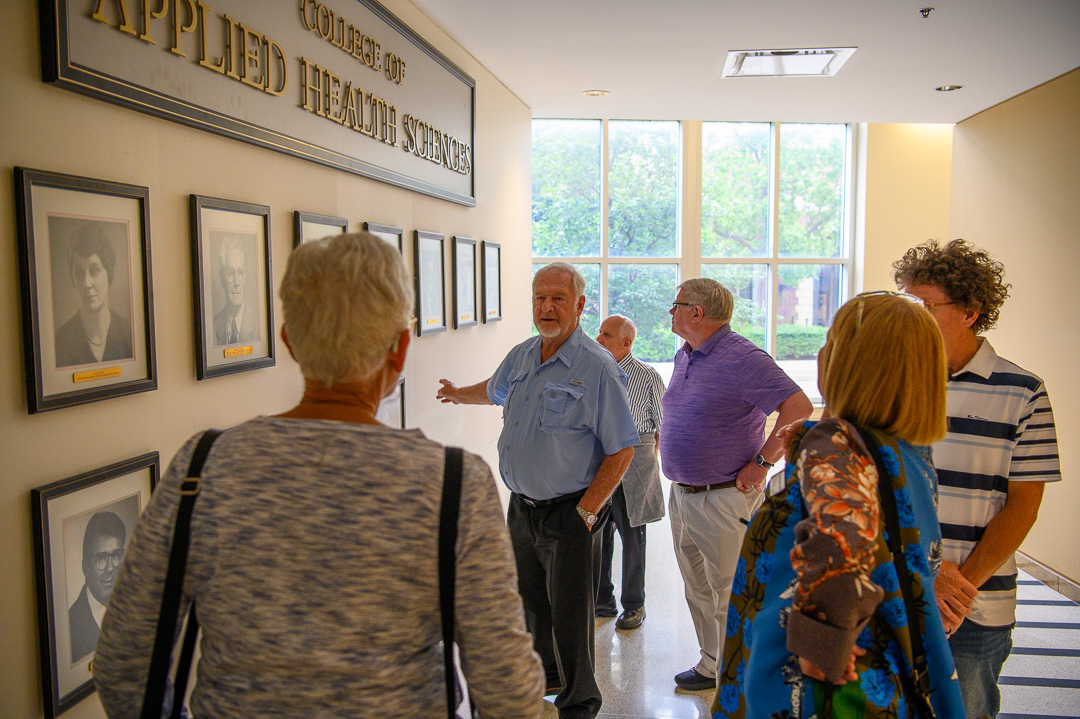
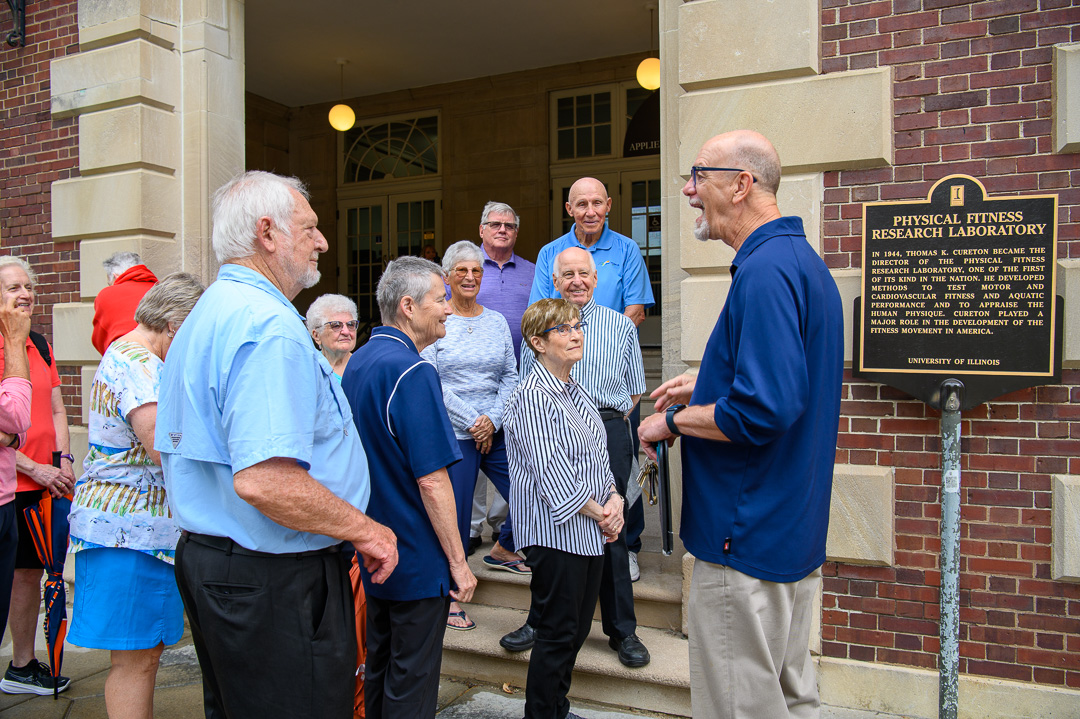
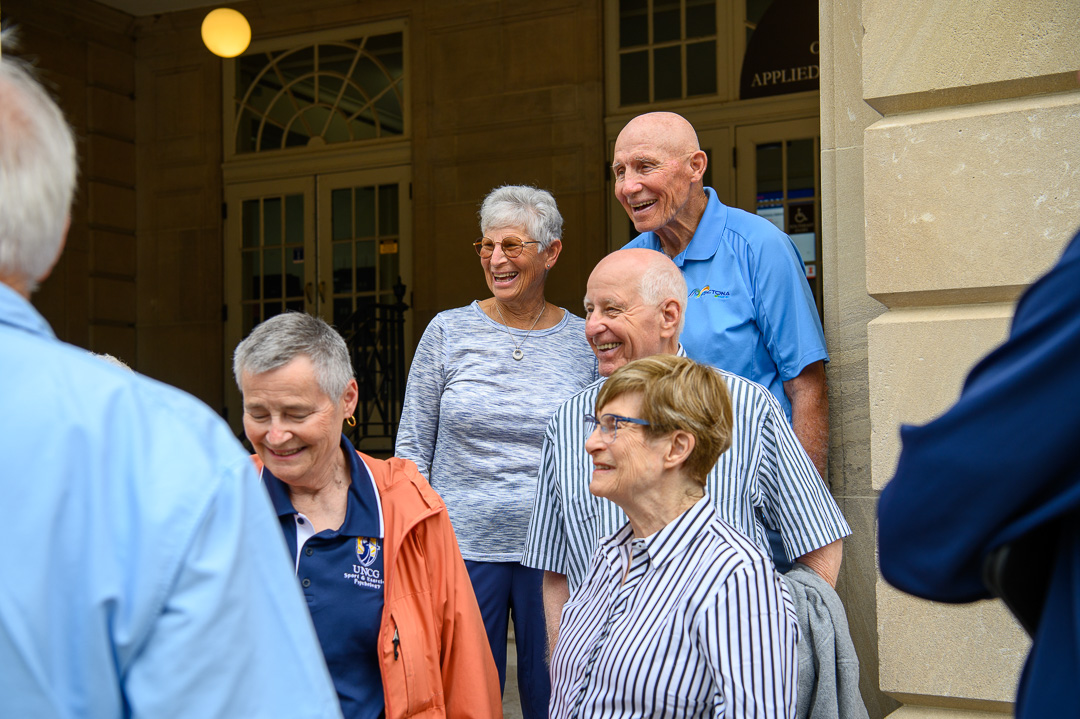
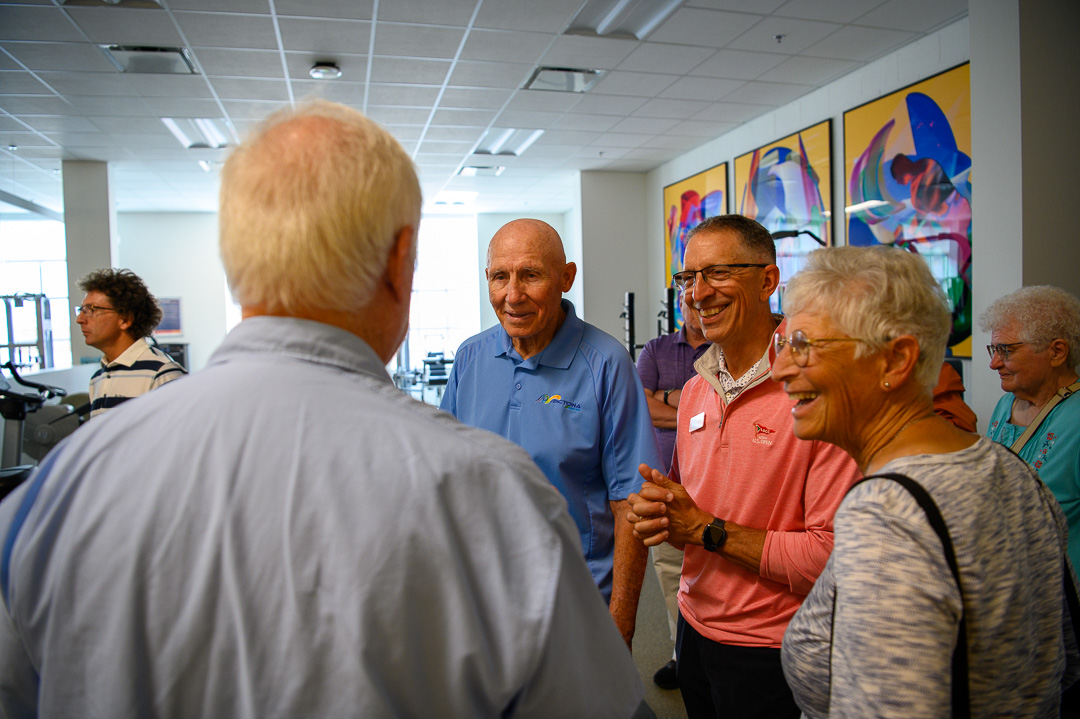
Julie and Rainer visited campus earlier this month in a reception celebrating their estate gift, where they got to speak with faculty and graduate students whose shoes they were in decades ago. 

“It has been a true pleasure to communicate with Rainer and Julie through the course of this agreement,” said KCH Department Head Kim Graber. “They are kind, intelligent, and captivating individuals, and they have left an indelible footprint on the history of our department.”

In the meantime, the couple is heading to Svalbard, an archipelago of Norway that’s one of the northernmost inhabited areas in the world. They plan to photograph polar bears and other wildlife there in the summer before making another trip to South Africa in September. 

And they recently announced their plan to hand the reins of the Pictona pickleball facility to new leadership by the end of the year. 

“One of the things that we’re really proud of here is having had a career in physical activity and made it part of our personal life as well is that here we get to witness, every day, people enjoying physical activity in the form of pickleball,” Rainer said. 

“We’re looking at the future and trying to find the right personnel to replace us as we look at doing more travel, more photography, and actually getting to play pickleball more.”  
 

Editor’s note:

To reach Ethan Simmons, email ecsimmon@illinois.edu.
 

Related news

Health Technology program undergoes leadership change from Rogers to Mejia


Wendy Rogers, center, says Shannon Mejia, left, is ready to lead the Health Tech program (Photo provided)

Health and Kinesiology Professor Wendy Rogers, the founding director of the Health Technology Education Program in 2017, stepped aside in the summer of 2024 and Shannon Mejía, an associate professor in HK, was named her successor.

Rogers had already had an illustrious academic career, primarily at Georgia Tech, before coming to the University of Illinois Urbana-Champaign in 2017. Together with her husband, Dan Fisk—also a Ph.D. in the field of experimental psychology, Rogers created the Human Factors & Aging Laboratory in 2003 at Georgia Tech. After Fisk retired in 2013, Rogers relocated the lab to Illinois—where Fisk got his doctorate—four years later.

Rogers’ arrival at Illinois coincided with an Investment for Growth proposal led by the College of Applied Health Sciences and The Grainger College of Engineering aimed at developing the Health Technology Education Program. Health and Kinesiology Professor Jeff Woods, who spearheaded the IFG with Kesh Kesavadas, a professor of Industrial and Enterprise Systems Engineering, knew who he wanted to lead the Health Tech program.

“Jeff asked me if I would be willing to lead the educational component and I agreed,” said Rogers, who is the Shahid & Ann Carlson Khan Professor of Applied Health Sciences. 

“We hired Nicole Holtzclaw-Stone in January 2018 and the four of us (Jeff, Kesh, Nicole, and I) spent a lot of time together developing the Health Technology Education Program,” Rogers said.  “We shepherded our Master of Science in Health Technology through department and college educational policy committees, the Graduate College, the Faculty Senate, the Board of Trustees, and finally the Illinois Board of Higher Education. In December 2019, Nicole and I drove to Chicago for the Illinois Board of Higher Education meeting in case there were any questions but there were none and we were officially approved. We welcomed our first cohort in August of 2020,” during the COVID-19 pandemic.

Rogers said she always planned to get the Health Tech program established and build a strong foundation before passing it on.

“The time was right to transition to a new director, but we want to continue to build on the trajectory we are on,” she said. “The mission is to advance health technology education for learners at all levels through our interdisciplinary undergraduate certificate and minor (joint with Industrial & Enterprise Systems Engineering), our Master of Science in Health Technology (in collaboration with Grainger College of Engineering), and our Health Technology Professional Education Program.”

Mejía praised her predecessor’s vision. 

“She led the development and implementation of an innovative education program that provides cross training in user needs, human factors and user experience methodologies, and engineering principles to develop leaders who can speak the language of both health care and engineering,” Mejía said of Rogers. “To address the critical challenges facing health care today, it is essential to understand user needs and technological capabilities in order to assure that technological solutions truly support the well-being of individuals, families, organizations, and communities. We train students to fulfill this essential role. This program is one of a kind in the nation. And it is my privilege to take the program to its next level.”

Rogers said the move was eased by knowing Mejía was ready to step in.

“Dr. Mejía has been an active member of the Health Technology Education Program since its inception,” Rogers said. “She is the right person at the right time to take the program to the next level. She has a lot of energy and creative ideas. Together, with Dr. Katelyn Talbott as the assistant director, I know the program will continue to be successful and to grow.”

For her part, Talbott said Mejía “has great ideas for growth and increased recognition in the field.”

“As with any change in leadership, new leaders are able to bring their perspectives to the challenges and goals in front of them,” Talbott said. “Shannon will be no different. I look forward to working with Shannon as we work to grow all aspects of the Health Technology program.”

Rogers will continue in her roles as director of the McKechnie Family LIFE Home, program director of CHART: Collaborations in Health, Aging, Research, and Technology and director of Human Factors & Aging Laboratory.  “I have plenty to keep me busy and I look forward to having more time to devote to these activities,” she said.

As a recognition of their continued support of the MS-HT program, Rogers and Fisk have endowed the Wendy A. Rogers Health Technology Travel Award. The award will provide master’s students with the opportunity to travel to conferences to share their own work, to learn from other researchers, and to participate in networking opportunities. Additional donations to the fund are welcome and will help to provide travel support for more students.

Donation instructions for mail or online gifts are on uif.uillinois.edu/how-to-give. For online donations, in the dropdown menu under Gift Designation, click on the “Other” box and enter Fund #777754 or “Wendy A. Rogers Health Technology Travel Award” or write this information on the memo line of your check.

“In August of 2024 we welcome our fifth cohort into the program,” Rogers said of the Health Tech program. “Alumni from our program are already out in the working world making a difference in health technology to improve quality of life for all of us.”

Editor’s note:

To reach Vince Lara-Cinisomo, email vinlara@illinois.edu.
 

Related news

KCH becomes Health and Kinesiology


The University of Illinois at Urbana-Champaign’s College of Applied Health Sciences is proud to announce a significant milestone in its ongoing commitment to advancing health sciences education and research. Effective Aug. 16, the Department of Kinesiology and Community Health will officially change its name to the Department of Health and Kinesiology.

The new name better reflects significant changes in our disciplines, research interests, and educational mission. Health and Kinesiology allows for a broader, more inclusive representation of a department that focuses on multiple aspects of health and physical activity in a diverse society. It also honors our legacy as leaders in the field of health and kinesiology, while pointing the way forward to a future that is both dynamic and innovative. 

The name change was a decision that was made based on goals highlighted in the KCH Strategic Plan and upon the recommendation of the KCH Restructuring Task Force. It was supported by multiple stakeholders and was recently approved by the College of Applied Health Sciences, UIUC Senate, and Board of Trustees.

Cheryl Hanley-Maxwell, dean of the College of Applied Health Sciences, expressed enthusiasm about the department’s name change, saying, “The renaming of our department to Health and Kinesiology aligns with our strategic vision of fostering interdisciplinary collaboration and addressing the multifaceted aspects of health and wellness. This change reflects our commitment to providing innovative education, conducting impactful research, and serving our communities.”

HK Department Head Kim Graber said, “As the department evolves to better reflect the dynamic landscape of health and movement sciences, we believe the change to Health and Kinesiology not only embraces our commitment to comprehensive wellness but also underscores our dedication to advancing research, education and outreach in these vital areas.”

The Department of Health and Kinesiology offers a wide range of undergraduate, graduate and doctoral programs aimed at preparing students for careers in health promotion, exercise science, public health, rehabilitation, and related fields. With world-class faculty and state-of-the-art facilities, the department equips students with the knowledge, skills, and practical experience needed to excel in diverse healthcare settings.

Editor’s note:

To reach Vince Lara-Cinisomo, email vinlara@illinois.edu.
 

Related news

How Black distance runners shaped the sport from the shadows


Long-distance runner Ted Corbitt, center, was the first Black American to represent the U.S. in the Olympic marathon. (Photo provided)

The world of competitive long-distance running took off in the 1970s. But stories of the sport’s Black architects and pioneers who laid its foundation have been largely untold for decades. 

Teaching Assistant Professor Jake Fredericks in the Department of Recreation, Sport and Tourism at the University of Illinois has dedicated a significant part of his research to uncovering the legacies of successful Black long-distance runners who grew the sport “from the shadows” while challenging enduring racial stereotypes. 

“The explosion of running in the 1970s could not have happened without the efforts of the earlier generation, in the ‘50s and ‘60s, to lay the groundwork for the races in the first place,” Fredericks said. “These are the men who established the marathon courses or put the structures in place for organizations that could support bigger and bigger races.” 

This Memorial Day Weekend, he’ll co-lead a panel presentation on Black running history to an academic audience at a conference for the North American Society for Sport History (NASSH). Fredericks will present papers alongside Gary Corbitt, an archivist and son of legendary long-distance competitor Ted Corbitt, and Suzuko Morikawa, associate professor of History and Africana Studies at Chicago State University. 

Dave Wiggins, the former NASSH president and professor emeritus from George Mason University, will co-moderate the discussion. 

Fredericks’ paper, titled “When is it Okay to Run Around Your Neighborhood in Shorts?: Representations of Black Running at the National Marathon Championship,” examines the country’s perceptions of race and long-distance running through the prism of the AAU National Championship in Yonkers, New York, the nation’s second-oldest marathon.

From 1938 until 1966, Yonkers was the site of the country’s preeminent championship marathon race, and several Black American runners—such as Louis White, Ted Corbitt and Harold Harris—posted some of its best times, more than a decade before long-distance running grew beyond its niche, community-driven status.  

While Black American athletes such as basketball’s Bill Russell, baseball’s Jackie Robinson and tennis’s Althea Gibson received significant coverage in the newspapers of the day, “marathoning was on the margins,” Fredericks said. 

In 1952, Corbitt became the first Black American to represent the United States in the Olympic marathon. Two years later, Corbitt was crowned champion in the 1954 National Marathon Championship. 

“That victory is so sparsely covered across the newspapers in the United States, that he’s mostly forgotten. Ted Corbitt is not a name that we often say alongside Jackie Robinson, even though they’re competing at the same time and had similar levels of success,” Fredericks said. “My research looks at how these Black Americans really shaped the sport, even from the shadows.” 

Chicago’s Harris posted his best performance in the 1964 Yonkers Marathon, finishing fourth—just one spot removed from a bid to compete in that year’s Summer Olympics. 

Compared to the more “glamorous” track and field events such as sprints and jumps, long-distance running lacked institutional support, Fredericks said. So, in 1958, many of the sport’s top competitors formed the Road Runners Club of America, opening chapters with running enthusiasts in major American cities. 

Harris became one of the founding members of the Midwest Road Runners branch based in Chicago, which fostered a multiracial community of runners in the city, Fredericks said. Meanwhile, based in New York City, Corbitt pioneered techniques to measure more accurately the 26.2-mile marathon races.

Back when Harris competed, marathons were lucky to run 100 participants, Fredericks said. The “marathon boom” of the 1970s changed all of that. 

A confluence of factors led to marathoning, and running writ large, to hit the mainstream. Medical science backing the health benefits of exercise had steadily grown while Cold War-era pressures to increase Americans’ fitness continued. Then, in 1972, Frank Shorter won the marathon at the Munich Games, scoring the United States’ first gold medal in the event since 1908, and first medal since 1924. 

Ted Corbitt is not a name that we often say alongside Jackie Robinson, even though they’re competing at the same time and had similar levels of success.

Jake Fredericks

Teaching Assistant Professor, RST

Shorter’s success was lionized in the media, and his profile—a white, educated American man—suddenly became the prototypical image of the long-distance runner. 

“We lose the image of Ted Corbitt, who could have just as easily been the image of running, or somebody like Harold Harris, in Chicago, could have been the image of running,” Fredericks said. Those kinds of pioneering figures get replaced throughout the ‘70s, by a Frank Shorter-esque, well-to-do upper middle-class person.” 

The lack of recognition these Black American pioneers faced also played into athletic racial stereotypes. Fredericks’ dissertation, “Great Speed and Great Stamina,” in part challenged the lasting notion that Black athletes were “built” for explosive, powerful feats but couldn’t win in tests of endurance. 

The stereotype seemed to build from the sport of boxing, where analysts alleged that Black fighters couldn’t “go the distance” in the ring. Jesse Owens’ prodigious success in the sprints and long jump Olympic events of the 1930s shattered racial barriers in the sporting world but reinforced some of the same athletic stereotypes that dogged Black American athletes of the day. 

These Black runners’ success, however, “disproves these stereotypes that, unfortunately, have lasted 100 years. They’ve just been so hard to remove in the minds of the public,” Fredericks said. 

Part of the mission of Fredericks’ research, along with Gary Corbitt’s new Ted Corbitt Institute for Running History Research, is to document the history of the sport’s development more accurately and recognize the oft-forgotten figures who laid its framework. 

What stands out to Fredericks is many of these early organizers’ foresight: “They knew that road running had this potential to engage the masses,” he said. Even when races were lucky to field a dozen runners, they kept pushing to host events and spread the word. 

“Black Americans are a huge part of the story of long-distance running. Today, we reap the benefits of their efforts to establish and grow the sport of running, yet that part of the history often gets left out.” 

Editor’s note:

To reach Ethan Simmons, email ecsimmon@illinois.edu.
 

Related news

Get to Know: Miki Sato, RST assistant professor


Miki Sato (Photo provided)

Miki Sato joined the College of Applied Health Sciences in 2020, after six years at James Madison University. 

How would you describe your primary research interests?  

My primary line of research focuses on exploring how and why engagement in sport-related consumption activities, such as sport participation and sport spectatorship, can contribute to improved health, health-related behaviors, and overall well-being. 

I have conducted research in various sport settings, including participatory sport events (e.g., running events, walking events), fitness clubs, spectator sport events, and the Olympic Games.

What are you working on right now?

I am involved in research projects that examine the health benefits of sport participation and park and recreational facility availability within communities. Additionally, we are working on projects that explore the distinct roles of various sport participation locations, such as parks, fitness clubs, and community recreation centers, in promoting sport participation behaviors and enhancing well-being.

Regarding sport spectatorship, we are conducting projects that examine how engagement in professional sporting events, both through behavioral live spectating and psychological identification with professional sport teams, is associated with consumer well-being. We recently published a paper that provides evidence supporting sport spectatorship as a form of experiential consumption that fosters happiness among sport fans.

What’s a fun fact you’d like to share about yourself? What do you like to do in your free time?

I am a big fan of track and field and long-distance running. One of my childhood idols was Carl Lewis, who won nine Olympic gold medals in sprint and long-jump events. I am also a recreational runner. 

Since moving to Illinois, I have participated in the Illinois Marathon’s 10k race twice. The event was incredibly well-organized, and I recommend it to runners of all levels, from novices to experienced athletes!

Editor’s note:

To reach Ethan Simmons, email ecsimmon@illinois.edu.
 

Related news

College of Applied Health Sciences
110 Huff Hall
1206 South 4th Street
Champaign, IL 61820
(217) 333-2131