Tacoria Humphrey was recently named a Dike Eddleman Athlete of the Year, presented annually to the top Fighting Illini male and female athlete
Big Ten long jump champ Tacoria Humphrey has plans beyond her track and field competitions. (Photo courtesy of Fighting Illini)
She races down the rubberized runway, determination pumping through her arms, energy coursing across her strides and focus blazing in her eyes. With a mighty leap, she seems to sail through the air. Sand mushrooms under her shoes as she lands in the pit, the crowd roaring. That’s Tacoria Humphrey—champion of the 2025 Big Ten Long Jump.
Humphrey started track in middle school at Raymond Park Middle School on Indianapolis’ east side, where she broke two records in the high jump and 200 meter. Now, she’s well-decorated: she earned All-American honors in both indoor and outdoor seasons after winning back-to-back Big Ten long jump titles, placed fourth at the NCAA outdoor championships, recorded the third-longest indoor jump in NCAA history as national runner-up and earned a spot on The Bowerman Watch List. Humphrey said her success came from confidence.
“I feel like track is a mental sport,” Humphrey said. “If you believe you can do something, you’re most likely going to be able to do it, whereas if you’re scared or thinking about other people, that’s going to take over your mind and you’re not going to do well.”
Humphrey also attributed her many accomplishments to her training and her coach, Petros Kyprianou, the current director of Track & Field and Cross Country at the University of Illinois Urbana-Champaign.
“He has inspired me the most because he really believes in me, and when somebody just believes in you so much, you start to believe in yourself,” Humphrey said. “He’s just so thrilled to coach me, and he sees that I have a bright future and it just makes me want to accomplish everything to the highest level I can.”
She recalled a moment at the 2025 regionals for the NCAA Outdoor Championships. Competitors only had three jumps, and Humphrey’s weren’t up to the number she needed to qualify for nationals.
“After my second jump, he talked with me,” Humphrey said. “He was giving me that pep talk, like, ‘You got this. This is what you’ve been training for,’ and helping me calm down. I literally went from 15th place to fourth, and I qualified.”
Kyprianou was the one who encouraged Humphrey to switch her event from high jump to long jump her sophomore year of college.
“I definitely was like, ‘This is weird,’ but I love trying new things,” Humphrey said. “I never expected to change events and to do so good in that event, but I 100% don’t regret it.”
“I always love helping people. I’m a people person.
Tacoria Humphrey
Community Health major and Dike Eddleman Athlete of the Year
Outside of her national achievements, Humphrey was recently named a Dike Eddleman Athlete of the Year, presented annually to the top Fighting Illini male and female athlete. The University of Illinois Athlete of the Year was first awarded in 1940, and was named in honor of the 11-time UI letterman and Olympian Dwight “Dike” Eddleman in 1993, who is generally considered the greatest athlete in the history of Illinois Athletics.
Caitlin Clarke, a health and kinesiology teaching assistant professor and chair of the Academic Progress and Eligibility Committee, said that sport performance is typically not the only factor that goes into choosing the recipient of the Dike Eddleman award.
“This is part of the culture of Illinois Athletics—they’re not going to go for someone who’s just really good at their sport and doesn’t care about academics at all,” Clarke said. “We get some really phenomenal students who are both really good at their sport and also really good at their major.”
At Illinois, Humphrey is a community health major, with a concentration in health education and health planning and promotion.
“I always love helping people,” Humphrey said. “I’m a people person.”
This summer, she’s participating in the Health and Kinesiology 471 internship program and working with Wellness4Every1, an organization dedicated to ensuring equitable access to high-quality arts and wellness programs for students in diverse communities. Clarke, additionally a lead faculty for the community health internship program, said Humphrey is doing a great job stepping into the professional world.
“She’s future-thinking, because she knows that she wants to compete professionally for a while, but she isn’t just checking off a box with this internship,” Clarke said. “This experience really pushes students to learn how to communicate professionally, which is an important skill anywhere and can be difficult to navigate.”
Clarke said it’s important for all student athletes to also excel outside of their sport.
“Most of our student athletes are going to go on to careers that are not always directly related to sports, so you have to have a plan,” Clarke said. “You don’t want that plan to be, ‘Well, I just kind of did okay in my major.’ You want to be the rock star that gets into a successful career so that you can enjoy your life and do more to help other people around you.”
Currently, Humphrey is preparing to become a pro athlete. Her first pro meet was the USA Track and Field Championships at the end of July.
“I’ll be a little nervous, but not really, because I’ve been jumping big marks that are close to what pros jump,” Humphrey said. “I’m eager to have better competition, and that will definitely push me.”
For her, success means a gold medal, and with her trademark confidence, it’s not a matter of if—but when.
Today’s Department of Health and Kinesiology once hosted the nation’s foremost researchers of sport psychology. Nearly 50 years on, these pioneers reunited at Huff Hall for a weekend on campus.
When Rainer Martens arrived at the University of Illinois in the summer of 1966, he stepped out of his blue Mustang and bounded up the steps of George Huff Hall, to see the university’s Sport Psychology Laboratory with his own eyes.
What he found on the third floor of Huff initially disappointed him: old equipment piled up in the corner of a room with just enough space to seat a class. “We thought we’d come to the wrong place,” Martens said.
Turns out, he wasn’t in the wrong place—maybe just a little early.
What followed was the explosive growth of sport psychology research at Illinois. With help from the university’s world-class department of psychology, a group of likeminded doctoral students—including Martens, Glyn Roberts and the late Dan Landers—began building a formal sport psychology graduate program at Illinois, to study the mental aspects of athletic success, motivation and performance.
Dozens of doctoral students went on to matriculate in the program and bring their discoveries to institutions across the globe. By the late 1970s, Illinois had become the torchbearer for modern-day sport psychology in the U.S., with a vibrant group of researchers at the helm.
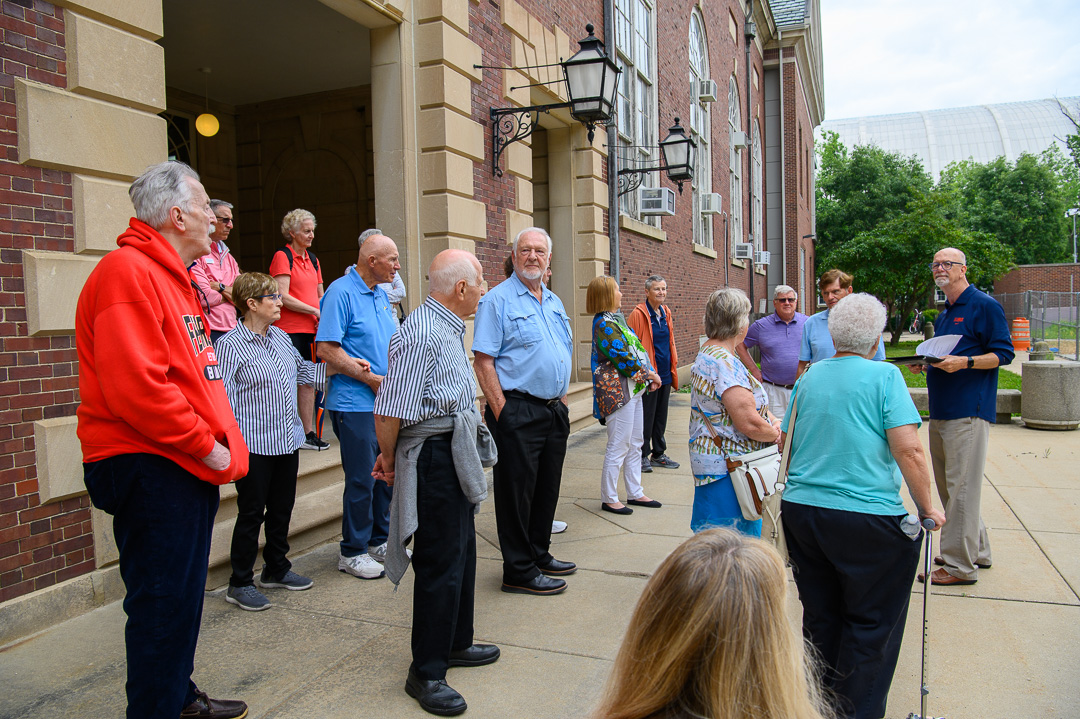
Five decades later, a group of those same students and faculty returned to campus to catch up with their former colleagues, and take a tour of their old academic home. The guest list left an indelible mark on the field of sport psychology as it stands today.
Even as Illinois’ own sport psychology program has faded, the legacy of its achievements and discoveries endure in the modern day College of Applied Health Sciences. Faculty at AHS, particularly in Health and Kinesiology, continue to study the psychological effects of exercise and physical activity at large, building on more than 100 years of tradition.
“All these former students, they’ve all gone on to distinguished careers. They’ve gone on to become presidents of national sport psychology organizations, and spoken all over the world,” Martens said. “This gathering, it’s a once in a lifetime thing.”
To cap off their walk down memory lane, these legends of sport psychology got to share lunch with current-day faculty and doctoral students in the Department of Health and Kinesiology.
“That was very humbling, we never expected anybody to turn out,” said Glyn Roberts, who worked as a professor of sport psychology at Illinois until 1998. “It was very rewarding that they would do that for us.”
Guests of Honor
Rainer Martens, a professor of kinesiology at Illinois until 1984, and co-founder of Human Kinetics, leading publisher of books and journals on physical activity
Julie Martens, PhD in sport psychology and the first employee of Human Kinetics, who retired as executive vice president in 2009
Glyn Roberts, professor emeritus at the Norwegian School of Sport Sciences and former professor of sport psychology at Illinois
Tara Scanlan, professor emerita of psychology at UCLA, and her husband Larry Scanlan
Diane Gill, kinesiology professor emerita at UNC Greensboro
Dan Gould and Marty Ewing, professors emeriti at Michigan State. Both earned a Ph.D. at Illinois, and Gould taught here until 1991
Damon Burton, professor of sport psychology at the University of Idaho
Robin Vealey, professor of kinesiology and health at the University of Miami, Ohio
Linda “Bump” Harrison, a publisher who got her PhD in the program in 1987
Marc Lochbaum, professor of kinesiology at Texas Tech who went to Illinois for undergrad and was mentored by several sport psychology greats
Absent were Joan Duda, professor of sport and exercise psychology at University of Birmingham, and Dan Landers, a professor of sport and exercise psychology and co-founder of the Journal of Sport Psychology, who passed away in 2023
‘We didn’t realize it, but we were pioneers’
Though Illinois experienced fertile growth of sport psychology in the 1970s, the seeds were planted by Coleman Griffith, known as the “father of sport psychology” for his pioneering work into the mental aspects of athletic performance.
Griffith founded and ran Illinois’ Athletic Research Laboratory until 1932, where he studied the links between personality and physiology on athletic success. He wrote two books—“Psychology of Coaching” and “Psychology and Athletics”— but left no proteges for his research. Griffith later became provost of the university.
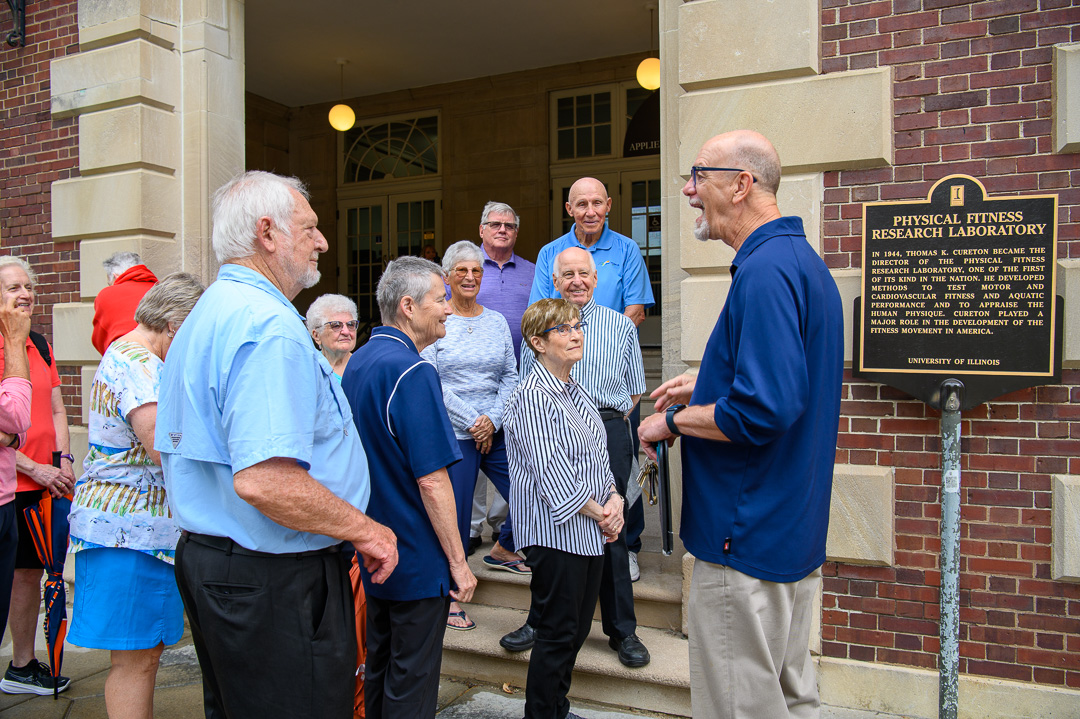
Physical fitness pioneer Thomas “TK” Cureton started his Physical Fitness Research Laboratory in 1944, occasionally collaborating with psychologist Raymond B. Cattell. The two of them examined the relationship between physical activity on personality and several of Cureton’s graduate students examined the anxiety-reducing effects of exercise. In 1951, Professor Alfred “Fritz” Hubbard revived Griffith’s research line with a new Sport Psychology Laboratory, located in a third floor office of Huff Hall, then known as Huff Gymnasium.
Hubbard specialized in motor learning, but saw latent potential in the sport psychology discipline. After a decade of research and recruitment, Hubbard had a prediction: the number of graduate students interested in sport psychology would double or triple by the end of the 1970s. His forecast of growth came true.
Still, those who joined the Illinois sport psychology program in the 1960s found their way to the field before an academic path formally existed. Some started out in coaching or physical education, and were searching for applied knowledge to use in the field.
For Rainer, his experience with intense anxiety before youth wrestling matches inspired him to understand competitive nerves and how to quell them.
After getting degrees from the then-named Department of Physical Education, Landers, Martens and Roberts all eventually joined the Children’s Research Center, a grant-funded research vehicle seeking to explain children’s behavior from multiple academic disciplines.
The recent grads worked in the center’s Motor Performance and Play Research Laboratory, where they used social psychology principles to study children’s play, and explore how their stress levels, personalities and more influenced their motor learning.
The grant-funded lab supercharged their progress.
“A lot of the stuff we did initially was stress related. How do you reduce stress? That was Rainer’s research—what he called competitive anxiety,” said Roberts, who began working at the Children’s Research Center in 1973. “Mine was motivation: how do you make people do what they ought to be doing?”
Full-time research positions to study the field were unusual, and freeing. From 1968 to 1975, Martens stayed on with the Children’s Research Center. Lifted by the university’s resources, namely its enormous library, computing power and collaborators in psychology, the lab produced leading research in sport psychology before peer institutions had caught on to the emerging discipline.
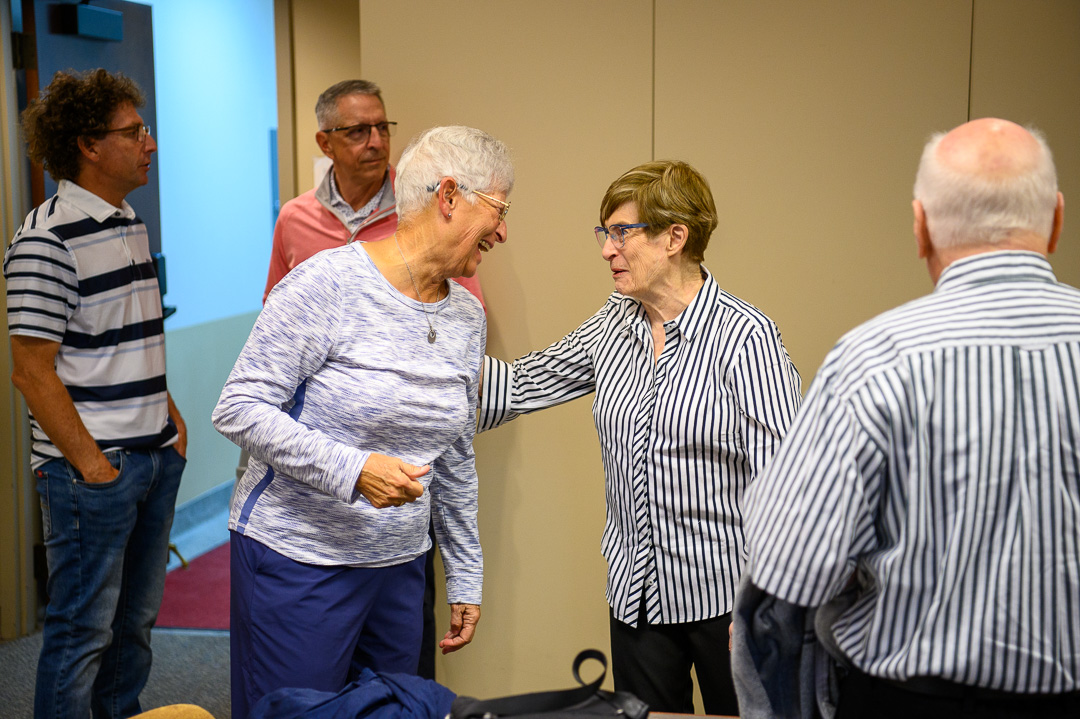
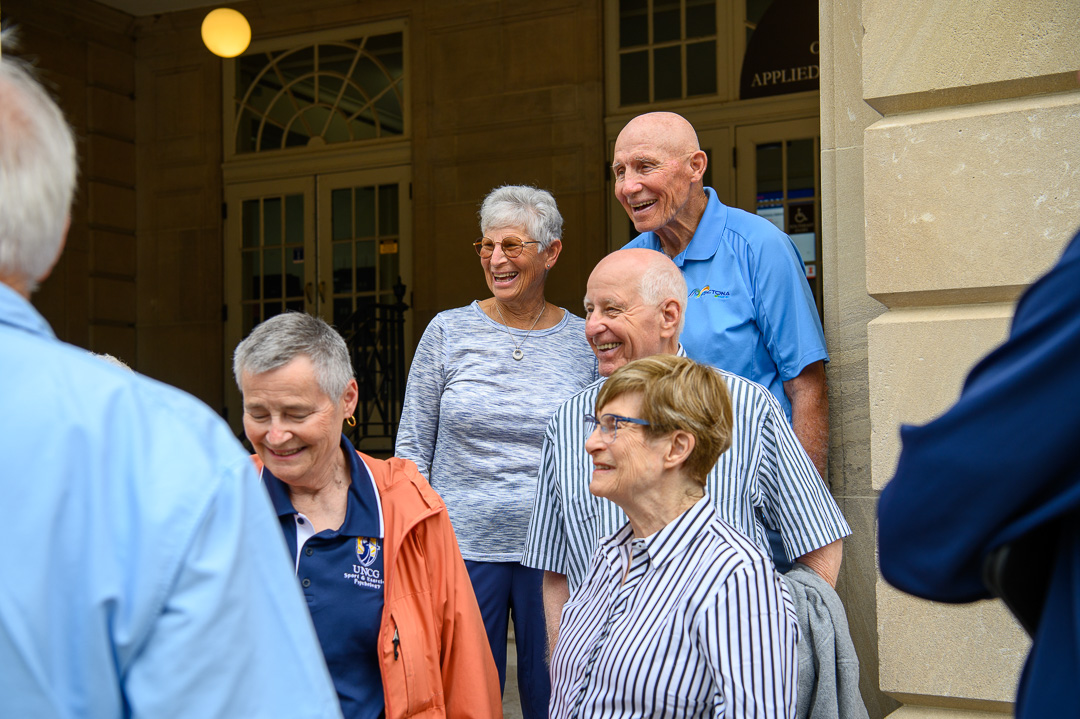
Julie Martens (center left) and Tara Scanlan (second from right) share a laugh in Huff Hall. Both of them obtained their doctoral degrees in sport psychology from the University of Illinois.
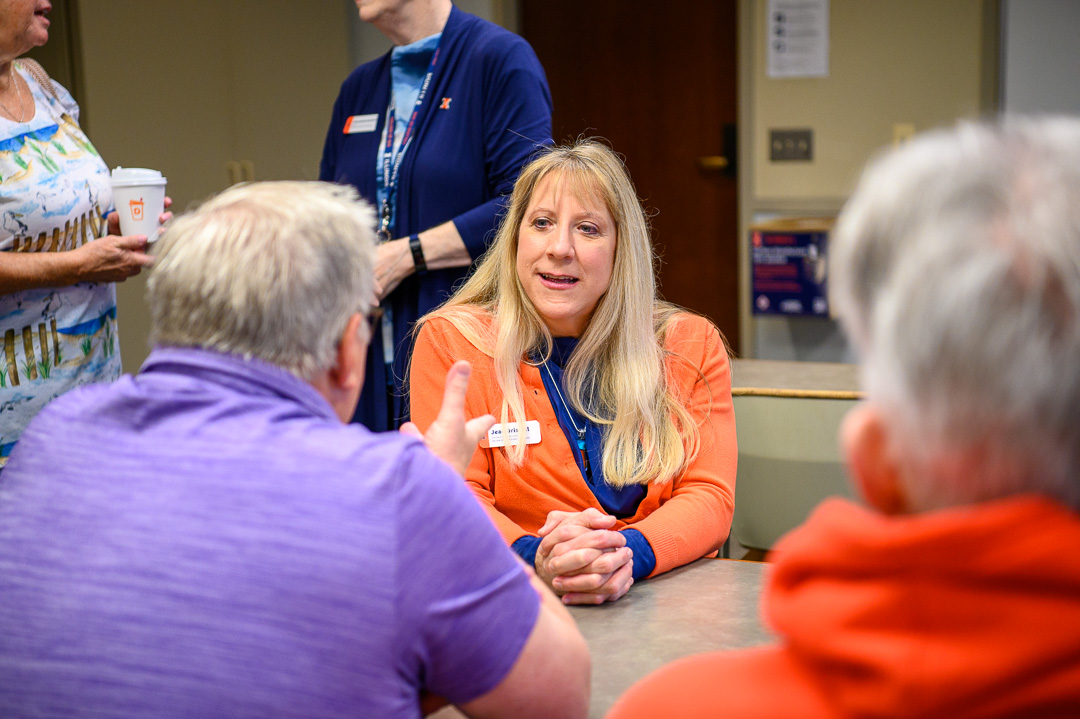
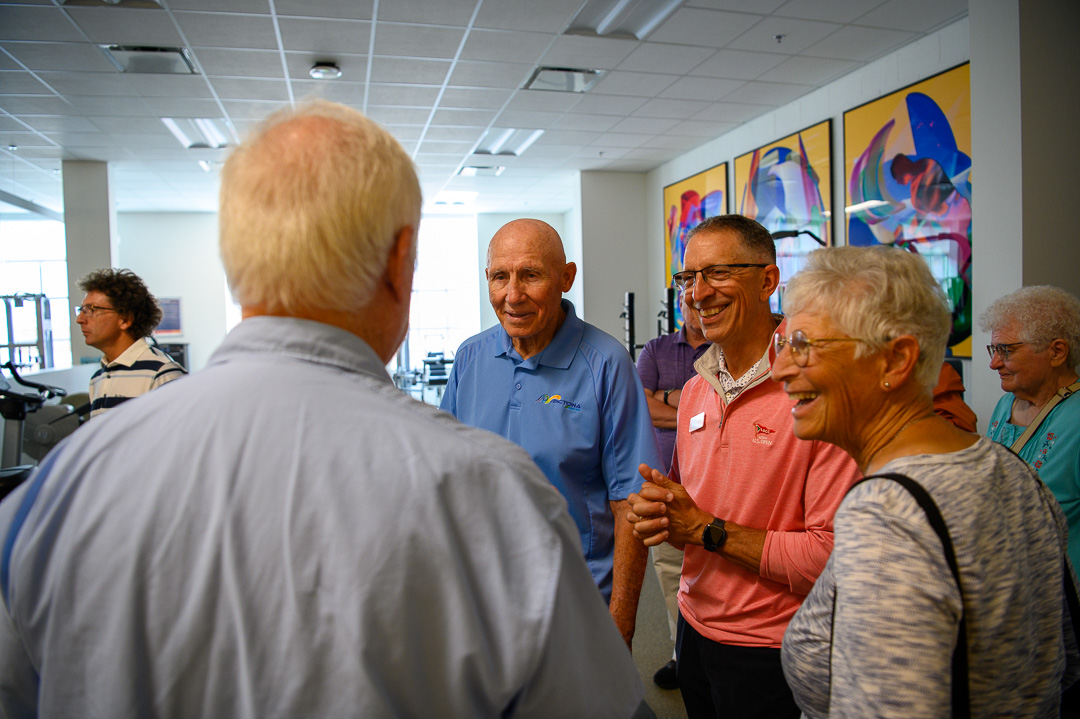
Jean Driscoll (center) chats with Dan Gould and Damon Burton, both graduates of the sport psychology program at Illinois who went on to successful careers in the field.
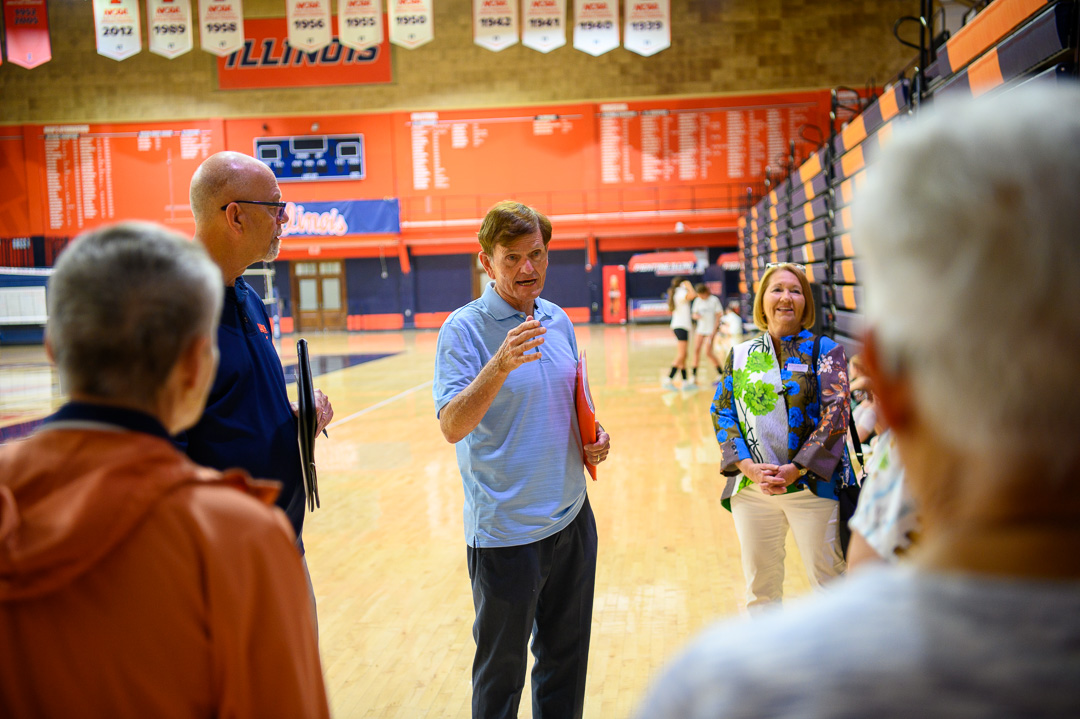
Bill Goodman (center) retired associate dean for administration at the College of AHS, tours former Illinois sport psychology students and faculty around Huff Gym.
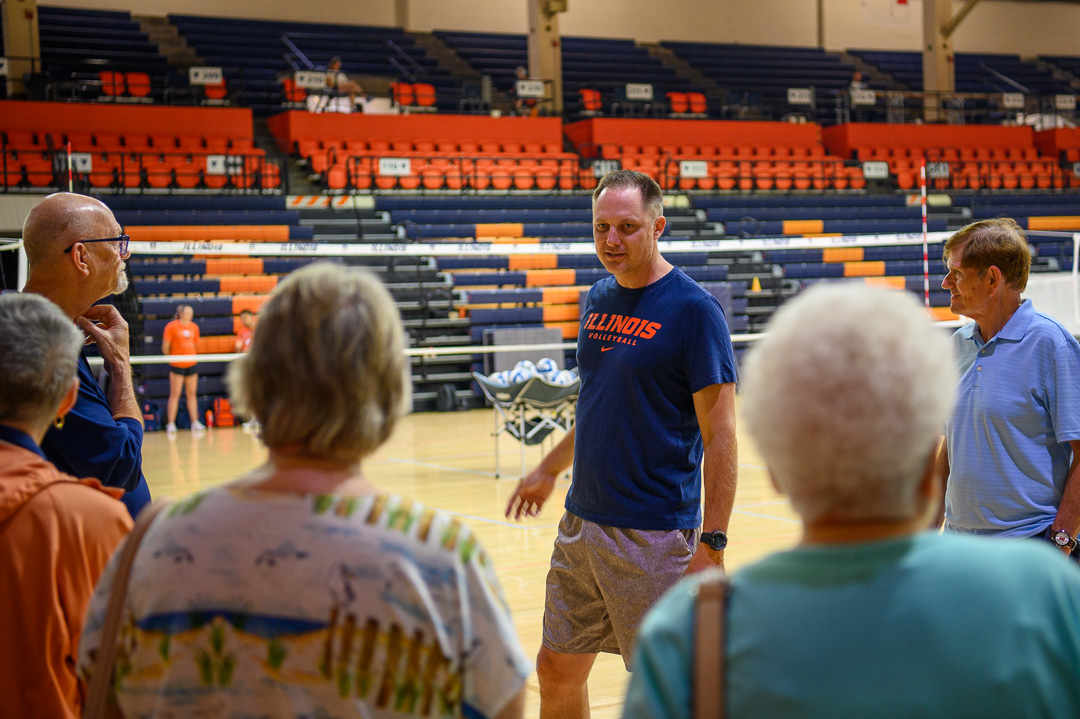
Chris Tamas, the current coach of the Illinois volleyball squad, speaks to former sport psychology students and faculty in Huff Gym.
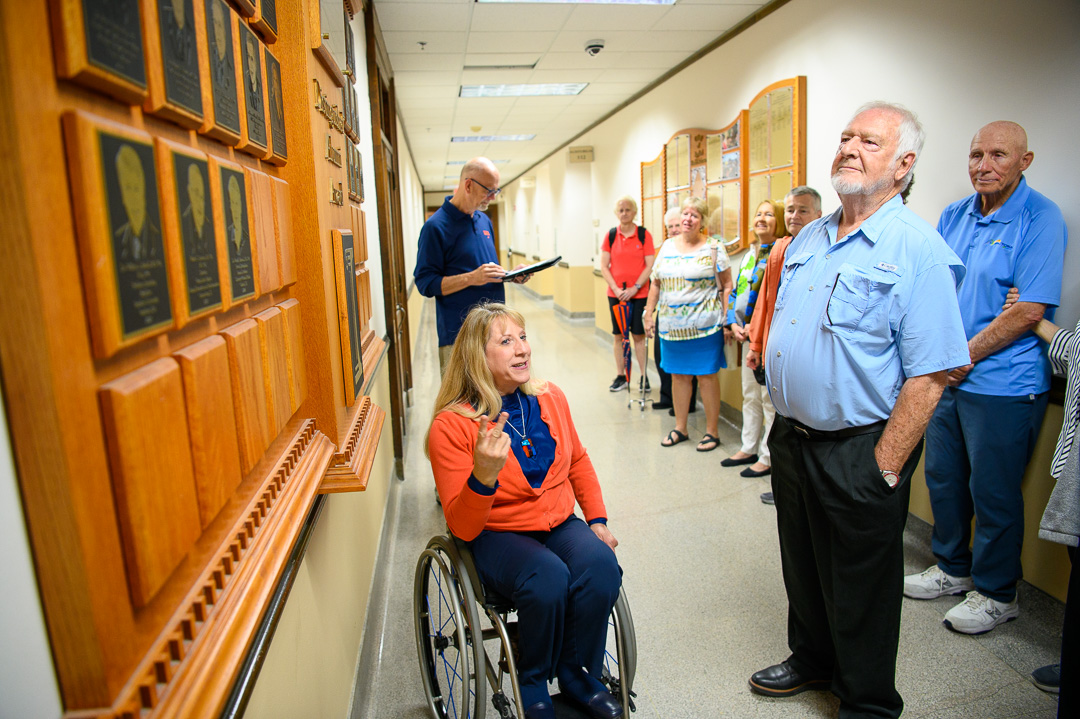
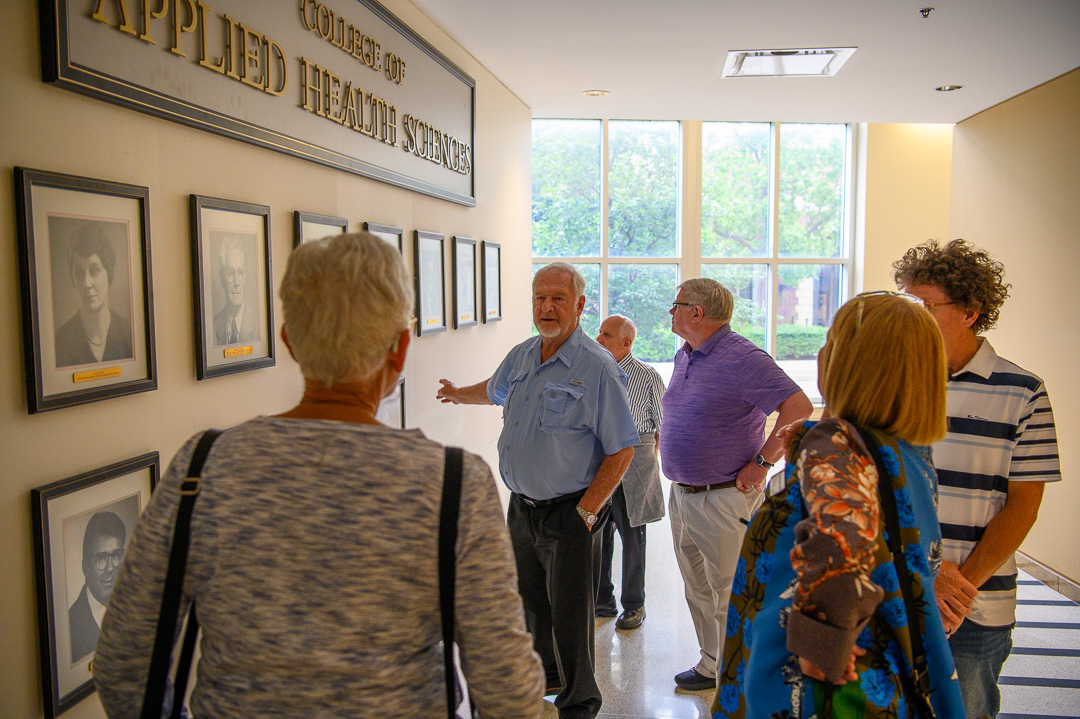
Jean Driscoll shows off the wall of Distinguished Alumni Award winners from the College of Applied Health Sciences.
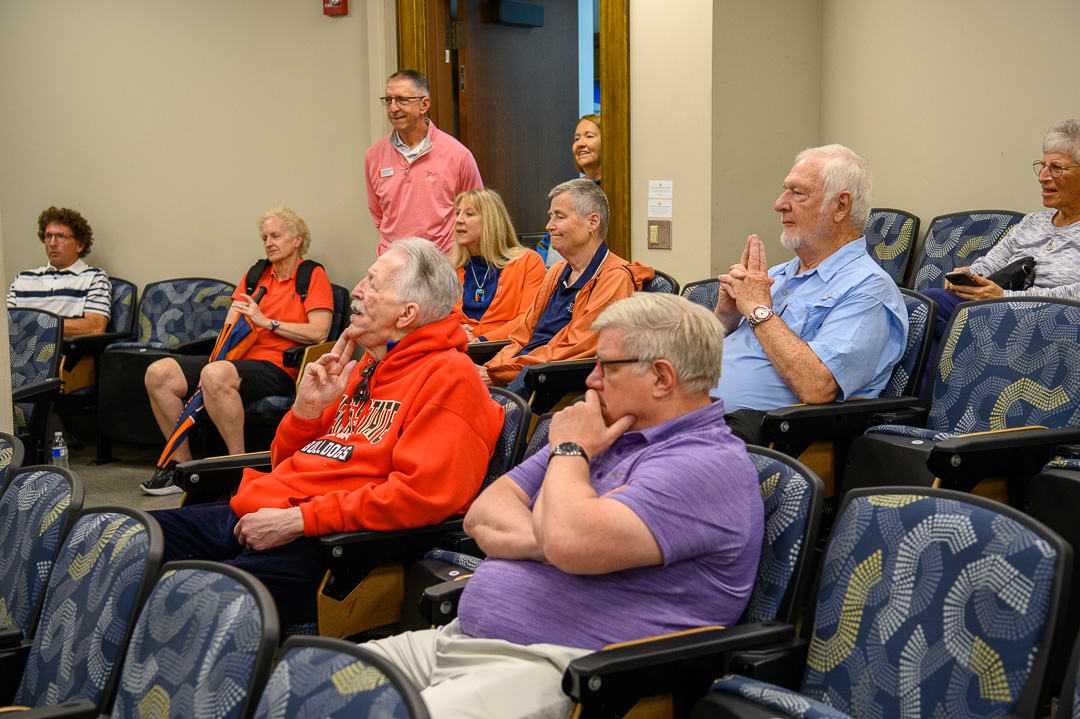
Former Illinois sport psychology students and faculty sit in one of the new Huff Hall classrooms. The space used to be part of the Huff Gym indoor pool.
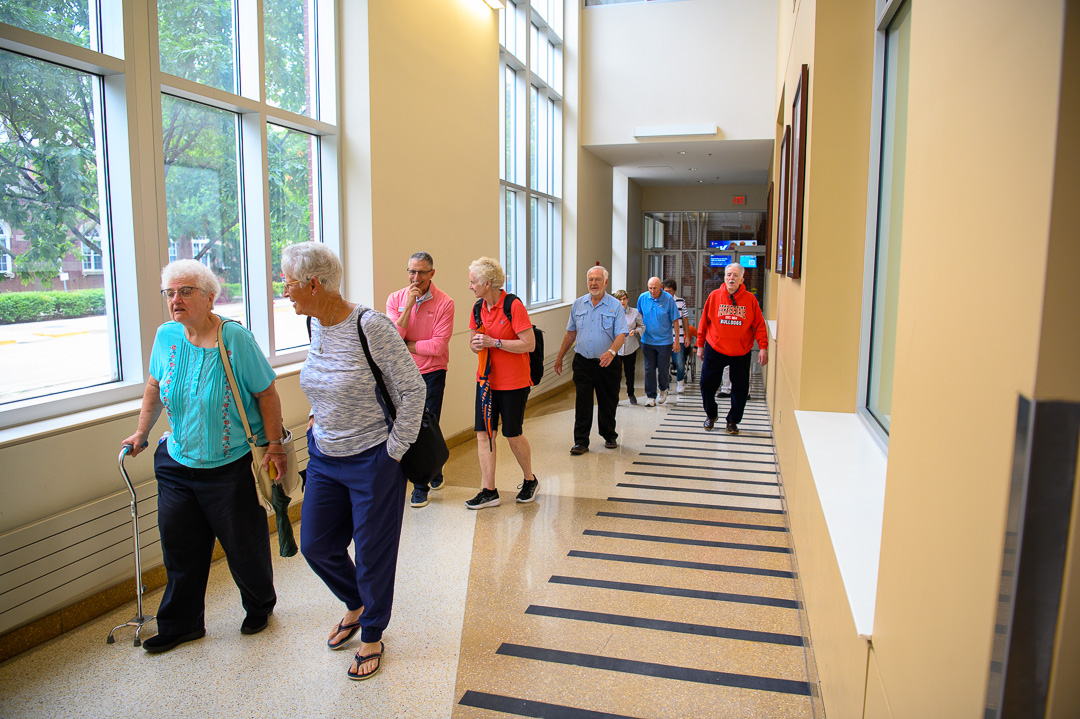
A reunion of sport psychology faculty and students at Illinois brought the guests inside and outside Huff Hall, where much of the early research into their field took place.
Former Illinois sport psychology faculty and students walk up the ramp of the Khan Annex, an addition to Huff Hall that opened in 2011.
Glyn Roberts (center) points to the wall of deans of the College of Applied Health Sciences.
Don Hardin (right), adjunct instructor at AHS and former women's volleyball head coach, talks about the history of Huff Hall with former sport psychology students and faculty.
The sport psychology tour stops by the Freer Hall gym, used for research purposes.
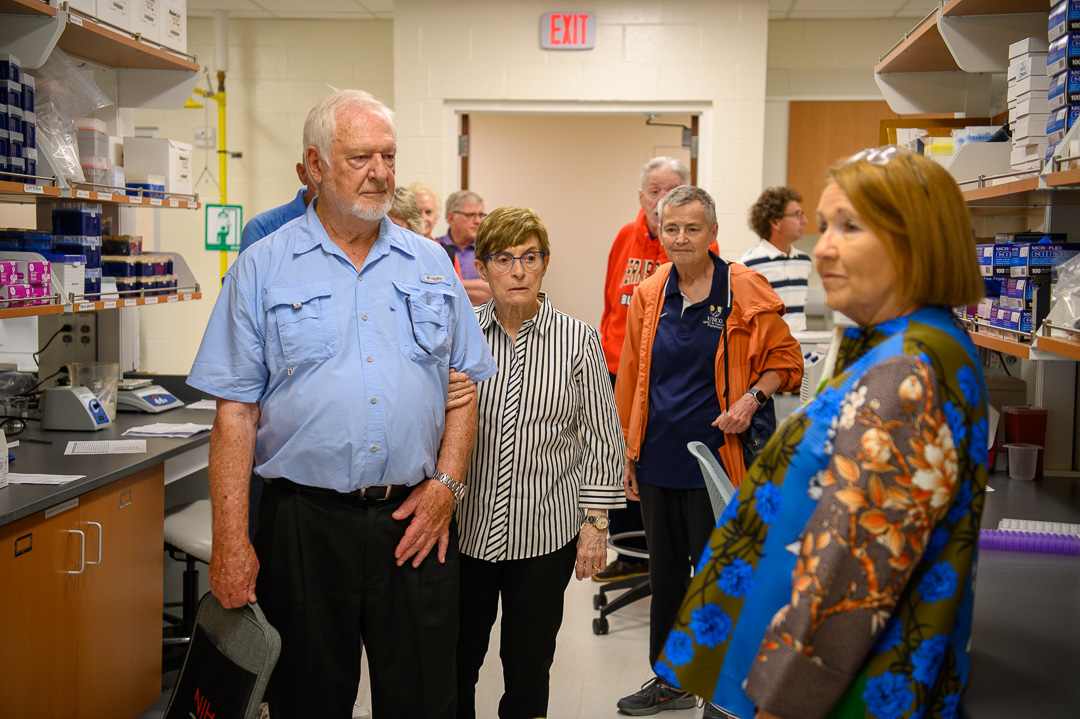
Former sport psychology students and faculty tour the basement labs of Freer Hall.
The enthusiasm of Illinois sport psychologists was clearly infectious. After a couple years teaching physical education, Diane Gill attended a conference at Brockport, New York, where she got to hear both Dan Landers and Rainer Martens speak about their research at Illinois. By her first semester in Urbana-Champaign, Gill was in Martens’ class “Social Psychology and Physical Activity,” where his first doctoral student, Tara Scanlan, was teaching assistant.
“Taking that course, immediately I thought, ‘this is the area I’d like to be in,’” Gill said.
She soon worked with the pair on their competitive anxiety research, and later studied competitiveness and athletes’ “achievement orientation,” or drive to improve and accomplish goals within their sport, along with a host of other topics in the field.
“Illinois was the place to be if you wanted to be in sport psychology,” she said.
Gill is newly retired, having spent more than 30 years as a professor of kinesiology at University of North Carolina, Greensboro after obtaining her master’s and Ph.D. at Illinois.
(“My doctoral students are retiring,” said Martens, now 82. “That makes me really old.”)
Physical activity—whether it’s high-level athletics or recess play—is all one field.
Diane Gill
Professor Emerita of Kinesiology, UNC Greensboro
Julie Martens, née Simon, was accepted into the program in 1973, coming to Illinois specifically to study with Rainer. (They would get married nearly 20 years later).
“[Tara Scanlan and Diane] had an office out at the Children’s Research Center right next to Rainer’s. As I got to know them, we used to be out there every evening. They said, “Come on out, you can study at night with us,’” Julie said. “That’s how I got involved with meeting the other students, then I got an assistantship and got where I wanted to be.”
The scientists would run experiments, hop over to the nearby cafeteria in the Adler Mental Health building for lunch and sketch out ideas for new research designs on napkins. Those early days were “invigorating,” Martens said.
By 1980, U. of I. was the premier place of study for sport psychology, alongside Penn State. They had turned the topic into a formal graduate program, and the field was continuing to blossom. In 1979, Dan Landers and Rainer co-founded the Journal of Sport Psychology, where Landers was the inaugural editor-in-chief.
As the field grew in relevance, new pathways opened up and Illinois sport psychology spread across the country. Sport psychology got a “big break” when the Olympic Training Committee allowed athletes to be advised by professionals who weren’t clinicians or psychiatrists, Roberts said—sport psychologists could now help athletes develop strategies to perform under extreme stressors.
“The U. of I. was very special. And the thing that stuck with me was we attracted such good students. We generated a reputation, and students wanted to come here from all over the world,” Roberts said. “We didn’t realize it, but we were pioneers.”
‘No better program in the world’
Between visits to their old labs and offices, the sport psychology legends visited classrooms in Huff Hall where there used to be a swimming pool, and walked on floors of Freer Hall that were once open air.
“In Freer and Huff, things have changed, which is good in many ways. You wouldn’t want the same stuff you had 50 years ago,” Gill said.
Over the weekend, the sport psychology crew took the 40-minute drive to Allerton Park in Monticello, where they hosted the nation’s first conference in sport psychology: the North American Society for Psychology of Sport and Physical Activity (NASPSPA) in 1973.
Several of them later served as executives and presidents of the society. The first conference also planted the seeds for Human Kinetics, the Champaign-based publisher of sport and exercise science founded by Martens and his first wife, Marilyn.
Though a formal sport psychology program no longer exists at Illinois, the field has expanded and evolved. The Department of Health and Kinesiology continues to study the psychological aspects and benefits of physical activity.
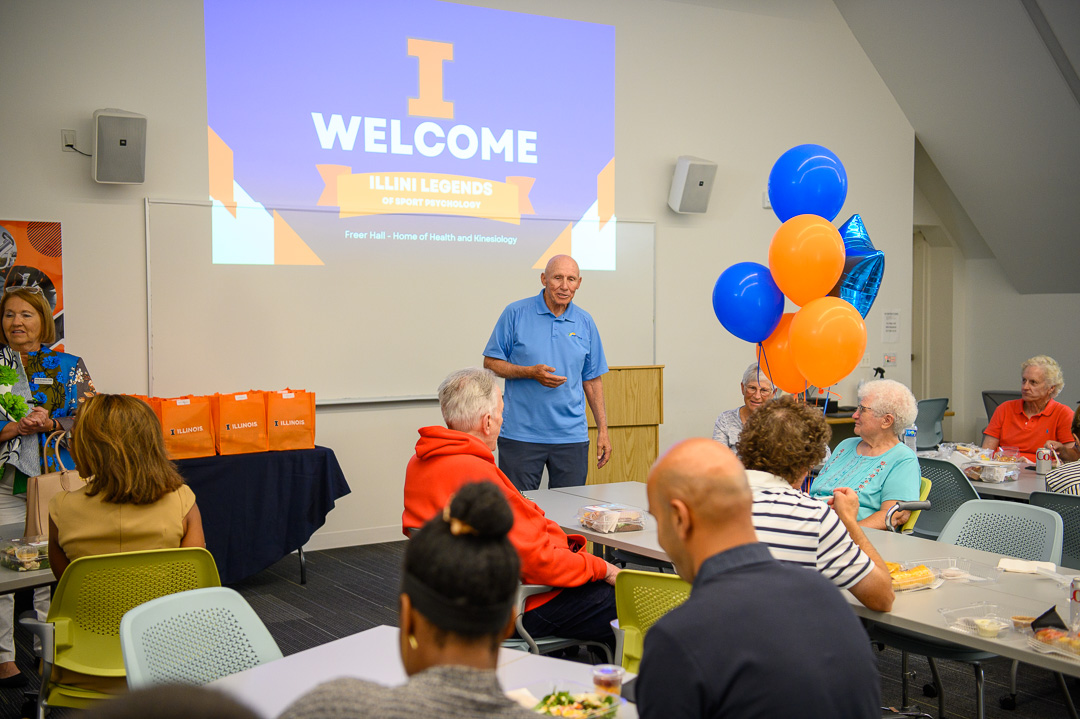
Rainer Martens speaks to his former Sport Psychology colleagues, and the current-day faculty of Health and Kinesiology.
“I think of it as one field. Physical activity—whether it’s high-level athletics or recess play—is all one field,” Gill said.
After walking through their old stomping grounds, the group met with current-day faculty and students of Health and Kinesiology for lunch in Freer Hall.
“This was the group that got sport psychology a foothold in this country,” said HK Professor Steve Petruzzello, who runs the college’s Exercise Psychophysiology Laboratory. “It’s wonderful to see these folks back here, to see their eyes light up as they’re walking around the halls, seeing spaces that look familiar and some that are completely unfamiliar.”
What remains from this era of sport psychology, and even the early days of Athletic Research Laboratory, are questions on the relationship between physical activity and psychology—including personality, stress, cognitive factors and affect, or feeling states.
“Faculty currently study these kinds of topics in older adults and children, in diverse populations, and in more specialized groups like tactical athletes,” Petruzzello said. “So really, the pioneering work of Coleman Griffith at Illinois over 100 years ago has evolved and developed into what it is today.”
Before heading off, the sport psychologists dispensed career advice with some of the rising graduate students and faculty. Linda Harrison obtained her Ph.D. from the program in 1987—she opted to go into the publishing industry instead of academia, but she credits her time at Illinois for developing her abilities to think and ask questions.
“The grad students all benefited from the historic founding fathers of sport psychology and the scholars who picked up the torch to carry the program to the next level,” Harrison said. “I am sure there was no better program in the world than the one offered at U. of I.”
Editor’s note:
To reach Ethan Simmons, email ecsimmon@illinois.edu The College of Applied Health Sciences and Illinois Division of Intercollegiate Athletics are celebrating 100 years of Huff Hallthis fall.
Misuse of nitrous oxide, or “laughing gas,” is on the rise nationally. Researchers warn that the U.S. may be at the “bottom of the hill” for this public health issue.
Canisters of Galaxy Gas, a nitrous oxide product often carried by smoke shops and online sellers. (Credit: Galaxy Gas)
An anesthetic most often used at the dentist or doctor’s office, nitrous oxide or “laughing gas” has been misused recreationally for decades in the form of whipped cream chargers, often called “whippets.”
Research from a University of Illinois professor shows an alarming rise in fatalities associated with the drug in the last decade, potentially driven by efforts to mass-market products to a new generation.
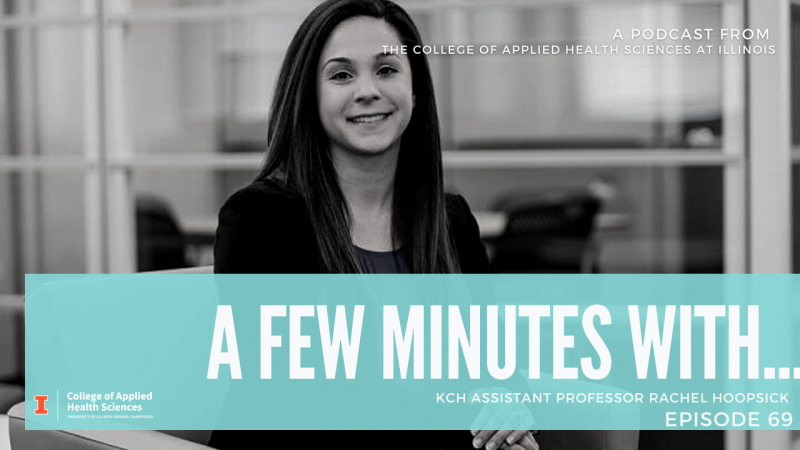
In the study, “US nitrous oxide mortality” published in JAMA Network Open and co-authored by Health and Kinesiology Assistant Professor Rachel Hoopsick and University of Mississippi Assistant Professor of Public Health Andrew Yockey, the researchers tracked the number of deaths in the United States associated with nitrous oxide misuse from 2010 to 2023, using Centers for Disease Control and Prevention data.
In that timeframe, U.S. annual deaths from nitrous oxide poisoning are up by nearly 600%, the study found. Of the 1,240 reported deaths during that period, 74% occurred in the last 7 years.
“I think we are currently at the bottom of a hill,” said Hoopsick. “Without any type of regulatory intervention, deaths and poisonings from nitrous oxide will increase at an accelerating rate and become a tremendous public health issue.”
For reference, 23 users of nitrous oxide died from the drug in 2010, compared to 156 in the year 2023. two factors make the picture look even worse: the sale of nitrous oxide is largely unregulated, and unlike most “party drugs,” users can die after inhaling it just once.
“This product is killing kids, it’s killing young adults,” Yockey said. “There’s no clear intention for using this product recreationally. Our message at the end of the day is: no one should be dying from nitrous oxide poisoning, at all.”
The number of annual deaths associated with nitrous oxide misuse has leapt by 600% in the last 14 years, according to a new study published in JAMA Network Open. (Source: “US nitrous oxide mortality”)
Repackaged for a new generation
Hoopsick and Yockey are frequent collaborators on research into substance use and mortality, often studying highly addictive drugs like methamphetamine and heroin.
Rachel Hoopsick (Provided)
Until recently, Yockey wasn’t convinced nitrous oxide misuse had become a public health issue. During a class he taught on substance abuse, he initially dismissed whippets as a fad of the past.
“A student raised their hand and said, ‘I can buy this at a gas station,’” Yockey said. Sure enough, the student pulled up pictures of colorfully packaged canisters of nitrous oxide, with goofy brand names such as “Galaxy Gas” or “Exotic Whip.”
These emerging brands are exploiting a regulatory loophole, the researchers said. Nitrous oxide is the whipping agent for whipped cream, so companies use that purpose as a cover to sell the product for recreational use.
“Flavored and scented versions, there’s no legitimate culinary purpose for that,” Hoopsick said. “It’s a gas—it doesn’t flavor the whipped cream. But it gives a scent or flavor to that gas for people using it as an inhalant.”
In the U.S., misuse of the inhalant has steadily risen since 2010. From 2023 to 2024, the number of intentional nitrous oxide exposure reports increased by 58 percent, Yockey wrote in a letter to the Journal of Medicine, Surgery and Public Health. More than 13 million people in the U.S. report using the inhalant in their lifetime.
A separate analysis showed emergency medical visits for nitrous oxide misuse in Michigan jumped by four to five times from 2019 to 2023.
We don’t want to wait until we’re at the top of the mountain, which is what we did with opioids.
Rachel Hoopsick
Assistant Professor of Health and Kinesiology
As of now, due to the culinary purpose of these products, the sale of nitrous oxide is still largely unregulated. Four states—Alabama, California, Michigan and Louisiana—have banned its recreational use as of July 2025. Others, such as Arizona and Connecticut, have banned the sale of the substance to minors; New York banned the sale of whipped cream chargers to anyone under 21 years of age.
Earlier this year, the Food and Drug Administration advised consumers to avoid inhaling nitrous oxide “from any size canisters, tanks, or chargers,” naming more than a dozen brands.
Still, in most states, users can pick from collections of brightly colored whipped cream chargers or dispensers at local smoke shops, or have canisters of nitrous delivered to their door from online shopping platforms.
“Since last summer, it’s taken off,” Yockey said.
A familiar playbook
The marketing “playbook” for nitrous oxide bears eerily similarity to the tobacco industry, Hoopsick said, in both appeal and accessibility. Sellers minimize health risks while dressing up the products in flashier exteriors, targeted at young people.
Tobacco companies were pressured by federal regulators to end practices that targeted young buyers, such as flavored cigarettes and cartoon brand mascots.
A canister of “original flavor” Galaxy Gas. (Credit: Galaxy Gas)
“We know nitrous oxide has neurological effects,” Hoopsick said. “But sellers rarely, if ever, provide health warnings. The public largely views it as a harmless party drug.”
Unlike the usual “party drug,” however, nitrous oxide risks both instant brain damage and death. The brief “high” temporarily paralyzes users, and can lead to hypoxia, or deprivation of oxygen to the body. Nitrous oxide inactivates vitamin B12, which can lead to a host of other health problems, including nerve damage.
Many deaths arise from the drug’s paralytic effect: the researchers were recently contacted by a mother whose college-age child died from drowning in a hot tub after inhaling nitrous oxide.
In the researchers’ view, the best path to stem nitrous oxide misuse is by making it harder to get, by raising the age requirements for purchase or limiting where the substance can be purchased.
“From a public health perspective, now is a critical window of time to intervene,” Hoopsick said. “We don’t want to wait until we’re at the top of the mountain, which is what we did with opioids.”
In addition to their professional experience, Gabrielle Dillon and Jack Senefeld share research interests
Gabrielle Dillon, left, and Jack Senefeld share common backgrounds and research interests (Photo by Ethan Simmons)
When Gabrielle Dillon joined the Department of Health and Kinesiology in the College of Applied Health Sciences last fall, she was greeted by a familiar face. She and Jack Senefeld, who had joined HK in fall 2023, had briefly overlapped in professional positions at the Mayo Clinic in Rochester, Minnesota.
Senefeld, who’d completed his Ph.D. at Marquette University, ended his five-year stint with Mayo in 2023 as a member of the College of Medicine faculty and an associate consultant in the Department of Anesthesiology and Perioperative Medicine and the Department of Physiology and Biomedical Engineering. Dillon joined the Human Integrative Physiology Lab in Mayo’s Department of Anesthesiology and Perioperative Medicine as a postdoctoral fellow in 2022 after completing her Ph.D. at The Pennsylvania State University. They were in different labs in the same department, but the labs collaborated closely.
Senefeld was happy to join the faculty at Illinois because of its outstanding reputation as a research university.
“There are a lot of great tools here to be a successful scientist, and both the university and the College of Applied Health Sciences are highly regarded,” he said.
When another faculty position opened just a year after his arrival, Senefeld forwarded the announcement to “big names and rising stars” in the field, among them his Mayo colleague Dillon.
“I knew both her Ph.D. mentor and her postdoctoral mentor, and her academic credentials are impeccable,” he said. “So we felt really fortunate when we saw her application in the pile.”
In addition to their professional experience, Dillon and Senefeld share research interests. They were members of a working group at Mayo that examined sex differences and physiology, and each makes a point of addressing women’s health in their work.
Dillon’s research focuses on vascular and cardiovascular physiology.
“I’m currently examining vascular testing across a woman’s lifespan and looking at whether physical activity can combat adverse cardiovascular aging and adverse menopause effects,” she said. She hopes not only to advance knowledge related to women’s cardiovascular health, but also to identify effective physical activity-based interventions to improve cardiovascular health. A secondary line of research examines the relationship between birth control and cardiovascular health in women.
Senefeld’s research seeks to understand and to mitigate the detrimental effects of metabolic disease and aging.
I think we’re both very fortunate to have landed jobs here, and we’re very pleased to be here.
Jack Senefeld
HK assistant professor
“My research focuses primarily on advancing understanding of non-pharmacological interventions—particularly exercise—for aging and metabolic disease,” he said. “I’m investigating how people with prediabetes perform during exercise, specifically how their skeletal muscle performs.”
Through his research, Senefeld hopes to shed light on why people have difficulty complying with exercise guidelines that are known to slow down the progression of diabetes, particularly in older adults. His research will examine how muscles combat fatigue in that population in hopes of increasing their ability to exercise, and he intends to investigate sex differences in muscle performance.
Senefeld and Dillon agree that Illinois is a great place to do human subjects research.
“The standard barriers to human subjects research have really been eliminated here,” Senefeld said. “We have health centers in the area, wonderful laboratory resources for science and multiple units on campus that can analyze samples. And from a practical standpoint, we have parking right outside the building.”
Dillon adds that the departmental culture fosters a supportive research environment.
“Everyone is excited, motivated and eager to collaborate,” she said. “As a new faculty member, I have found everyone to be extremely helpful. We also have a great dean and department head, both of whom are very encouraging.”
Dillon and Senefeld are equally passionate about their teaching. They’ve attended workshops through the Center for Innovation in Teaching and Learning on campus as well as faculty seminars developed by Amy Woods, associate dean for faculty affairs in AHS, and have applied what they’ve learned to co-developing undergraduate and graduate classes. They also are working with the AHS Office of Online Education and Learning Design to develop more effective ways of reaching digitally oriented students.
The heavy demands on young tenure-track scholars have not dampened their enthusiasm for service to their profession. Senefeld co-directs the Lifetime Fitness Program, an exercise program that offers older individuals in the Urbana-Champaign community exercise classes taught by undergraduate and graduate students in health and kinesiology. Dillon is active in the American Physiological Society, of which both she and Senefeld are members. She has developed webinars and career panels for APS, as well as serving on its awards committee. Both are also members of the American College of Sports Medicine, in which Senefeld was recently named a fellow.
The future is bright for Dillon and Senefeld, who are looking forward to long and productive careers at Illinois. As Senefeld put it, “I think we’re both very fortunate to have landed jobs here, and we’re very pleased to be here.”
Mobility disabilities, defined as a “serious difficulty walking or climbing stairs,” affect approximately 21 percent of adults 65 years of age and older
Saul Morse credits assistive technology for helping save his wife’s life (Photo provided)
Saul Morse believes his wife might not have survived a recent health episode without assistive technology.
“Had it not been for our voice-activated digital home assistant, we would not have been able to get my wife the urgent care she needed when she was having a stroke,” said Morse, a College of Applied Health Sciences alumnus and wheelchair user who has post-polio syndrome and is among the growing population of older adults who are aging in place with mobility disabilities.
At the time of his wife’s stroke, Morse—the 2023 Harold Scharper Award recipient—was a participant in a study led by Health and Kinesiology Professor Wendy Rogers, whose research team equipped Morse with the smart home devices that became life-saving tools for him and his wife. Rogers’ study is but one pillar of her storied research career, during which she has worked closely with older adults aging in place to understand their unique challenges and accelerate innovations to improve their quality of life.
Mobility disabilities, defined as a “serious difficulty walking or climbing stairs,” affect approximately 21 percent of adults 65 years of age and older, and this population of older adults only continues to increase, according to a paper from Rogers and her colleagues published in the Gerontechnology journal. Despite the challenges of mobility impairments, a majority of older adults choose to age in place to maintain autonomy and connection to their community. More than 75 percent of Americans 50 years of age and older choose this path.
With the rise in the availability of smart home technology, Rogers identified the potential role of this technology to provide a significant boon to the growing population of older adults with mobility disabilities. Rogers initiated an investigation into smart home technology for older adults in 2019, prior to the COVID-19 pandemic. The pandemic’s stay-at-home orders only further highlighted the critical role that smart home technology can play to boost independence and reduce isolation for many older adults aging in place.
“It is important to offer older adults with long-term mobility disabilities suitable strategies to maintain and postpone significant declines in functional independence,” said Rogers, who, along with Kim Graber, is one of two Shahid and Ann Carlson Khan Professors of Applied Health Sciences.
In this strategic research project, Rogers’ preliminary study, funded in part by the Illinois Department of Aging, investigated ways of reducing feelings of isolation and loneliness and increasing support for older adults. Since then, Rogers has developed a robust portfolio documenting her lab’s study of the role of smart home technology for older adults aging in place.
In January 2020, Rogers and her team published the first paper of this study detailing perceptions of digital assistant devices by early technology adopting older adults. From there, they introduced a group of older adults to two different Amazon digital home assistants, the Echo Show and Echo Speaker, to investigate how older adults interact with those devices and what activities the devices supported. A 2023 paper reported Rogers’ study of specific technology-training needs shared by older adults who do not have experience with such devices.
Those findings informed the next stage of Rogers’ multi-year research project funded by the National Institute on Disability, Independent Living, and Rehabilitation Research: the creation of a technology suite to equip and empower older adults with all the tools necessary to overcome the obstacles to technology adoption and proper usage. To that end, Rogers’ team developed the Digital Assistance in a Box, or DAB, for the study’s 24 participants, who used the at-home technologies for five weeks.
The DAB included an Amazon Echo Show 8, Philips Hue Smart Lightbulb, an Amazon Smart Plug and a custom-designed instructional manual.
It is important to offer older adults with long-term mobility disabilities suitable strategies to maintain and postpone significant declines in functional independence.
Wendy Rogers
HK Professor
“I never intended to use this kind of technology, because I was concerned about what would be recorded on the manufacturer’s servers,” Morse said. “But as a participant in the study, we installed a digital voice assistant and smart bulbs and plugs in my office and in our living room and bedroom. Being in a wheelchair, I saw the utility of these technologies right away. What most impressed me, though, were the custom user manuals—even a technophobe could use and appreciate them.”
Where previous studies looked at the viability of smart home technology for older adults, considering the range of activities they can support and how they might remedy loneliness, Rogers’ latest investigation zeroed in on a deeper exploration of older adults’ attitudes specifically regarding DHAs. Rogers’ team identified a few primary threats that might prevent older adults from adopting DHAs. In addition to the common barrier of learning to use a new technology, only a few older adults reported a lack of trust for manufacturers and a concern for their privacy.
Overall, study participants reported using DHAs for a wide variety of everyday activities and shared that the benefits of DHAs outweigh the risks. Participants reported using DHAs for leisure, hobby, entertainment, and health monitoring and maintenance endeavors. In fact, the results emphasize that DHAs specifically are particularly useful for older adults with mobility disabilities because of the voice-activated nature of such technologies.
“There’s a misperception that older adults don’t want to use technology,” Rogers said. “I’m an advocate for providing them with the support they need to use technology innovations. The benefits of reduced loneliness and isolation are a significant incentive. This latest study suggests that with increased education and training about privacy risks and protective strategies, older adults can experience the benefits of this assistant technology.”
In addition to this study, Rogers is working on multiple projects to benefit older adults aging in place. In partnership with researchers at TechSAge, she is investigating solutions for older adults with long-term vision or hearing impairments. Laura Rice, an associate professor in HK, and director of TechSAge, is leading a project to develop a fall-detection device for those in wheelchairs. At the McKechnie Family LIFE Home, Rogers is working with Girish Krishan, associate professor Industrial & Enterprise Systems Engineering, and Ian Rice, associate professor in HK, to develop a fall-prevention robotic shower. And there’s also a project with Katie Driggs-Campbell in Electrical and Computer Engineering to develop a wayfinding robot for adults with vision disabilities.
“We are studying the actual needs for aging in place for older adults and then coming back to our lab to work with engineers on how we can implement creative solutions that will improve the quality of life for older adults who are aging in place,” Rogers said. “Our study of DHAs, specifically, is a premier example of what makes Applied Health Sciences a special place, as we are doing the systematic interdisciplinary research necessary to produce responsive and supportive innovations to support people in our community.”
Many students majoring in HK want to pursue careers in occupational therapy, physical therapy and athletic training
Whitney Wolff was asked to develop a musculoskeletal anatomy course (Photo by Ethan Simmons)
Whitney Wolff had just completed a semester as an assistant professor at tiny Lakeland University in Sheboygan, Wisconsin, when the opportunity to work at an R1 university arose.
Wolff, who earned her Ph.D. from the University of Michigan in 2022, taught at Lakeland—student population approximately 2,500—that fall before applying to the Department of Health and Kinesiology in the College of Applied Health Sciences. As part of this process, the department asked her to develop a musculoskeletal anatomy course.
“Our HK faculty identified a need for a musculoskeletal anatomy course so the students could strengthen their understanding in an applied setting,” said Wolff, now a teaching assistant professor in Health and Kinesiology.
Many students majoring in HK want to pursue careers in occupational therapy, physical therapy and athletic training, and those fields dovetail with Wolff’s experience.
“I was on the pre-physical therapy track for the first three years of my undergraduate degree. I went to a university that required a semester-long, 40-hour a week internship and an extensive practicum experience, both of which I spent in a physical therapy setting,” she said. “I had a lot of experience observing and shadowing physical therapists, and it just wasn’t for me. However, I was able to draw on those experiences while designing this course.”
Wolff’s academic journey began with a B.S. in Exercise Science and a Master of Education in Kinesiology from Bowling Green State University, followed by a Ph.D. in Movement Science from the University of Michigan.
When she saw a faculty position open at Illinois, she jumped at the chance.
“It was primarily Illinois’ strong kinesiology program and the opportunity to be a part of a department that values both research and teaching. I was also excited by the high caliber of students that I’d be able to teach and mentor,” she said as to why she chose to come to Illinois.
Wolff believes her knowledge of the field as well as her methods are beneficial to students.
“I really challenge my students to develop a set of practical skills that will benefit them in graduate school and beyond. This is why I emphasize hands-on experience and less of ‘Can I memorize this information and then ace an exam’?”
“My approach to this course has been shaped by my experiences as well as knowing that these students want to be successful in very challenging careers.”
Wolff wanted the course to be more experiential learning and not just “listening to me talk about anatomy.”
Since kinesiology-related careers often involve working with other people, it’s an important experience for the students so that they discover whether this is a good fit for them
Whitney Wolff
Teaching Assistant Professor, Health and Kinesiology
“I designed musculoskeletal anatomy to be a lab-based course where 90 percent of the students’ time in class is spent completing hands-on activities. They’re working through the process themselves, and I can really see them grow and improve rapidly. It has been a really fun class to develop.”
Wolff informed the course design by talking with friends and colleagues who went through our nation’s leading physical therapy programs, asking about how they prepare for patient-clinician interactions and what anatomy courses are like in those programs.
“In typical undergraduate anatomy courses, (students) learn to identify the muscles on an image or on a plasticized model, whereas you look at us, we’re covered in skin and subcutaneous fat. Kinesiologists need to be able to identify muscles and bony landmarks on a living, breathing person that moves and changes position.”
As much “hands-on” learning as there is, Wolff is more “hands-off,” allowing students to explore and practice without fear of making mistakes.
And if students aren’t comfortable with being touched or touching others, Wolff will accommodate in class but did acknowledge that that could be a sign a student is in the wrong major.
“Since kinesiology-related careers often involve working with other people, it’s an important experience for the students so that they discover whether this is a good fit for them,” she said.
In addition to teaching, Wolff’s research focuses on the biomechanical presentation of idiopathic chronic neck pain in males and females. Her ultimate research goal is to design and implement workplace interventions aimed at preventing and treating idiopathic chronic neck pain.
Wolff said part of that research will involve how to manipulate seated posture without the need for an expensive ergonomic chair.
“(Neck pain) is often linked with static work postures such as sitting at a computer, so (an intervention) could be movement-based or could include adjustments to shoulder, head and neck posture. If we can identify the seated posture that decreases musculoskeletal strain of the neck and shoulder while being comfortable enough that an individual can maintain the posture, that could potentially decrease the likelihood of developing idiopathic chronic neck pain,” she said.
HK researchers found that the school children who more closely adhered to a special diet showed better control over their attention
A diet rich in fiber and antioxidants shows promise for children’s mental abilities, according to Shelby Keye’s research (Photo by Ethan Simmons)
A diet rich in fiber and antioxidants, low in fat and full of colorful berries and vegetables has shown a strong connection to slowed cognitive decline in older adults. This same Mediterranean-influenced diet shows promise for children’s mental abilities, too.
A recent study led by University of Illinois Health and Kinesiology Assistant Professor Shelby Keye compared elementary school kids’ food intake to this specific diet pattern—fittingly called the MIND diet—and measured how those kids performed on a task designed to challenge their attention span.
Keye and a team of researchers, including Health and Kinesiology Associate Professor Naiman Khan and Illinois Nutritional Sciences Ph.D. candidate Tori Holthaus, found that the school children who more closely adhered to this special diet showed better control over their attention.
“When we see something in older adults, we’re like, ‘I wonder if we’re going to see that same thing with kids?’” Keye said. “That was the question: will the MIND diet be related to children’s cognitive skills?’”
The MIND diet is short for Mediterranean-DASH Intervention for Neurodegenerative Delay. It’s a combination of the popular Mediterranean diet—which prioritizes beans, leafy vegetables, berries, seafood and olive oil—and the DASH diet, originally built to combat hypertension.
Researchers at Rush University in Chicago combined elements of these two diets and found certain components were related to better cognitive health in older adults.
To investigate whether the MIND diet had positive effects for kids’ brain health, the research team decided to study a pressing skill for any school-age child: paying attention.
In early life, the human brain is developing all of its cognitive skills simultaneously. But in certain phases of development, specific skills are growing faster and are more sensitive to a person’s changes in health, Keye said.
“Attention and inhibition around that elementary age is a particularly sensitive skill to health behaviors,” Keye said. “It may be because you have started school. And now, you’re in this environment where you have to inhibit, you have to prevent yourself from turning around and talking to your friend or even inhibit yourself from listening to internal thoughts.”
Their study marks the first time the MIND diet has been analyzed in a population this young. The diet’s connection to attention control opens the gates for more specific, involved research into the diet’s potential effects.
“With us finding this relationship with the MIND diet, that means that those foods that are important for older adults could be just as important for children,” Keye said.
To answer their question, the research team collected a week’s worth of dietary records for 129 local children, ages 7 to 11 years old. Parents of the child participants were tasked with recording everything their kid ate or drank for seven days, in close consultation with their children.
The children’s diets were scored on their proximity to the MIND diet pattern versus the most recent Healthy Eating Index, a set of dietary guidelines developed by the U.S. Department of Agriculture. The two diets are similar but emphasize different food groups: The MIND diet encourages more berries and olive oil, for example.
Before gathering their diet records, the researchers collected the children’s demographic and anthropometric data—height, weight, age and the like. And each participant completed a cognitive test designed to challenge their focus, called the Eriksen-Flanker task.
The task asks participants to look at a series of rapidly flashing arrows pointing in different directions on a computer screen, and mark which direction the arrow in the center of the image was pointing. (For kids, the arrows are replaced with pictures of fish.)
The children who ate foods closer to the MIND diet scored more accurately on the attention task. The positive relationship did not show significant differences based on the children’s overall caloric intake, sex or household income.
No significant relationship was found with the kids’ scores on the Healthy Eating Index guidelines.
The children who ate foods closer to the MIND diet scored more accurately on the attention task.
“This is one study, and it’s one of the first,” Keye said. “But because we found a relationship, there is most likely something there.”
As for why the diet had a relationship to attention control, Keye said a few possibilities are worth further research.
Many of the dark green vegetables and berries present in the MIND diet are rich in antioxidants, which have an anti-inflammatory effect that helps with brain development and function, she said.
Weight could also play a role. A separate study found that children who followed the MIND diet had a lower weight status on average—a higher weight status can relate to greater levels of inflammation and poorer cognitive performance.
Also, physical activity and diet quality tend to go together in people, Keye said. It could be that the kids who ate more MIND diet foods focused better because of a healthier, more active lifestyle.
Is the evidence enough to start changing children’s diets? More research is needed into the potential cause-and-effect, but if the benefits interest you, “I would not stray away,” Keye said.
“I always try to just keep it simple while doing this type of work. Sometimes I find that people will read about this and say, ‘I’ve got to change all these things about my life,’” Keye said. “I study behavior change a little bit, and I find that it’s easier to start simple and do one thing.”
If the MIND diet’s potential benefits seem compelling, try adding in some berries and smoothies into your meal plan, or cooking with olive oil instead of butter for a week, Keye suggested.
For now, the results from this study present a few next steps. Future studies can run diet interventions, where researchers control participants’ food intake to fit the MIND diet and observe any effects. Researchers could also make the same analysis of diet and attention control in an even younger group of child participants, or with a wider range of socioeconomic status.
“We’re just excited to be doing the work and excited to have some interesting results,” Keye said. “And hopefully, one day, we can get a good intervention.”
The paper, “MIND Diet Pattern Is Associated with Attentional Control in School-Aged Children,” was published in the Journal of Cognitive Enhancement in January 2025. It is available online.
Responsibility for teaching many courses offered by the department is also borne by another group of highly qualified individuals known as specialized faculty
Kristen DiFilippo was one of five Illinois faculty awarded for Excellence in Undergraduate Teaching this year (Photo by Ethan Simmons)
Like the University of Illinois and the College of Applied Health Sciences, the Department of Health and Kinesiology pursues a three-pronged mission of leadership in research, teaching and service. It is the primary responsibility of tenure-track faculty to advance the research mission by successfully securing grants to support their work and by publishing extensively in the leading journals in their areas of expertise.
Tenure-track faculty also teach, of course, but responsibility for teaching many courses offered by the department is also borne by another group of highly qualified individuals known as specialized faculty. More than 75% of the department’s specialized faculty hold doctoral degrees in such fields as kinesiology, community health, nutritional science, sociology and education.
“These are individuals who really enjoy teaching, who enjoy interacting with students and helping them along their educational journey,” said Health and Kinesiology Department Head Kim Graber. “They’re passionate about teaching and having an impact on the lives of undergraduate and graduate students.”
“Passion” is the word both Kristen DiFilippo and Kristin Carlson use when talking about teaching. Both hold positions as teaching assistant professors. Carlson was in a tenure-track position at another university when she realized she wasn’t as interested in doing research as she was in working with students. The teaching position at Illinois better aligned with her personal goals, she said, and she seized the opportunity to join the teaching faculty. That the decision was a good one is evidenced by Carlson receiving the 2023 Excellence in Undergraduate Teaching Award: Specialized Faculty from the College of Applied Health Sciences.
“The university is known for its research—and it attracts a lot of students—but they are deeply concerned about the education they are receiving here,” she said. “We are able to provide a high-quality educational experience to our students, and we develop relationships with them as we see them time and again in the various classes we teach.”
DiFilippo, who was one of five Illinois faculty awarded for Excellence in Undergraduate Teaching this year, shares Carlson’s enthusiasm for her primary role.
“My first love is the classroom, and teaching is valued here,” she said. “Specialized faculty play a significant role in the teaching mission and making sure that there is quality education being provided for our students. We are excited to be in the classroom.”
Some of their responsibilities straddle the line between teaching and service. Carlson, for example, oversees the department’s physical education teacher licensure program. She also serves as an assistant department head with a focus on curriculum. DiFilippo guides students in the Interdisciplinary Health Sciences degree program through their required internship experiences as a teacher of the 400-level internship course. She also is the lead teacher for the Interdisciplinary Health Sciences’ annual study abroad experience in Greece.
These are individuals who really enjoy teaching, who enjoy interacting with students and helping them along their educational journey.
Kim Graber
HK Department head
While the lion’s share of their responsibilities relate to teaching, DiFilippo, Carlson and other members of the teaching faculty also are expected to contribute to the department’s research mission. DiFilippo applies her background in nutritional science to investigations of chronic disease prevention and management through the use of nutrition education and behavior change. She is a principal investigator on a seven-figure grant from the U.S. Department of Agriculture that supports OneOp, a collaboration with the Department of Defense and Cooperative Extension that provides continuing education opportunities to health care providers who work with military-connected individuals. Carlson, a member of the Pedagogical Kinesiology Lab, focuses her research on incorporating academics into K-12 physical education and enhancing the fitness activities used in physical education classes.
Although they are not eligible for tenure, DiFilippo and Carlson can apply for promotions similar to tenure-track faculty, from teaching assistant professor to teaching associate professor to teaching professor. Unlike tenure-track faculty, who must apply for tenure after five years or lose their positions, members of the teaching faculty may choose not to submit paperwork for promotion indefinitely, as long as their annual contracts are renewed.
Graber said the teaching faculty are highly valued by the department and across campus.
“They step up in so many ways that enable the tenure-track faculty to focus on their research,” she said. “We wouldn’t be able to offer as many undergraduate and graduate classes as we do with the high quality that we are known for without our professionals who are devoted to teaching. They are a godsend.”
Kim Graber, Shahid and Ann Carlson Khan professor and head, Department of Health and Kinesiology (Photo by Craig Pessman)
Hello, Health and Kinesiology family,
Welcome to the spring 2025 edition of our newsletter! This marks our first spring semester under our new department name, officially changed last August. We have exciting updates to share and plenty to celebrate.
Inside, you’ll learn about the importance of specialized faculty, how digital-voice assistants support older adults and read about innovative research and a prestigious honor for our faculty. I hope this edition leaves you inspired by our collective impact and the momentum we’re building together.
Wishing you a successful and fulfilling semester!
Warmly, Kim Graber Shahid and Ann Carlson Khan Professor and Head, Department of Health and Kinesiology