Pedro Hallal honored with King James McCristal Distinguished Scholar award


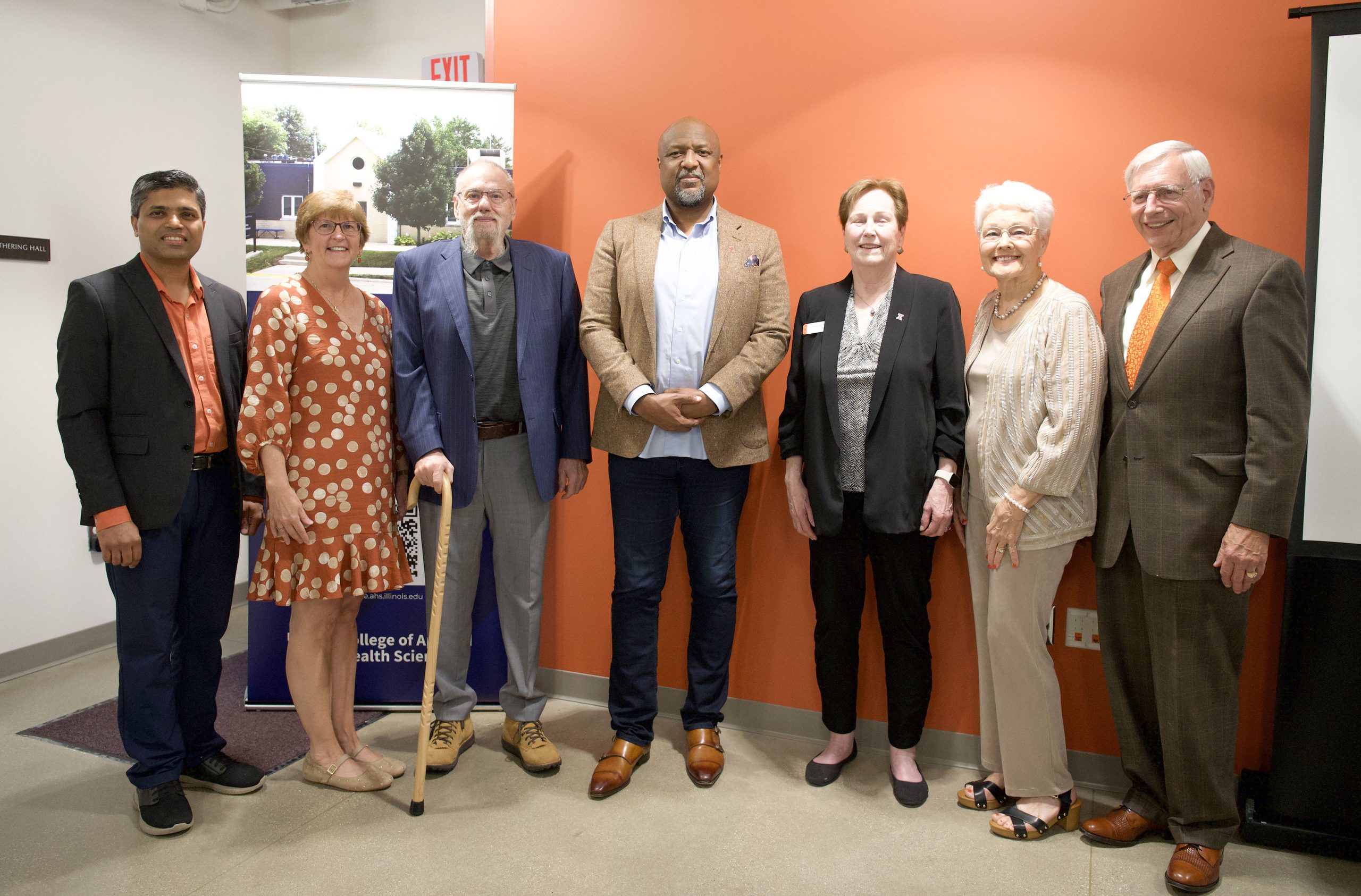
Pedro Hallal accepts the King James McCristal Distinguished Scholar Award on Wednesday, Sept. 23, 2025.

Like many young researchers, Pedro Hallal thought his first study would be groundbreaking and potentially change the paradigm of the study of physical activity. Ultimately, he said, it didn’t, but now, with the value of experience at hand, he understands that was OK.

“We are trained to think of things that no one has ever studied. But science is much more about consistency of results nowadays, than about brand-new findings,” said Hallal, the Alvin M. and Ruth L. Sandall Professor in the Department of Health and Kinesiology at the University of Illinois Urbana-Champaign. “We do research because of the questions; we don’t start with the answers.”

Thanks to that curiosity and because of the breadth of his research, Hallal on Sept. 24 was awarded the King James McCristal Distinguished Scholar Award, one of the most prestigious recognitions in the College of Applied Health Sciences. The award honors faculty whose scholarly contributions have significantly advanced their disciplines while elevating the reputation of the university.

For Hallal—whose research has transformed global understanding of physical activity and health—the honor represents both a recognition of past achievements and an encouragement to push forward in addressing one of the world’s most pressing public health challenges: physical inactivity.

“Professor Hallal’s scholarly work has substantially elevated the profile of his department, our college and the university by advancing public health knowledge and global health equity,” said Cheryl Hanley-Maxwell, dean of the College of Applied Health Sciences.

A Global Lens on Physical Activity

Hallal, who is also director of AHS’ Master of Public Health program, has built an international reputation for his research on physical inactivity, a phenomenon he argues must be understood in the context of modern life.

“Today, we have fewer people being active,” Hallal said. “Most of them are indoors, looking at a screen. We have to think about what physical activity is today, not decades ago. The notion that physical activity is good for health has been known for centuries. Only since the 1950s and ‘60s have we really been studying it.”

His scholarship began in Brazil, where his master’s thesis—“Physical Inactivity: Prevalence and Associated Variables in Brazilian Adults”—found that 41.1 percent of the surveyed population did not meet recommended activity levels of 150 minutes per week. This early work set the stage for his career-long focus on understanding inactivity as both a personal and societal issue.

Hallal’s impact expanded dramatically with his contributions to a series in The Lancet, one of the most influential medical journals in the world. His research revealed that one-third of adults worldwide—approximately 1.5 billion people—failed to achieve the minimum recommended level of physical activity. Equally concerning, four-fifths of children ages 13 to 15 fell short of the one-hour daily activity guideline. The findings underscored physical inactivity as a global pandemic, drawing international attention to a public health crisis with profound implications for chronic disease and health equity.

Hallal has often said that this work in The Lancet is the “research I am most proud of.”

Redefining Scientific Inquiry

Throughout his career, Hallal has emphasized the importance of scientific rigor and humility.

That philosophy has guided him to produce a body of work that does not merely identify problems but interrogates the systems that perpetuate them. His studies consistently highlight how socioeconomic and geographic inequalities shape access to safe and purposeful physical activity.

“Access to safe, purposeful physical activity must be a societal priority,” Hallal said. By framing physical inactivity not only as an individual choice but also as an issue of structural inequities, he has pushed the field toward broader, more inclusive approaches to solutions.

Access to safe, purposeful physical activity must be a societal priority

Pedro Hallal

Professor of Health and Kinesiology

A Legacy of Impact

The King James McCristal Distinguished Scholar Award cements Hallal’s place among the most influential scholars at Illinois. The recognition highlights not only his academic achievements but also his role in shaping the conversation around health equity worldwide.

From uncovering high rates of inactivity in Brazil to leading global efforts to quantify physical inactivity, Hallal has consistently produced research that informs public policy, inspires further scientific exploration, and elevates the role of physical activity in public health discourse.

Looking Ahead: Challenging Assumptions

As Hallal reflects on the future of his field, he sees opportunities to question prevailing assumptions and generate new lines of inquiry.

He is particularly interested in challenging the idea that “every movement counts.” While small bursts of activity are beneficial, Hallal believes that the global challenge lies in ensuring people have the opportunity for meaningful, sustained physical activity. He also underscores the importance of recognizing how time scarcity and resource inequality reinforce global disparities in health behaviors.

“I think this place, this campus and college, are in a great position to tackle these things,” Hallal said. “We are already one of the country’s leaders in the field, and we are one of the most productive groups in the world on this topic.”

Editor’s note:

To reach Vince Lara-Cinisomo, email vinlara@illinois.edu.
 

Share on social

Related news

New study reveals nitrous oxide misuse deaths are steeply increasing


Canisters of Galaxy Gas, a nitrous oxide product often carried by smoke shops and online sellers. (Credit: Galaxy Gas)

An anesthetic most often used at the dentist or doctor’s office, nitrous oxide or “laughing gas” has been misused recreationally for decades in the form of whipped cream chargers, often called “whippets.” 

Research from a University of Illinois professor shows an alarming rise in fatalities associated with the drug in the last decade, potentially driven by efforts to mass-market products to a new generation. 

In the study, “US nitrous oxide mortality” published in JAMA Network Open and co-authored by Health and Kinesiology Assistant Professor Rachel Hoopsick and University of Mississippi Assistant Professor of Public Health Andrew Yockey, the researchers tracked the number of deaths in the United States associated with nitrous oxide misuse from 2010 to 2023, using Centers for Disease Control and Prevention data.

In that timeframe, U.S. annual deaths from nitrous oxide poisoning are up by nearly 600%, the study found. Of the 1,240 reported deaths during that period, 74% occurred in the last 7 years.

“I think we are currently at the bottom of a hill,” said Hoopsick. “Without any type of regulatory intervention, deaths and poisonings from nitrous oxide will increase at an accelerating rate and become a tremendous public health issue.” 

For reference, 23 users of nitrous oxide died from the drug in 2010, compared to 156 in the year 2023. two factors make the picture look even worse: the sale of nitrous oxide is largely unregulated, and unlike most “party drugs,” users can die after inhaling it just once. 

“This product is killing kids, it’s killing young adults,” Yockey said. “There’s no clear intention for using this product recreationally. Our message at the end of the day is: no one should be dying from nitrous oxide poisoning, at all.”

The number of annual deaths associated with nitrous oxide misuse has leapt by 600% in the last 14 years, according to a new study published in JAMA Network Open. (Source: “US nitrous oxide mortality”)

Repackaged for a new generation

Hoopsick and Yockey are frequent collaborators on research into substance use and mortality, often studying highly addictive drugs like methamphetamine and heroin.  

A woman with a blue shirt, brown hair and a black blazer smiles for a portrait inside an academic building.
Rachel Hoopsick (Provided)

Until recently, Yockey wasn’t convinced nitrous oxide misuse had become a public health issue. During a class he taught on substance abuse, he initially dismissed whippets as a fad of the past. 

“A student raised their hand and said, ‘I can buy this at a gas station,’” Yockey said. Sure enough, the student pulled up pictures of colorfully packaged canisters of nitrous oxide, with goofy brand names such as “Galaxy Gas” or “Exotic Whip.” 

These emerging brands are exploiting a regulatory loophole, the researchers said. Nitrous oxide is the whipping agent for whipped cream, so companies use that purpose as a cover to sell the product for recreational use. 

“Flavored and scented versions, there’s no legitimate culinary purpose for that,” Hoopsick said. “It’s a gas—it doesn’t flavor the whipped cream. But it gives a scent or flavor to that gas for people using it as an inhalant.” 

In the U.S., misuse of the inhalant has steadily risen since 2010. From 2023 to 2024, the number of intentional nitrous oxide exposure reports increased by 58 percent, Yockey wrote in a letter to the Journal of Medicine, Surgery and Public Health. More than 13 million people in the U.S. report using the inhalant in their lifetime.  

A separate analysis showed emergency medical visits for nitrous oxide misuse in Michigan jumped by four to five times from 2019 to 2023. 

We don’t want to wait until we’re at the top of the mountain, which is what we did with opioids.

Rachel Hoopsick

Assistant Professor of Health and Kinesiology

As of now, due to the culinary purpose of these products, the sale of nitrous oxide is still largely unregulated. Four states—Alabama, California, Michigan and Louisiana—have banned its recreational use as of July 2025. Others, such as Arizona and Connecticut, have banned the sale of the substance to minors; New York banned the sale of whipped cream chargers to anyone under 21 years of age.  

Earlier this year, the Food and Drug Administration advised consumers to avoid inhaling nitrous oxide “from any size canisters, tanks, or chargers,” naming more than a dozen brands.  

Still, in most states, users can pick from collections of brightly colored whipped cream chargers or dispensers at local smoke shops, or have canisters of nitrous delivered to their door from online shopping platforms. 

“Since last summer, it’s taken off,” Yockey said. 

A familiar playbook

The marketing “playbook” for nitrous oxide bears eerily similarity to the tobacco industry, Hoopsick said, in both appeal and accessibility. Sellers minimize health risks while dressing up the products in flashier exteriors, targeted at young people.

Tobacco companies were pressured by federal regulators to end practices that targeted young buyers, such as flavored cigarettes and cartoon brand mascots. 

A canister of “original flavor” Galaxy Gas. (Credit: Galaxy Gas)

“We know nitrous oxide has neurological effects,” Hoopsick said. “But sellers rarely, if ever, provide health warnings. The public largely views it as a harmless party drug.”

Unlike the usual “party drug,” however, nitrous oxide risks both instant brain damage and death. The brief “high” temporarily paralyzes users, and can lead to hypoxia, or deprivation of oxygen to the body. Nitrous oxide inactivates vitamin B12, which can lead to a host of other health problems, including nerve damage. 

Many deaths arise from the drug’s paralytic effect: the researchers were recently contacted by a mother whose college-age child died from drowning in a hot tub after inhaling nitrous oxide.

In the researchers’ view, the best path to stem nitrous oxide misuse is by making it harder to get, by raising the age requirements for purchase or limiting where the substance can be purchased.  

“From a public health perspective, now is a critical window of time to intervene,” Hoopsick said. “We don’t want to wait until we’re at the top of the mountain, which is what we did with opioids.”

Editor’s note:

To reach Rachel Hoopsick, email hoopsick@illinois.edu.
To reach Andrew Yockey, email rayocke1@olemiss.edu

The paper “U.S. nitrous oxide mortality” is available online.

DOI: 10.1001/jamanetworkopen.2025.22164
 

Share on social

Related news

From Mayo Clinic to Urbana-Champaign


Gabrielle Dillon, left, and Jack Senefeld share common backgrounds and research interests (Photo by Ethan Simmons)

When Gabrielle Dillon joined the Department of Health and Kinesiology in the College of Applied Health Sciences last fall, she was greeted by a familiar face. She and Jack Senefeld, who had joined HK in fall 2023, had briefly overlapped in professional positions at the Mayo Clinic in Rochester, Minnesota. 

Senefeld, who’d completed his Ph.D. at Marquette University, ended his five-year stint with Mayo in 2023 as a member of the College of Medicine faculty and an associate consultant in the Department of Anesthesiology and Perioperative Medicine and the Department of Physiology and Biomedical Engineering. Dillon joined the Human Integrative Physiology Lab in Mayo’s Department of Anesthesiology and Perioperative Medicine as a postdoctoral fellow in 2022 after completing her Ph.D. at The Pennsylvania State University. They were in different labs in the same department, but the labs collaborated closely.

Senefeld was happy to join the faculty at Illinois because of its outstanding reputation as a research university. 

“There are a lot of great tools here to be a successful scientist, and both the university and the College of Applied Health Sciences are highly regarded,” he said. 

When another faculty position opened just a year after his arrival, Senefeld forwarded the announcement to “big names and rising stars” in the field, among them his Mayo colleague Dillon.

“I knew both her Ph.D. mentor and her postdoctoral mentor, and her academic credentials are impeccable,” he said. “So we felt really fortunate when we saw her application in the pile.” 

In addition to their professional experience, Dillon and Senefeld share research interests. They were members of a working group at Mayo that examined sex differences and physiology, and each makes a point of addressing women’s health in their work.

Dillon’s research focuses on vascular and cardiovascular physiology.

“I’m currently examining vascular testing across a woman’s lifespan and looking at whether physical activity can combat adverse cardiovascular aging and adverse menopause effects,” she said. She hopes not only to advance knowledge related to women’s cardiovascular health, but also to identify effective physical activity-based interventions to improve cardiovascular health. A secondary line of research examines the relationship between birth control and cardiovascular health in women.

Senefeld’s research seeks to understand and to mitigate the detrimental effects of metabolic disease and aging. 

I think we’re both very fortunate to have landed jobs here, and we’re very pleased to be here.

Jack Senefeld

HK assistant professor

“My research focuses primarily on advancing understanding of non-pharmacological interventions—particularly exercise—for aging and metabolic disease,” he said. “I’m investigating how people with prediabetes perform during exercise, specifically how their skeletal muscle performs.”

Through his research, Senefeld hopes to shed light on why people have difficulty complying with exercise guidelines that are known to slow down the progression of diabetes, particularly in older adults. His research will examine how muscles combat fatigue in that population in hopes of increasing their ability to exercise, and he intends to investigate sex differences in muscle performance.

Senefeld and Dillon agree that Illinois is a great place to do human subjects research. 

“The standard barriers to human subjects research have really been eliminated here,” Senefeld said. “We have health centers in the area, wonderful laboratory resources for science and multiple units on campus that can analyze samples. And from a practical standpoint, we have parking right outside the building.”

Dillon adds that the departmental culture fosters a supportive research environment. 

 “Everyone is excited, motivated and eager to collaborate,” she said. “As a new faculty member, I have found everyone to be extremely helpful. We also have a great dean and department head, both of whom are very encouraging.”

Dillon and Senefeld are equally passionate about their teaching. They’ve attended workshops through the Center for Innovation in Teaching and Learning on campus as well as faculty seminars developed by Amy Woods, associate dean for faculty affairs in AHS, and have applied what they’ve learned to co-developing undergraduate and graduate classes. They also are working with the AHS Office of Online Education and Learning Design to develop more effective ways of reaching digitally oriented students.

The heavy demands on young tenure-track scholars have not dampened their enthusiasm for service to their profession. Senefeld co-directs the Lifetime Fitness Program, an exercise program that offers older individuals in the Urbana-Champaign community exercise classes taught by undergraduate and graduate students in health and kinesiology. Dillon is active in the American Physiological Society, of which both she and Senefeld are members. She has developed webinars and career panels for APS, as well as serving on its awards committee. Both are also members of the American College of Sports Medicine, in which Senefeld was recently named a fellow.

The future is bright for Dillon and Senefeld, who are looking forward to long and productive careers at Illinois. As Senefeld put it, “I think we’re both very fortunate to have landed jobs here, and we’re very pleased to be here.”

Related news

Study shows smart home technology to be beneficial for aging in place


Saul Morse credits assistive technology for helping save his wife’s life (Photo provided)

Saul Morse believes his wife might not have survived a recent health episode without assistive technology.

“Had it not been for our voice-activated digital home assistant, we would not have been able to get my wife the urgent care she needed when she was having a stroke,” said Morse, a College of Applied Health Sciences alumnus and wheelchair user who has post-polio syndrome and is among the growing population of older adults who are aging in place with mobility disabilities. 

At the time of his wife’s stroke, Morse—the 2023 Harold Scharper Award recipient—was a participant in a study led by Health and Kinesiology Professor Wendy Rogers, whose research team equipped Morse with the smart home devices that became life-saving tools for him and his wife. Rogers’ study is but one pillar of her storied research career, during which she has worked closely with older adults aging in place to understand their unique challenges and accelerate innovations to improve their quality of life. 

Mobility disabilities, defined as a “serious difficulty walking or climbing stairs,” affect approximately 21 percent of adults 65 years of age and older, and this population of older adults only continues to increase, according to a paper from Rogers and her colleagues published in the Gerontechnology journal. Despite the challenges of mobility impairments, a majority of older adults choose to age in place to maintain autonomy and connection to their community. More than 75 percent of Americans 50 years of age and older choose this path.

With the rise in the availability of smart home technology, Rogers identified the potential role of this technology to provide a significant boon to the growing population of older adults with mobility disabilities. Rogers initiated an investigation into smart home technology for older adults in 2019, prior to the COVID-19 pandemic. The pandemic’s stay-at-home orders only further highlighted the critical role that smart home technology can play to boost independence and reduce isolation for many older adults aging in place.  

“It is important to offer older adults with long-term mobility disabilities suitable strategies to maintain and postpone significant declines in functional independence,” said Rogers, who, along with Kim Graber, is one of two Shahid and Ann Carlson Khan Professors of Applied Health Sciences.

In this strategic research project, Rogers’ preliminary study, funded in part by the Illinois Department of Aging, investigated ways of reducing feelings of isolation and loneliness and increasing support for older adults. Since then, Rogers has developed a robust portfolio documenting her lab’s study of the role of smart home technology for older adults aging in place. 

In January 2020, Rogers and her team published the first paper of this study detailing perceptions of digital assistant devices by early technology adopting older adults. From there, they introduced a group of older adults to two different Amazon digital home assistants, the Echo Show and Echo Speaker, to investigate how older adults interact with those devices and what activities the devices supported. A 2023 paper reported Rogers’ study of specific technology-training needs shared by older adults who do not have experience with such devices. 

Those findings informed the next stage of Rogers’ multi-year research project funded by the National Institute on Disability, Independent Living, and Rehabilitation Research: the creation of a technology suite to equip and empower older adults with all the tools necessary to overcome the obstacles to technology adoption and proper usage. To that end, Rogers’ team developed the Digital Assistance in a Box, or DAB, for the study’s 24 participants, who used the at-home technologies for five weeks.

The DAB included an Amazon Echo Show 8, Philips Hue Smart Lightbulb, an Amazon Smart Plug and a custom-designed instructional manual. 

It is important to offer older adults with long-term mobility disabilities suitable strategies to maintain and postpone significant declines in functional independence.

Wendy Rogers

HK Professor

“I never intended to use this kind of technology, because I was concerned about what would be recorded on the manufacturer’s servers,” Morse said. “But as a participant in the study, we installed a digital voice assistant and smart bulbs and plugs in my office and in our living room and bedroom. Being in a wheelchair, I saw the utility of these technologies right away. What most impressed me, though, were the custom user manuals—even a technophobe could use and appreciate them.”

Rogers’ most recent papers from this project are “Supporting older adults with mobility disabilities through voice-activated digital assistants and smart home technologies” (2024) and “Multifaceted perspectives about digital home assistants and privacy from older adults with mobility disabilities” (2025), both published in the Gerontechnology journal. This latest paper reports findings from an optional follow-up 10-week study conducted for previous study participants. 

Where previous studies looked at the viability of smart home technology for older adults, considering the range of activities they can support and how they might remedy loneliness, Rogers’ latest investigation zeroed in on a deeper exploration of older adults’ attitudes specifically regarding DHAs. Rogers’ team identified a few primary threats that might prevent older adults from adopting DHAs. In addition to the common barrier of learning to use a new technology, only a few older adults reported a lack of trust for manufacturers and a concern for their privacy. 

Overall, study participants reported using DHAs for a wide variety of everyday activities and shared that the benefits of DHAs outweigh the risks. Participants reported using DHAs for leisure, hobby, entertainment, and health monitoring and maintenance endeavors. In fact, the results emphasize that DHAs specifically are particularly useful for older adults with mobility disabilities because of the voice-activated nature of such technologies. 

“There’s a misperception that older adults don’t want to use technology,” Rogers said. “I’m an advocate for providing them with the support they need to use technology innovations. The benefits of reduced loneliness and isolation are a significant incentive. This latest study suggests that with increased education and training about privacy risks and protective strategies, older adults can experience the benefits of this assistant technology.”

In addition to this study, Rogers is working on multiple projects to benefit older adults aging in place. In partnership with researchers at TechSAge, she is investigating solutions for older adults with long-term vision or hearing impairments. Laura Rice, an associate professor in HK, and director of TechSAge, is leading a project to develop a fall-detection device for those in wheelchairs. At the McKechnie Family LIFE Home, Rogers is working with Girish Krishan, associate professor Industrial & Enterprise Systems Engineering, and Ian Rice, associate professor in HK, to develop a fall-prevention robotic shower. And there’s also a project with Katie Driggs-Campbell in Electrical and Computer Engineering to develop a wayfinding robot for adults with vision disabilities. 

“We are studying the actual needs for aging in place for older adults and then coming back to our lab to work with engineers on how we can implement creative solutions that will improve the quality of life for older adults who are aging in place,” Rogers said. “Our study of DHAs, specifically, is a premier example of what makes Applied Health Sciences a special place, as we are doing the systematic interdisciplinary research necessary to produce responsive and supportive innovations to support people in our community.” 

Related news

Wolff brings hands-on approach to musculoskeletal anatomy course


Whitney Wolff was asked to develop a musculoskeletal anatomy course (Photo by Ethan Simmons)

Whitney Wolff had just completed a semester as an assistant professor at tiny Lakeland University in Sheboygan, Wisconsin, when the opportunity to work at an R1 university arose.

Wolff, who earned her Ph.D. from the University of Michigan in 2022, taught at Lakeland—student population approximately 2,500—that fall before applying to the Department of Health and Kinesiology in the College of Applied Health Sciences. As part of this process, the department asked her to develop a musculoskeletal anatomy course.

“Our HK faculty identified a need for a musculoskeletal anatomy course so the students could strengthen their understanding in an applied setting,” said Wolff, now a teaching assistant professor in Health and Kinesiology. 

Many students majoring in HK want to pursue careers in occupational therapy, physical therapy and athletic training, and those fields dovetail with Wolff’s experience.

“I was on the pre-physical therapy track for the first three years of my undergraduate degree. I went to a university that required a semester-long, 40-hour a week internship and an extensive practicum experience, both of which I spent in a physical therapy setting,” she said. “I had a lot of experience observing and shadowing physical therapists, and it just wasn’t for me. However, I was able to draw on those experiences while designing this course.”

Wolff’s academic journey began with a B.S. in Exercise Science and a Master of Education in Kinesiology from Bowling Green State University, followed by a Ph.D. in Movement Science from the University of Michigan.

When she saw a faculty position open at Illinois, she jumped at the chance.

“It was primarily Illinois’ strong kinesiology program and the opportunity to be a part of a department that values both research and teaching. I was also excited by the high caliber of students that I’d be able to teach and mentor,” she said as to why she chose to come to Illinois.

Wolff believes her knowledge of the field as well as her methods are beneficial to students.

“I really challenge my students to develop a set of practical skills that will benefit them in graduate school and beyond. This is why I emphasize hands-on experience and less of ‘Can I memorize this information and then ace an exam’?”

“My approach to this course has been shaped by my experiences as well as knowing that these students want to be successful in very challenging careers.”

Wolff wanted the course to be more experiential learning and not just “listening to me talk about anatomy.”

Since kinesiology-related careers often involve working with other people, it’s an important experience for the students so that they discover whether this is a good fit for them

Whitney Wolff

Teaching Assistant Professor, Health and Kinesiology

“I designed musculoskeletal anatomy to be a lab-based course where 90 percent of the students’ time in class is spent completing hands-on activities. They’re working through the process themselves, and I can really see them grow and improve rapidly. It has been a really fun class to develop.”

Wolff informed the course design by talking with friends and colleagues who went through our nation’s leading physical therapy programs, asking about how they prepare for patient-clinician interactions and what anatomy courses are like in those programs.

“In typical undergraduate anatomy courses, (students) learn to identify the muscles on an image or on a plasticized model, whereas you look at us, we’re covered in skin and subcutaneous fat. Kinesiologists need to be able to identify muscles and bony landmarks on a living, breathing person that moves and changes position.”

As much “hands-on” learning as there is, Wolff is more “hands-off,” allowing students to explore and practice without fear of making mistakes. 

And if students aren’t comfortable with being touched or touching others, Wolff will accommodate in class but did acknowledge that that could be a sign a student is in the wrong major.

“Since kinesiology-related careers often involve working with other people, it’s an important experience for the students so that they discover whether this is a good fit for them,” she said.

In addition to teaching, Wolff’s research focuses on the biomechanical presentation of idiopathic chronic neck pain in males and females. Her ultimate research goal is to design and implement workplace interventions aimed at preventing and treating idiopathic chronic neck pain. 

Wolff said part of that research will involve how to manipulate seated posture without the need for an expensive ergonomic chair.

“(Neck pain) is often linked with static work postures such as sitting at a computer, so (an intervention) could be movement-based or could include adjustments to shoulder, head and neck posture. If we can identify the seated posture that decreases musculoskeletal strain of the neck and shoulder while being comfortable enough that an individual can maintain the posture, that could potentially decrease the likelihood of developing idiopathic chronic neck pain,” she said.

Editor’s note:

To reach Vince Lara-Cinisomo, email vinlara@illinois.edu.
 

Related news

Can a special diet promote children’s focus?


A diet rich in fiber and antioxidants shows promise for children’s mental abilities, according to Shelby Keye’s research (Photo by Ethan Simmons)

A diet rich in fiber and antioxidants, low in fat and full of colorful berries and vegetables has shown a strong connection to slowed cognitive decline in older adults. This same Mediterranean-influenced diet shows promise for children’s mental abilities, too. 

A recent study led by University of Illinois Health and Kinesiology Assistant Professor Shelby Keye compared elementary school kids’ food intake to this specific diet pattern—fittingly called the MIND diet—and measured how those kids performed on a task designed to challenge their attention span. 

Keye and a team of researchers, including Health and Kinesiology Associate Professor Naiman Khan and Illinois Nutritional Sciences Ph.D. candidate Tori Holthaus, found that the school children who more closely adhered to this special diet showed better control over their attention. 

“When we see something in older adults, we’re like, ‘I wonder if we’re going to see that same thing with kids?’” Keye said. “That was the question: will the MIND diet be related to children’s cognitive skills?’”

The MIND diet is short for Mediterranean-DASH Intervention for Neurodegenerative Delay. It’s a combination of the popular Mediterranean diet—which prioritizes beans, leafy vegetables, berries, seafood and olive oil—and the DASH diet, originally built to combat hypertension. 

Researchers at Rush University in Chicago combined elements of these two diets and found certain components were related to better cognitive health in older adults. 

To investigate whether the MIND diet had positive effects for kids’ brain health, the research team decided to study a pressing skill for any school-age child: paying attention. 

In early life, the human brain is developing all of its cognitive skills simultaneously. But in certain phases of development, specific skills are growing faster and are more sensitive to a person’s changes in health, Keye said. 

“Attention and inhibition around that elementary age is a particularly sensitive skill to health behaviors,” Keye said. “It may be because you have started school. And now, you’re in this environment where you have to inhibit, you have to prevent yourself from turning around and talking to your friend or even inhibit yourself from listening to internal thoughts.” 

Their study marks the first time the MIND diet has been analyzed in a population this young. The diet’s connection to attention control opens the gates for more specific, involved research into the diet’s potential effects.

“With us finding this relationship with the MIND diet, that means that those foods that are important for older adults could be just as important for children,” Keye said. 

To answer their question, the research team collected a week’s worth of dietary records for 129 local children, ages 7 to 11 years old. Parents of the child participants were tasked with recording everything their kid ate or drank for seven days, in close consultation with their children. 

The children’s diets were scored on their proximity to the MIND diet pattern versus the most recent Healthy Eating Index, a set of dietary guidelines developed by the U.S. Department of Agriculture. The two diets are similar but emphasize different food groups: The MIND diet encourages more berries and olive oil, for example. 

Before gathering their diet records, the researchers collected the children’s demographic and anthropometric data—height, weight, age and the like. And each participant completed a cognitive test designed to challenge their focus, called the Eriksen-Flanker task. 

The task asks participants to look at a series of rapidly flashing arrows pointing in different directions on a computer screen, and mark which direction the arrow in the center of the image was pointing. (For kids, the arrows are replaced with pictures of fish.) 

The children who ate foods closer to the MIND diet scored more accurately on the attention task. The positive relationship did not show significant differences based on the children’s overall caloric intake, sex or household income. 

No significant relationship was found with the kids’ scores on the Healthy Eating Index guidelines. 

The children who ate foods closer to the MIND diet scored more accurately on the attention task.

“This is one study, and it’s one of the first,” Keye said. “But because we found a relationship, there is most likely something there.” 

As for why the diet had a relationship to attention control, Keye said a few possibilities are worth further research. 

Many of the dark green vegetables and berries present in the MIND diet are rich in antioxidants, which have an anti-inflammatory effect that helps with brain development and function, she said. 

Weight could also play a role. A separate study found that children who followed the MIND diet had a lower weight status on average—a higher weight status can relate to greater levels of inflammation and poorer cognitive performance. 

Also, physical activity and diet quality tend to go together in people, Keye said. It could be that the kids who ate more MIND diet foods focused better because of a healthier, more active lifestyle.  

Is the evidence enough to start changing children’s diets? More research is needed into the potential cause-and-effect, but if the benefits interest you, “I would not stray away,” Keye said. 

“I always try to just keep it simple while doing this type of work. Sometimes I find that people will read about this and say, ‘I’ve got to change all these things about my life,’” Keye said. “I study behavior change a little bit, and I find that it’s easier to start simple and do one thing.”

If the MIND diet’s potential benefits seem compelling, try adding in some berries and smoothies into your meal plan, or cooking with olive oil instead of butter for a week, Keye suggested. 

For now, the results from this study present a few next steps. Future studies can run diet interventions, where researchers control participants’ food intake to fit the MIND diet and observe any effects. Researchers could also make the same analysis of diet and attention control in an even younger group of child participants, or with a wider range of socioeconomic status. 

“We’re just excited to be doing the work and excited to have some interesting results,” Keye said. “And hopefully, one day, we can get a good intervention.”

To contact Shelby Keye, email skeye2@illinois.edu 

The paper, “MIND Diet Pattern Is Associated with Attentional Control in School-Aged Children,” was published in the Journal of Cognitive Enhancement in January 2025. It is available online.

DOI: 10.1007/s41465-025-00318-4

Editor’s note:

To reach Ethan Simmons, email ecsimmon@illinois.edu.
 

Related news

A passion for teaching


Kristen DiFilippo was one of five Illinois faculty awarded for Excellence in Undergraduate Teaching this year (Photo by Ethan Simmons)

Like the University of Illinois and the College of Applied Health Sciences, the Department of Health and Kinesiology pursues a three-pronged mission of leadership in research, teaching and service. It is the primary responsibility of tenure-track faculty to advance the research mission by successfully securing grants to support their work and by publishing extensively in the leading journals in their areas of expertise. 

Tenure-track faculty also teach, of course, but responsibility for teaching many courses offered by the department is also borne by another group of highly qualified individuals known as specialized faculty. More than 75% of the department’s specialized faculty hold doctoral degrees in such fields as kinesiology, community health, nutritional science, sociology and education.

“These are individuals who really enjoy teaching, who enjoy interacting with students and helping them along their educational journey,” said Health and Kinesiology Department Head Kim Graber. “They’re passionate about teaching and having an impact on the lives of undergraduate and graduate students.”

“Passion” is the word both Kristen DiFilippo and Kristin Carlson use when talking about teaching. Both hold positions as teaching assistant professors. Carlson was in a tenure-track position at another university when she realized she wasn’t as interested in doing research as she was in working with students. The teaching position at Illinois better aligned with her personal goals, she said, and she seized the opportunity to join the teaching faculty. That the decision was a good one is evidenced by Carlson receiving the 2023 Excellence in Undergraduate Teaching Award: Specialized Faculty from the College of Applied Health Sciences.

“The university is known for its research—and it attracts a lot of students—but they are deeply concerned about the education they are receiving here,” she said. “We are able to provide a high-quality educational experience to our students, and we develop relationships with them as we see them time and again in the various classes we teach.” 

DiFilippo, who was one of five Illinois faculty awarded for Excellence in Undergraduate Teaching this year,  shares Carlson’s enthusiasm for her primary role.

“My first love is the classroom, and teaching is valued here,” she said. “Specialized faculty play a significant role in the teaching mission and making sure that there is quality education being provided for our students. We are excited to be in the classroom.”

Some of their responsibilities straddle the line between teaching and service. Carlson, for example, oversees the department’s physical education teacher licensure program. She also serves as an assistant department head with a focus on curriculum. DiFilippo guides students in the Interdisciplinary Health Sciences degree program through their required internship experiences as a teacher of the 400-level internship course. She also is the lead teacher for the Interdisciplinary Health Sciences’ annual study abroad experience in Greece. 

These are individuals who really enjoy teaching, who enjoy interacting with students and helping them along their educational journey.

Kim Graber

HK Department head

While the lion’s share of their responsibilities relate to teaching, DiFilippo, Carlson and other members of the teaching faculty also are expected to contribute to the department’s research mission. DiFilippo applies her background in nutritional science to investigations of chronic disease prevention and management through the use of nutrition education and behavior change. She is a principal investigator on a seven-figure grant from the U.S. Department of Agriculture that supports OneOp, a collaboration with the Department of Defense and Cooperative Extension that provides continuing education opportunities to health care providers who work with military-connected individuals. Carlson, a member of the Pedagogical Kinesiology Lab, focuses her research on incorporating academics into K-12 physical education and enhancing the fitness activities used in physical education classes. 

Although they are not eligible for tenure, DiFilippo and Carlson can apply for promotions similar to tenure-track faculty, from teaching assistant professor to teaching associate professor to teaching professor. Unlike tenure-track faculty, who must apply for tenure after five years or lose their positions, members of the teaching faculty may choose not to submit paperwork for promotion indefinitely, as long as their annual contracts are renewed. 

Graber said the teaching faculty are highly valued by the department and across campus.

“They step up in so many ways that enable the tenure-track faculty to focus on their research,” she said. “We wouldn’t be able to offer as many undergraduate and graduate classes as we do with the high quality that we are known for without our professionals who are devoted to teaching. They are a godsend.” 

Related news

HK spring 2025 department head message


Kim Graber, Shahid and Ann Carlson Khan professor and head, Department of Health and Kinesiology (Photo by Craig Pessman)

Hello, Health and Kinesiology family,

Welcome to the spring 2025 edition of our newsletter! This marks our first spring semester under our new department name, officially changed last August. We have exciting updates to share and plenty to celebrate.

Inside, you’ll learn about the importance of specialized faculty, how digital-voice assistants support older adults and read about innovative research and a prestigious honor for our faculty. I hope this edition leaves you inspired by our collective impact and the momentum we’re building together.

Wishing you a successful and fulfilling semester!


Warmly,
Kim Graber
Shahid and Ann Carlson Khan Professor and Head, Department of Health and Kinesiology

Related news

AHS students present diverse projects for Undergrad Research Week


Kinesiology juniors Elizabeth Martinez, center, and Aubrey Cervantes, left, present their research at the AHS Undergrad Research Expo (Photo by Ethan Simmons)

For a freshman at the College of Applied Health Sciences, Saiesha Bollapragada’s research portfolio is impressive. 

At last week’s Undergraduate Research Symposium, the I-Health major got to present the results from her first research project, “Public Health Preparedness Among UIUC Students During Extreme Heat Conditions,” where she examined students’ awareness and handling of severe heat in the spring semester. 

She completed her study with a push from Students Pursuing Applications, Research and Knowledge, or SPARK, an AHS program that jump-starts incoming undergraduate students research experiences by pairing them with professors in the college. Bollapragada was placed with Recreation, Sport, and Tourism Associate Professor Mariela Fernandez, whose experience with urban environmental injustices fit her research topic perfectly. 

“Professor Fernandez motivated me to start this project on my own,” Bollapragada said. “There’s a lot more reading involved than I thought there was, it was a lot of work preparing for the symposium, but if it’s something you’re interested in it’s a fun process.” 

Students, faculty and staff got a taste of the findings from AHS’ budding student researchers during the AHS Undergraduate Research Expo at Huff Hall on Wednesday, April 24, where a roster of undergraduates gave poster presentations on a diverse range of research topics.

Many students spearheaded their own research projects with significant support and guidance from faculty and graduate students. Others, like a group of Speech and Hearing Science students from the Intellectual DisAbilities Communication Lab led by Associate Professor Marie Moore Channell, provided updates on long-range research projects they’ve assisted with on campus. 

Three SHS seniors, Emma Mueller, Abigail Keasler and Liz Gremer, presented initial findings from their glimpse into the Speech Accessibility Project, an ongoing research endeavor looking to make voice recognition software—such as Apple’s Siri or Amazon’s Alexa—more accessible for people with different speech patterns.

Each of the students has helped recruit participants with Down syndrome or aided vocal transcriptions from the samples they’ve collected. Under the leadership of Channell, the lab hopes to collect 240,000 voice samples from 400 participants. 

“Our poster looked into the recruiting process with that population and took a look at patterns of articulation differences exhibited by individuals with Down syndrome,” said Mueller, who transcribed vocal samples for the project. 

All three of the students met in Channell’s lab, and immediately found research responsibilities once the Down syndrome portion of the project came under Channell’s purview. 

“It’s been very rewarding, very interesting and very impactful,” Keasler said. “A lot of families in meetings or over the phone say, ‘Siri doesn’t really understand what we’re trying to say,’ so this is very important and I can’t wait to see the results of it.” 

Coming to a project affiliated with SHS with “so much publicity and so much money coming in is encouraging,” said Gremer, who has helped recruit participants and set up their first meetings for collecting voice samples. 

AHS student programs, such as the first-generation focused Mannie L. Jackson Illinois Academic Enrichment and Leadership Program (I-LEAP), were well represented in the research symposium. I-LEAP juniors Elizabeth Martinez and Aubrey Cervantes, both studying kinesiology, brought results from their research collaboration on high-intensity interval training. 

Working within KCH Professor Steve Petruzzello’s Exercise Psychophysiology Lab, the pair analyzed 25 participants’ emotional responses to high-intensity exercise, compared with their scores and symptoms of several mental health qualities: namely anxiety, depression and neuroticism. 

“We were looking at exercise adherence—how can we get more people to get more active—and we were really interested in HIIT exercise, so we put it all together in one research project,” Cervantes said. 

What they found: Participants with more symptoms of depression reported more negative affect responses during the HIIT exercise, while anxiety and neuroticism didn’t show significant predictive power, they said.

“This is my first hands-on [study] that I can call my own and Aubrey’s,” said Martinez, who’s applying to physical therapy schools. “My favorite part is meeting with the participants. It’s so fun getting to know everyone, even if there’s a lot more hours behind the desk just plugging and chugging data.” 

Editor’s note:

To reach Ethan Simmons, email ecsimmon@illinois.edu.
 

Related news

Master Plan: How campus investment will boost AHS master’s programs


RST interim department head Bill Stewart, left, chats with MHA director Lynne Barnes and MPH director Pedro Hallal (Photo by Ethan Simmons)

Three master’s programs in the College of Applied Health Sciences are undergoing transformations for the digital age.

After receiving a $2.035 million award from the University of Illinois Investment for Growth program, AHS faculty, administrators and industry partners will collaborate to create online versions of the Master of Public Health and Master of Health Administration degrees. Additionally, the Master of Recreation, Sport and Tourism online degree will be restructured into three specialized programs: recreation and park management, sport management and administration, and tourism and event management.

The revamped online degrees are expected to expand the accessibility of AHS programs worldwide, reaching new students from underrepresented and nontraditional backgrounds.

“Going global has been a priority of this university for years,” said Pedro Hallal, Alvin M. and Ruth L. Sandall professor in the Department of Kinesiology and Community Health and director of the MPH program. “So now going global is a priority of this program as well.”

The addition of “stackable certificates” across each discipline will attract nontraditional students looking to boost their knowledge as well as mid-career professionals seeking expertise in their chosen industry.

Each program is committed to including new voices in their online instructional material, mainly experienced professionals working in the respective fields.

“It’ll be a nice blend,” said Lynne Barnes, the longtime top Carle Foundation Hospital administrator who was hired as director of the MHA program this fall. “We’ll have professors who really understand the knowledge base of the field, and we’ll also have clinical people who are working in the field doing the teaching, just like we do for the in-person program.”

The creation of new online master’s degree formats will start with collaboration with AHS’ online learning team. The online MPH program and restructured RST online master’s degrees will begin enrolling students in fall 2025; the online MHA program will debut in fall 2026.

“We’re taking the ‘growth’ term very seriously,” said Professor Bill Stewart, interim department head for RST. “This is a long-term investment for us, not just a one-off thing.”

MPH: ‘The perfect storm’ for growth 

To populations around the globe, the COVID-19 pandemic was a clarion call to the vital importance of public health infrastructure.

The awakening clearly reached young people pondering their life paths: According to data from the Association of Schools and Programs of Public Health, applications to public health graduate degree programs increased 40 percent from 2020 to 2021.

“It’s so much easier now to choose a career related to public health,” said KCH Associate Professor Andi Schwingel, who is working alongside Hallal in developing the online coursework.

“Going global has been a priority of this university for years. So now going global is a priority of this program as well.”

Pedro Hallal

HK Professor, director of the MPH program

For the University of Illinois’ MPH program, the decision to create an online program is also a matter of maturity, Hallal said. Four years have elapsed since the program obtained accreditation from the Council on Education for Public Health.

“Some people in your neighborhood will add a security camera, and you don’t think it’s important until your house gets robbed, and then you see, ‘Oh, I needed that camera,’” Hallal said. “I think that is exactly what happened with public health.

“It was the perfect storm for our time to grow.”

The work ahead will be rigorous, with 20-plus courses awaiting development. Faculty plan to work with external partners, such as public health professionals, to create new course content. And it will be suited to the future landscape of public health, Hallal said: How might climate change and global warming transform health needs? How can we address the coexistence of infectious diseases with chronic conditions, like hypertension and diabetes?

A target for the MPH online expansion is the non-traditional student population. The MPH program will offer six certificates: epidemiology, biostatistics, public health, one health, physical activity and health and health promotion.

“It’s the time for us to reach nontraditional students, we feel ready for it,” Schwingel said. “We want to keep the rigor, the quality that we’ve been giving students in their residential program to the online space as well.”

MHA: Making health administration accessible

The MHA program at Illinois is designed to prepare students for leadership in the healthcare industry.

What the MHA program has recently observed, according to KCH Assistant Professor Mina Raj, is an influx of requests for an online equivalent, especially among mid-career healthcare administrators.

“The pandemic has made salient how important the healthcare system is, and how important it is to have administrators who can respond to public health emergencies and other unpredictable situations,” Raj said.

The overriding goal for the online degree is accessibility, Raj said: What material can be packaged into a four-week or eight-week course? The MHA online degree will offer three professional certificates: health finance, healthcare quality and health informatics.

“I think for this group of professionals it’s really about giving them the context and rationale behind why certain decisions are made as administrators or within a healthcare organization, as well as the tools to anticipate the impacts or consequences of various administrative decisions,” Raj said. “We have faculty with different expertise, different professional backgrounds, and everyone is excited to teach these courses.”

The work has already begun for Barnes, who wants to incorporate seasoned industry experts into course content. Barnes came to the university after retiring from a 45-year career at Carle Foundation Hospital.

“I hope to use real clinicians, people doing the work like at Christie Clinic, Carle and OSF Healthcare to be part of the lectures, so that the students who are online, all over the world and all over the United States experience instruction through people who are actually doing the work,” Barnes said.

RST: Degrees for specialized industries

The Department of Recreation, Sport and Tourism has been a leader in online education, debuting the first online master’s program in the discipline back in 2008.

But there wasn’t much fanfare, Stewart said. Online degrees were seen as “second-class programs” two decades ago.

“We were there at the beginning of the front to move online learning into a respectable degree process of education,” Stewart said.

Today, recreation, sport and tourism combine for an estimated $90 billion global set of industries. The pandemic resulted in a surge of public interest in leisure time and nature exploration, opening up new opportunities for professionals in the field, Stewart said.

“[RST] is about what we do in our free time to extend who we are and add value to our lives,” Stewart said. “We’ve come to embrace our needs for leisure-time activities in the last two years in ways that enhance our well-being and nurture our souls.”

The upcoming split of the current online master’s program into three tracks is a response to internal and external trends. Enrollment in the online MS in RST has plateaued in recent years, while other institutions have introduced their own online degrees in the discipline.

Online degrees were seen as “second-class programs” two decades ago, but no longer, said Bill Stewart, center. (Photo by Ethan Simmons)

Meanwhile, the demands of the industry have become more specialized over time.

“There’s still a need for the generalist degree, but because of the growth, we are finding professionals out there who need more help with the specialty,” Stewart said.

Students and mid-career professionals will be able to enroll in a new slate of RST certificates in high-demand topics, including inclusive design, agricultural tourism, sport analytics, e-sport administration, and diversity, equity and inclusion.

The department is in the process of searching for a director of the RST online program, Stewart said, while tapping into a vast network of alumni to help develop new course content.

“Our alumni value the friends and faculty they came to know as students and find various ways to give back to the department,” Stewart said. “Many of our alums are leading remarkable careers in contexts related to recreation, sport and tourism; they readily share their expertise through assistance in course development, guest lectures, creating internship opportunities for our current students, and in some cases, teaching classes for us.

“Our students come here because they care about making people feel better, their well-being, their sense of community and health. They want to give back to the community and they want to give back to the department that gave them this path in life.”

Editor’s note:

To reach Ethan Simmons, email ecsimmon@illinois.edu.
 

Related news

College of Applied Health Sciences
110 Huff Hall
1206 South 4th Street
Champaign, IL 61820
(217) 333-2131