As we move through another dynamic semester in the Department of Health and Kinesiology, I am continually struck by the breadth and impact of the work happening across our department. This spring, our faculty, students and alumni have advanced important conversations at the intersections of health, behavior and society—work that not only contributes to scholarship, but also to real-world understanding and change.
Among our recent highlights, Jacob Allen and Elisa Caetano-Silva’s work on inflammatory bowel disease and stress-related colitis is helping to deepen our understanding of how physiological and psychological factors interact in complex ways. Similarly, Thayna Flores and Pedro Hallal’s research on toddler diets is offering fascinating insight into how early nutrition may shape not just physical development, but cognitive and behavioral patterns as well.
We are also excited to share an upcoming story on iPALS, which underscores the power of alumni engagement and support in sustaining meaningful programming. This story reflects the strong community that continues to define our department.
Our faculty are also pushing into emerging and interdisciplinary areas. Bruno Nunes’ work exploring the relationship between artificial intelligence and mortality raises compelling questions about the future of health analytics and prediction. Sarah Geiger’s early childhood investigations continue to illuminate foundational stages of development, adding depth to our understanding of lifelong health trajectories.
Additional articles highlight the impactful work from Laura Rice (research on fall prevention and management) and Sandraluz Lara-Cinisomo (postpartum depression and pain during and after childbirth in racial/ethnic minority women), as well as Soyoung Choi’s interdisciplinary collaborations and Robyn Gobin’s work in areas of Veterans’ health and mental health research.
Thank you for being part of a community that values curiosity, collaboration and meaningful impact. I look forward to all that the remainder of the semester will bring.
Woods leaves a legacy of groundbreaking research and inspired mentorship
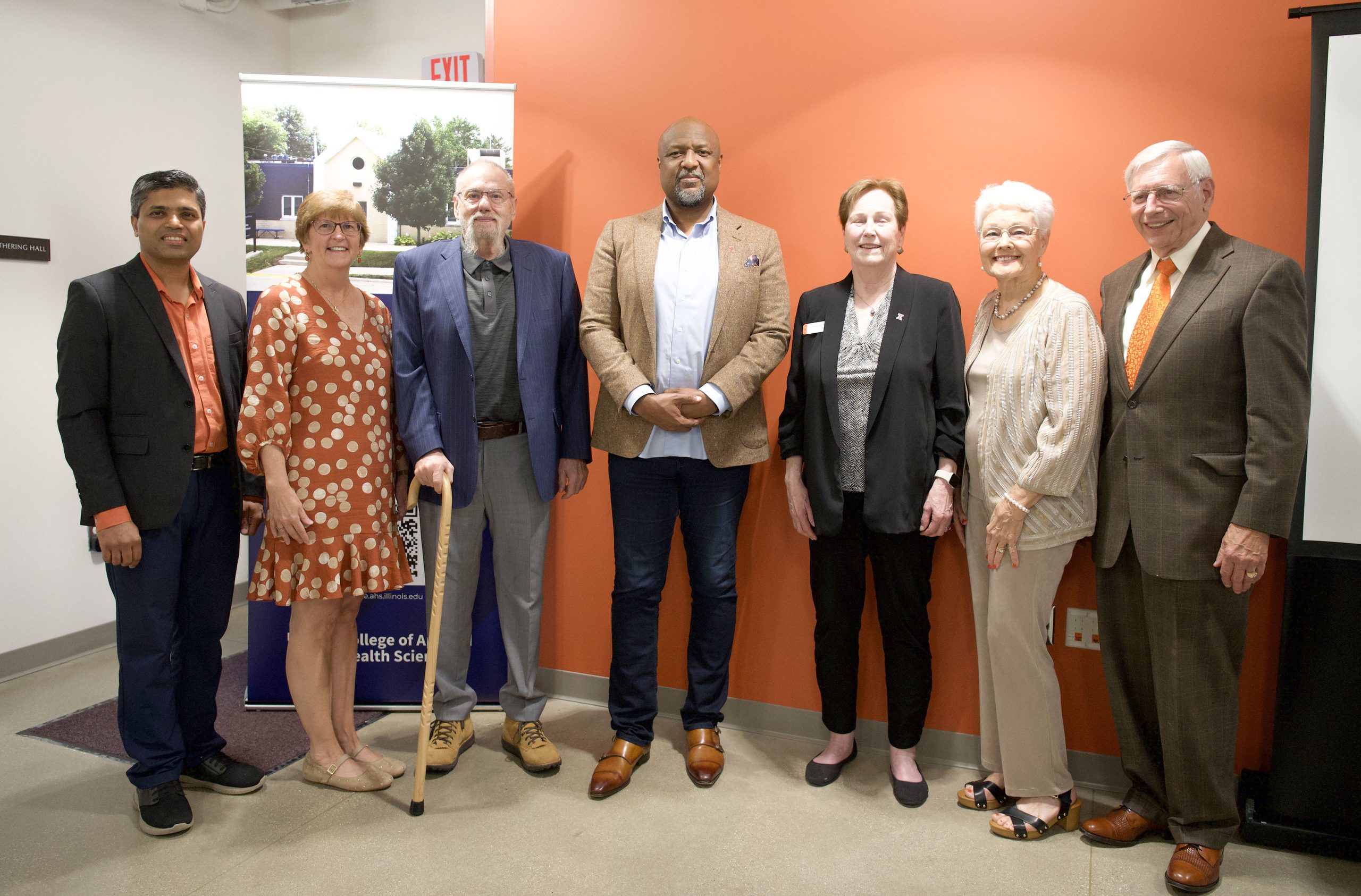
Jeff Woods, center, got a rousing sendoff from faculty and staff at the AHS college meeting on May 7. (Photo by Ethan Simmons)
After a noteworthy tenure spanning more than three decades at the University of Illinois, Jeffrey Woods, Ph.D., the associate dean for research in the College of Applied Health Sciences and a national leader in exercise physiology research, has announced his retirement, marking the end of an era for one of the campus’ most influential scholars in health and aging studies.
Woods, whose work has reshaped scientific understanding of how physical activity benefits the immune system and human health, retires as one of the College of Applied Health Sciences’ most honored researchers and mentors. Named the inaugural Mottier Family Professor in Applied Health Sciences in 2019, Woods leaves a legacy of groundbreaking research and institutional leadership that has influenced both scholars and students alike.
“When Jeff started his career at Illinois 32 years ago, life looked very different. His days began with an hour-long commute from Charleston, Illinois, to the University of Illinois. Even in tough winter conditions, he never complained; he simply did what needed to be done,” said Amy Woods, the James K. and Karen S. McKechnie Professor and associate dean for faculty affairs in AHS and Jeff’s wife.
“All the while, his impact extended far beyond home. He traveled widely, shared his expertise with colleagues around the world and contributed to NIH grant reviews, helping to shape the future of research in his field. Now, he has a well-earned chance to slow down and enjoy life on his own terms. Jeff’s dedication and integrity have made a lasting difference, and this milestone is so richly deserved. We are so proud of him and so grateful for the life we’ve built together.”
Woods earned his B.S. from the University of Massachusetts at Amherst, an M.S. from Springfield College and his Ph.D. in Exercise Science from the University of South Carolina. He joined the University of Illinois faculty in 1994, eventually holding appointments across multiple disciplinary programs, including the Departments of Health and Kinesiology, Nutritional Sciences and the Carle-Illinois College of Medicine.
In his retirement announcement, Woods credited the undergrad and graduate students he worked with, as well as faculty and staff, whom he called the “unsung heroes” of the university.
“It has been a great career at a great university,” he wrote. “I look forward to observing your future success through the lens of my emeriti role.”
Throughout his career, Woods became internationally respected for his pioneering research into how regular exercise counteracts inflammation, bolsters vaccine responses in older adults and, perhaps most notably, alters the gut microbiome in ways that promote health independent of diet. His research findings have appeared in over 140 peer-reviewed publications and helped define new directions in the study of aging and preventative health.
“Jeff has been a defining presence in the College of Applied Health Sciences—as a scientist, as a mentor and as a leader. His career represents the very best of our mission: rigorous research, collaborative innovation and an unwavering commitment to improving human health,” said Cheryl Hanley-Maxwell, dean of the College of Applied Health Sciences. “From the moment he arrived, he brought with him a spirit of curiosity and a deep belief in the transformative power of research.”
In addition to his pioneering scientific contributions, Woods served in numerous leadership capacities on campus. He was associate dean for research in the College of Applied Health Sciences and director of the Center on Health, Aging and Disability, where he guided interdisciplinary collaborations and championed integrative research programs aimed at improving the quality of life for aging populations.
Jeff has been a defining presence in the College of Applied Health Sciences—as a scientist, as a mentor and as a leader.
Cheryl Hanley-Maxwell
Dean, College of Applied Health Sciences
Colleagues and students will also remember him as a committed mentor. Over the years, Woods supervised more than 30 graduate students and served as a guiding force for early-career researchers, helping to cultivate a new generation of scholars in health sciences. His leadership extended beyond campus, with roles in national organizations and review panels that have shaped federal research agendas.
“One thing I’ve always appreciated about Jeff is the space he gave his trainees to grow,” said Jacob Allen, an associate professor in Health and Kinesiology. “As his Ph.D. student, he trusted me early on to think independently, take risks and develop my own scientific voice—practicing over and over how to communicate science clearly. That’s what ultimately matters: making an impact with your science. Jeff always reiterated that. That kind of environment is not easy to create, and it made a lasting impact on how I approach mentorship and science today. Now Jeff gets to apply that same approach to his golf game—plenty of time, plenty of reps, … but now no deadlines! Though he may still need a little extra ‘scientific creativity’ when his ball ends up in the woods.”
The Mottier Family Professorship, established through a generous estate gift honoring Charles and Audrey Phyllis Mottier, was awarded to Woods in recognition of his outstanding contributions to both science and education. At the investiture ceremony in 2019, Woods spoke warmly of the collaborative spirit of his colleagues and his gratitude for their daily challenges and inspirations.
As he steps away from his official duties, Woods said he looks forward to continuing to engage in collaborative projects, writing and opportunities to speak on issues at the intersection of exercise, aging and public health.
Wimmer’s chance choice leads to national public health leadership
Harold Wimmer, left, with Applied Health Sciences Dean Cheryl Hanley-Maxwell, got his undergrad and master’s degrees in AHS. (Photo by Ethan Simmons)
When Harold Wimmer returned to the College of Applied Health Sciences at the University of Illinois, it wasn’t just a professional visit—it was a homecoming shaped by decades of purpose, mentorship and public health leadership.
Wimmer, president and CEO of the American Lung Association, first walked the halls of what was then the College of Applied Life Studies as a student searching for direction. His visit offered a glimpse into how early moments of uncertainty can evolve into a career leading one of the nation’s most influential health organizations.
“I came into this college because as a freshman, I started in (the College of Liberal Arts & Sciences), more general studies, and I was really trying to find where I would best fit,” said Wimmer, who’s been working with the American Lung Association since 1978, the year he earned his master’s in health administration from the University of Illinois. He also got his undergrad from what is now Applied Health Sciences.
That sense of searching is familiar to many undergraduates. For Wimmer, the turning point came not from a formal advising session, but from a conversation with a roommate. It was a simple nudge—one that ultimately redirected his entire career trajectory.
“And it happened that my roommate was in kinesiology,” he said. “He talked about his experiences and the courses. I certainly had a passion for personal health and community also and working with others, so I came to (AHS) in my sophomore year.”
The decision to transfer to community health set the foundation for everything that followed.
If Wimmer’s story has a central theme, it is the power of mentorship. During his time at Illinois, he found not only academic rigor but also a network of professors who helped shape his thinking and ambitions.
“I got connected with Tom O’Rourke, Larry Olsen (and) Bill Creswell,” he said, listing faculty members who left a lasting impression. “Those individuals just really impacted me in so many different ways.”
What stood out wasn’t just their expertise, he said.
“They were also accessible. If you had any issues … their doors were always open. And that’s something that I remember.”
Wimmer’s academic focus quickly sharpened once he entered the community health curriculum. Courses in epidemiology and population health proved challenging, but transformative.
“I certainly fell in love with the curriculum and the work that’s behind it in terms of community health, public health,” he said.
What I studied here really aligned with the work of the American Lung Association.
Harold Wimmer
Applied Health Sciences alumnus and CEO, American Lung Association
He credits those classes with giving him a framework that still underpins his work at the national level.
“They were tough courses, but they were ones that have helped me throughout my career in terms of how to really work through public health … using sound data and epidemiology to help track diseases from the earliest points to a way to treat disease also.”
That emphasis on data-driven decision-making has become even more critical in today’s public health landscape, where emerging diseases, environmental challenges and health disparities require evidence-based responses.
Wimmer’s path to the American Lung Association began in an unexpectedly local way—with a job posting.
“I was fortunate to come across a job posting that the American Lung Association had in the office here at Huff Hall,” he said.
At the time, he admits, he didn’t know if he was prepared for the setting.
“I wasn’t really sure what I was getting into going into a nonprofit health organization,” he said.
But the alignment between his education and the organization’s mission quickly became clear.
“What I studied here really aligned with the work of the American Lung Association,” he said. “The mission … is not only about assisting patients with a lung disease, but it’s also working to prevent lung disease.”
That dual focus—treatment and prevention—is a hallmark of public health and one that reflects the principles taught in AHS.
Harold Wimmer became president and CEO of the American Lung Association in 2013 (Photo by Ethan Simmons).
Wimmer, who became president and CEO in 2013, oversees a nationwide organization tackling issues ranging from air quality to chronic lung disease. Yet when asked what skills matter most, he doesn’t point first to technical expertise.
Instead, he emphasizes communication.
“One thing that I think is really key in community health or public health is to have good communication skills and to be able to interact with individuals … and also groups,” he said.
For Wimmer, those skills were nurtured during his time at Illinois, through classroom discussions, group work and faculty mentorship.
During his visit, Wimmer—who met with AHS Dean Cheryl Hanley-Maxwell as well as taking visits to Carle Illinois College of Medicine, the Cancer Center at Illinois and the Beckman Institute—also offered practical advice to students eager to make an impact in public health, a field that has gained renewed visibility in recent years.
“I would say really study epidemiology and population data,” he said. “I think [that] is really critical in the field today.”
But technical knowledge alone isn’t enough. He stressed the importance of understanding diverse communities and advancing health equity.
“Having great communication skills, the ability to communicate with others in really diverse populations … health equity is very important,” he said.
It’s a message that aligns closely with the college’s current mission—demonstrating how its core values have remained consistent even as the field has evolved.
Like many alumni, Wimmer’s visit also prompted reflection. When asked what advice he would give his younger self, his answer was both practical and revealing.
“I would have probably looked at a minor in finance on the business side,” he said, noting how much of his current role involves budgeting and financial management.
It’s a reminder that careers in health aren’t confined to science alone—they often require a blend of skills, including leadership, strategy and financial acumen.
He also acknowledged a lingering curiosity about further education.
“I always think I would have liked to continue my education to get a Ph.D.,” he said, before adding with a laugh, “but I think I’m OK where I’m at.”
Can regular exercise reduce the protein needs of adults with type 2 diabetes?
From left: University of Illinois Professor Nick Burd, postdoc Mikaela Kasperek, Ph.D. student Gena Irwin, and Associate Professor Jacob Allen pose inside Freer Hall’s gym, where their labs will train participants in a 12-week exercise program for a clinical trial.
For healthy adults, roughly .8 grams of protein per kilogram of bodyweight per day is enough to maintain muscle mass and support daily function.
But for adults with type 2 diabetes, an estimated 1 in 10 adults in the United States, their protein requirements remain relatively undefined, but are believed to be elevated when compared to their non-diabetic counterparts. Especially as diabetic individuals age, their bodies often become more anabolic resistant: less responsive to the muscle-building effects of exercise and protein intake.
Researchers from the Department of Health and Kinesiology at the University of Illinois Urbana-Champaign are recruiting participants for a human clinical trial to understand the protein needs of older adults with type 2 diabetes, and whether regular exercise can help their bodies use protein more efficiently.
“The problem with current strategies for type 2 diabetes is they largely try to keep throwing protein in people’s diets: eat more, eat more, eat more,” HK Professor Nicholas Burd said.
Piling on the protein could have detrimental effects. There’s evidence that circulating amino acids, including branch chain amino acids that promote muscle mass, are associated with poorer outcomes for people with diabetes, said HK Associate Professor Jacob Allen.
Their upcoming study, “Exercise impact on dietary protein efficiency in older adults with type 2 diabetes,” is funded by a grant from the American Diabetes Association. The principal investigators are Burd, who researches protein metabolism, and Allen, who studies how exercise and nutrition impact the gut microbiome.
Health and Kinesiology professors Jack Senefeld and Steve Petruzzello are co-investigators on the study.
HK Assistant Professor Jack Senefeld and Professor Steve Petruzzello are co-investigators on the study, bringing expertise on training diabetic individuals and psychological well-being during exercise. Ph.D. candidate Gena Irwin and postdoc Mikaela Kasperek will lead the work from the Burd’s Exercise Performance Lab and Allen’s Integrative Microbiota Physiology labs respectively.
Starting this fall, the researchers will recruit 30 older adults to participate in this study—15 individuals living with type 2 diabetes and 15 without—and bring them into Freer Hall’s gym for a 12-week fitness program that mixes weight training with endurance exercise.
The researchers will use sensitive tools in their labs to figure out how efficiently participants’ bodies utilize protein, and whether that efficiency varies for older adults with and without diabetes. After participants wrap the exercise program, the team will test whether resistance training improved their bodies’ usage of protein overall, lessening their daily protein needs.
“To make an older person’s muscles more youthful, you can exercise them,” Burd said. “But we don’t know how the gut’s being impacted, and we don’t know how type 2 diabetes interferes with some of the ‘youthfulness’ effects of exercise.”
Some of our dietary protein ends up in our skeletal muscle, through muscle-protein synthesis, and some of it is used for energy. But there’s a “black box” around where the rest of our protein goes in the body, Allen said.
“We think that the microbes in the gut, the gut microbiome, might be responsible for some of this, but this has never been studied,” Allen said. “We’ve run some pilot work that fueled part of this study, where we can show that indeed, ingested amino acids are converted into these microbial metabolites.”
Why might that matter? Some of these metabolites are important for human health overall, Allen said. For example, short chain fatty acids—the byproducts of dietary fiber being processed in our gut—bring a host of benefits for metabolism and the immune system.
The research teams will host intervention days at the beginning and end of the 12-week exercise program, to see how participants’ bodies are using the protein in their muscle and gut.
Participants will consume amino acids labeled with stable isotope tracers. The labs will collect breath samples to see how much of the labeled amino acid is showing up in the breath—if more of that labeled protein appears in participants’ breath, their bodies aren’t as good at incorporating it into muscle.
Blood samples will help the scientists understand how the gut is taking those amino acids and converting them into potentially beneficial metabolites.
The second intervention day at the end of the trial will determine whether an exercise program changed the way participants’ bodies use protein.
“There are very few labs in the U.S that not only have the expertise, but have the infrastructure to be able to do this kind of work, so we’re very fortunate for Illinois and our department,” Burd said. “Stable isotope tracers require expensive machines to analyze.”
What’s in it for participants? On top of helping the scientists form dietary guidelines for older adults with type 2 diabetes, they’ll receive progressive exercise training from expert students and faculty at the college, that will hopefully serve them well beyond their last visit.
“A big goal is to change behavior, too, to make them healthier,” Allen said. “That’s ultimately what we’re trying to do.”
Editor’s note:
Interested in participating in this study? Take the survey to see if you qualify, or email the organizers at HK-ADA-Study@illinois.edu
Now that fall 2025 is underway, I’m excited to share some of the exciting stories from the Department of Health and Kinesiology. Each newsletter reminds me of how fortunate I am to work alongside such passionate faculty, students and alumni who are making a real difference in people’s lives.
In this issue, you’ll find a fascinating look at how our researchers are using fMRI technology to see how a new mother’s brain responds to pain. We’re also tackling an issue you may have seen in the news related to the growing misuse of nitrous oxide. Our faculty are at the forefront of this devastating issue. In the past decade, U.S. annual deaths from nitrous oxide poisoning are up by nearly 600 percent.
Another feature dives into how machine learning is helping us better understand cognitive function. The study offers insight into the health and lifestyle indicators—including diet, physical activity and weight—that align most closely with healthy brain function. And for those interested in nutrition, you won’t want to miss our story on potato-protein diet combinations. This research is showing creative, practical approaches to fueling both wellness and performance.
What ties all these stories together is the spirit of curiosity and care that defines our department. And, as always, none of this work would be possible without the encouragement of alumni like you. Your support inspires our students and drives our mission forward.
Thank you for staying connected with us—I hope you enjoy reading this issue as much as we enjoyed putting it together.
Megan Huibregtse, Ph.D., is a first-year assistant professor in the Department of Health and Kinesiology, but she’s no stranger to the Midwest. Huibregtse obtained her bachelor’s in neuroscience and a Ph.D. in human performance from Indiana University, Bloomington.She worked as a postdoctoral fellow at Emory University before joining the AHS faculty this fall.
Megan Huibregtse (Fred Zwicky / University of Illinois Urbana-Champaign)
Talk about what drew you to the College of AHS. Why did you choose to come to Illinois?
Megan: I was looking for an environment where I could connect with a vibrant research community and work directly with undergraduate and graduate students. While my work spans multiple disciplines such as clinical neuroscience or psychiatry, traumatic brain injury is one of the most common neurological conditions (Maas et al., 2022 The Lancet Neurology), and there’s a real public health concern about acute and long-term neurobehavioral effects.
So, AHS’s mission of improving health and well-being across the lifespan is a great fit for my research program. Plus, the neuroimaging resources here are unparalleled, and I can’t wait to start using the 7 Tesla scanner.
(The University of Illinois and Carle Health co-own a 7 Tesla MRI scanner, which provides a huge step up in quality for brain imaging.)
You’ve described yourself as ‘obsessed with the brain.’ When and how did your fascination with neuroscience begin?
I was unlucky enough to get two concussions from playing volleyball when I was younger, and the second led to the discovery of a brain tumor in my left frontal lobe. It might have been a coincidence, but the tumor was right next to where I hit my head when I got the first concussion.
Fortunately, the surgery to remove it went well, and I’ve been fascinated by the brain and what happens in response to injury ever since. Having personally gone through many hours of magnetic resonance imaging, I learned what a powerful tool it is to non-invasively examine the brain.
Within the area of traumatic brain injury, you’ve already investigated a wide variety of topics, from sub-concussive head impacts in high school football to head trauma from intimate partner violence. How do you generally describe your research interests?
That’s right—I’ve been fascinated by various aspects of neurotrauma. In general, I would say that my interests revolve around comprehending how our experiences (brain injuries, traumatic events, and when they occur simultaneously) impact our brain health. I consider brain health in terms of both structural integrity and function.
What are your priorities as you’re getting started here at Illinois?
This year, I’m working on setting up my research program—recruiting graduate students and undergraduate research assistants, submitting my protocols to the Institutional Review Board, and getting acquainted with the excellent neuroimaging resources at the Beckman Institute.
How has your experience in Urbana-Champaign been so far? Is there anything you’d like your colleagues to know about you?
It’s been great so far! Having completed my degrees at another Big Ten school (Indiana), Urbana-Champaign feels familiar already. Outside of work, I love to cook and bake for my family and friends.
Pedro Hallal has built an international reputation for his research on physical inactivity
Pedro Hallal accepts the King James McCristal Distinguished Scholar Award on Wednesday, Sept. 23, 2025.
Like many young researchers, Pedro Hallal thought his first study would be groundbreaking and potentially change the paradigm of the study of physical activity. Ultimately, he said, it didn’t, but now, with the value of experience at hand, he understands that was OK.
“We are trained to think of things that no one has ever studied. But science is much more about consistency of results nowadays, than about brand-new findings,” said Hallal, the Alvin M. and Ruth L. Sandall Professor in the Department of Health and Kinesiology at the University of Illinois Urbana-Champaign. “We do research because of the questions; we don’t start with the answers.”
Thanks to that curiosity and because of the breadth of his research, Hallal on Sept. 24 was awarded the King James McCristal Distinguished Scholar Award, one of the most prestigious recognitions in the College of Applied Health Sciences. The award honors faculty whose scholarly contributions have significantly advanced their disciplines while elevating the reputation of the university.
For Hallal—whose research has transformed global understanding of physical activity and health—the honor represents both a recognition of past achievements and an encouragement to push forward in addressing one of the world’s most pressing public health challenges: physical inactivity.
“Professor Hallal’s scholarly work has substantially elevated the profile of his department, our college and the university by advancing public health knowledge and global health equity,” said Cheryl Hanley-Maxwell, dean of the College of Applied Health Sciences.
A Global Lens on Physical Activity
Hallal, who is also director of AHS’ Master of Public Health program, has built an international reputation for his research on physical inactivity, a phenomenon he argues must be understood in the context of modern life.
“Today, we have fewer people being active,” Hallal said. “Most of them are indoors, looking at a screen. We have to think about what physical activity is today, not decades ago. The notion that physical activity is good for health has been known for centuries. Only since the 1950s and ‘60s have we really been studying it.”
His scholarship began in Brazil, where his master’s thesis—“Physical Inactivity: Prevalence and Associated Variables in Brazilian Adults”—found that 41.1 percent of the surveyed population did not meet recommended activity levels of 150 minutes per week. This early work set the stage for his career-long focus on understanding inactivity as both a personal and societal issue.
Hallal’s impact expanded dramatically with his contributions to a series in The Lancet, one of the most influential medical journals in the world. His research revealed that one-third of adults worldwide—approximately 1.5 billion people—failed to achieve the minimum recommended level of physical activity. Equally concerning, four-fifths of children ages 13 to 15 fell short of the one-hour daily activity guideline. The findings underscored physical inactivity as a global pandemic, drawing international attention to a public health crisis with profound implications for chronic disease and health equity.
Hallal has often said that this work in The Lancet is the “research I am most proud of.”
Redefining Scientific Inquiry
Throughout his career, Hallal has emphasized the importance of scientific rigor and humility.
That philosophy has guided him to produce a body of work that does not merely identify problems but interrogates the systems that perpetuate them. His studies consistently highlight how socioeconomic and geographic inequalities shape access to safe and purposeful physical activity.
“Access to safe, purposeful physical activity must be a societal priority,” Hallal said. By framing physical inactivity not only as an individual choice but also as an issue of structural inequities, he has pushed the field toward broader, more inclusive approaches to solutions.
Access to safe, purposeful physical activity must be a societal priority
Pedro Hallal
Professor of Health and Kinesiology
A Legacy of Impact
The King James McCristal Distinguished Scholar Award cements Hallal’s place among the most influential scholars at Illinois. The recognition highlights not only his academic achievements but also his role in shaping the conversation around health equity worldwide.
From uncovering high rates of inactivity in Brazil to leading global efforts to quantify physical inactivity, Hallal has consistently produced research that informs public policy, inspires further scientific exploration, and elevates the role of physical activity in public health discourse.
Looking Ahead: Challenging Assumptions
As Hallal reflects on the future of his field, he sees opportunities to question prevailing assumptions and generate new lines of inquiry.
He is particularly interested in challenging the idea that “every movement counts.” While small bursts of activity are beneficial, Hallal believes that the global challenge lies in ensuring people have the opportunity for meaningful, sustained physical activity. He also underscores the importance of recognizing how time scarcity and resource inequality reinforce global disparities in health behaviors.
“I think this place, this campus and college, are in a great position to tackle these things,” Hallal said. “We are already one of the country’s leaders in the field, and we are one of the most productive groups in the world on this topic.”
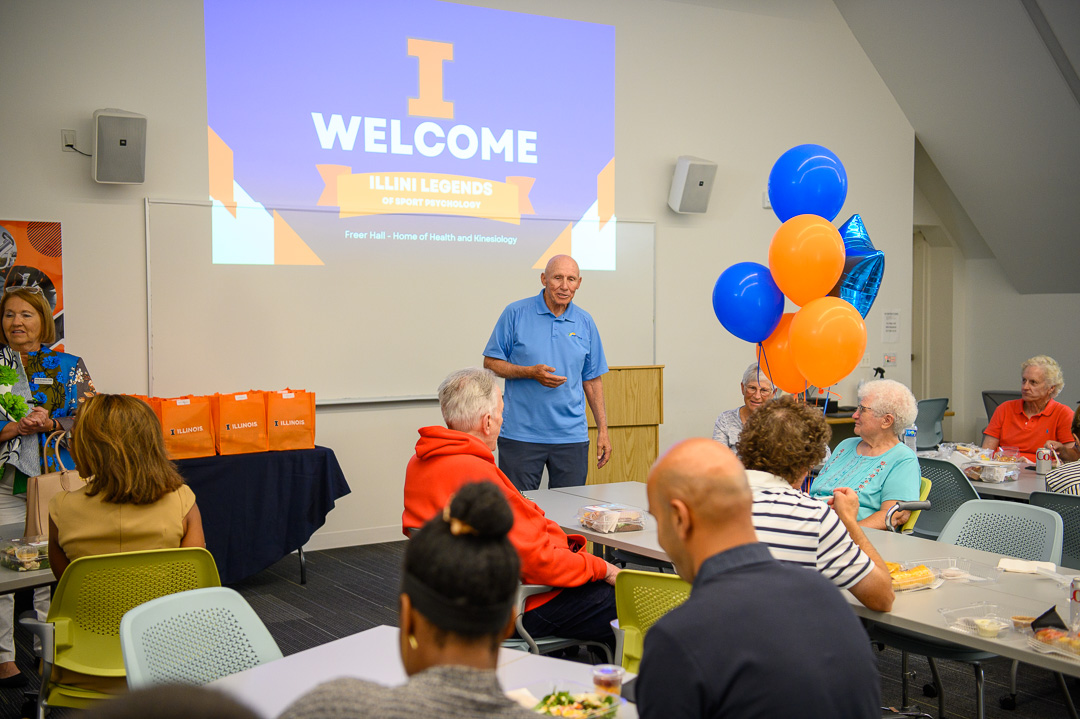
Today’s Department of Health and Kinesiology once hosted the nation’s foremost researchers of sport psychology. Nearly 50 years on, these pioneers reunited at Huff Hall for a weekend on campus.
When Rainer Martens arrived at the University of Illinois in the summer of 1966, he stepped out of his blue Mustang and bounded up the steps of George Huff Hall, to see the university’s Sport Psychology Laboratory with his own eyes.
What he found on the third floor of Huff initially disappointed him: old equipment piled up in the corner of a room with just enough space to seat a class. “We thought we’d come to the wrong place,” Martens said.
Turns out, he wasn’t in the wrong place—maybe just a little early.
What followed was the explosive growth of sport psychology research at Illinois. With help from the university’s world-class department of psychology, a group of likeminded doctoral students—including Martens, Glyn Roberts and the late Dan Landers—began building a formal sport psychology graduate program at Illinois, to study the mental aspects of athletic success, motivation and performance.
Dozens of doctoral students went on to matriculate in the program and bring their discoveries to institutions across the globe. By the late 1970s, Illinois had become the torchbearer for modern-day sport psychology in the U.S., with a vibrant group of researchers at the helm.
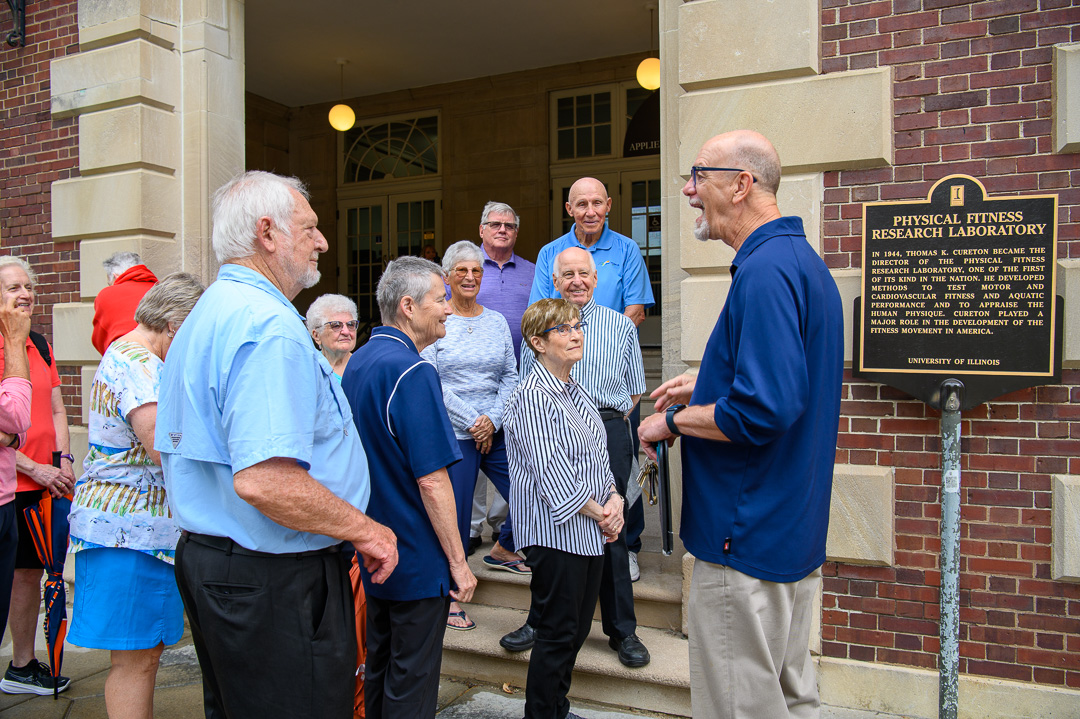
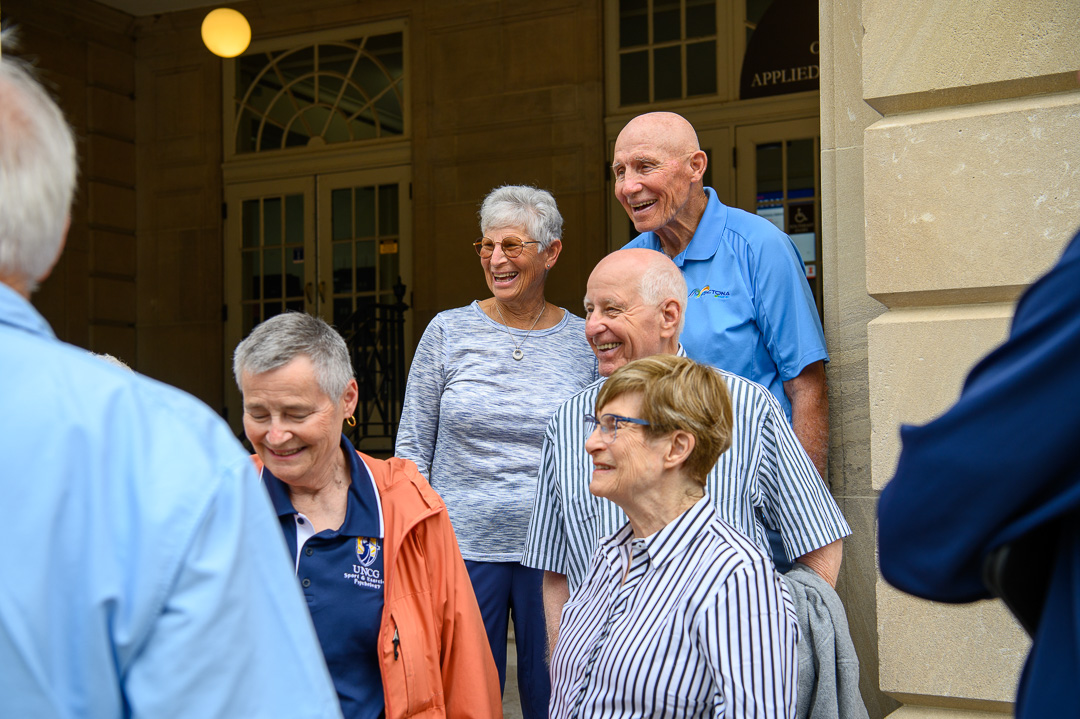
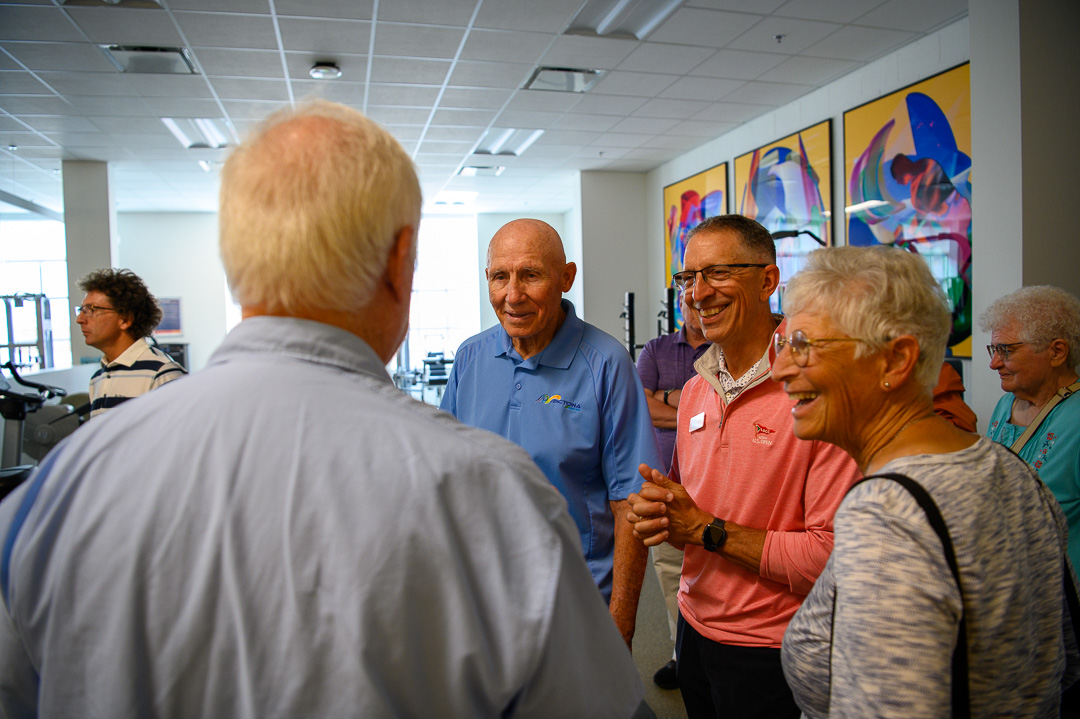
Five decades later, a group of those same students and faculty returned to campus to catch up with their former colleagues, and take a tour of their old academic home. The guest list left an indelible mark on the field of sport psychology as it stands today.
Even as Illinois’ own sport psychology program has faded, the legacy of its achievements and discoveries endure in the modern day College of Applied Health Sciences. Faculty at AHS, particularly in Health and Kinesiology, continue to study the psychological effects of exercise and physical activity at large, building on more than 100 years of tradition.
“All these former students, they’ve all gone on to distinguished careers. They’ve gone on to become presidents of national sport psychology organizations, and spoken all over the world,” Martens said. “This gathering, it’s a once in a lifetime thing.”
To cap off their walk down memory lane, these legends of sport psychology got to share lunch with current-day faculty and doctoral students in the Department of Health and Kinesiology.
“That was very humbling, we never expected anybody to turn out,” said Glyn Roberts, who worked as a professor of sport psychology at Illinois until 1998. “It was very rewarding that they would do that for us.”
Guests of Honor
Rainer Martens, a professor of kinesiology at Illinois until 1984, and co-founder of Human Kinetics, leading publisher of books and journals on physical activity
Julie Martens, PhD in sport psychology and the first employee of Human Kinetics, who retired as executive vice president in 2009
Glyn Roberts, professor emeritus at the Norwegian School of Sport Sciences and former professor of sport psychology at Illinois
Tara Scanlan, professor emerita of psychology at UCLA, and her husband Larry Scanlan
Diane Gill, kinesiology professor emerita at UNC Greensboro
Dan Gould and Marty Ewing, professors emeriti at Michigan State. Both earned a Ph.D. at Illinois, and Gould taught here until 1991
Damon Burton, professor of sport psychology at the University of Idaho
Robin Vealey, professor of kinesiology and health at the University of Miami, Ohio
Linda “Bump” Harrison, a publisher who got her PhD in the program in 1987
Marc Lochbaum, professor of kinesiology at Texas Tech who went to Illinois for undergrad and was mentored by several sport psychology greats
Absent were Joan Duda, professor of sport and exercise psychology at University of Birmingham, and Dan Landers, a professor of sport and exercise psychology and co-founder of the Journal of Sport Psychology, who passed away in 2023
‘We didn’t realize it, but we were pioneers’
Though Illinois experienced fertile growth of sport psychology in the 1970s, the seeds were planted by Coleman Griffith, known as the “father of sport psychology” for his pioneering work into the mental aspects of athletic performance.
Griffith founded and ran Illinois’ Athletic Research Laboratory until 1932, where he studied the links between personality and physiology on athletic success. He wrote two books—“Psychology of Coaching” and “Psychology and Athletics”— but left no proteges for his research. Griffith later became provost of the university.
Physical fitness pioneer Thomas “TK” Cureton started his Physical Fitness Research Laboratory in 1944, occasionally collaborating with psychologist Raymond B. Cattell. The two of them examined the relationship between physical activity on personality and several of Cureton’s graduate students examined the anxiety-reducing effects of exercise. In 1951, Professor Alfred “Fritz” Hubbard revived Griffith’s research line with a new Sport Psychology Laboratory, located in a third floor office of Huff Hall, then known as Huff Gymnasium.
Hubbard specialized in motor learning, but saw latent potential in the sport psychology discipline. After a decade of research and recruitment, Hubbard had a prediction: the number of graduate students interested in sport psychology would double or triple by the end of the 1970s. His forecast of growth came true.
Still, those who joined the Illinois sport psychology program in the 1960s found their way to the field before an academic path formally existed. Some started out in coaching or physical education, and were searching for applied knowledge to use in the field.
For Rainer, his experience with intense anxiety before youth wrestling matches inspired him to understand competitive nerves and how to quell them.
After getting degrees from the then-named Department of Physical Education, Landers, Martens and Roberts all eventually joined the Children’s Research Center, a grant-funded research vehicle seeking to explain children’s behavior from multiple academic disciplines.
The recent grads worked in the center’s Motor Performance and Play Research Laboratory, where they used social psychology principles to study children’s play, and explore how their stress levels, personalities and more influenced their motor learning.
The grant-funded lab supercharged their progress.
“A lot of the stuff we did initially was stress related. How do you reduce stress? That was Rainer’s research—what he called competitive anxiety,” said Roberts, who began working at the Children’s Research Center in 1973. “Mine was motivation: how do you make people do what they ought to be doing?”
Full-time research positions to study the field were unusual, and freeing. From 1968 to 1975, Martens stayed on with the Children’s Research Center. Lifted by the university’s resources, namely its enormous library, computing power and collaborators in psychology, the lab produced leading research in sport psychology before peer institutions had caught on to the emerging discipline.
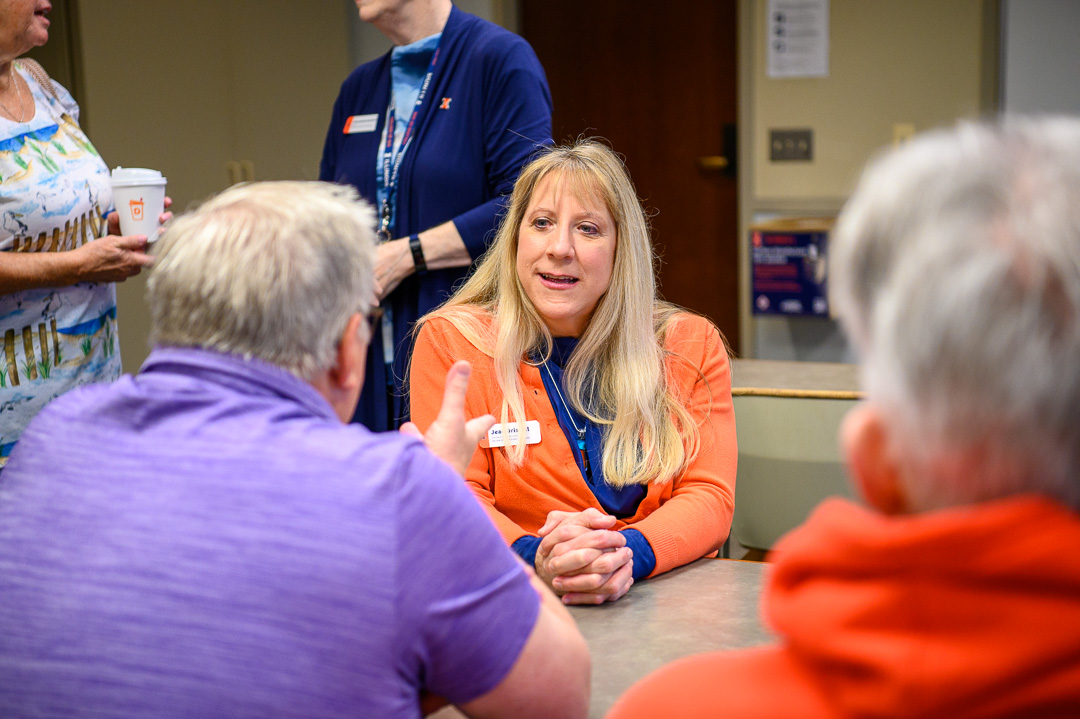
Julie Martens (center left) and Tara Scanlan (second from right) share a laugh in Huff Hall. Both of them obtained their doctoral degrees in sport psychology from the University of Illinois.
Jean Driscoll (center) chats with Dan Gould and Damon Burton, both graduates of the sport psychology program at Illinois who went on to successful careers in the field.
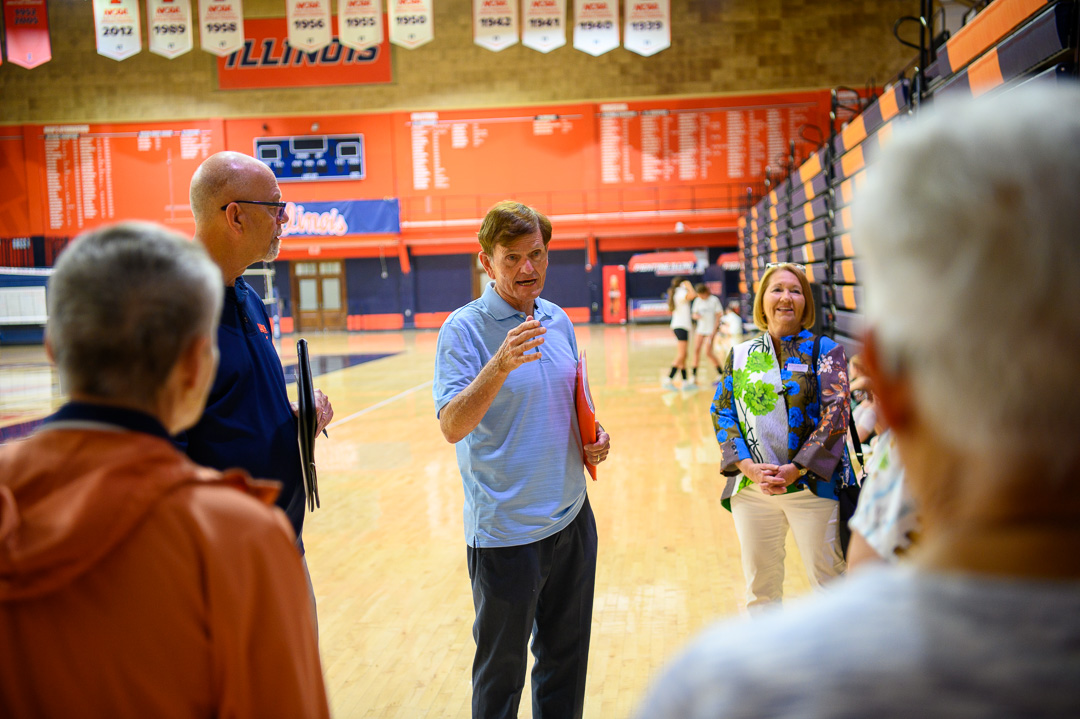
Bill Goodman (center) retired associate dean for administration at the College of AHS, tours former Illinois sport psychology students and faculty around Huff Gym.
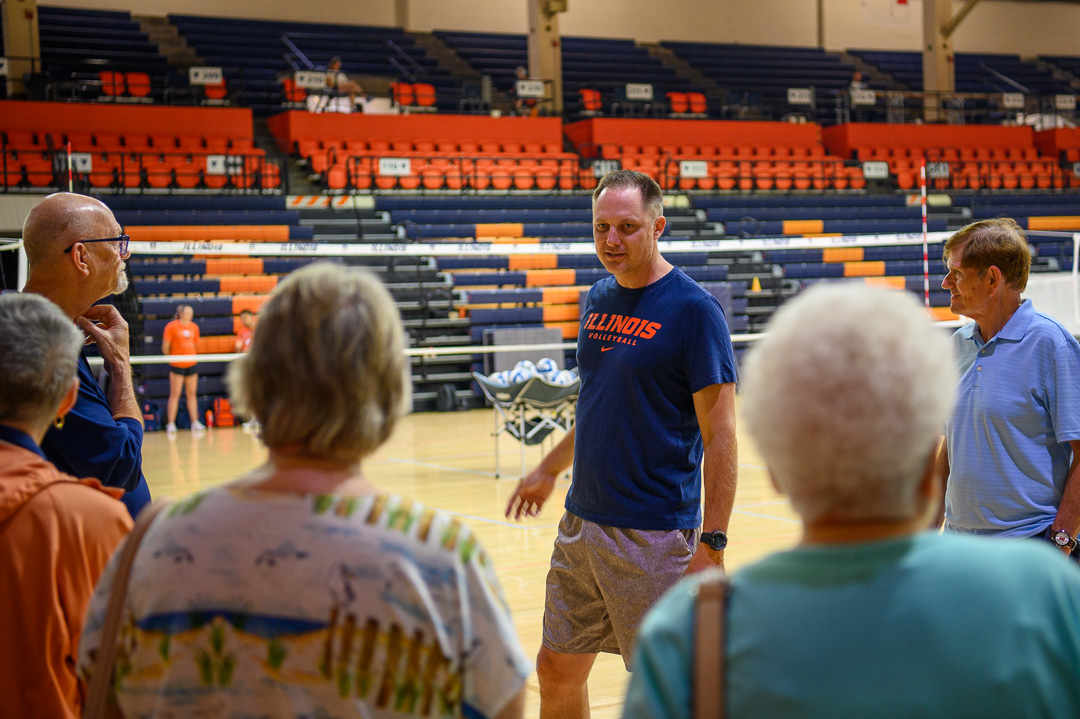
Chris Tamas, the current coach of the Illinois volleyball squad, speaks to former sport psychology students and faculty in Huff Gym.
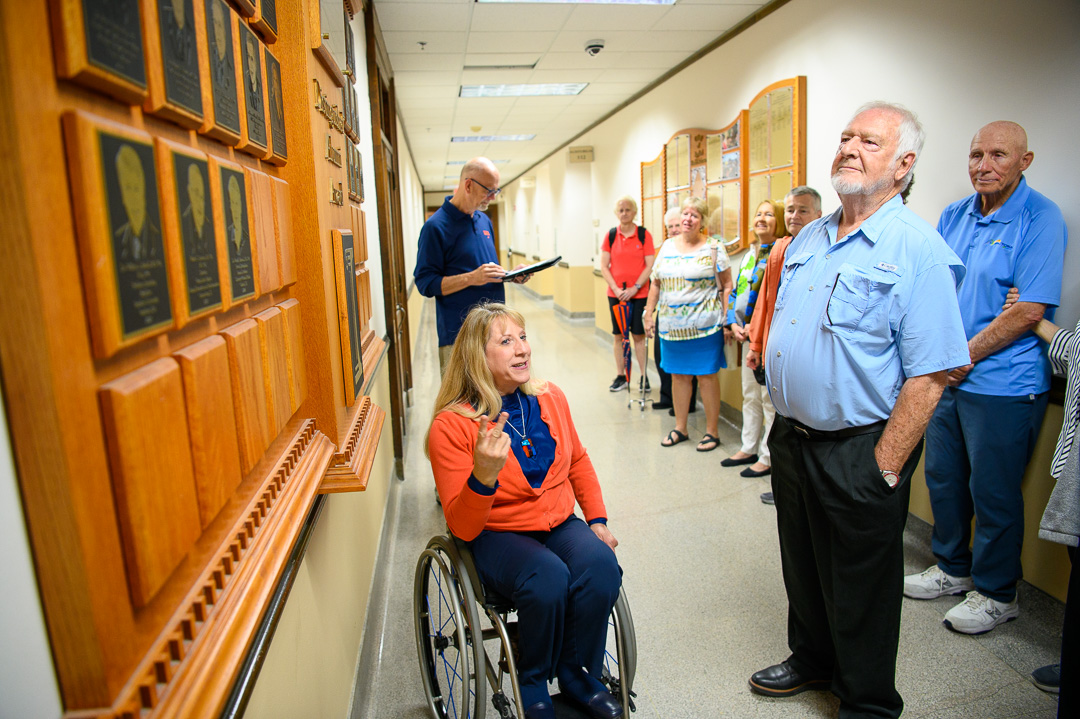
Jean Driscoll shows off the wall of Distinguished Alumni Award winners from the College of Applied Health Sciences.
Former Illinois sport psychology students and faculty sit in one of the new Huff Hall classrooms. The space used to be part of the Huff Gym indoor pool.
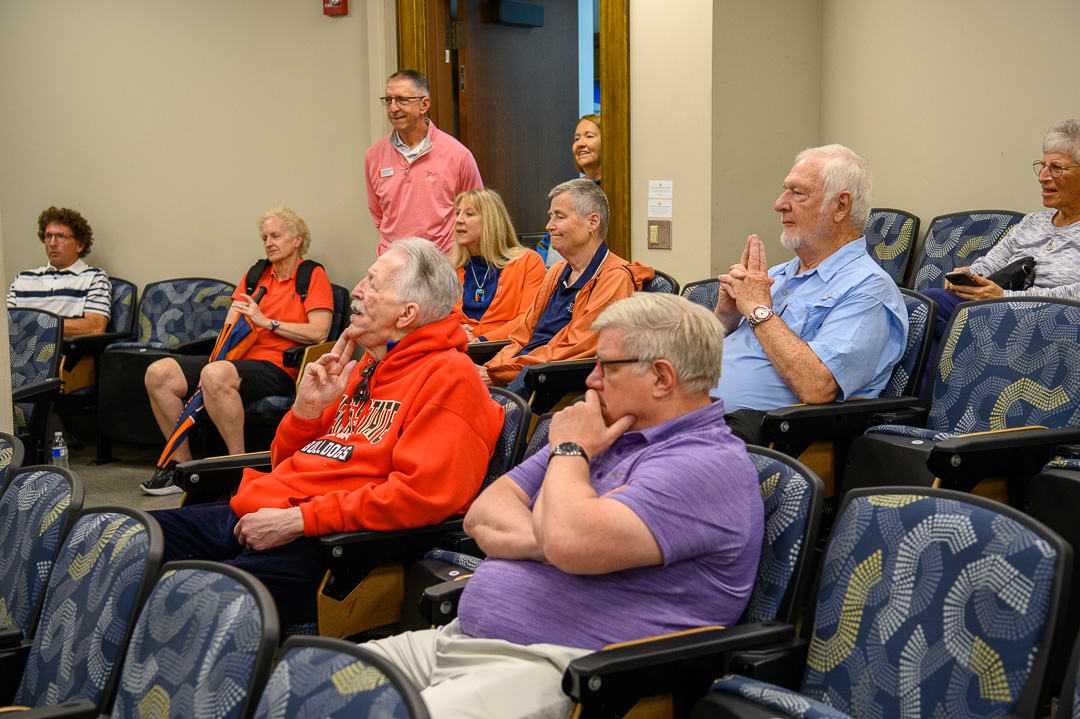
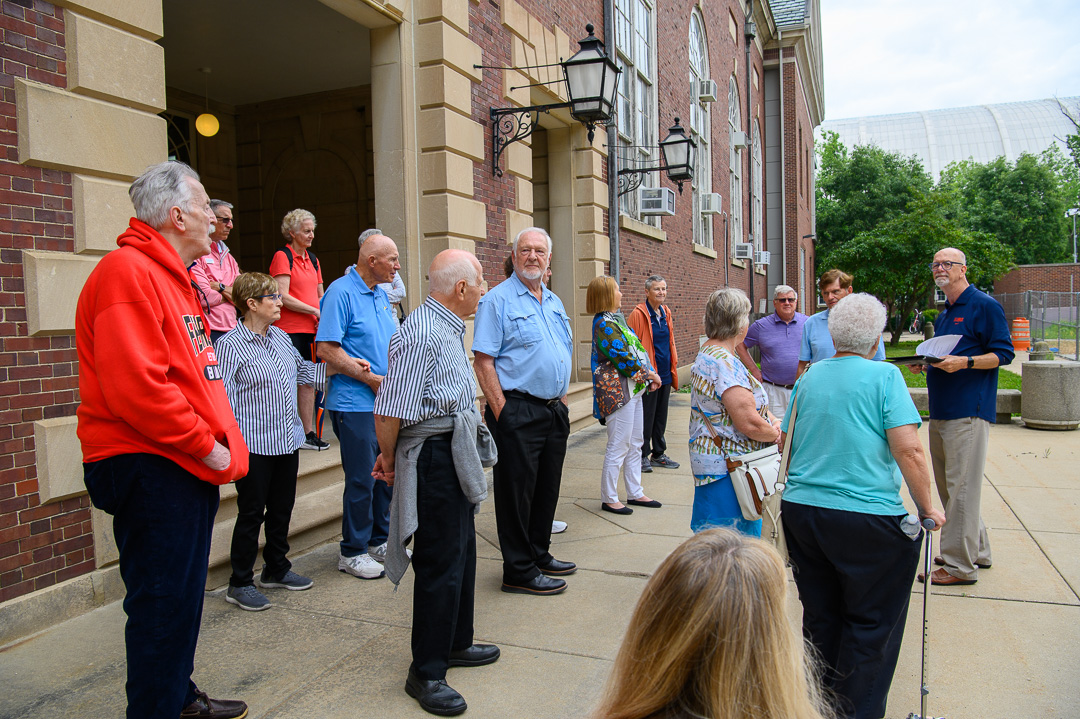
A reunion of sport psychology faculty and students at Illinois brought the guests inside and outside Huff Hall, where much of the early research into their field took place.
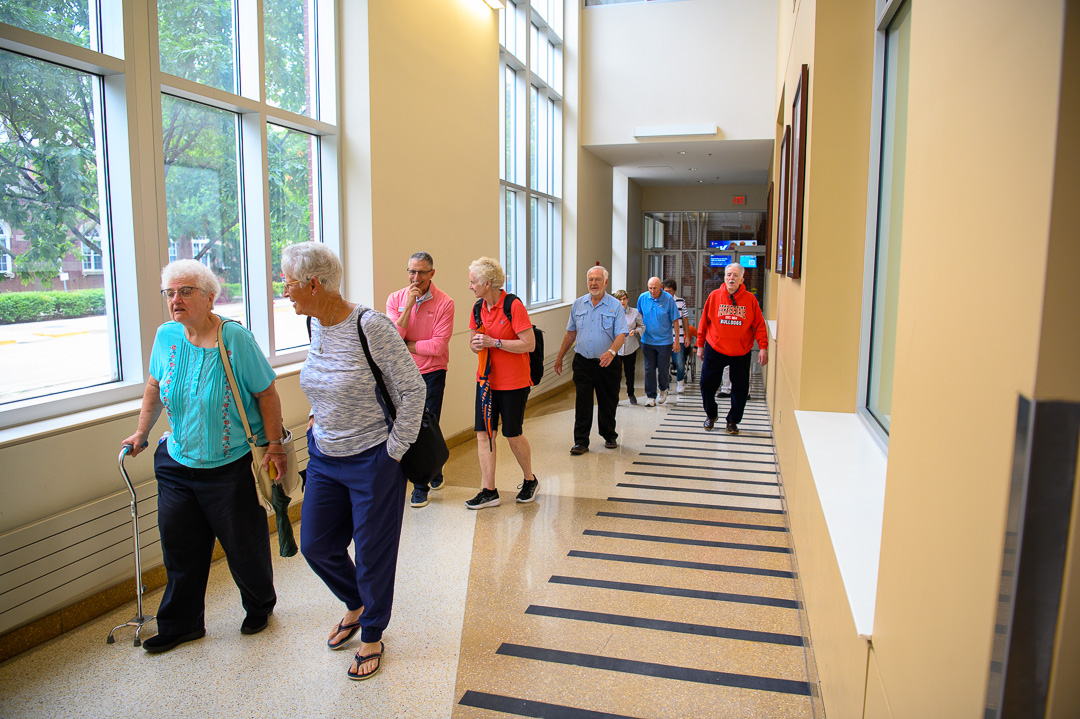
Former Illinois sport psychology faculty and students walk up the ramp of the Khan Annex, an addition to Huff Hall that opened in 2011.
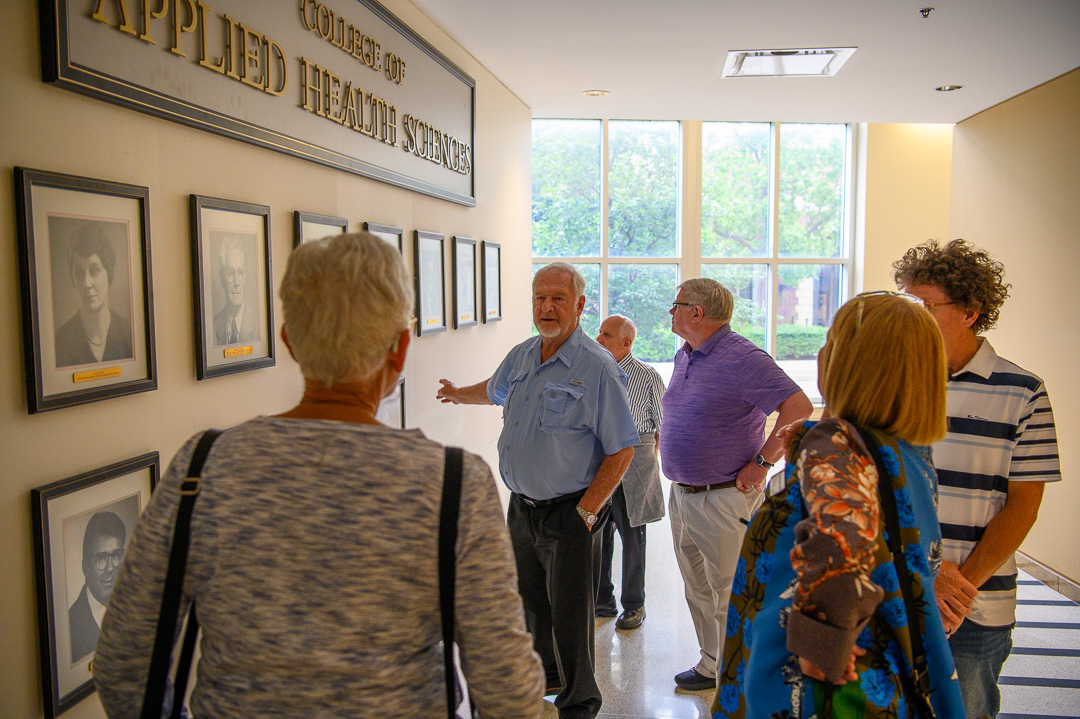
Glyn Roberts (center) points to the wall of deans of the College of Applied Health Sciences.
Don Hardin (right), adjunct instructor at AHS and former women's volleyball head coach, talks about the history of Huff Hall with former sport psychology students and faculty.
The sport psychology tour stops by the Freer Hall gym, used for research purposes.
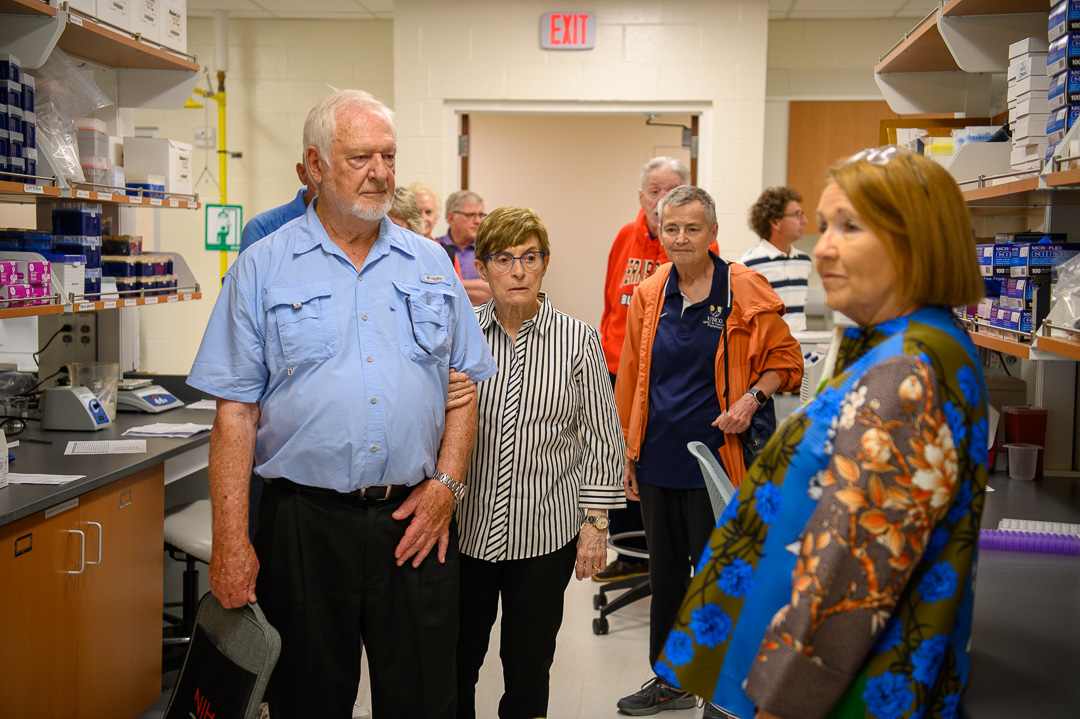
Former sport psychology students and faculty tour the basement labs of Freer Hall.
The enthusiasm of Illinois sport psychologists was clearly infectious. After a couple years teaching physical education, Diane Gill attended a conference at Brockport, New York, where she got to hear both Dan Landers and Rainer Martens speak about their research at Illinois. By her first semester in Urbana-Champaign, Gill was in Martens’ class “Social Psychology and Physical Activity,” where his first doctoral student, Tara Scanlan, was teaching assistant.
“Taking that course, immediately I thought, ‘this is the area I’d like to be in,’” Gill said.
She soon worked with the pair on their competitive anxiety research, and later studied competitiveness and athletes’ “achievement orientation,” or drive to improve and accomplish goals within their sport, along with a host of other topics in the field.
“Illinois was the place to be if you wanted to be in sport psychology,” she said.
Gill is newly retired, having spent more than 30 years as a professor of kinesiology at University of North Carolina, Greensboro after obtaining her master’s and Ph.D. at Illinois.
(“My doctoral students are retiring,” said Martens, now 82. “That makes me really old.”)
Physical activity—whether it’s high-level athletics or recess play—is all one field.
Diane Gill
Professor Emerita of Kinesiology, UNC Greensboro
Julie Martens, née Simon, was accepted into the program in 1973, coming to Illinois specifically to study with Rainer. (They would get married nearly 20 years later).
“[Tara Scanlan and Diane] had an office out at the Children’s Research Center right next to Rainer’s. As I got to know them, we used to be out there every evening. They said, “Come on out, you can study at night with us,’” Julie said. “That’s how I got involved with meeting the other students, then I got an assistantship and got where I wanted to be.”
The scientists would run experiments, hop over to the nearby cafeteria in the Adler Mental Health building for lunch and sketch out ideas for new research designs on napkins. Those early days were “invigorating,” Martens said.
By 1980, U. of I. was the premier place of study for sport psychology, alongside Penn State. They had turned the topic into a formal graduate program, and the field was continuing to blossom. In 1979, Dan Landers and Rainer co-founded the Journal of Sport Psychology, where Landers was the inaugural editor-in-chief.
As the field grew in relevance, new pathways opened up and Illinois sport psychology spread across the country. Sport psychology got a “big break” when the Olympic Training Committee allowed athletes to be advised by professionals who weren’t clinicians or psychiatrists, Roberts said—sport psychologists could now help athletes develop strategies to perform under extreme stressors.
“The U. of I. was very special. And the thing that stuck with me was we attracted such good students. We generated a reputation, and students wanted to come here from all over the world,” Roberts said. “We didn’t realize it, but we were pioneers.”
‘No better program in the world’
Between visits to their old labs and offices, the sport psychology legends visited classrooms in Huff Hall where there used to be a swimming pool, and walked on floors of Freer Hall that were once open air.
“In Freer and Huff, things have changed, which is good in many ways. You wouldn’t want the same stuff you had 50 years ago,” Gill said.
Over the weekend, the sport psychology crew took the 40-minute drive to Allerton Park in Monticello, where they hosted the nation’s first conference in sport psychology: the North American Society for Psychology of Sport and Physical Activity (NASPSPA) in 1973.
Several of them later served as executives and presidents of the society. The first conference also planted the seeds for Human Kinetics, the Champaign-based publisher of sport and exercise science founded by Martens and his first wife, Marilyn.
Though a formal sport psychology program no longer exists at Illinois, the field has expanded and evolved. The Department of Health and Kinesiology continues to study the psychological aspects and benefits of physical activity.
Rainer Martens speaks to his former Sport Psychology colleagues, and the current-day faculty of Health and Kinesiology.
“I think of it as one field. Physical activity—whether it’s high-level athletics or recess play—is all one field,” Gill said.
After walking through their old stomping grounds, the group met with current-day faculty and students of Health and Kinesiology for lunch in Freer Hall.
“This was the group that got sport psychology a foothold in this country,” said HK Professor Steve Petruzzello, who runs the college’s Exercise Psychophysiology Laboratory. “It’s wonderful to see these folks back here, to see their eyes light up as they’re walking around the halls, seeing spaces that look familiar and some that are completely unfamiliar.”
What remains from this era of sport psychology, and even the early days of Athletic Research Laboratory, are questions on the relationship between physical activity and psychology—including personality, stress, cognitive factors and affect, or feeling states.
“Faculty currently study these kinds of topics in older adults and children, in diverse populations, and in more specialized groups like tactical athletes,” Petruzzello said. “So really, the pioneering work of Coleman Griffith at Illinois over 100 years ago has evolved and developed into what it is today.”
Before heading off, the sport psychologists dispensed career advice with some of the rising graduate students and faculty. Linda Harrison obtained her Ph.D. from the program in 1987—she opted to go into the publishing industry instead of academia, but she credits her time at Illinois for developing her abilities to think and ask questions.
“The grad students all benefited from the historic founding fathers of sport psychology and the scholars who picked up the torch to carry the program to the next level,” Harrison said. “I am sure there was no better program in the world than the one offered at U. of I.”
Editor’s note:
To reach Ethan Simmons, email ecsimmon@illinois.edu The College of Applied Health Sciences and Illinois Division of Intercollegiate Athletics are celebrating 100 years of Huff Hallthis fall.
Misuse of nitrous oxide, or “laughing gas,” is on the rise nationally. Researchers warn that the U.S. may be at the “bottom of the hill” for this public health issue.
Canisters of Galaxy Gas, a nitrous oxide product often carried by smoke shops and online sellers. (Credit: Galaxy Gas)
An anesthetic most often used at the dentist or doctor’s office, nitrous oxide or “laughing gas” has been misused recreationally for decades in the form of whipped cream chargers, often called “whippets.”
Research from a University of Illinois professor shows an alarming rise in fatalities associated with the drug in the last decade, potentially driven by efforts to mass-market products to a new generation.
In the study, “US nitrous oxide mortality” published in JAMA Network Open and co-authored by Health and Kinesiology Assistant Professor Rachel Hoopsick and University of Mississippi Assistant Professor of Public Health Andrew Yockey, the researchers tracked the number of deaths in the United States associated with nitrous oxide misuse from 2010 to 2023, using Centers for Disease Control and Prevention data.
In that timeframe, U.S. annual deaths from nitrous oxide poisoning are up by nearly 600%, the study found. Of the 1,240 reported deaths during that period, 74% occurred in the last 7 years.
“I think we are currently at the bottom of a hill,” said Hoopsick. “Without any type of regulatory intervention, deaths and poisonings from nitrous oxide will increase at an accelerating rate and become a tremendous public health issue.”
For reference, 23 users of nitrous oxide died from the drug in 2010, compared to 156 in the year 2023. two factors make the picture look even worse: the sale of nitrous oxide is largely unregulated, and unlike most “party drugs,” users can die after inhaling it just once.
“This product is killing kids, it’s killing young adults,” Yockey said. “There’s no clear intention for using this product recreationally. Our message at the end of the day is: no one should be dying from nitrous oxide poisoning, at all.”
The number of annual deaths associated with nitrous oxide misuse has leapt by 600% in the last 14 years, according to a new study published in JAMA Network Open. (Source: “US nitrous oxide mortality”)
Repackaged for a new generation
Hoopsick and Yockey are frequent collaborators on research into substance use and mortality, often studying highly addictive drugs like methamphetamine and heroin.
Rachel Hoopsick (Provided)
Until recently, Yockey wasn’t convinced nitrous oxide misuse had become a public health issue. During a class he taught on substance abuse, he initially dismissed whippets as a fad of the past.
“A student raised their hand and said, ‘I can buy this at a gas station,’” Yockey said. Sure enough, the student pulled up pictures of colorfully packaged canisters of nitrous oxide, with goofy brand names such as “Galaxy Gas” or “Exotic Whip.”
These emerging brands are exploiting a regulatory loophole, the researchers said. Nitrous oxide is the whipping agent for whipped cream, so companies use that purpose as a cover to sell the product for recreational use.
“Flavored and scented versions, there’s no legitimate culinary purpose for that,” Hoopsick said. “It’s a gas—it doesn’t flavor the whipped cream. But it gives a scent or flavor to that gas for people using it as an inhalant.”
In the U.S., misuse of the inhalant has steadily risen since 2010. From 2023 to 2024, the number of intentional nitrous oxide exposure reports increased by 58 percent, Yockey wrote in a letter to the Journal of Medicine, Surgery and Public Health. More than 13 million people in the U.S. report using the inhalant in their lifetime.
A separate analysis showed emergency medical visits for nitrous oxide misuse in Michigan jumped by four to five times from 2019 to 2023.
We don’t want to wait until we’re at the top of the mountain, which is what we did with opioids.
Rachel Hoopsick
Assistant Professor of Health and Kinesiology
As of now, due to the culinary purpose of these products, the sale of nitrous oxide is still largely unregulated. Four states—Alabama, California, Michigan and Louisiana—have banned its recreational use as of July 2025. Others, such as Arizona and Connecticut, have banned the sale of the substance to minors; New York banned the sale of whipped cream chargers to anyone under 21 years of age.
Earlier this year, the Food and Drug Administration advised consumers to avoid inhaling nitrous oxide “from any size canisters, tanks, or chargers,” naming more than a dozen brands.
Still, in most states, users can pick from collections of brightly colored whipped cream chargers or dispensers at local smoke shops, or have canisters of nitrous delivered to their door from online shopping platforms.
“Since last summer, it’s taken off,” Yockey said.
A familiar playbook
The marketing “playbook” for nitrous oxide bears eerily similarity to the tobacco industry, Hoopsick said, in both appeal and accessibility. Sellers minimize health risks while dressing up the products in flashier exteriors, targeted at young people.
Tobacco companies were pressured by federal regulators to end practices that targeted young buyers, such as flavored cigarettes and cartoon brand mascots.
A canister of “original flavor” Galaxy Gas. (Credit: Galaxy Gas)
“We know nitrous oxide has neurological effects,” Hoopsick said. “But sellers rarely, if ever, provide health warnings. The public largely views it as a harmless party drug.”
Unlike the usual “party drug,” however, nitrous oxide risks both instant brain damage and death. The brief “high” temporarily paralyzes users, and can lead to hypoxia, or deprivation of oxygen to the body. Nitrous oxide inactivates vitamin B12, which can lead to a host of other health problems, including nerve damage.
Many deaths arise from the drug’s paralytic effect: the researchers were recently contacted by a mother whose college-age child died from drowning in a hot tub after inhaling nitrous oxide.
In the researchers’ view, the best path to stem nitrous oxide misuse is by making it harder to get, by raising the age requirements for purchase or limiting where the substance can be purchased.
“From a public health perspective, now is a critical window of time to intervene,” Hoopsick said. “We don’t want to wait until we’re at the top of the mountain, which is what we did with opioids.”