Believing the Impossible: Illinois wheelchair athlete Hoda Elshorbagy overcame the odds


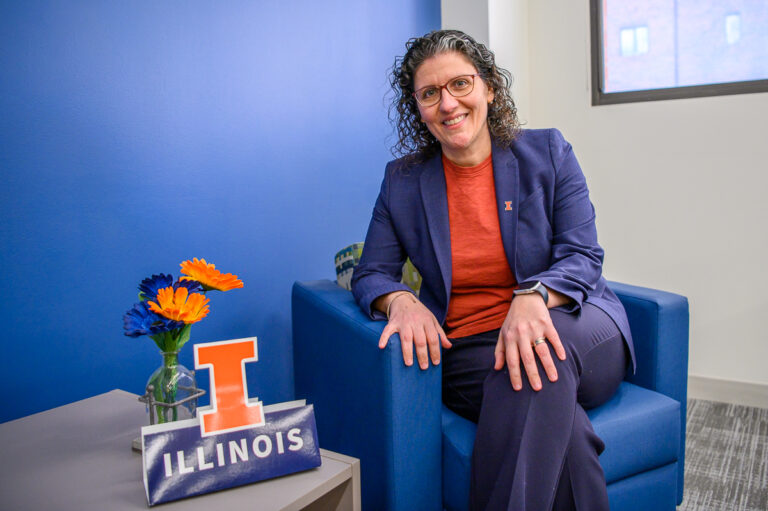
Hoda Elshorbagy aims to develop the sport of wheelchair racing and become Egypt’s first qualified wheelchair racing coach (Photo provided)

By JONATHAN KING

In her home in southern Egypt, Hoda Elshorbagy glanced at the TV, then turned to her father with clear-eyed conviction and said, “One day, I’m going to do that.”

Without missing a beat, he said, “Yes—you need to be one of them.”

Elshorbagy and her father were glued to the 2016 Paralympic Games that day in their rural village when they saw for the first time a sport that would become Hoda’s passion: Wheelchair racing.

Only eight years later, Elshorbagy—now a member of the Illinois wheelchair racing team—finished 10th in the women’s wheelchair division of the 128th Boston Marathon. The timing seemed improbable, but for those who know Elshorbagy and her determination, it was no surprise.

Elshorbagy’s journey from rural Egypt to central Illinois was an unlikely story, a path littered with numerous obstacles.

At eight months old, she was paralyzed due to a medical error. With her parents’ help, she endured 13 surgeries, enabling her a degree of mobility supported by crutches and braces. Elshorbagy then discovered adaptive sports and chose discus throwing and weightlifting. But wheelchair racing? She didn’t own a wheelchair and wheelchair racing was unfathomable in Egypt, where wheelchair accessibility is uncommon.

Without a wheelchair, team or coach, what was she to do?

Elshorbagy traveled to Cairo to meet with adaptive sport leaders but met resistance. Still, she was unbowed.

“When they told me ‘No, no, no,’ I heard ‘Yes, yes, yes,’” she said.

So, she ventured into the unknown and found someone to build a custom wheelchair, and she worked with a friend to fabricate custom gloves. She used YouTube to find videos of the Illinois wheelchair team and Coach Adam Bleakney. To understand Bleakney’s videos, though, she had to learn English. She dreamed that one day she would join the Illinois team to learn from Bleakney face to face. For seven years, she planned, prayed, persevered and practiced.

And then came her break.

She applied for and was awarded a grant by the Challenged Athletes Foundation. Elshorbagy traveled to the U.S. for one week at the invitation of CAF Coach Carlos Moleda. This experience further ignited the fire in her belly. Returning to Egypt, Elshorbagy began to contact anyone she could find on Facebook who might be able to help make a connection that would open a door to the prestigious Illinois wheelchair team.

“How can I get to Illinois and train with Coach Bleakney? That question fueled me,” she said. “Eventually, someone introduced me to Coach Marty Morse (DRES’ first wheelchair track and field coach), and he became my online coach for the next year and a half.”

And then came the news. Coach Morse invited Elshorbagy to come to Illinois in April 2023. What was originally planned as an introductory visit to fit her for a racing chair turned into Bleakney encouraging her to enroll in Parkland College as a precursor to becoming a student at Illinois and then the Illinois wheelchair racing team.

Today, two years later, Elshorbagy is a kinesiology student in the College of Applied Health Sciences and the newest recipient of the Morse-Hedrick Scholarship, created by Illinois alumna and decorated Paralympian Jean Driscoll in honor of her coaches, Morse and Brad Hedrick.

“Hoda had a very difficult time pursuing her athletic goals, but she kept pushing forward, literally and figuratively. She has an incredibly strong spirit and her determination is beyond compare,” Driscoll said. “Hoda aligns with the spirit of this scholarship through her commitment to excellence, doing the work required to get stronger, trusting her coach and the training process, respecting everyone from teammates to race directors and organizers, and having a fire inside that drives her to be the best she can be. She is very deserving of this scholarship. Hoda has a promising future, and a vision that will undoubtedly touch many lives.”

The Morse-Hedrick scholarship provides financial assistance to undergraduate students with disabilities who participate in athletic programs through Disability Resources and Educational Services. The DRES program has been an incubator for the growth and success of students with disabilities since its inception in 1948. Morse and Hedrick, alumni of the College of Applied Health Sciences, are internationally known for their dedication to coaching and mentoring athletes with disabilities, including numerous Paralympic champions.

“Words cannot describe how it feels to have this support,” said a glowing and grateful Elshorbagy. “I’m surrounded by the best athletes and coaches in this sport, and I have a home away from home at Illinois. I’m living a dream.”

In her brief career on the Illinois team, Hoda has finished third in the Illinois Half Marathon, 10th in the Boston Marathon, seventh in the Chicago Marathon, sixth in the New York City Marathon and will compete in her second Boston Marathon later this month.

But Elshorbagy’s dreams don’t stop there.

Upon the completion of a master’s degree in kinesiology, Elshorbagy has a vision to return to Egypt to help others who face similar challenges that have marked her journey. In her home country, the field of kinesiology is not available for those with disabilities. Elshorbagy wants to change that. Equipped with her kinesiology education from Illinois, she wants to educate and train others with disabilities in Egypt. As a wheelchair athlete, Elshorbagy aims to develop the sport of wheelchair racing and become Egypt’s first qualified wheelchair racing coach.

“Hoda will be successful at whatever she does. She is a woman with determination and vision,” Bleakney said. “Our wheelchair community at Illinois serves as an incubator for her continual growth in the sport. If all goes well, I’m confident we are going to be able to get Hoda onto the Egyptian national team for the 2025 or 2027 World Championships.”

For Elshorbagy, who once sat watching the Paralympic wheelchair racers on TV, the dream of being one of those Paralympians is suddenly within reach. The 2028 games in Los Angeles are on the horizon. Twelve years after that memorable day with her father, Elshorbagy is hopeful to be one of those athletes herself. This time, her father will watch, not on TV, but in person, seeing his daughter represent their country and bringing hope to others like her to do what some say was impossible.

Share on social
Related news

NIWBT didn’t result in titles, but Illinois again showcases its adaptive sports programs


The Illini women’s basketball team finished third in the 2025 NIWBT (Photo by Craig Pessman)

The University of Illinois and Illinois Wheelchair Athletics played host last week to the 47th Annual National Intercollegiate Wheelchair Basketball Tournament and even though neither Illini team took home a title, the event at the State Farm Center was still an opportunity to showcase Illinois as a trailblazer for disability resources and adaptive sports.

This year marked the 76th anniversary of the first NIWBT, which was hosted in 1949 at a University of Illinois satellite campus in Galesburg, Illinois. The tournament was organized by Dr. Tim Nugent, the first director of Disability Resources and Educational Services, also known as DRES. In honor of the man known as the “father of accessibility,” the tournament winner is awarded the coveted Timothy J. Nugent Championship Trophy.

This season’s NIWBT featured 11 men’s teams and 6 women’s teams competing in 21 total games across four days, from March 26-29.

In terms of results, the Illini women’s team reached the semifinals after beating City University of New York 72-19, but lost to Texas-Arlington 59-40. The Illini women did defeat Arizona, 62-37, for a third-place finish.

Women’s coach Stephanie Wheeler praised the fans for making their voices heard.

“You could hear their screams, you could hear their I-L-Ls, you could hear them say the names of the players,” Wheeler said. “It’s that kind of energy that translates on court.” 

The Illinois men beat Eastern Washington 79-39 in their first-round game, but were defeated by Alabama 65-47 in their second game. The Illini men did cap their play by beating Missouri 51-34 in a consolation game.

In the men’s bracket, top-seed Arizona beat Texas-Arlington 75-65 to win the Nugent trophy. For the women, top-seeded Alabama beat UTA 67-52 to secure the title, its fifth straight title since 2019 (the 2020 tournament was canceled because of the COVID-19 pandemic).

The Illinois men last won an NIWBT title in 2010, while the Illini women have yet to capture the Nugent trophy since women’s play began in 2011. Despite the teams’ current droughts, both programs hold 29 championships between them.

Three members of the men’s team—Ryan Fitzpatrick, Sebastian Milan and Martrell Stevens—left Champaign-Urbana shortly after the tournament to play for Team USA in the IWBF Men’s U23 Americas Championship from April 2-6 in Bogota, Colombia. That tournament features Brazil, Canada, Colombia and Team USA, competing for two qualification spots at the 2025 IWBF Men’s U23 World Championship, taking place in São Paulo, Brazil in June.

Next year’s NIWBT will be played at the University of Arizona.

Editor’s note:

To reach Vince Lara-Cinisomo, email vinlara@illinois.edu.
 

Share on social

Related news

A new fellowship for a groundbreaking leisure researcher


RST Associate Professor Liza Berdychevsky has been named a TALS Fellow for her continued contributions to leisure sciences. 

As a graduate student, Liza Berdychevsky didn’t expect much fanfare when she first visited a Leisure Research Symposium as a “future scholar,” on behalf of The Academy of Leisure Sciences (TALS). In 2008, she was completing her master’s program and searching for a university to complete her doctorate. 

Yet when she began to meet the academy’s cadre of experienced leisure scientists, Berdychevsky felt seen, welcomed and valued, “almost like a celebrity,” she said. 

Seventeen years later, Berdychevsky—now an associate professor of Recreation, Sport and Tourism at Illinois—has been named a TALS Fellow for her continued contributions to leisure sciences. 

“It’s one of the biggest honors there is in our field,” Berdychevsky said. “I certainly didn’t expect it to happen so early. I’m very grateful to my colleagues’ recognition of my work, and the fact that they felt that it’s time.” 

Berdychevsky arrived at the Urbana-Champaign campus in 2013, after completing her doctorate at the University of Florida. She quickly made her mark studying risky leisure behaviors, such as sexual risk taking, violence, and delinquent practices, along with sexual leisure and positive sexuality across gender and lifespan. 

Her work often focuses on vulnerable populations, including older adults facing ageist stereotypes around their sexuality, transgender people, high-risk young travelers and people affected by the COVID-19 pandemic. 

Her name will join the TALS Fellows alongside a select group of scholars, including many of the same researchers she looked up to as a budding academic. 

She’ll share the mantle with several of her colleagues from RST at Illinois. Previous fellows include Professor Monika Stodolska, a frequent collaborator; Professor Laura Payne, director of the Office of Recreation and Park Resources; Associate Professors Toni Liechty and Julie Son; and Professor and current RST Department Head Carla Santos. 

Santos said a TALS fellowship provides “global recognition for your research,” which can lead to keynote speaking opportunities and bolster recruitment of top graduate students. 

“Her work offers direction and examples that influence practices on how to advance positive sexuality, including sex as leisure in later life, and is informed by theory and empirical evidence,” Santos said. “Dr. Berdychevsky is undoubtedly pushing the boundaries of what leisure scholarship can, and should, become.”

Berdychevsky is a frequent contributor to prominent leisure, tourism, sexual health, and aging journals, including Leisure Sciences, Leisure Studies, Tourism Management, Annals of Tourism Research, Journal of Sex Research, Archives of Sexual Behavior, The Gerontologist, and Innovation in Aging. She has also published two books co-edited with University of Otago Professor Neil Carr: “Sex in Tourism: Exploring the Light and the Dark” (2021) and “Innovation and Impact of Sex as Leisure in Research and Practice (2022). Her third book, “Sex in Hospitality: The Good, the Bad, and the Ugly” is under contract. 

“If you look at the mission of TALS, it’s an organization for scholars who are focused on the fundamental value of leisure and how we can promote it through scholarship, education, advocacy, and service,” Berdychevsky said. “They were pivotal to most of my choices throughout my career. Many of them feel like a family to me.” 

Berdychevsky will accept her fellowship at the 2025 TALS Research and Teaching Conference, hosted March 5-7 in Pittsburgh. 

The Academy of Leisure Sciences (TALS) was founded in 1980 by former leaders of the Society of Park and Recreation Educators, including Allen Sapora, a pioneer in recreation education and research at Illinois and former RST department head. 

(To learn more about Associate Professor Berdychevsky’s work, visit her faculty page here.)  

Editor’s note:

To reach Ethan Simmons, email ecsimmon@illinois.edu.
 

Share on social

Related news

Chez Veterans Center again plays host to Warrior-Scholar Project


Photo by caption

For Chez Veterans Center director of operations Andy Bender, the function of the Warrior-Scholar Project is straightforward: Offer military Veterans a two-week-long academic “boot camp” to reacquaint themselves with the classroom environment before heading to a college or university. 

“One of the hardest things a service member is going to do is leave the service,” Bender said. “We really enjoy having the Warrior-Scholar Project here because it reflects what we want to be a part of: Making that transition.” 

In June 2024, the Chez Veterans Center, the hub for military Veteran populations at the University of Illinois, hosted a cohort of higher-ed-bound Veterans for the third year in a row. 

The Warrior-Scholar Project partners with American colleges and universities to host brief, intensive, no-cost college prep experiences for both enlisted Veterans and service members transitioning into civilian life.

The Chez Center brought in Warrior-Scholars for the first time in 2022, with a week of STEM-centered coursework taught by Illinois faculty. This year’s edition doubled the session’s length, adding a Humanities track of classes for participants. 

The cohort of 15 students and six fellows all hailed from outside of Illinois. Most hadn’t ever visited the Champaign-Urbana campus; though they may not choose Illinois for school, the experience still has a hand in their higher ed journeys. 

The two-week schedule was filled with visits to various campus landmarks and labs, including the McKechnie Family LIFE Home, and a robotics and automation demonstration at the Agricultural and Bioengineering research farm. Humanities seminars focused on the United States’ founding principles and documents that the Veterans were sworn to defend. 

Assistant Professor of Political Science Alicia Uribe-McGuire led one of their first seminars, teaching an engaged class on the origin and execution of the U.S. Constitution. 

“I’ve always thought that the more a student wants it, the better a student they are. And I think they want it,” Uribe-McGuire said shortly after her seminar discussion. “I’ve had Veterans in my classes before, and they’re some of the best students.”

One frequent class contributor was Cody Lepp, an eight-year Navy SEAL who decided to return to school while still serving in the military. After three years taking online classes through National University in San Diego, Lepp is heading into his senior year and he wanted to use WSP to see how he measured up in the in-person classroom environment. 

“I came in with an open mindset, hopefully I can learn some new things,” Lepp said. “What I hope to get out of it is practice applying my skills, seeing where I stand against the majority of my fellows.”
 
Jonathan Banasihan had spent seven years as a technician for the U.S. Navy when a new challenge—going back to school—entered his purview. The Warrior-Scholar Project seemed a great opportunity to refamiliarize himself with the flow of a classroom. 

Banasihan, the son of Filipino immigrants, never thought college was an option. With a bachelor’s degree from American University and now planning to go to law school at George Washington University, Banasihan feels he left the academic boot camp with far more than advertised. 

“I didn’t think that I could do the things that I did in college until I came here,” said Banasihan, now a facilitator for the Warrior-Scholar Project. “The confidence that WSP gave me to not just be uncomfortable, but to stretch myself in ways that I never really expected or wanted to was huge.” 

Banasihan is ushering through student Veterans who were in his same position. 

“UIUC has been an incredible, incredible partner. I can’t say anything but good things about this place,” Banasihan said. 

Among Veterans’ challenges reintegrating after their service, higher education can be a “completely different animal,” Bender said. 

“If you’re like some service members—if you’ve spent four, five, six years—how long has it been since you were in a classroom? You might have some of those creeping doubts come in. Can I make it? Am I going to fit in? Is this going to be successful?” he said. 

“(WSP) is providing the confidence to these service members that we can do it. That there is a future beyond my service time. That there is a way to make it.” 

Editor’s note:

To reach Ethan Simmons, email ecsimmon@illinois.edu.
 

Share on social

Related news

Illini athletes win big at Paris Paralympics


Steve Serio celebrates Team USA’s Paralympic gold in Paris (Getty Images)

By VINCE LARA-CINISOMO

If this really was Steve Serio’s final Paralympic Games appearance, he went out in style.

The University of Illinois Urbana-Champaign alum had 24 points, 10 rebounds and eight assists as Team USA won its record third straight Paralympic Games gold medal, holding off Great Britain 73-69 in Paris.

“This team has grown so much over the course of the last couple of years,” said Serio, the five-time Paralympian, team captain and graduate of the College of Applied Health Sciences. “We knew that Great Britain was going to be a great opponent, a really tough group of guys. Right now, we’re just excited that we won a basketball game and got to bring home another gold medal for our country.”

Serio and Jake Williams combined for 19 points in the first quarter for the U.S., including a late 3-pointer from Serio to put Team USA in the lead. Great Britain clawed back within three points with three minutes to go in the game, but timely buckets from Serio, Williams, and Illinois alum Brian Bell as well as a few defensive stops put the game to bed. Team USA won its third consecutive gold medal—the first time that’s ever been accomplished—and its eighth all time.

Before the game, Serio said the Paris Games would be his last.

“This entire Games I’ve tried to be present,” Serio said. “Live in the moment more than I have in the past. You look at the game, you look at this experience a little bit differently when you know it’s going to be your last one. I can’t think of a better way to go out, I’m going to remember this for a really long time.”

The USA women’s wheelchair basketball team won a silver medal, falling short in its attempt at gold. The U.S. lost in the final to defending champ Netherlands, 63-49. The women’s team, which included Illini athletes Kaitlyn Eaton, Ali Ibanez and Emily Oberst, has not won gold since 2016.

In track and field, Illinois alum Susannah Scaroni took her fourth medal of the 2024 Games, winning bronze in the women’s marathon T54 came after a battle with Australian Madison de Rozario and China’s Zhaoqian Zhou.

“There was a moment in the race where Madison and I were working so hard and going back and forth and honestly, I didn’t care what color the medal was, but I was hoping she and I could get silver and bronze,” Scaroni said. “That’s what happened and I’m so happy for her.”

As for other Illini athletes competing in Paris, two-time medalist Daniel Romanchuk was Team USA’s top men’s finisher, taking fourth in the men’s T54 race with a time of 1:32.23. Romanchuk won the second Paralympic title of his career in Paris in the 5,000-meter T54 race on the track and also took bronze in the 400-meter.

Seven-time Paralympian Aaron Pike followed Romanchuk with a seventh-place finish in 1:36.23.

Matching Pike’s seventh-place finish on the women’s side was Tatyana McFadden, who won her 21st Paralympic medal in Paris and became the most decorated U.S. Paralympic track and field athlete in history.

Two-time Paralympic medalist Brian Siemann and two-time Paralympian Jenna Fesemyer rounded out Team USA’s results in 11th and 13th place in the men’s and women’s races, respectively. Siemann, who in his fourth Paralympic Games won his first two medals in Paris, finished in 1:51.56 while Fesemyer clocked a time of 2:05.42.

Editor’s note:

To reach Vince Lara-Cinisomo, email vinlara@illinois.edu.
 

Share on social

Related news

Study explores effects of racial discrimination on Black parents and children


Robyn Gobin (left) and Shardé Smith

Black Americans experience racial discrimination on a regular basis, and it is a cause of chronic and pervasive stress. It is known to contribute to elevated risk for poor mental health outcomes, but most research has focused on individuals. A new study from the University of Illinois Urbana-Champaign looks at the interpersonal effects of discrimination on parents and their adolescent children.

“A person’s experiences with racial discrimination are not just their own but may spill over into the family and affect the mental health and perceived social support of other family members. We underestimate the impact of discrimination if we’re only looking at the individual level,” said lead author Shardé Smith, associate professor in the Department of Human Development and Family Studies, part of the College of Agricultural, Consumer and Environmental Sciences at Illinois.

Smith and co-author Robyn Gobin, associate professor in the Department of Health and Kinesiology at Illinois, drew on a longitudinal Chicago neighborhood study examining the impact of social interactions and environments. Based on data from the study’s third wave, the researchers included 401 Black parent-adolescent dyads, with an average age of 15 for the children. Participants answered questions about their experiences of racial discrimination over the past year, as well as their psychological well-being and perceived family support.

Analyzing the data for patterns, Smith and Gobin identified four clusters of responses: One group in which both the parent and the adolescent reported exposure to discrimination, another group where only the parent had experienced discrimination, a third group where the adolescent but not the parent had experienced discrimination, and a fourth group where both parents and children had a low likelihood of exposure to discrimination in the past year.

Specifically, parents were likely to experience racial discrimination at work, and both adolescents and their parents were likely to experience discrimination outside of their neighborhood and when they were receiving services. Furthermore, adolescents were likely to experience racial discrimination from the police.

As expected, the researchers found interactive effects of exposure to racial discrimination, consistent with the concept of “linked lives” that indicate people’s life experiences impact their family members. Overall, parents and adolescents in the three risk groups reported more psychological distress and lower levels of family support.

However, adolescents indicated significantly less family support when their parents also experienced racial discrimination. For parents, the combined exposure to racial discrimination did not diminish their perceptions of social support any more than the other risk groups.

It’s possible that parents struggle to support their children when they are also experiencing racial discrimination themselves, or perhaps children are not reporting the experiences to their parents, the researchers noted.

“It’s important for adolescents to talk to their parents and be able to receive support in managing racial trauma. If they can’t talk about these things in their family of origin with people who really understand it, then they may be left on their own trying to manage it, which could further exacerbate the mental health challenges they might be experiencing,” Gobin stated.

The researchers did not find any differences based on demographic characteristics. This demonstrates these effects are not unique to one population, but affect people across gender identity, age, and socio-economic status, Smith said. 

These findings show the importance of developing interventions to address the psychological effects of discrimination in a family context, particularly focusing on how to help adolescents receive the support they need.

“I want to highlight that the goal in an ideal world is to dismantle the systems that create the discrimination. However, given how difficult that will be over time, we still need to engage in more malleable approaches to tackle these issues. We need to make sure healing frameworks are trauma-sensitive and culturally sound, helping to capitalize on the strengths within the Black community,” Smith concluded.

The paper, “The Dyadic Effects of Racial Discrimination: Using Latent Class Analysis to Explore Patterns of Racial Discrimination Among Black Parent–Adolescent Dyads,” is published in Cultural Diversity and Ethnic Minority Psychology [DOI: 10.1037/cdp0000678].

Share on social

Related news

Message from the HK Department Head


Kim Graber (Photo by Craig Pessman)

Hello, members of the Health and Kinesiology family,

As we welcome the fall semester, I am thrilled to share the latest edition of our newsletter. This issue marks the first edition of the Health and Kinesiology newsletter, reflecting our department’s official name change that took effect on Aug. 16. We have much to celebrate from the past year and exciting developments ahead.

Inside, you’ll meet our new faculty, find updates on a leadership change for our MS in Health Technology program, read highlights of the impressive accomplishments of our students and take a look at the research our faculty members are conducting. Their dedication to advancing knowledge and promoting healthier communities continues to inspire us all.

As you explore the fall 2024 Health and Kinesiology newsletter, I hope you find motivation in our collective achievements and the shared commitment to enhancing well-being and community.

Wishing you a productive and energizing fall semester.

Warm regards,
Kim Graber
Professor and Head, Department of Health and Kinesiology

Related news

RST internship: Jonathan Oliveira


Jonathan Oliveira worked as a stadium competition analyst for Copa América at Allegiant Stadium in Las Vegas (Photo provided)


In his role, Jonathan was responsible for implementing and monitoring operations activities directly related to matches, press conferences, and stadium familiarization of all the national soccer teams who played at the stadium. In addition, he coordinated overlapping activities in areas inclduing transportation, protocol, and marketing. Further responsibilities included managing match equipment, locker rooms, ceremony rehearsals, organizing volunteers, and more.

On the highlights of his summer, Jonathan said, “I had the opportunity to interact with some of the most famous soccer players, coaches, and staff in the world and learn about the behind-the-scenes of match-day operations. I could connect and learn from several brilliant professionals with vast experiences in the sports events industry. This experience at Copa América was a dream accomplished!”

Share on social

Related news

Beebe hopes to make MLB his future home


Nate Beebe holds a glove used by Rita Meyer Moellering of the Peoria Redwings, a team from the All-American Girls Professional Baseball League in the 1940s. (Photo provided)

For someone who wants to work in baseball in the future, Nate Beebe had a dream internship this summer.

Beebe, now a senior in the Department of Recreation, Sport and Tourism, spent his summer interning at the National Baseball Hall of Fame and Museum in Cooperstown, New York.

Beebe was one of 16 students chosen for the 2024 Frank and Peggy Steele Internship Program for Youth Leadership Development. The program, which hosted its 24th class, offers interns the opportunity to learn from Hall of Fame employees, senior leadership staff and Steele Internship alumni through various seminars and career development events.

Beebe said the idea to apply for the internship came from RST Teaching Associate Professor Mike Raycraft. Beebe’s role involved compiling reports for leadership and developing new queries for specialized searches, building his skills as a data analyst. Additionally, he had the opportunity to create a 10-minute presentation for museum guests about artifacts not currently on display.

“I worked very closely with Kimberly Adler (manager of Data Analytics) and Jason Schiellack (director of Membership and Annual Giving),” he said. “Kimberly was who I did all of my day-to-day tasks with, and she helped me become acclimated to the systems that were being used and the practices in place at the Hall.”

Beebe said he enjoyed his time in upstate New York, working at what many regard as the best of the four major sports’ Halls of Fame.

“The feeling that I had is probably best described as excitement,” he said. “There’s just so much history in Cooperstown, and I couldn’t believe that I was going to get to work there every day for 10 weeks.”

While interning, Beebe lived about 30 minutes south of Cooperstown in Oneonta. The nearby State University of New York campus has a relationship with the Hall of Fame and directs interns to stay in the college’s dorms, he said. He took advantage of the location by taking day trips to Philadelphia and New York City for baseball games.

Those trips could be viewed as scouting for future work opportunities.

“I would like to work in baseball after graduation,” Beebe said. “I’m not sure if I want to pursue that immediately after school or try to work in a corporate environment first and develop some skills, but, eventually, I would like to work in some type of data analytics role with a baseball team.”

Share on social

Related news

College of Applied Health Sciences
110 Huff Hall
1206 South 4th Street
Champaign, IL 61820
(217) 333-2131